As President Donald Trump declared Washington, D.C., a crime-ridden wasteland in need of federal intervention and threatened similar federal interventions in other Black-led cities, several mayors compared notes.
The president's characterization of their cities contradicts what they began noticing last year: that they were seeing a drop in violent crime after a pandemic-era spike. In some cases the declines were monumental, due in large part to more youth engagement, gun buyback programs and community partnerships.
Click to Gallery
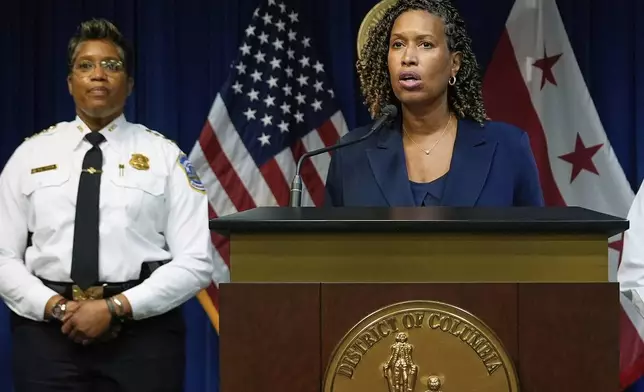
FILE - Washington Mayor Muriel Bowser speaks, accompanied by Metropolitan Police Department Chief Pamela A. Smith, during a news conference on President Donald Trump's plan to place Washington police under federal control and deploy National Guard troops to Washington, Monday, Aug. 11, 2025, in Washington. (AP Photo/Julia Demaree Nikhinson, File)
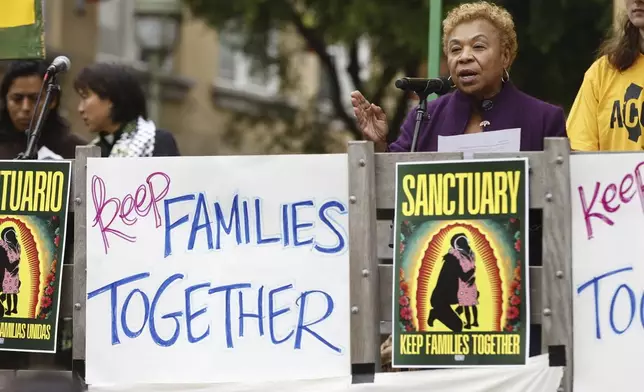
FILE - Oakland Mayor Barbara Lee speaks during a vigil held at Fruitvale Station to show solidarity with demonstrations against ICE raids, in Oakland, Calif., on Tuesday, June 10, 2025. (Santiago Mejia/San Francisco Chronicle via AP, File)
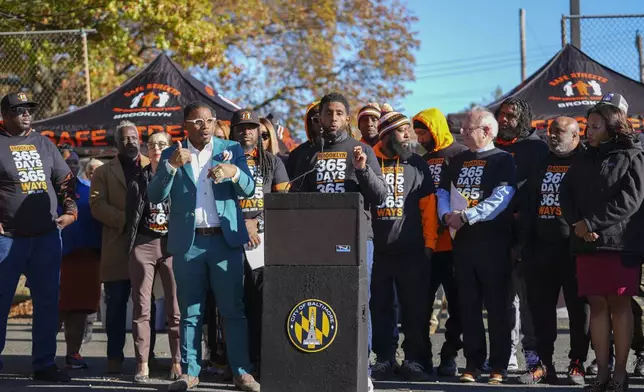
FILE - Baltimore Mayor Brandon Scott, center, speaks during a news conference to celebrate achieving over 365 days without a homicide within the Brooklyn neighborhood Safe Streets catchment zone, Tuesday, Nov. 12, 2024, in Baltimore. (AP Photo/Stephanie Scarbrough, File)

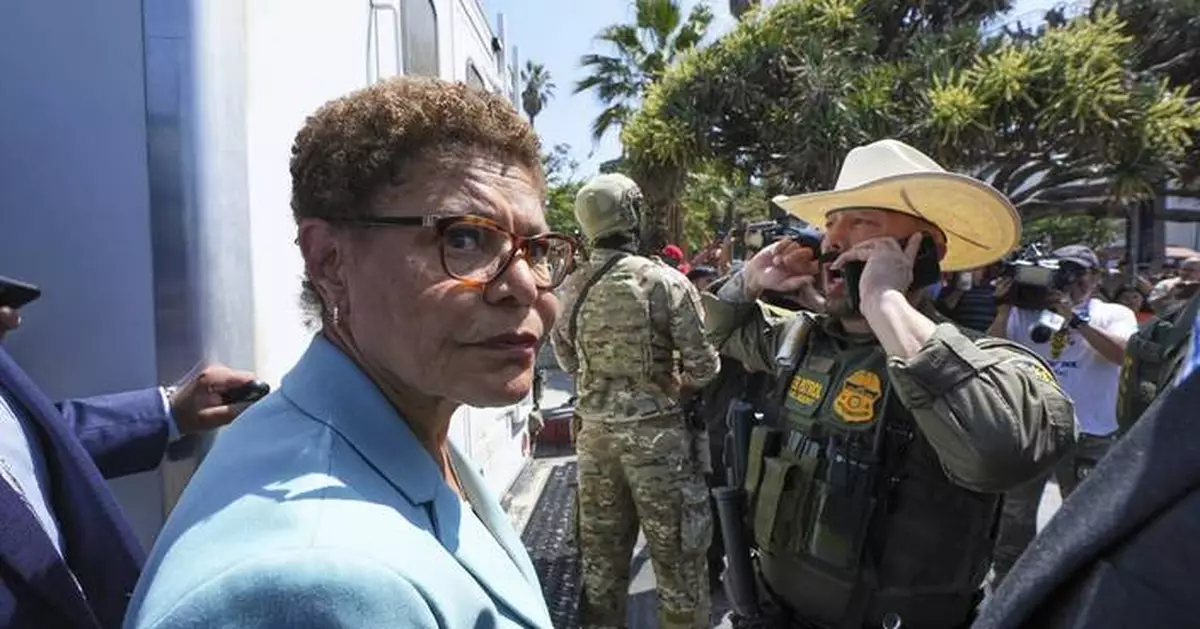
FILE - Los Angeles Mayor Karen Bass stands in front of a Border Patrol federal agent at MacArthur Park in Los Angeles, on Monday, July 7, 2025. (AP Photo/Damian Dovarganes, File)
Now members of the African American Mayors Association are determined to stop Trump from burying accomplishments that they already felt were overlooked. And they're using the administration's unprecedented law enforcement takeover in the nation's capital as an opportunity to disprove his narrative about some of the country's greatest urban enclaves.
“It gives us an opportunity to say we need to amplify our voices to confront the rhetoric that crime is just running rampant around major U.S. cities. It’s just not true,” said Van Johnson, mayor of Savannah, Georgia, and president of the African American Mayors Association. “It’s not supported by any evidence or statistics whatsoever.”
After deploying the first of 800 National Guard members to Washington, the Republican president is setting his sights on other cities including Baltimore, Chicago, Los Angeles and Oakland, California, calling them crime-ridden and “horribly run." One thing they all have in common: They're led by Black mayors.
“It was not lost on any member of our organization that the mayors either were Black or perceived to be Democrats,” Johnson said. “And that’s unfortunate. For mayors, we play with whoever’s on the field.”
The federal government's actions have heightened some of the mayors' desires to champion the strategies used to help make their cities safer.
Trump argued that federal law enforcement had to step in after a prominent employee of the Department of Government Efficiency, or DOGE, was attacked in an attempted carjacking. He also pointed to homeless encampments, graffiti and potholes as evidence of Washington “getting worse.”
However statistics published by Washington’s Metropolitan Police contradict the president and show violent crime has dropped there since a post-pandemic peak in 2023.
Chicago Mayor Brandon Johnson scoffed at Trump’s remarks, hailing the city’s “historic progress driving down homicides by more than 30% and shootings by almost 40% in the last year alone.”
Mayor Karen Bass of Los Angeles, where homicides fell 14% between 2023 and 2024, called the federal takeover nothing but a performative “power grab.”
In Baltimore, officials say they have seen historic decreases in homicides and nonfatal shootings this year, and those have been on the decline since 2022, according to the city's public safety data dashboard. Carjackings were down 20% in 2023, and other major crimes fell in 2024. Only burglaries have climbed slightly.
The lower crime rates are attributed to tackling violence with a “public health” approach, city officials say. In 2021, under Mayor Brandon Scott, Baltimore created a Comprehensive Violence Prevention Plan that called for more investment in community violence intervention, more services for crime victims and other initiatives.
Scott accused Trump of exploiting crime as a “wedge issue and dog whistle” rather than caring about curbing violence.
“He has actively undermined efforts that are making a difference saving lives in cities across the country in favor of militarized policing of Black communities,” Scott said via email.
The Democratic mayor pointed out that the Justice Department has slashed over $1 million in funding this year that would have gone toward community anti-violence measures. He vowed to keep on making headway, regardless.
“We will continue to closely work with our regional federal law enforcement agencies, who have been great partners, and will do everything in our power to continue the progress despite the roadblocks this administration attempts to implement,” Scott said.
Just last week Oakland officials touted significant decreases in crime in the first half of this year compared with the same period in 2024, including a 21% drop in homicides and a 29% decrease in all violent crime, according to the midyear report by the Major Cities Chiefs Association. Officials credited collaborations with community organizations and crisis response services through the city's Department of Violence Prevention, established in 2017.
“These results show that we're on the right track,” Mayor Barbara Lee said at a news conference. “We're going to keep building on this progress with the same comprehensive approach that got us here.”
After Trump gave his assessment of Oakland last week, she rejected it as “fearmongering.”
Social justice advocates agree that crime has gone down and say Trump is perpetuating exaggerated perceptions that have long plagued Oakland.
Nicole Lee, executive director of Urban Peace Movement, an Oakland-based organization that focuses on empowering communities of color and young people through initiatives such as leadership training and assistance to victims of gun violence, said much credit for the gains on lower crime rates is due to community groups.
“We really want to acknowledge all of the hard work that our network of community partners and community organizations have been doing over the past couple of years coming out of the pandemic to really create real community safety,” Lee said. “The things we are doing are working.”
She worries that an intervention by military forces would undermine that progress.
“It creates kind of an environment of fear in our community,” Lee said.
In Washington, agents from multiple federal agencies, National Guard members and even the United States Park Police have been seen performing law enforcement duties from patrolling the National Mall to questioning people parked illegally.
Pentagon press secretary Kingsley Wilson said the guard troops will not be armed but declined to elaborate on their assignments to safety patrols and beautification efforts.
Savannah's Johnson said he is all for partnering with the federal government, but troops on city streets is not what he envisioned. Instead, cities need federal assistance for things like multistate investigation and fighting problems such as gun trafficking, and cybercrimes.
“I’m a former law enforcement officer. There is a different skill set that is used for municipal law enforcement agencies than the military,” Johnson said.
There has also been speculation that federal intervention could entail curfews for young people.
But that would do more harm, Nicole Lee said, disproportionately affecting young people of color and wrongfully assuming that youths are the main instigators of violence.
“If you’re a young person, basically you can be cited, criminalized, simply for being outside after certain hours,” Lee said. “Not only does that not solve anything in regard to violence and crime, it puts young people in the crosshairs of the criminal justice system.”
For now, Johnson said, the mayors are watching their counterpart in Washington, Muriel Bowser, closely to see how she navigates the unprecedented federal intervention. She has been walking a fine line between critiquing and cooperating since Trump's takeover, but things ramped up Friday when officials sued to try to block the takeover.
Johnson praised Bowser for carrying on with dignity and grace.
“Black mayors are resilient. We are intrinsically children of struggle,” Johnson said. “We learn to adapt quickly, and I believe that we will and we are.”

FILE - Washington Mayor Muriel Bowser speaks, accompanied by Metropolitan Police Department Chief Pamela A. Smith, during a news conference on President Donald Trump's plan to place Washington police under federal control and deploy National Guard troops to Washington, Monday, Aug. 11, 2025, in Washington. (AP Photo/Julia Demaree Nikhinson, File)
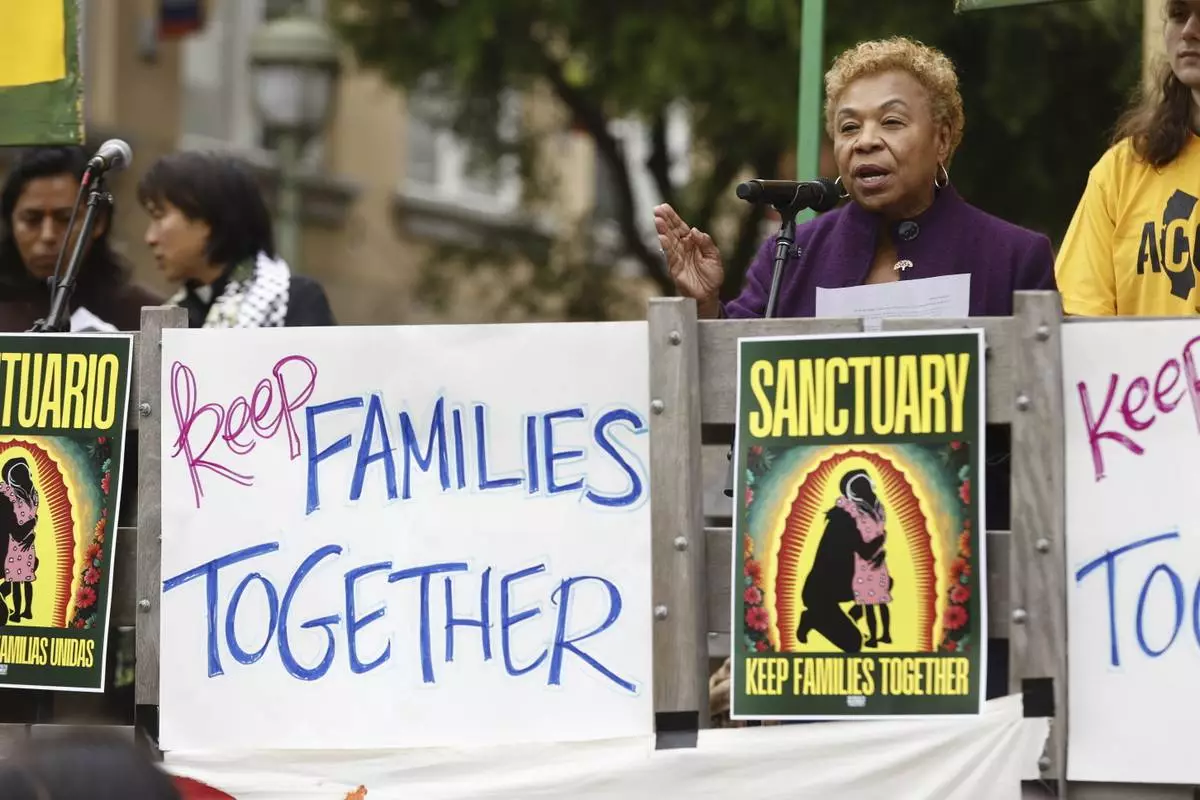
FILE - Oakland Mayor Barbara Lee speaks during a vigil held at Fruitvale Station to show solidarity with demonstrations against ICE raids, in Oakland, Calif., on Tuesday, June 10, 2025. (Santiago Mejia/San Francisco Chronicle via AP, File)
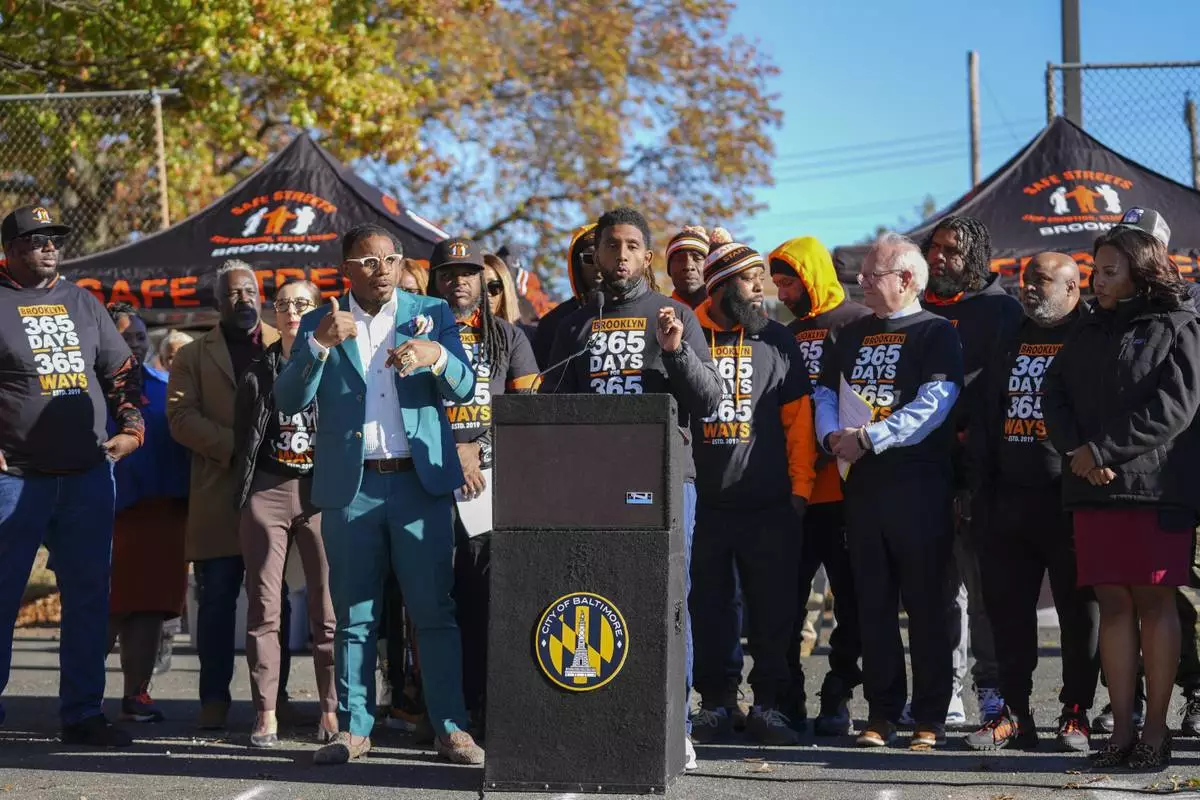
FILE - Baltimore Mayor Brandon Scott, center, speaks during a news conference to celebrate achieving over 365 days without a homicide within the Brooklyn neighborhood Safe Streets catchment zone, Tuesday, Nov. 12, 2024, in Baltimore. (AP Photo/Stephanie Scarbrough, File)
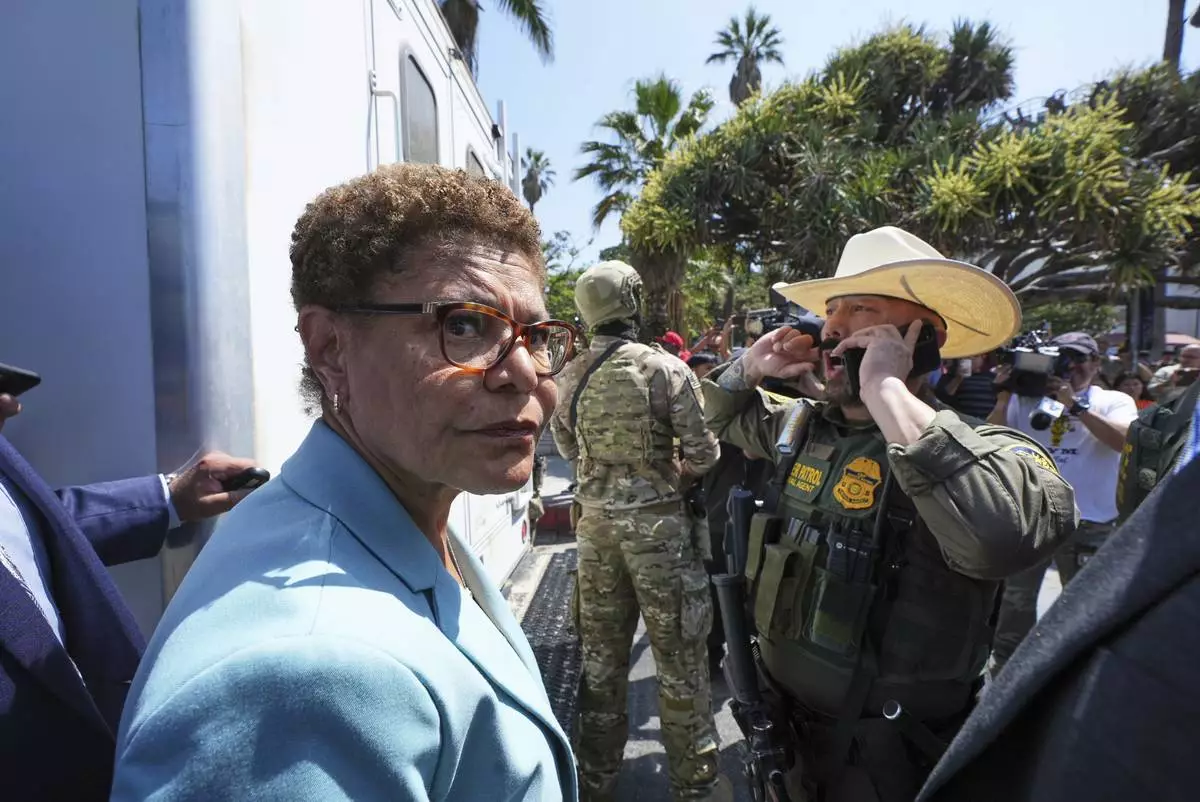
FILE - Los Angeles Mayor Karen Bass stands in front of a Border Patrol federal agent at MacArthur Park in Los Angeles, on Monday, July 7, 2025. (AP Photo/Damian Dovarganes, File)