Skip to Content Facebook Feature Image

Brave Chinese, Americans fighting in Battle of Western Yunnan remembered after 80 years

China

China

China

Brave Chinese, Americans fighting in Battle of Western Yunnan remembered after 80 years

2025-08-19 16:13 Last Updated At:18:47

Over 80 years ago in southwest China's Yunnan Province, Chinese troops teamed up with American volunteer pilots in a key battle against Japanese invading forces during World War II, ensuring the flow of much-needed supplies.

In May 1942, the Japanese army invaded western parts of Yunnan, capturing the west bank of the Nujiang River. The Yunnan-Myanmar Road, also known as "Burma Road," -- China's only international land supply route -- was completely severed, making it nearly impossible for urgently needed wartime supplies to reach China.

In May 1944, to reclaim the lost territory and reopen the vital supply route, the Chinese Expeditionary Force, in coordination with the Chinese Army in India, launched a full-scale counteroffensive, with the goal of achieving a rendezvous at the China-Burma border. They broke through numerous defense lines and eventually besieged Yunnan's Tengchong, a city which was about to become a key battleground in China's War of Resistance Against Japanese Aggression.

On August 2, 1944, the battle of Tengchong began.

"The biggest challenge in retaking the city was the walls. The Expeditionary Forces couldn't breach them as they were too solid. The American planes bombed breaches into the walls, allowing our troops to break through and begin the assault," said Ma Juan, director of the Memorial of Western Yunnan War of Resistance against Japanese Aggression.

During the two years of occupation, the Japanese transformed Tengchong into a fortress by fortifying buildings and streets, digging trenches and bunkers, and even modifying a large brass bell by carving out three gun ports.

Chinese soldiers used flamethrowers and bazookas to destroy enemy strongholds and machine-gun nests. They breached walls with explosives, fighting house to house, street by street.

The local civilians also took part in the resistance as well. They acted as guides, transported food, and provided vital logistical support to the Expeditionary Force.

"Every household near Tengchong City welcomed the soldiers. They cooked for them every day and treated them like their own kids. One day, they prepared a whole table of food, but not a single soldier came back. The villagers could only sit and stare at that untouched meal, weeping in silence," Ma said.

On September 14, 1944, after over 40 days of scorched-earth battle, over 6,000 Japanese troops were wiped out and Tengchong was finally reclaimed. The Chinese Expeditionary Force suffered over 18,000 casualties, with 9,168 killed in action. A total of 19 American soldiers also lost their lives.

In 2004, Clifford Long, a Flying Tigers veteran who had bombed the city wall during the battle, returned to Tengchong in his 80s.

"The short period of time that he was in China was one of the most meaningful parts of his life. Through cooperation we can achieve great things," Clifford Ray Long II, vice president of Sino-American Aviation Heritage Foundation, said about his father at a Flying Tigers exhibition in Guangzhou this July.

The victory in western parts of Yunnan inspired Chinese people to keep fighting. With the Burma Road reopened, Allied supplies once again flowed into China, supporting battlefronts across the country.

Today, a martyrs' cemetery stands in Tengchong to honor the fallen soldiers and civilians who perished in the battle. On August 15, the 80th anniversary of Japan's unconditional surrender in Word War II, the Memorial of Western Yunnan War of Resistance against Japanese Aggression reopened after months of renovation, presenting an important page of history in modern formats to locals and visitors.
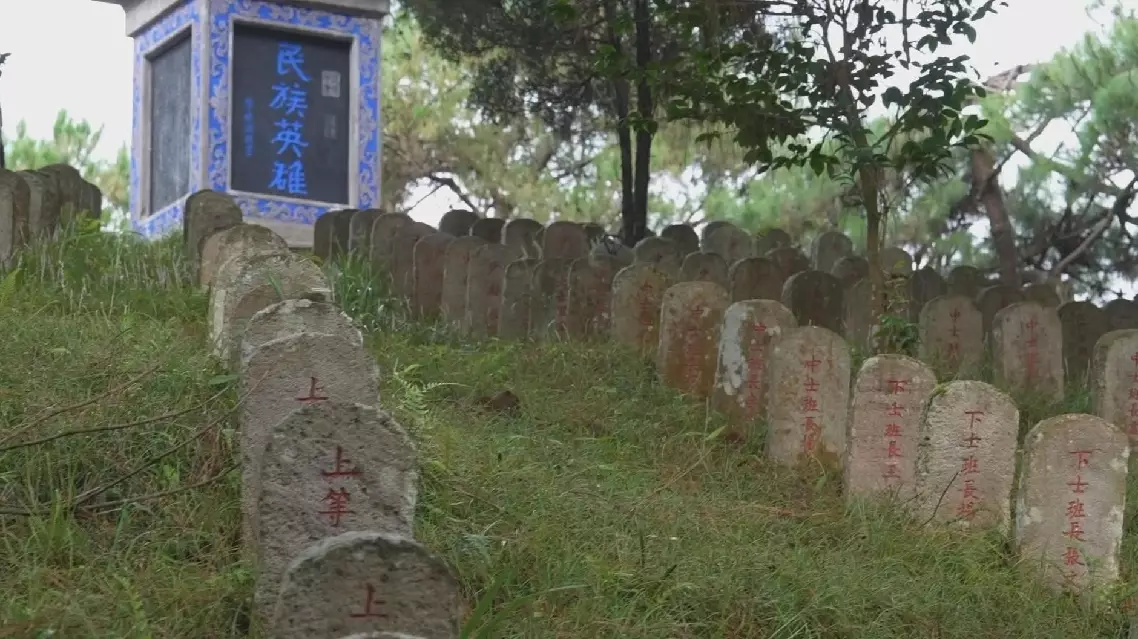
Brave Chinese, Americans fighting in Battle of Western Yunnan remembered after 80 years
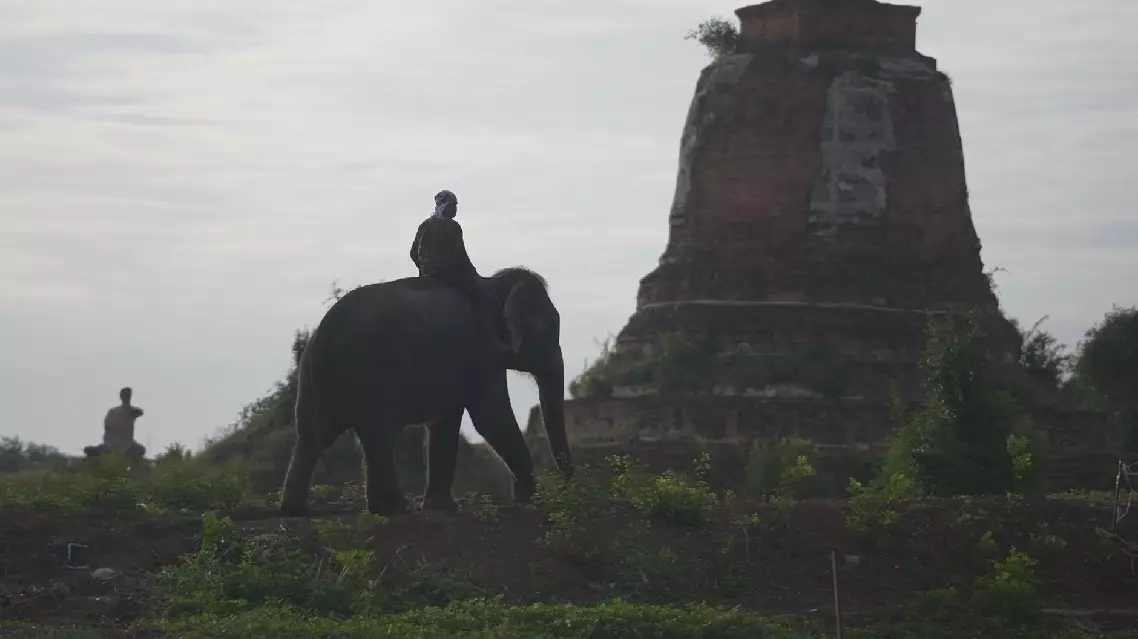

Brave Chinese, Americans fighting in Battle of Western Yunnan remembered after 80 years
The three astronauts of China's recently-returned Shenzhou-20 mission on Friday shared the experiences of their dramatic 204-day space mission, including detailing the emergency procedures which were implemented to bring them safely home after their return capsule was struck by space debris.

The trio -- Chen Dong, Chen Zhongrui, and Wang Jie -- met with the press in Beijing on Friday afternoon, marking their first public appearance since returning to Earth in November.

When detailing the emergency response mechanisms which were enacted prior to their scheduled return, the astronauts explained that upon discovering a triangular crack on the spacecraft's viewport window, they immediately took photos for documentation and transmitted them to the ground team, who swiftly activated an emergency plan to get the trio home safely.

Experienced mission commander Chen Dong explained how the crew had complete faith in their colleagues on the ground to find a solution to these unforeseen circumstances which led to their return being delayed.

"First, we must trust the ground team, who would anticipate everything and develop the safest return plan for us. Second, we must believe in ourselves; as well-trained astronauts, we have the ability to manage various unexpected failures. I believe that with the collaboration of astronauts and researchers on the ground, our space home will surely go farther, more steadily, and for a longer time," he said.

Following their extended stay in space as a result of the debris incident, the Shenzhou-20 crew spent a total 204 days in orbit, setting a new record for the longest duration by a single group of Chinese astronauts.

During their mission, they completed multiple payload operations, conducted extensive scientific experiments, and carried out four extravehicular activities.

"Our crew worked together with the ground team in unity and coordination, completing four extravehicular activities, several payload entry and exit tasks, and a large number of scientific experiments. It was a fulfilling yet challenging mission. The path to exploring the heavens is long and arduous, but I firmly believe that China's space missions will succeed," said Chen Zhongrui, a former air force pilot who was making his first spaceflight during the mission.

"From the ground to space, from learning to application, I have deeply felt the solid progress of Chinese space endeavors and the quiet dedication of countless personnel behind the scenes. In the future, I will accomplish each mission with full commitment, living up to the trust of the motherland and the people," said fellow astronaut Wang Jie, who was also making his debut spaceflight.

After returning to Earth on Nov 14, the trio successfully completed their isolation recovery and rehabilitation and will now resume normal training following health assessments.

The crew's return, originally scheduled for Nov 5, was postponed due to safety concerns, with the astronauts later using the return capsule belonging to their successor crew of the Shenzhou-21 mission to get back to Earth. China later launched the unmanned Shenzhou-22 spacecraft which will serve the future return of the crew now aboard the Tiangong Space Station.

Shenzhou-20 astronauts share experiences after safely returning from debris incident

Shenzhou-20 astronauts share experiences after safely returning from debris incident

Recommended Articles