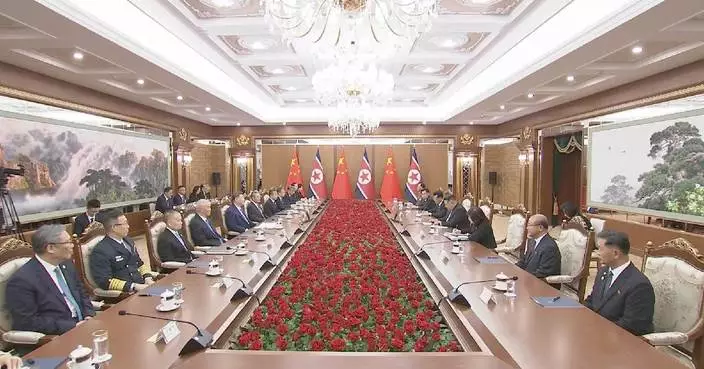
The Shenzhen Bay Port in south China's Guangdong Province recorded more than 200,000 arrivals and departures in a single day on Saturday, its highest ever, as the Guangdong-Hong Kong-Macao Greater Bay Area (GBA) is witnessing an unprecedented wave of cross-border travel this summer.
Family trips, weekend getaways and culture-themed tours have surged in July and August, keeping every port in Shenzhen at peak capacity.
Immigration figures on the Shenzhen Bay Port's operation show that, as of Saturday, the number of mainland travelers entering and departing through the port has increased 34 percent year-on-year. The number of Hong Kong, Macao, and Taiwan residents has increased 25 percent, and the number of foreign passport holders has increased 33 percent.
"We stayed here for two nights. We went to Foshan and Zhongshan, tried lots of famous local food, like the black tofu," said one traveler from Hong Kong.
"Crossing here is quick and easy. We do it all the time," said another.
"I'm with a group of 30 people. Tonight we rest, tomorrow we go to Dongmen. We are on a five-day trip to Zhuhai, Shenzhen, Hong Kong and Macao," said an Indonesian visitor.
Better transport links, seamless QR-code cross-border payments and faster custom inspection e-gates have combined with a calendar of festive events in the Greater Bay Area to heat up the entire travel chain. Scenic zones, restaurants and hotels are reaping the rewards.
"Customer flow in the summer is 10 to 15 percent above normal. Seventy percent are Hong Kong and Macao guests, and on weekends we serve over 1,000 of them. Customers have to wait 40 to 60 minutes on average for a table. We close at 10 p.m., but people are still lining up at 9:30," said Luo Zhisheng, a restaurant manager in Shenzhen.
The Shenzhen Bay Port handled 30 million crossings this year as of Saturday, nearly two months ahead of last year's pace.
"Most travelers are families, students on study tours or spectators of sports and cultural events. We've taken measures including additional lanes, passenger flow optimization and route diversion to keep everything moving smoothly during peak hours," said Shi Li, a customs inspection officer at the Shenzhen Bay Port.
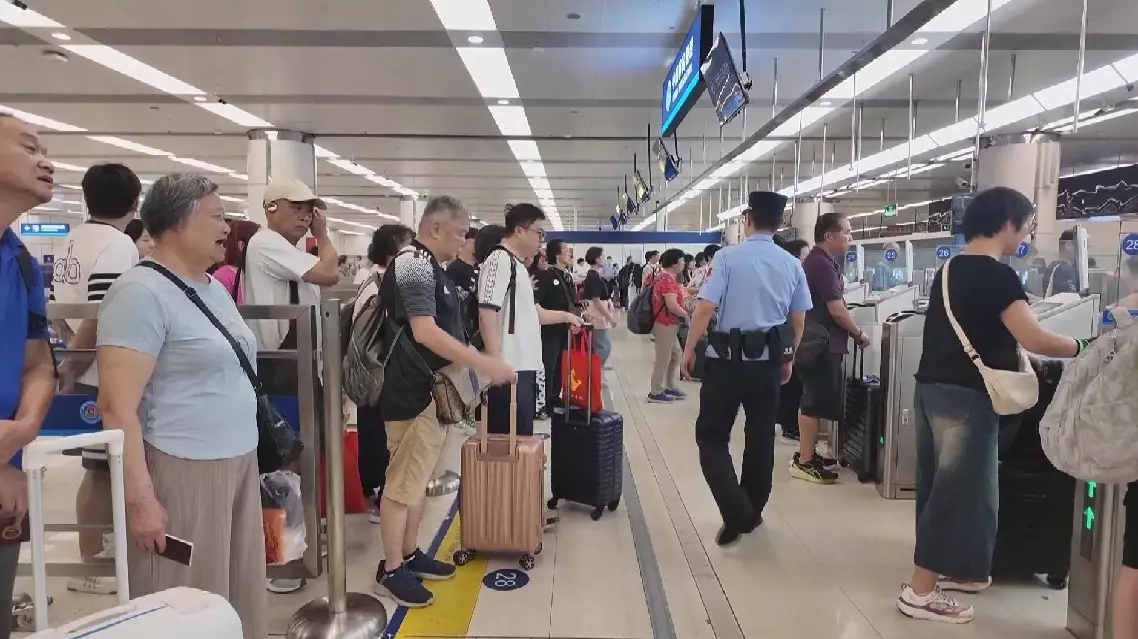
Shenzhen Bay Port logs record single-day passenger traffic amid summer cross-border travel boom
Xi Jinping, general secretary of the Communist Party of China (CPC) Central Committee and Chinese president, said on Monday that the relationship between China and the Democratic People's Republic of Korea (DPRK) stands at a new historical starting point.
Xi arrived in the DPRK capital of Pyongyang earlier on Monday to begin a two-day state visit at the invitation of Kim Jong Un, general secretary of the Workers' Party of Korea and president of the State Affairs of the DPRK, marking his first trip to the country in seven years.
Delivering a speech at a welcome banquet hosted by Kim, Xi pointed out that China and the DPRK, linked by mountains and rivers and sharing a common future, have seen their traditional friendship passed down across generations and grow ever stronger over time through the test of the evolving international landscape.
This year marks the 65th anniversary of the China-DPRK Treaty of Friendship, Cooperation and Mutual Assistance, and the China-DPRK relationship stands at a new historical starting point, Xi said, noting that he has reached important consensus with Kim during his visit.
From the strategic perspective of the future and destiny of socialism, both leaders have agreed to seize the general trend of the times, respond to the shared aspirations of the two peoples, strengthen high-level exchanges, deepen strategic communication, expand practical cooperation, enhance people-to-people bonds, promote the high-level development of China-DPRK relations, jointly open up brighter prospects for the socialist cause of both countries, and contribute to the continuous progress of human society, Xi said.
The successful convening of the Ninth Congress of the WPK this year has made strategic plans and major arrangements for the long-term development of the Party and the country's cause, ushering in a new period of comprehensive development of the DPRK's socialist cause, Xi said.
As good neighbors, good friends and good comrades, the Chinese side sincerely wishes that, under the strong leadership of the Central Committee of the WPK headed by General Secretary Kim, the DPRK people will successfully accomplish the goals and tasks set by the Ninth Congress of the WPK and make constant new achievements in the socialist cause of the DPRK, Xi said.
On behalf of the WPK, the government and the people of the DPRK, Kim extended the warmest welcome to Xi on his visit. Kim said that Pyongyang was filled with an atmosphere of friendship on this special day as the DPRK's Party, government and people warmly welcomed their most distinguished guest.
Noting that Xi's first overseas trip of the year had brought him to the DPRK, Kim said this fully demonstrated the great importance Xi attached to developing relations between the two parties and the two countries, and constituted the most valuable support for the DPRK's socialist cause.
Noting the meeting with Xi came nine months after their previous meeting, Kim said that during this meeting, they reached important consensus on further advancing DPRK-China relations with new contemporary connotations in light of new changing circumstances, and exchanged views on international and regional issues of mutual concern, which will surely accelerate the development of the DPRK-China friendship with profound historical traditions, and contribute to peace and stability in the region and the world.
The DPRK people take heartfelt joy in the remarkable achievements made by the brotherly Chinese people, Kim said, expressing belief that under the leadership of the CPC with Xi at its core, the great Chinese people will surely create greater achievements in building a great modern socialist country in all respects, realizing the Second Centenary Goal, and completing the new journey toward the great rejuvenation of the Chinese nation.
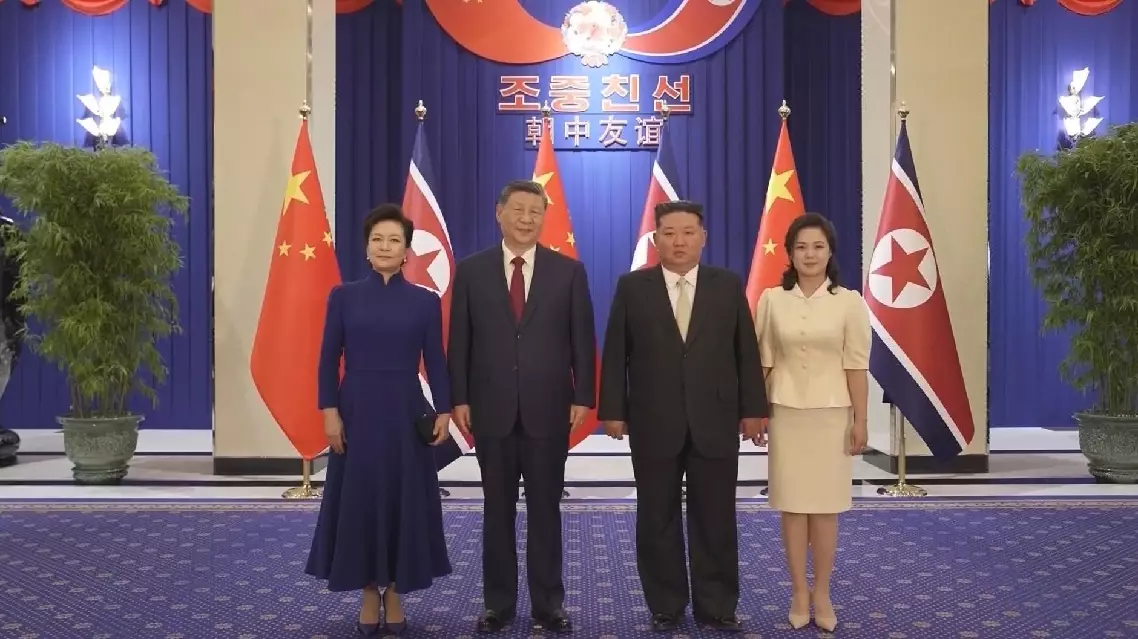
Xi says China-DPRK ties stand at new historical starting point