Skip to Content Facebook Feature Image

Students face new cellphone restrictions in 17 states as school year begins

News

Students face new cellphone restrictions in 17 states as school year begins
News

News

Students face new cellphone restrictions in 17 states as school year begins

2025-08-21 17:42 Last Updated At:17:50

Jamel Bishop is seeing a big change in his classrooms as he begins his senior year at Doss High School in Louisville, Kentucky, where cellphones are now banned during instructional time.

In previous years, students often weren’t paying attention and wasted class time by repeating questions, the teenager said. Now, teachers can provide “more one-on-one time for the students who actually need it.”

More Images
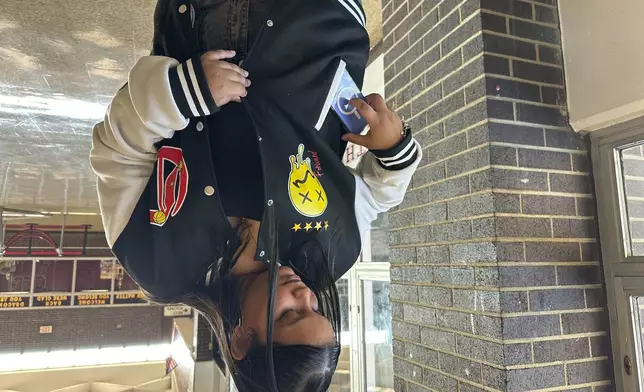
Doss High School student Mia Rivera demonstrates how she puts her phone away before the start of school on Friday, Aug. 15, 2025, in Louisville, Ky. (AP Photo/Dylan Lovan)
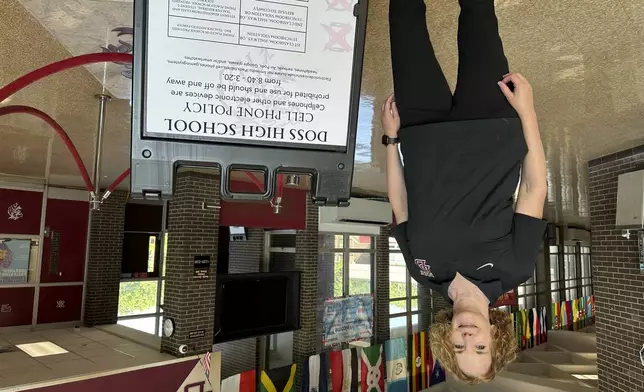
Doss High School student Mia Rivera demonstrates how she puts her phone away before the start of school on Friday, Aug. 15, 2025, in Louisville, Ky. (AP Photo/Dylan Lovan)

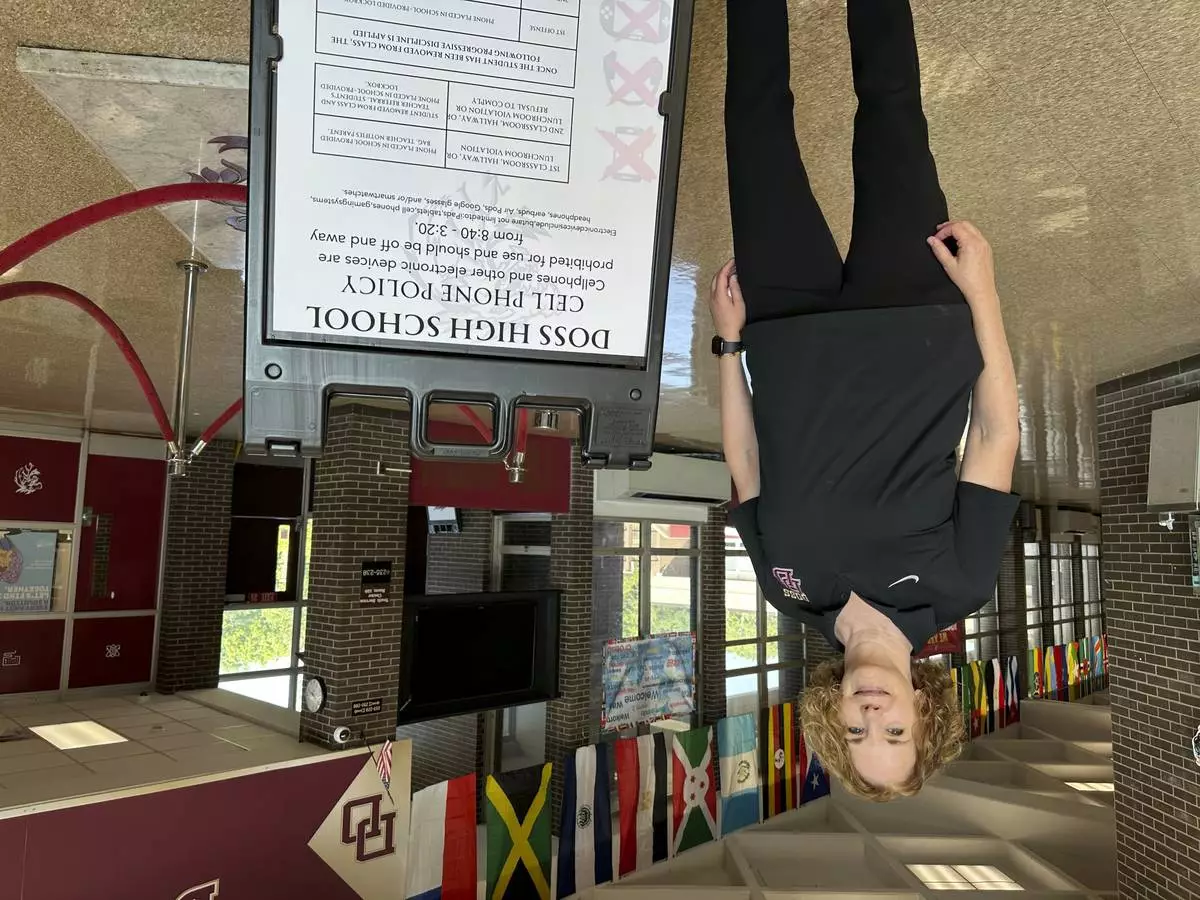
Doss High School Principal Julie Chancellor stands by a new cell phone policy sign at the entrance to the school on Friday, Aug. 15, 2025, in Louisville, Ky. (AP Photo/Dylan Lovan)
Doss High School Principal Julie Chancellor stands by a new cell phone policy sign at the entrance to the school on Friday, Aug. 15, 2025, in Louisville, Ky. (AP Photo/Dylan Lovan)

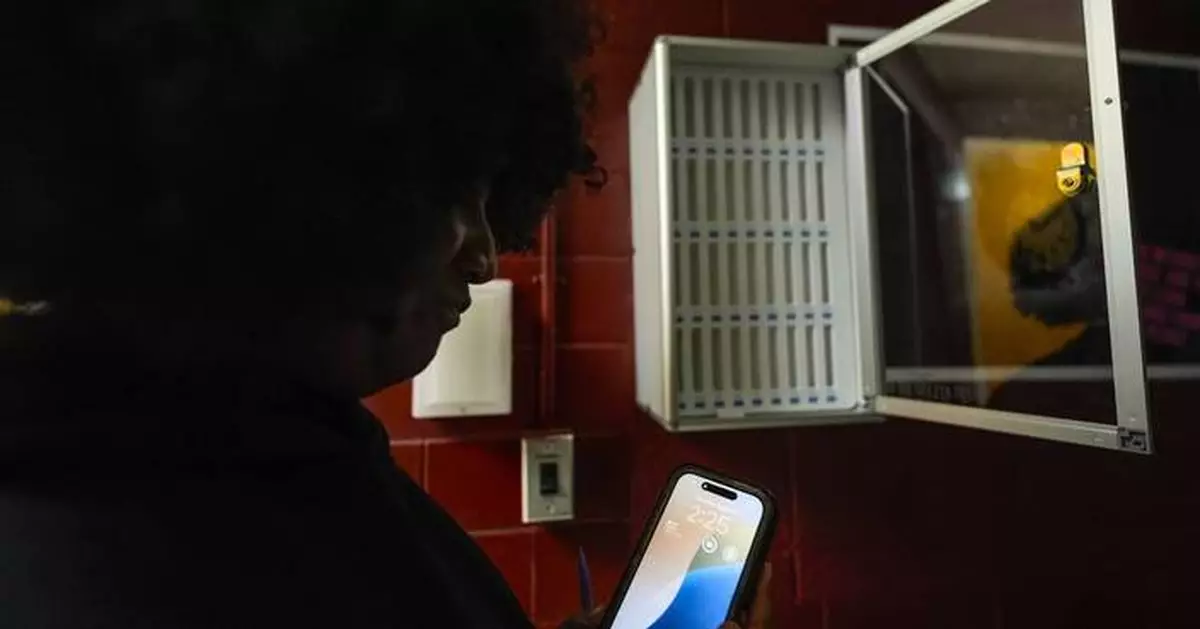
A cell phone locker is seen at Ronald McNair Sr. High School, Thursday, Aug. 7, 2025, in Atlanta. (AP Photo/Mike Stewart)
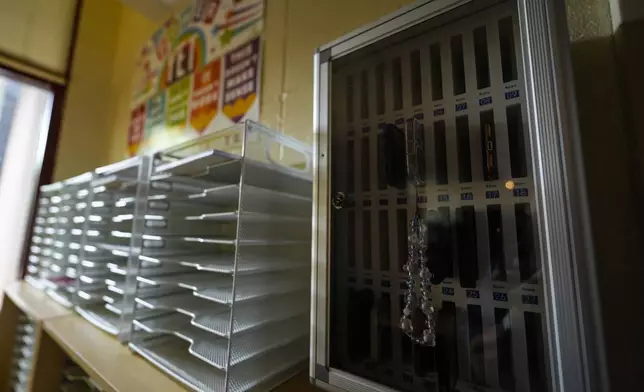
A cell phone locker is seen at Ronald McNair Sr. High School, Thursday, Aug. 7, 2025, in Atlanta. (AP Photo/Mike Stewart)

A cell phone locker is seen at Ronald McNair Sr. High School, Thursday, Aug. 7, 2025, in Atlanta. (AP Photo/Mike Stewart)

A cell phone locker is seen at Ronald McNair Sr. High School, Thursday, Aug. 7, 2025, in Atlanta. (AP Photo/Mike Stewart)

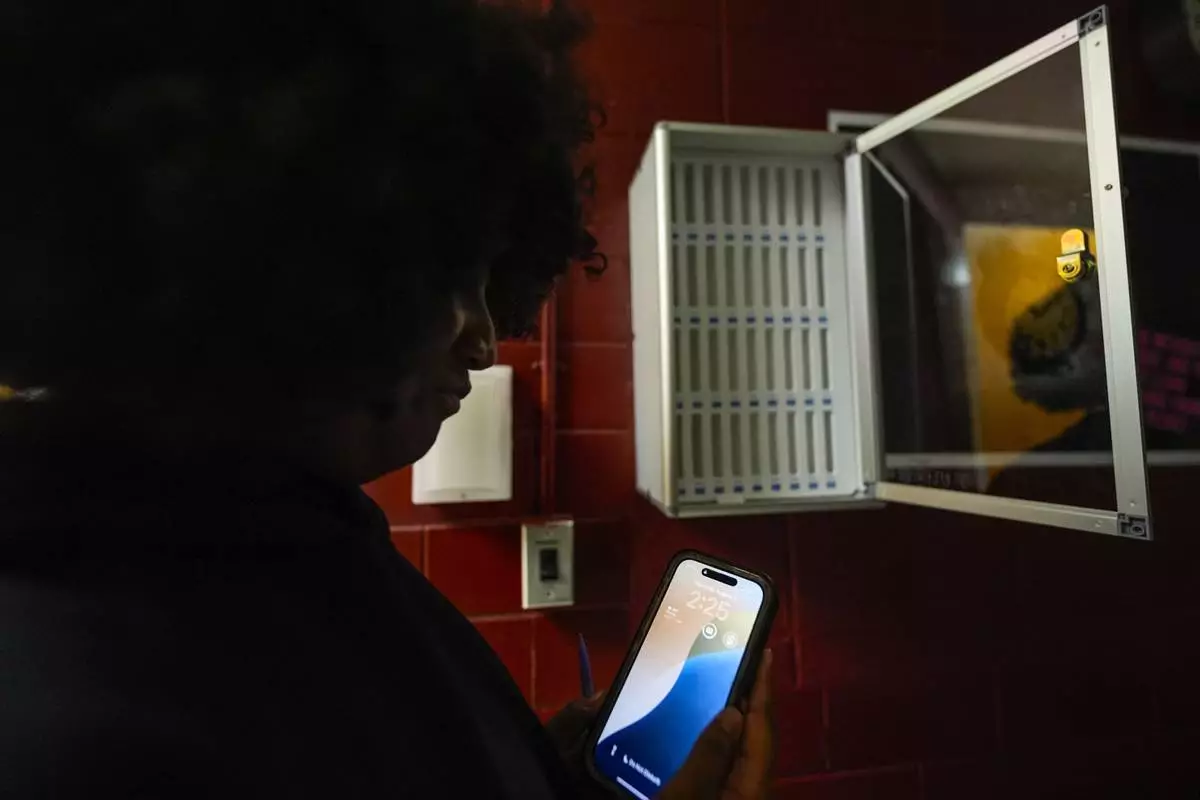
Student Audreanna Johnson views her cell phone near a cell phone locker at Ronald McNair Sr. High School, Thursday, Aug. 7, 2025, in Atlanta. (AP Photo/Mike Stewart)

Student Audreanna Johnson views her cell phone near a cell phone locker at Ronald McNair Sr. High School, Thursday, Aug. 7, 2025, in Atlanta. (AP Photo/Mike Stewart)

Kentucky is one of 17 states and the District of Columbia starting this school year with new restrictions, bringing the total to 35 states with laws or rules limiting phones and other electronic devices in school. This change has come remarkably quickly: Florida became the first state to pass such a law in 2023.

Both Democrats and Republicans have taken up the cause, reflecting a growing consensus that phones are bad for kids' mental health and take their focus away from learning, even as some researchers say the issue is less clear-cut.

“Anytime you have a bill that’s passed in California and Florida, you know you’re probably onto something that’s pretty popular," Georgia state Rep. Scott Hilton, a Republican, told a forum on cellphone use last week in Atlanta.

Phones are banned throughout the school day in 18 of the states and the District of Columbia, although Georgia and Florida impose such “bell-to-bell” bans only from kindergarten through eighth grade. Another seven states ban them during class time, but not between classes or during lunch. Still others, particularly those with traditions of local school control, mandate only a cellphone policy, believing districts will take the hint and sharply restrict phone access.

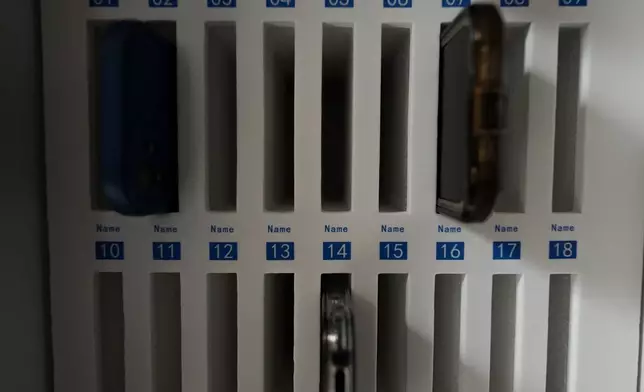
For students, the rules add new school-day rituals, like putting phones in magnetic pouches or special lockers.

Students have been locking up their phones during class at McNair High School in suburban Atlanta since last year. Audreanna Johnson, a junior, said “most of them did not want to turn in their phones” at first, because students would use them to gossip, texting “their other friends in other classes to see what’s the tea and what’s going on around the building.”

That resentment is “starting to ease down” now, she said. "More students are willing to give up their phones and not get distracted.”

But there are drawbacks — like not being able to listen to music when working independently in class. “I’m kind of 50-50 on the situation because me, I use headphones to do my schoolwork. I listen to music to help focus,” she said.

In a survey of 125 Georgia school districts by Emory University researchers, parental resistance was cited as the top obstacle to regulating student use of social and digital media.

Johnson’s mother, Audrena Johnson, said she worries most about knowing her children are safe from violence at school. School messages about threats can be delayed and incomplete, she said, like when someone who wasn’t a McNair student got into a fight on school property, which she learned about when her daughter texted her during the school day.

“My child having her phone is very important to me, because if something were to happen, I know instantly,” Johnson said.

Many parents echo this — generally supporting restrictions but wanting a say in the policymaking and better communication, particularly about safety — and they have a real need to coordinate schedules with their children and to know about any problems their children may encounter, said Jason Allen, the national director of partnerships for the National Parents Union.

“We just changed the cellphone policy, but aren’t meeting the parents' needs in regards to safety and really training teachers to work with students on social emotional development,” Allen said.

Some researchers say it's not yet clear what types of social media may cause harm, and whether restrictions have benefits, but teachers “love the policy,” according to Julie Gazmararian, a professor of public health at Emory University who does surveys and focus groups to research the effects of a phone ban in middle school grades in the Marietta school district near Atlanta.

“They could focus more on teaching,” Gazmararian said. “There were just not the disruptions.”

Another benefit: More positive interactions among students. “They were saying that kids are talking to each other in the hallways and in the cafeteria,” she said. “And in the classroom, there is a noticeably lower amount of discipline referrals.”

Gazmararian is still compiling numbers on grades and discipline, and cautioned that her work may not be able to answer whether bullying has been reduced or mental health improved.

Social media use clearly correlates with poor mental health, but research can’t yet prove it causes it, according to Munmun De Choudhury, a Georgia Tech professor who studies this issue.

“We need to be able to quantify what types of social media use are causing harm, what types of social media use can be beneficial,” De Choudhury said.

Some state legislatures are bucking the momentum.

Wyoming's Senate in January rejected requiring districts to create some kind of a cellphone policy after opponents argued that teachers and parents need to be responsible.

And in the Michigan House in July, a Republican-sponsored bill directing schools to ban phones bell-to-bell in grades K-8 and during high school instruction time was defeated in July after Democrats insisted on upholding local control. Democratic Gov. Gretchen Whitmer, among multiple governors who made restricting phones in schools a priority this year, is still calling for a bill to come to her desk.

Associated Press writers Isabella Volmert in Lansing, Michigan, and Dylan Lovan in Louisville, Kentucky, contributed.
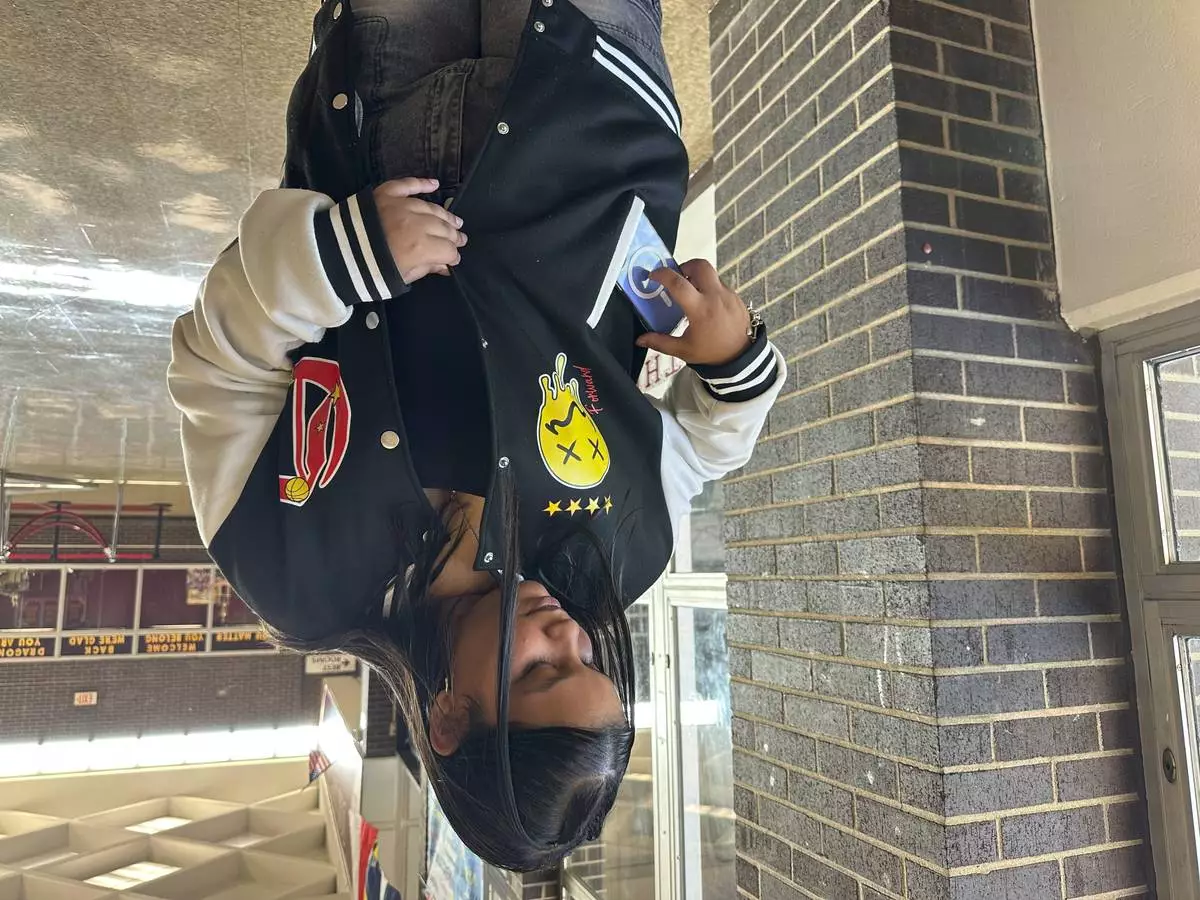
Doss High School student Mia Rivera demonstrates how she puts her phone away before the start of school on Friday, Aug. 15, 2025, in Louisville, Ky. (AP Photo/Dylan Lovan)
Doss High School student Mia Rivera demonstrates how she puts her phone away before the start of school on Friday, Aug. 15, 2025, in Louisville, Ky. (AP Photo/Dylan Lovan)

Doss High School Principal Julie Chancellor stands by a new cell phone policy sign at the entrance to the school on Friday, Aug. 15, 2025, in Louisville, Ky. (AP Photo/Dylan Lovan)

Doss High School Principal Julie Chancellor stands by a new cell phone policy sign at the entrance to the school on Friday, Aug. 15, 2025, in Louisville, Ky. (AP Photo/Dylan Lovan)

A cell phone locker is seen at Ronald McNair Sr. High School, Thursday, Aug. 7, 2025, in Atlanta. (AP Photo/Mike Stewart)
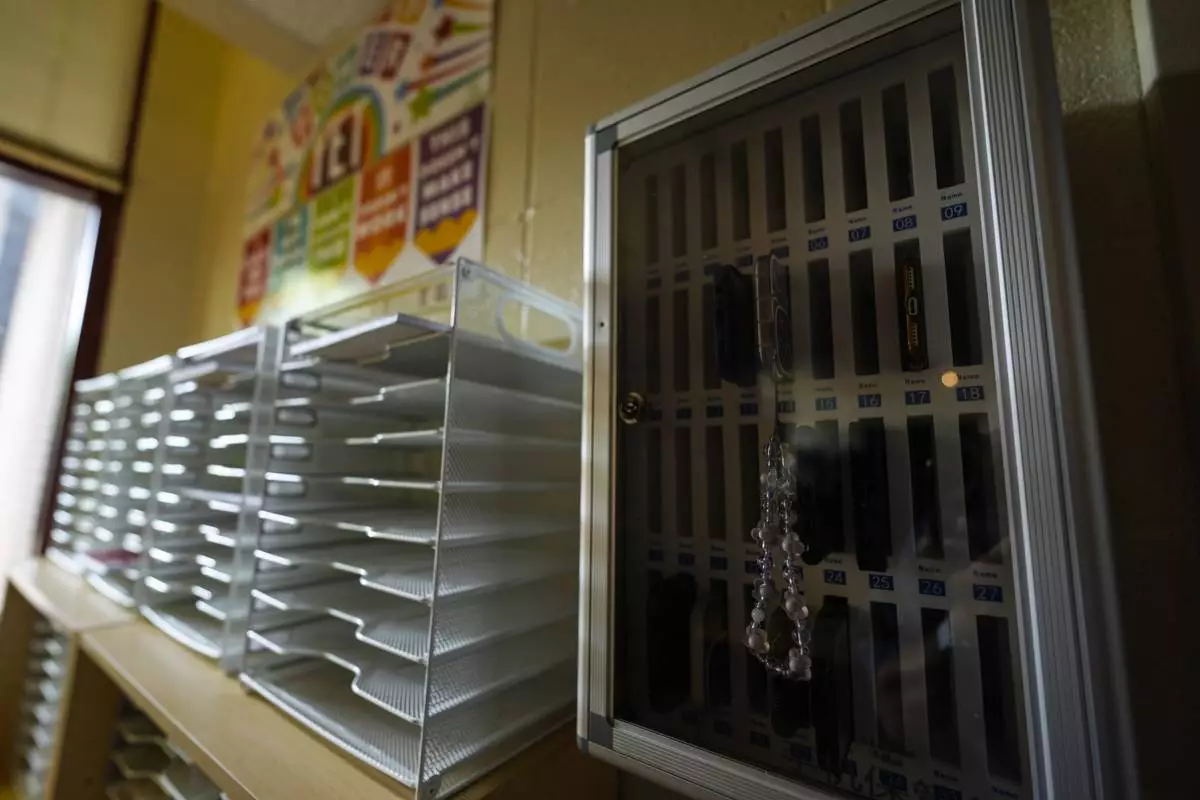
A cell phone locker is seen at Ronald McNair Sr. High School, Thursday, Aug. 7, 2025, in Atlanta. (AP Photo/Mike Stewart)
A cell phone locker is seen at Ronald McNair Sr. High School, Thursday, Aug. 7, 2025, in Atlanta. (AP Photo/Mike Stewart)

A cell phone locker is seen at Ronald McNair Sr. High School, Thursday, Aug. 7, 2025, in Atlanta. (AP Photo/Mike Stewart)

Student Audreanna Johnson views her cell phone near a cell phone locker at Ronald McNair Sr. High School, Thursday, Aug. 7, 2025, in Atlanta. (AP Photo/Mike Stewart)
Student Audreanna Johnson views her cell phone near a cell phone locker at Ronald McNair Sr. High School, Thursday, Aug. 7, 2025, in Atlanta. (AP Photo/Mike Stewart)
A federal appeals panel on Thursday reversed a lower court decision that released former Columbia University graduate student Mahmoud Khalil from an immigration jail, bringing the government one step closer to detaining and ultimately deporting the Palestinian activist.

The three-judge panel of the 3rd U.S. Circuit Court of Appeals didn’t decide the key issue in Khalil’s case: whether the Trump administration’s effort to throw Khalil out of the U.S. over his campus activism and criticism of Israel is unconstitutional.

But in its 2-1 decision, the panel ruled a federal judge in New Jersey didn’t have jurisdiction to decide the matter at this time. Federal law requires the case to fully move through the immigration courts first, before Khalil can challenge the decision, they wrote.

“That scheme ensures that petitioners get just one bite at the apple — not zero or two,” the panel wrote. “But it also means that some petitioners, like Khalil, will have to wait to seek relief for allegedly unlawful government conduct.”

Thursday’s decision marked a major win for the Trump administration’s sweeping campaign to detain and deport noncitizens who joined protests against Israel.

Tricia McLaughlin, a Homeland Security Department spokesperson, called the ruling “a vindication of the rule of law.”

In a statement, she said the department will “work to enforce his lawful removal order” and encouraged Khalil to “self-deport now before he is arrested, deported, and never given a chance to return.”

It was not clear whether the government would seek to detain Khalil, a legal permanent resident, again while his legal challenges continue.

In a statement distributed by the American Civil Liberties Union, Khalil called the appeals ruling “deeply disappointing."

“The door may have been opened for potential re-detainment down the line, but it has not closed our commitment to Palestine and to justice and accountability," he said. "I will continue to fight, through every legal avenue and with every ounce of determination, until my rights, and the rights of others like me, are fully protected.”

Baher Azmy, one of Khalil's lawyers, said the ruling was “contrary to rulings of other federal courts."

“Our legal options are by no means concluded, and we will fight with every available avenue,” he said.

The ACLU said the Trump administration cannot lawfully re-detain Khalil until the order takes formal effect, which won't happen while he can still immediately appeal.

Khalil’s lawyers can request that the panel's decision be set aside and the matter reconsidered by a larger group of judges on the 3rd Circuit Court of Appeals, or they can go to the U.S. Supreme Court.

An outspoken leader of the pro-Palestinian movement at Columbia, Khalil was arrested last March. He then spent three months detained in a Louisiana immigration jail, missing the birth of his first child.

Federal officials have accused Khalil of leading activities “aligned to Hamas,” though they have not presented evidence to support the claim and have not accused him of criminal conduct. They also accused Khalil, 31, of failing to disclose information on his green card application.

The government justified the arrest under a seldom-used statute that allows for the expulsion of noncitizens whose beliefs are deemed to pose a threat to U.S. foreign policy interests.

In June, a federal judge in New Jersey ruled that justification would likely be declared unconstitutional and ordered Khalil released.

President Donald Trump's administration appealed that ruling, arguing the deportation decision should fall to an immigration judge, rather than a federal court.

Khalil has dismissed the allegations as “baseless and ridiculous,” framing his arrest and detention as a “direct consequence of exercising my right to free speech as I advocated for a free Palestine and an end to the genocide in Gaza.”

New York City’s new mayor, Zohran Mamdani, said on social media Thursday that Khalil should remain free.

“Last year’s arrest of Mahmoud Khalil was more than just a chilling act of political repression, it was an attack on all of our constitutional rights,” Mamdani wrote on X. “Now, as the crackdown on pro-Palestinian free speech continues, Mahmoud is being threatened with rearrest. Mahmoud is free — and must remain free.”

Judge Arianna Freeman dissented Thursday, writing that her colleagues were holding Khalil to the wrong legal standard. Khalil, she wrote, is raising “now-or-never claims” that can be handled at the district court level, even though his immigration case isn't complete.

Both judges who ruled against Khalil, Thomas Hardiman and Stephanos Bibas, were Republican appointees. President George W. Bush appointed Hardiman to the 3rd Circuit, while Trump appointed Bibas. President Joe Biden, a Democrat, appointed Freeman.

The two-judge majority rejected Freeman's worry that their decision would leave Khalil with no remedy for unconstitutional immigration detention, even if he later can appeal.

“But our legal system routinely forces petitioners — even those with meritorious claims — to wait to raise their arguments," the judges wrote.

The decision comes as an appeals board in the immigration court system weighs a previous order that found Khalil could be deported to Algeria, where he maintains citizenship through a distant relative, or Syria, where he was born in a refugee camp to a Palestinian family.

His attorneys have said he faces mortal danger if forced to return to either country.

Associated Press writers Larry Neumeister and Anthony Izaguirre contributed to this story.

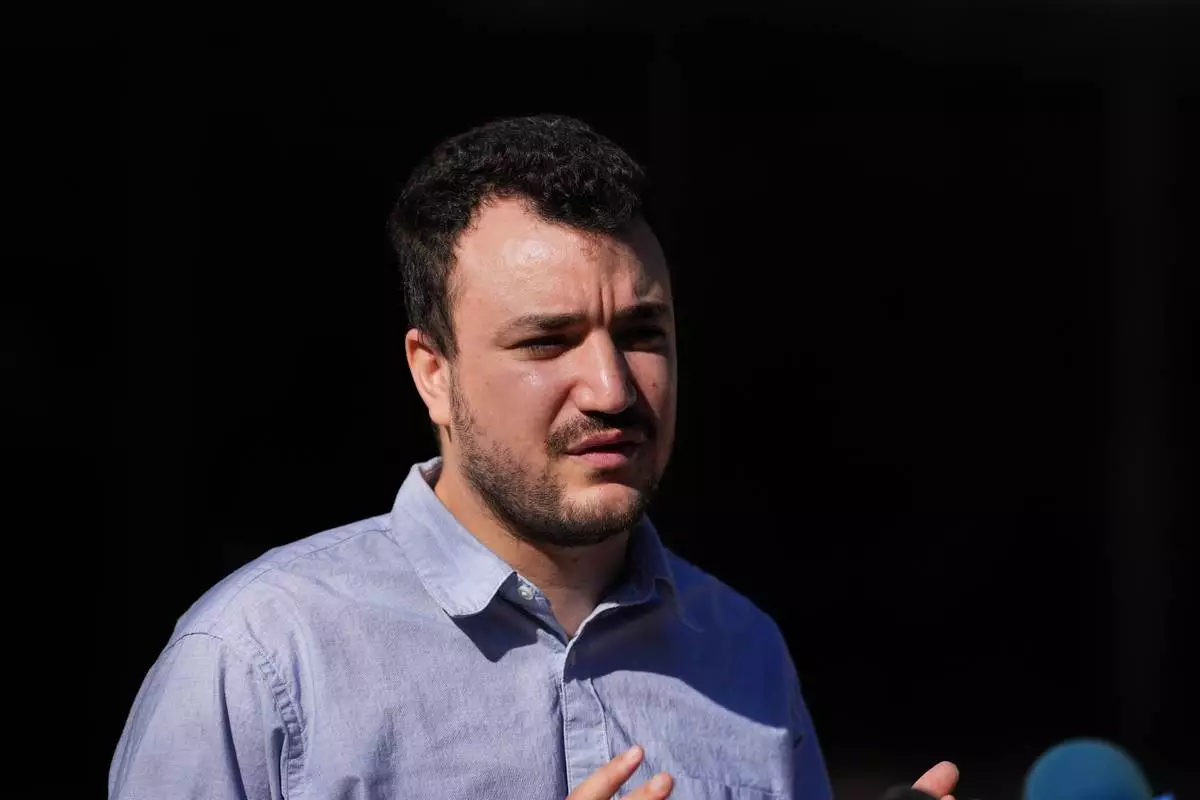
FILE - Palestinian activist Mahmoud Khalil holds a news conference outside Federal Court on Tuesday, Oct. 21, 2025 in Philadelphia (AP Photo/Matt Rourke, File)

FILE - Palestinian activist Mahmoud Khalil holds a news conference outside Federal Court on Tuesday, Oct. 21, 2025 in Philadelphia (AP Photo/Matt Rourke, File)

Recommended Articles