The Federal Security Service of the Russian Federation (FSB) on Tuesday released three declassified documents, showing that the Japanese Imperial Army's Unit 731, a notorious Japanese germ-warfare unit during World War II (WWII), repeatedly conducted human experiments to carry out germ warfare in China during the war, and attacked hundreds of Chinese civilians with germ-filled artillery shells to calculate infection rates and determine the "potency" of the pathogens.
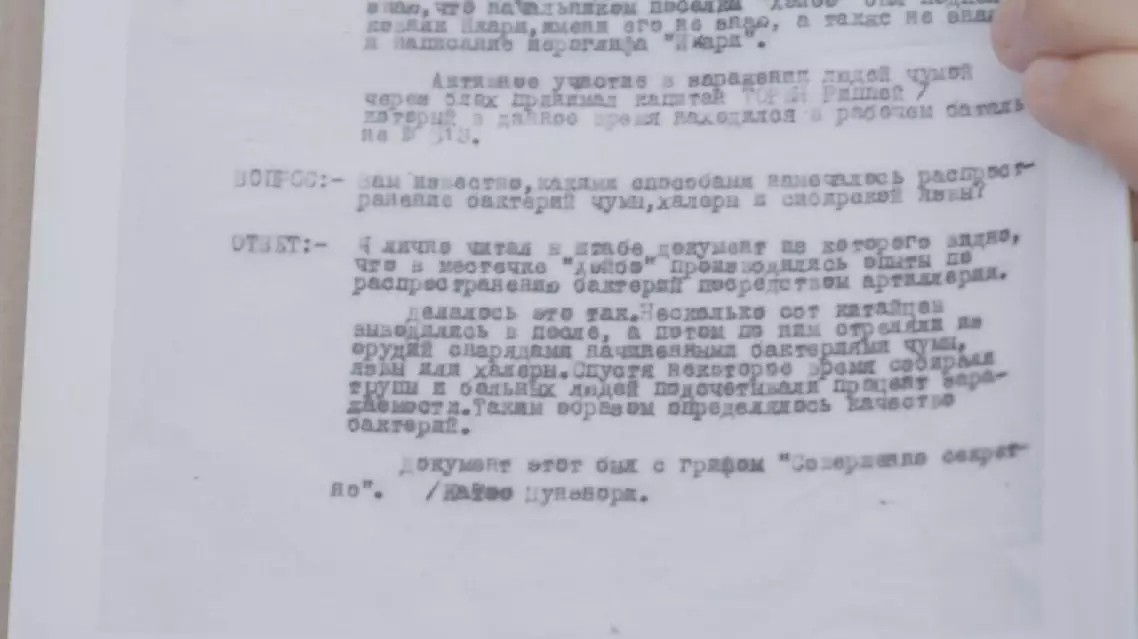
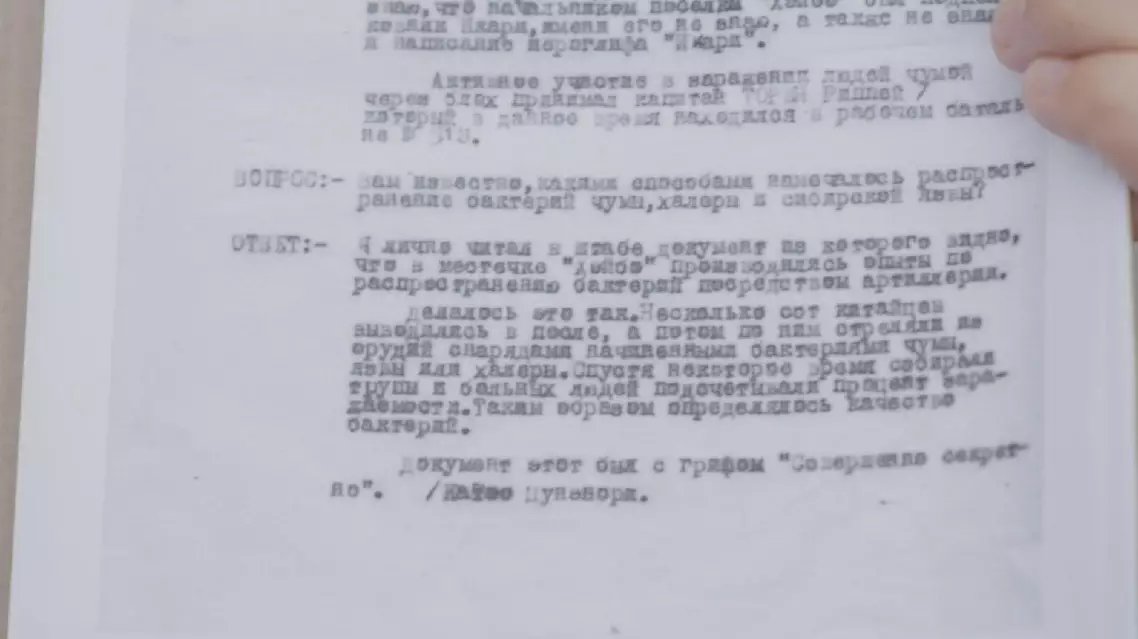
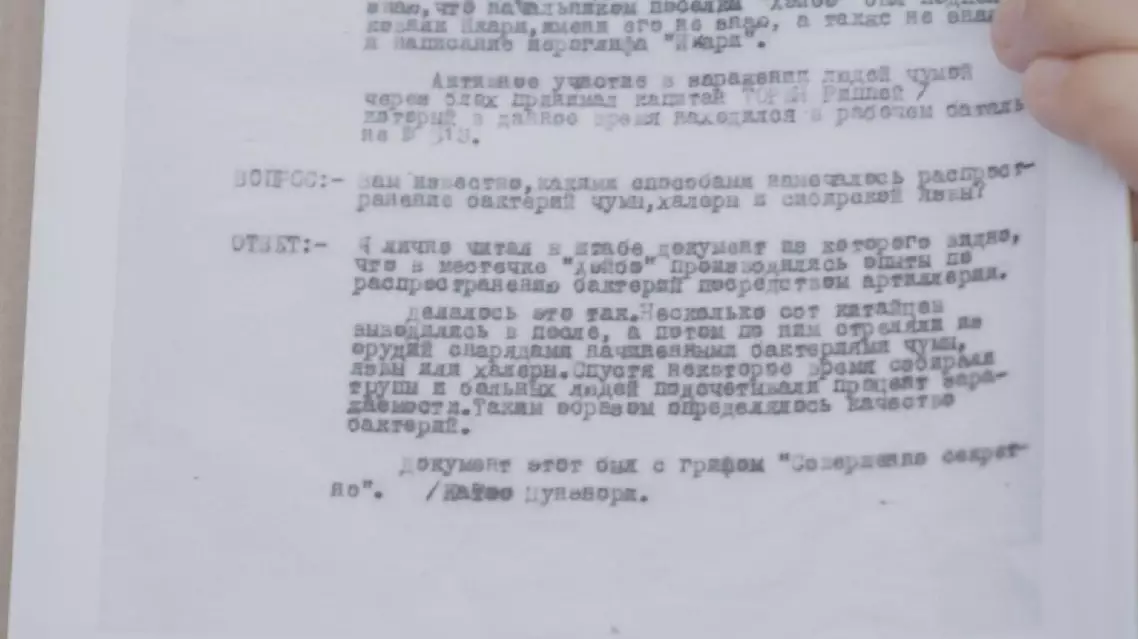
The three documents, totaling 24 pages, contain the interrogation record and handwritten confession of former Unit 731 bacteriologist Kato Tsunenori, as well as a special report titled "Japan's preparation for bacteriological warfare against the Soviet Union."
"Hundreds of Chinese were driven into the wild and shelled with bombs filled with plague, anthrax, or cholera bacteria," Kato said in the interrogation record.
During his interrogation on Feb 10, 1948, Kato confessed that he had learned of these facts while reviewing documents at Unit 731's headquarters in Harbin, northeast China's Heilongjiang Province. According to Kato, after the attacks and following a certain amount of time, experimenters would collect the bodies and count the number of infected individuals to calculate the infection rate, thereby assessing the effectiveness of the bacteria.
"Ceramic bombs filled with lump-shaped materials were dropped into densely populated areas in China, targeting not the military units but civilians," said Anatoly Koshkin, professor at the Moscow-based Institute of Oriental Studies.
The declassified documents also suggest more than 600,000 Japanese soldiers surrendered during the battle between the Soviet Red Army and the Japanese Kwantung Army in Northeast China.
From 1945 to 1948, the Soviet state security agencies investigated the captured and detained Japanese military and civilian personnel who had been involved in the research and development of biological weapons.
Interrogations of captured Japanese biological experts confirmed that the Japanese invaders in China had conspired to launch an attack on the Soviet Union from Northeast China. The Japanese military was preparing to use biological warfare capable of causing mass casualties and had set up the Unit 731 in Harbin.
The investigation also showed the Japanese invaders had established Unit 731 in Harbin. The unit conducted research and experiments on various types of plague, anthrax, gas gangrene, glanders, typhoid, dysentery, cholera, and viral hemorrhagic fevers, aiming to identify the most effective pathogens for large-scale human infection and their methods of deployment.
In order to test the effects and modes of infection of these pathogens, Unit 731 continuously carried out human experiments, detaining Chinese and Russian civilians as well as Japanese death-row prisoners for these purposes, the documents show.
"The prisoners, including women, the elderly, and children, were euphemistically referred to 'logs'. They were viewed as an inferior race ranking lower than livestock. The total number of these prisoners might reach 40,000 or even more," said Mikhail Myagkov, science director of the Russian Military Historical Society.
The declassified documents also showed that between 1935 and 1936, the Japanese army established Unit 731 and its affiliated institutions for launching the germ warfare. From 1940 to 1942, their operations were mainly targeted at China. Between 1941 and 1945, they frequently conducted human experiments. In the final years of WWII, they focused on carrying out sabotage activities.
Russia releases declassified documents revealing Japanese unit 731's atrocities of human experiments in China
Russia releases declassified documents revealing Japanese unit 731's atrocities of human experiments in China
Russia releases declassified documents revealing Japanese unit 731's atrocities of human experiments in China