China has ramped up its efforts to preserve and revitalize traditional villages in contiguous clusters, leveraging their rich cultural and natural resources to forge unique, sustainable development paths.
From January to June, these historic villages welcomed over 293 million tourists, generating about 34.21 billion yuan (about 4.78 billion U.S. dollars) in tourism-related consumption.
Also known as ancient villages, many of these settlements boast centuries of history and are home to well-preserved architecture, intangible cultural heritages, and scenic landscapes.
By hosting intangible cultural heritage exhibitions, folk art performances, and traditional sports competitions, these villages have boosted rural tourism, creative industries, and local economies.
One standout example is Longtan Village in Pingnan County of east China's Fujian Province, a nationally recognized traditional village that has seen a surge in the number of visitors this summer.
"A lot of original, natural elements of the village have been well preserved, and this helps us understand the local folk culture," said a tourist from east China's Zhejiang Province.
Longtan has joined forces with three neighboring traditional villages to form the Longtan Cultural and Creative Industry Zone.
Through the restoration of historic homes, preservation of cultural heritage, revival of folk activities, and diversification of tourism offerings, the cluster welcomed around 290,000 tourists during this summer holiday.
This model is being replicated nationwide. In Zhejiang, Shandong, Hunan, and other provincial regions, authorities are advancing integrated protection and development strategies, encouraging villages to pool resources, co-create cultural brands, and achieve both individual uniqueness and collective impact.
The goal is to establish a sustainable "culture-driven, industry-supported" development model, ensuring traditional villages remain vibrant and economically viable.
"Look at these vast tea plantations, they're now being cultivated by young people who've returned to their hometown. With increased income, who would still want to leave home and work elsewhere?" said Gao Ping, a resident in Huaqiu Village of Qionglai City in southwest China's Sichuan Province.
Data from the Ministry of Housing and Urban-Rural Development shows that China currently has inscribed a total of 8,155 traditional villages to its state protection list, with more than 5,000 additional villages included in provincial-level protection programs.
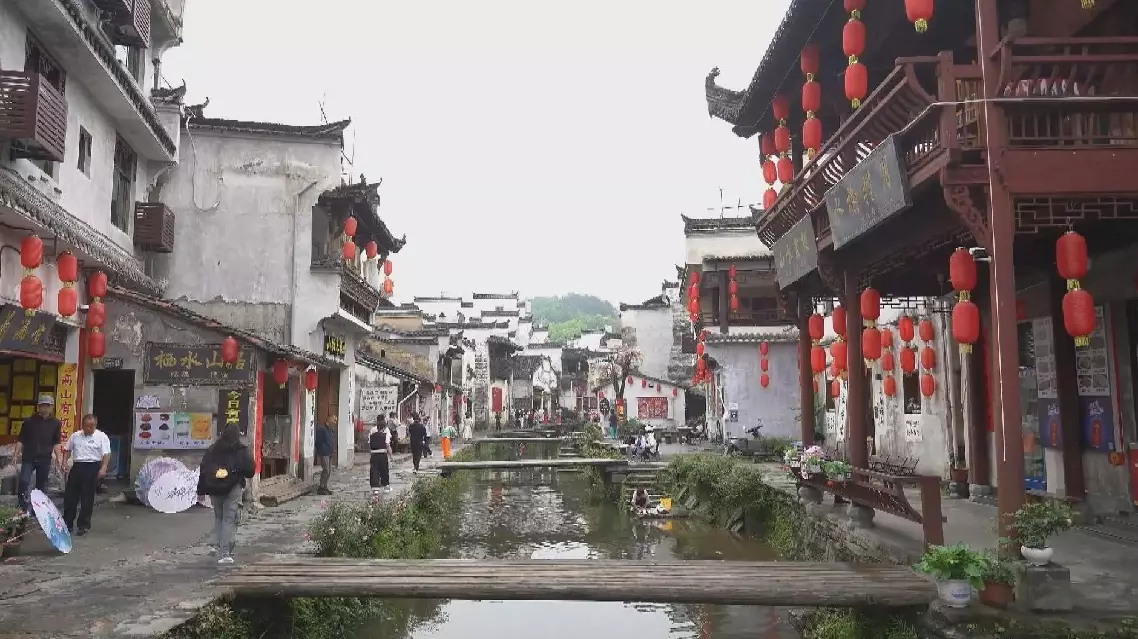
Well-preserved traditional villages attract tourists in China