Skip to Content Facebook Feature Image

What to know about Charles Kushner, the US diplomat summoned to Paris over Macron letter

News

What to know about Charles Kushner, the US diplomat summoned to Paris over Macron letter
News

News

What to know about Charles Kushner, the US diplomat summoned to Paris over Macron letter

2025-08-26 04:28 Last Updated At:04:30

Paris' summoning of U.S. Ambassador to France Charles Kushner, following his allegations that the country had not done enough to combat antisemitism, indicates its formal displeasure with the diplomat.

But Kushner — the father of Jared Kushner, son-in-law to President Donald Trump — did not respond to a summons Monday and sent his No. 2 instead, according to a French diplomatic official.

Charles Kushner was summoned after writing a letter to French President Emmanuel Macron alleging the country did not do enough to combat antisemitism. The foreign ministry called his allegations "unacceptable."

French-U.S. relations have faced tensions this year amid Trump’s trade war and a split over the future of U.N. peacekeepers in Lebanon. France and the U.S. also have been divided on support for Ukraine in its war with Russia, but the split has eased with Trump expressing support for security guarantees and a warm meeting with Macron and other European leaders at the White House last week.

Here's what to know about Charles Kushner and his summons:

In the letter released late Sunday, Kushner wrote that “public statements haranguing Israel and gestures toward recognition of a Palestinian state embolden extremists, fuel violence and endanger Jewish life in France."

He urged Macron “to act decisively: enforce hate-crime laws without exception, ensure the safety of Jewish schools, synagogues and businesses ... and abandon steps that give legitimacy to Hamas and its allies.”

In response, the French ministry said Kushner’s allegations violate international law and the obligation not to interfere with the internal affairs of another country.

The diplomatic dustup follows Macron’s rejection this past week of accusations from Israeli Prime Minister Benjamin Netanyahu that France’s intention to recognize a Palestinian state is fueling antisemitism.

France is home to the largest Jewish population in Europe; its estimated 500,000 Jews is the third-largest Jewish population in the world after Israel and the U.S., as well as approximately 1% of the national population.

The French official, who spoke on condition of anonymity in line with foreign ministry policy, said the U.S. chargé d’affaires who appeared in Kushner's place Monday was told that the letter “was unacceptable," constituted interference in France’s internal affairs and ignored the government’s efforts on combating antisemitism.

The White House referred comment to the State Department, whose deputy spokesperson, Tommy Pigott, said Sunday that it stood by Kushner’s comments.

When he announced his intention to nominate Kushner in November, Trump called him “a tremendous business leader, philanthropist, & dealmaker.”

In May, the Senate confirmed Kushner's appointment 51-45. During hearings, he told senators that he is a child of Holocaust survivors who came to the United States after World War II, and his grandmothers and other members of his family were executed by Nazis.

As Trump has rattled traditionally solid relationships with European allies, Kushner said he appreciates the history between the two countries and is “dedicated to building an even stronger relationship.”

As he prepared to leave office following his first term in December 2020, Trump pardoned Kushner, following a years-earlier guilty plea to charges of tax evasion and witness tampering.

Prosecutors alleged that Kushner had hatched a scheme for revenge and intimidation after discovering his brother-in-law was cooperating with federal authorities in an investigation, hiring a prostitute and arranging to have the encounter recorded with a hidden camera and sent to his own sister, the man’s wife.

After pleading guilty to 18 counts, Kushner was sentenced in 2005 to two years in prison. It was the highest sentence he could receive under a plea deal, but less than that sought by Chris Christie, the U.S. attorney for New Jersey at the time and later governor and Republican presidential candidate.

Christie, who called it “one of the most loathsome, disgusting crimes” he ever prosecuted as U.S. attorney, has blamed Jared Kushner for his firing from Trump’s 2016 transition team. In 2018, Charles Kushner told The New York Times that he wasn’t interested in clemency, saying he “would prefer not to have a pardon” because it would garner publicity.

Kushner founded Kushner Companies, a real estate firm. Married to Trump's eldest daughter, Ivanka, Jared Kushner was a senior adviser in Trump's first White House, working on a wide range of issues and policies, including Middle East peace efforts.

Inspired by his father’s time in prison, Jared Kushner pushed Trump to back criminal justice reform legislation and was an integral part of the first Trump administration’s clemency efforts.

In his early 20s and a law and business school student in the mid-2000s when his father was sentenced, Jared Kushner suddenly found himself having to run the family’s businesses while shuttling back and forth on weekends to see his father in Alabama.

“When you’re on the other side of the system, you feel so helpless,” Jared Kushner said in 2018. “I felt like, I was on this side of the system, so how can I try to do whatever I can do to try to be helpful to the people who are going through it” and deserve a second chance.

Trump and the elder Kushner knew each other from real estate circles, and their children were married in 2009.

Associated Press writer Sylvie Corbet in Paris contributed to this report.

Kinnard can be reached at http://x.com/MegKinnardAP
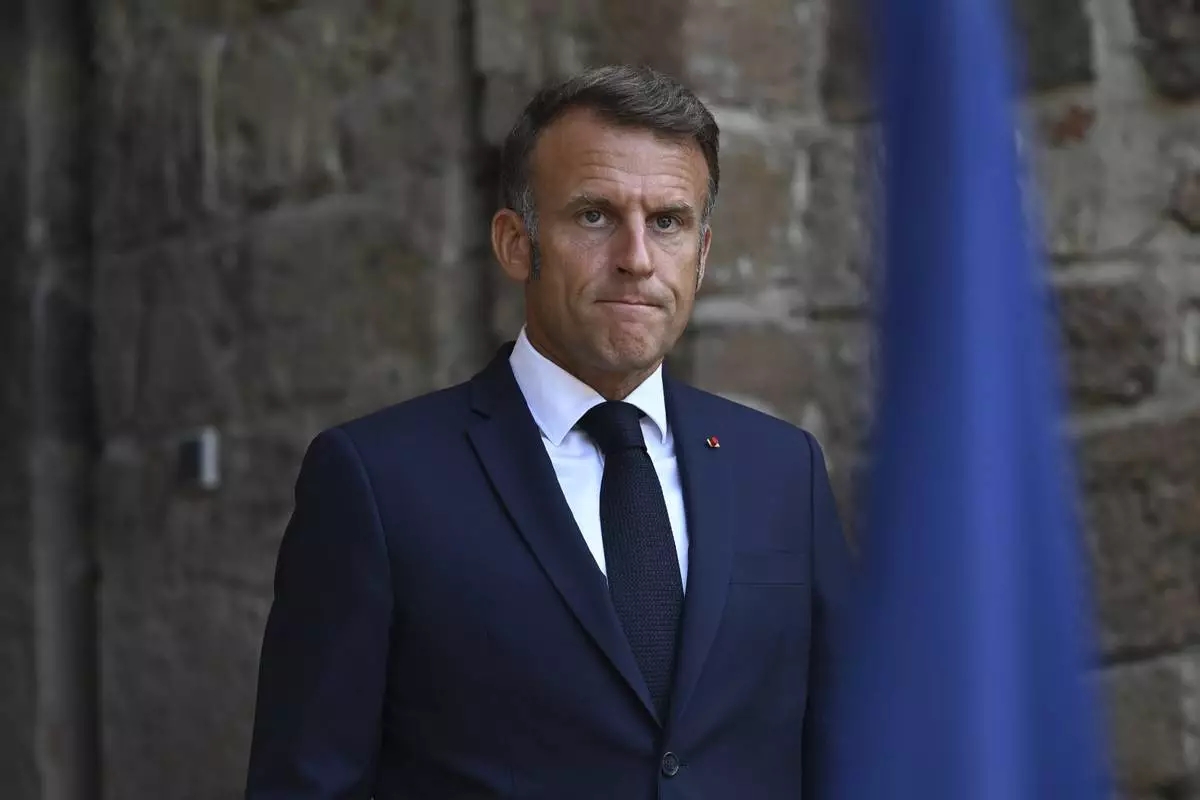
French President Emmanuel Macron arrives to speak after attending a video conference with members of the so-called "coalition of the willing", Sunday, Aug. 17, 2025 at the Fort de Bregancon in Bormes-les-Mimosas, southern France. (AP Photo/Philippe Magoni, Pool)
French President Emmanuel Macron arrives to speak after attending a video conference with members of the so-called "coalition of the willing", Sunday, Aug. 17, 2025 at the Fort de Bregancon in Bormes-les-Mimosas, southern France. (AP Photo/Philippe Magoni, Pool)

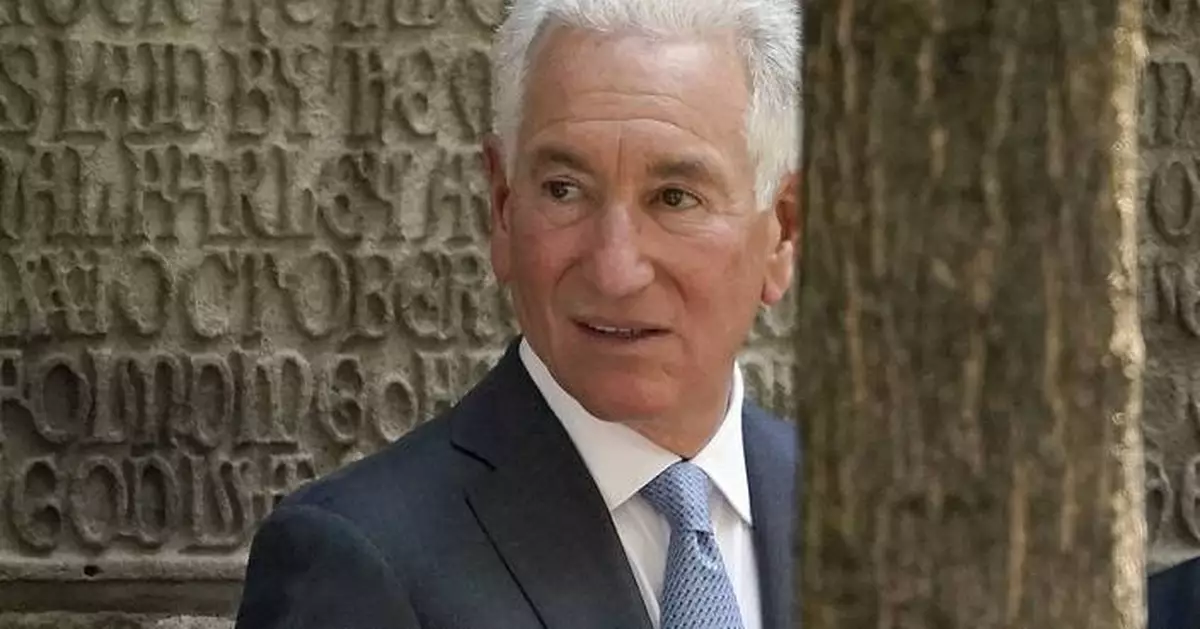
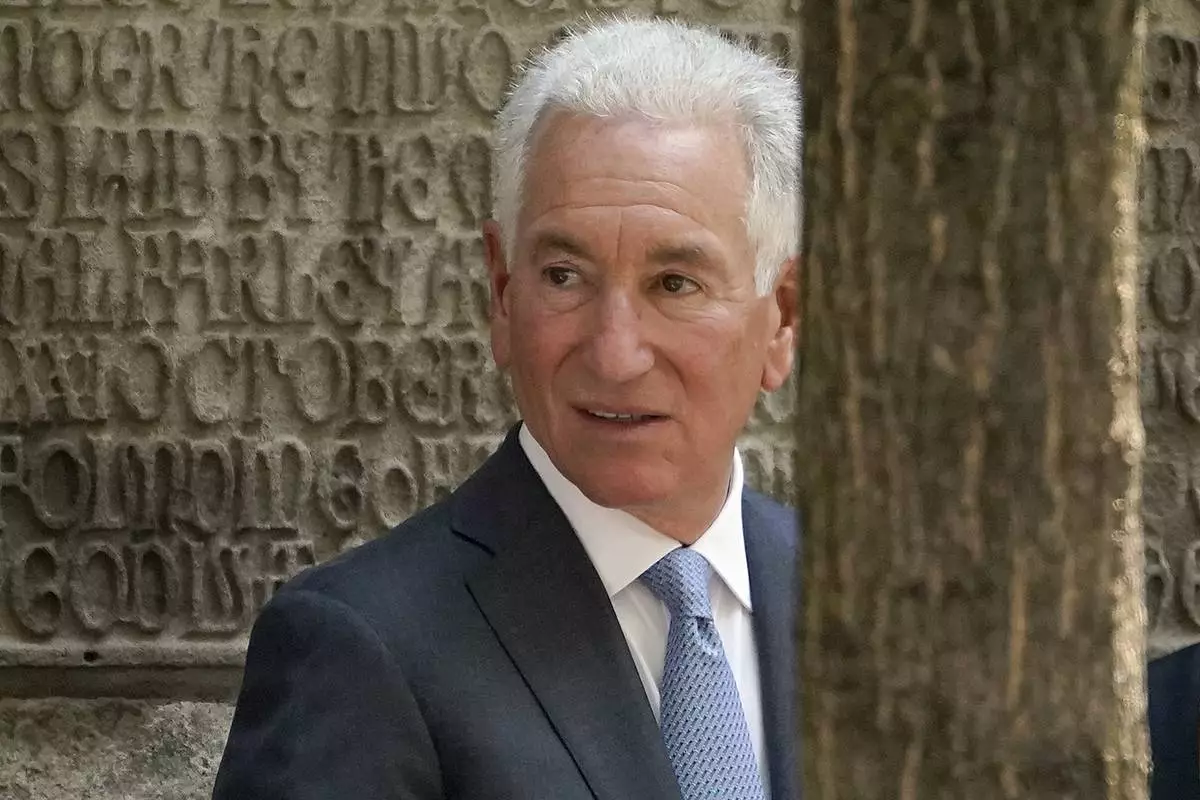
FILE - Charles Kushner arrives for the funeral of Ivana Trump, July 20, 2022, in New York. (AP Photo/John Minchillo, File)


FILE - Charles Kushner arrives for the funeral of Ivana Trump, July 20, 2022, in New York. (AP Photo/John Minchillo, File)

A federal appeals panel on Thursday reversed a lower court decision that released former Columbia University graduate student Mahmoud Khalil from an immigration jail, bringing the government one step closer to detaining and ultimately deporting the Palestinian activist.

The three-judge panel of the 3rd U.S. Circuit Court of Appeals didn’t decide the key issue in Khalil’s case: whether the Trump administration’s effort to throw Khalil out of the U.S. over his campus activism and criticism of Israel is unconstitutional.

But in its 2-1 decision, the panel ruled a federal judge in New Jersey didn’t have jurisdiction to decide the matter at this time. Federal law requires the case to fully move through the immigration courts first, before Khalil can challenge the decision, they wrote.

“That scheme ensures that petitioners get just one bite at the apple — not zero or two,” the panel wrote. “But it also means that some petitioners, like Khalil, will have to wait to seek relief for allegedly unlawful government conduct.”

Thursday’s decision marked a major win for the Trump administration’s sweeping campaign to detain and deport noncitizens who joined protests against Israel.

Tricia McLaughlin, a Homeland Security Department spokesperson, called the ruling “a vindication of the rule of law.”

In a statement, she said the department will “work to enforce his lawful removal order” and encouraged Khalil to “self-deport now before he is arrested, deported, and never given a chance to return.”

It was not clear whether the government would seek to detain Khalil, a legal permanent resident, again while his legal challenges continue.

In a statement distributed by the American Civil Liberties Union, Khalil called the appeals ruling “deeply disappointing."

“The door may have been opened for potential re-detainment down the line, but it has not closed our commitment to Palestine and to justice and accountability," he said. "I will continue to fight, through every legal avenue and with every ounce of determination, until my rights, and the rights of others like me, are fully protected.”

Baher Azmy, one of Khalil's lawyers, said the ruling was “contrary to rulings of other federal courts."

“Our legal options are by no means concluded, and we will fight with every available avenue,” he said.

The ACLU said the Trump administration cannot lawfully re-detain Khalil until the order takes formal effect, which won't happen while he can still immediately appeal.

Khalil’s lawyers can request that the panel's decision be set aside and the matter reconsidered by a larger group of judges on the 3rd Circuit Court of Appeals, or they can go to the U.S. Supreme Court.

An outspoken leader of the pro-Palestinian movement at Columbia, Khalil was arrested last March. He then spent three months detained in a Louisiana immigration jail, missing the birth of his first child.

Federal officials have accused Khalil of leading activities “aligned to Hamas,” though they have not presented evidence to support the claim and have not accused him of criminal conduct. They also accused Khalil, 31, of failing to disclose information on his green card application.

The government justified the arrest under a seldom-used statute that allows for the expulsion of noncitizens whose beliefs are deemed to pose a threat to U.S. foreign policy interests.

In June, a federal judge in New Jersey ruled that justification would likely be declared unconstitutional and ordered Khalil released.

President Donald Trump's administration appealed that ruling, arguing the deportation decision should fall to an immigration judge, rather than a federal court.

Khalil has dismissed the allegations as “baseless and ridiculous,” framing his arrest and detention as a “direct consequence of exercising my right to free speech as I advocated for a free Palestine and an end to the genocide in Gaza.”

New York City’s new mayor, Zohran Mamdani, said on social media Thursday that Khalil should remain free.

“Last year’s arrest of Mahmoud Khalil was more than just a chilling act of political repression, it was an attack on all of our constitutional rights,” Mamdani wrote on X. “Now, as the crackdown on pro-Palestinian free speech continues, Mahmoud is being threatened with rearrest. Mahmoud is free — and must remain free.”

Judge Arianna Freeman dissented Thursday, writing that her colleagues were holding Khalil to the wrong legal standard. Khalil, she wrote, is raising “now-or-never claims” that can be handled at the district court level, even though his immigration case isn't complete.

Both judges who ruled against Khalil, Thomas Hardiman and Stephanos Bibas, were Republican appointees. President George W. Bush appointed Hardiman to the 3rd Circuit, while Trump appointed Bibas. President Joe Biden, a Democrat, appointed Freeman.

The two-judge majority rejected Freeman's worry that their decision would leave Khalil with no remedy for unconstitutional immigration detention, even if he later can appeal.

“But our legal system routinely forces petitioners — even those with meritorious claims — to wait to raise their arguments," the judges wrote.

The decision comes as an appeals board in the immigration court system weighs a previous order that found Khalil could be deported to Algeria, where he maintains citizenship through a distant relative, or Syria, where he was born in a refugee camp to a Palestinian family.

His attorneys have said he faces mortal danger if forced to return to either country.

Associated Press writers Larry Neumeister and Anthony Izaguirre contributed to this story.

FILE - Palestinian activist Mahmoud Khalil holds a news conference outside Federal Court on Tuesday, Oct. 21, 2025 in Philadelphia (AP Photo/Matt Rourke, File)

FILE - Palestinian activist Mahmoud Khalil holds a news conference outside Federal Court on Tuesday, Oct. 21, 2025 in Philadelphia (AP Photo/Matt Rourke, File)

Recommended Articles