The head of Rokid, a leading Chinese tech firm specialized in augmented reality (AR) glasses, has outlined the firm's development philosophy and urged people not to be afraid of high-tech advancements amid an ongoing artificial intelligence revolution.
Zhu Mingming, the founder and CEO of the Hangzhou-based company, discussed the challenges of developing smart glasses and explored the potential of open-source AI technology in helping bridge the digital divide in an interview with the China Global Television Network (CGTN).
China's smart glasses market is seeing considerable growth this year, driven by the rapid adoption of AI, and Rokid is at the forefront of the industry.
Back in June, Rokid announced that its AR glasses had become the world's first smart glasses with built-in payment functions, while it has also reportedly already sold 300,000 units.
Zhu stressed that the company's mission is to bring people out of the 'digital cage' and help them back into the real world where they can be more immersed with their surroundings.
While many have hailed the glasses' potential as a real-time translation tool, Zhu noted the primary aim in the development of these glasses was to help visually or hearing impaired people have a more regular life. But he acknowledged the product will assist people in entering a new country and immersing themselves in a different culture.
"The idea actually started like 10 years ago. So I'm pretty sure there are thousands of issues to fix, to resolve. So it's pretty critical technology, because it's not a well-ready technology. If you ask me how many issues we fixed in the past sort of 10 years, I have no idea. I just want to tell you every day we solved [and] we faced like hundreds of issues," he said.
During the development process, despite facing many challenges, he prioritized user experience and focused on creating high-quality products, believing that every problem can be solved. "We just really believe in what we are working on. So, that's why we can keep working hard for more than 10 years. I think this is the most important reason, because we really believe this product can change the world. Actually, it's pretty simple. See a problem, solve problem. I don't think I'm a visionary person. But I just, you know, you get an idea and you think the idea is totally right. We're on the right track. We're going in the right direction. So just do it," he said.
Zhu also highlighted the incredible progress which has been made in the past two years is thanks to the emergence of open-source AI, including that developed by Chinese start-up firm DeepSeek.
Although many people fear that new technology could pose a threat by replacing ordinary jobs, Zhu believes that people can actually benefit from high-tech advancements and innovations.
"People really need high technology. But they really are a little bit afraid of the high technology, because they just think this is high technology, it's very interesting, but I don't know how to use it. So, when people get a little bit afraid, then they're going to step back. So they miss the wonderful moment. They miss the high technology," he said.
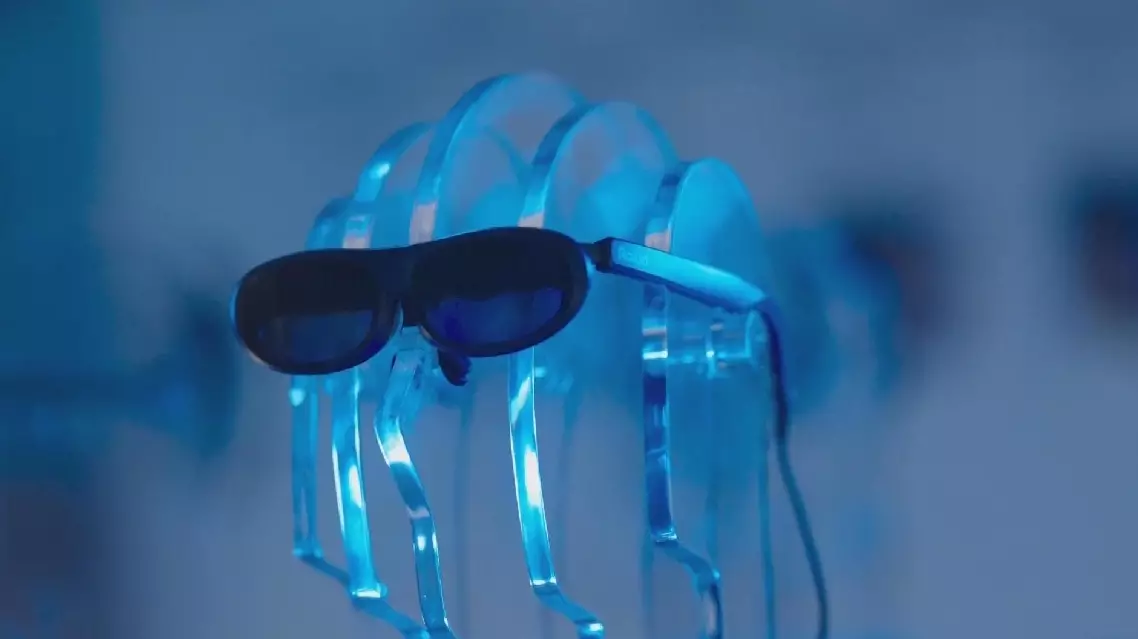
Chinese AR pioneer discusses smart glasses development, explores open-source AI tech potential