The establishment of the Shenzhen Special Economic Zone (SEZ) has been a great innovative move to advance China's modernization and the SEZ continues to prove its relevance with innovation-driven development in the new era.
Tuesday marks the 45th anniversary of the Shenzhen SEZ. A once-sleepy fishing village, Shenzhen became a testing ground for China's reform and opening-up when it was designated as one of the country's first special economic zones in 1980.
Over the past decades, Shenzhen has rapidly emerged as a leading hub for innovation and technology. It is now again at the forefront of China's transformation to high-quality and innovation-driven development, playing a trailblazing role in the country's deepened reform and higher-level opening-up.
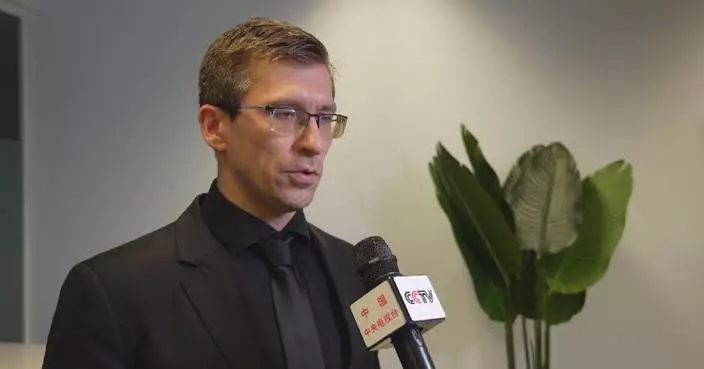
Technology professionals such as Zhang Ke are advancing the use of artificial intelligence in critical fields. He leads the AI for Science department at BYD, China's world-leading new energy vehicle manufacturer, where his team has pioneered the integration of AI into lithium battery research and development.
"In the fields of material research and lithium batteries, we will accelerate this research by a tremendous amount, and this new approach that combines robotics and AI algorithms will really change the way that we do research and the way that we live," Zhang told China Global Television Network (CGTN).
After earning a Ph.D. overseas, Zhang chose to settle in Shenzhen. He said that government support and the city's open environment have greatly helped him do research here over the years. "It embraces openness. The government here really provided a fairly easy policy environment for this to happen and to integrate people from different countries and from different fields," he said.
According to the Capital Institute of Science and Technology Development Strategy, Shenzhen ranks second nationwide for science and technology innovation among 288 cities across China.
Shenzhen's success lies in a unique combination of a supportive government and a market environment that embraces inclusiveness and openness and promotes global collaboration, according to Cao Zhongxiong, assistant president of the China Development Institute.
"Traditionally, our innovation followed a path from basic science to technological and industrial innovation. In Shenzhen, however, innovation is first driven by industries and enterprises, which then continuously extends and feeds back into basic research, fostering the development of technological innovation. I can clearly see an efficient, organic interaction between the market and the government, where resources within the city can undergo a highly effective 'chemical reaction'," said Cao.
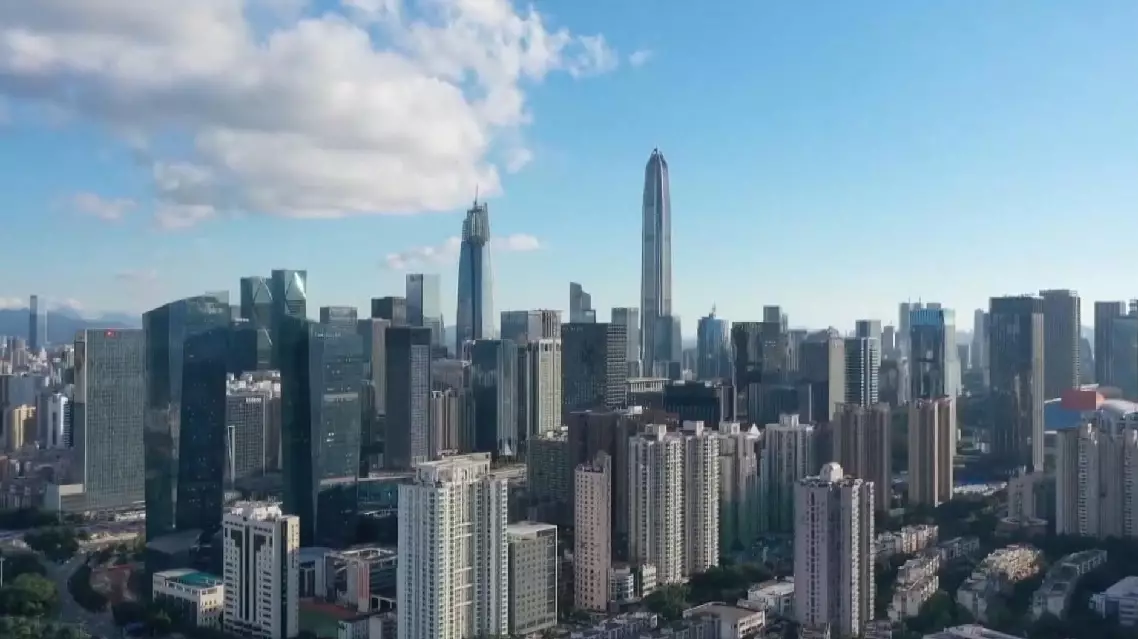
Shenzhen SEZ continues spearheading China's reform, opening-up 45 years on

Geoeconomic confrontation is the leading short-term global threat in 2026, the World Economic Forum (WEF) warned in its Global Risks Report 2026 released on Wednesday ahead of its annual meeting in Davos, Switzerland.
The report ranks geoeconomic confrontation as the top risk for 2026, followed by interstate conflict, extreme weather, societal polarization, and misinformation and disinformation. It also identifies geoeconomic confrontation as the most severe risk over the next two years.
"I think if there is to be one key takeaway from the report, it's that we are entering an age of competition and this new competitive order is then shaping current global risks, but it is also shaping and to some extent hindering our ability to actually cope with them. That's really the key takeaway. If we take a look at, the number one risk both for 2026 and two years out, it's dual economic confrontation. But then if we look at the risks 10 years out. It's really the climate and environment related risks. All of these things require global cooperation and that's where we're seeing a big backsliding in this new age of competition," said Saadia Zahidi, managing director of the WEF.
Economic risks showed the largest increase in the two-year outlook, with concerns over economic downturns, inflation, rising debt and potential asset bubbles intensifying amid geoeconomic tensions, the report said.
Environmental risks remain the most severe overall, led by extreme weather, biodiversity loss and critical changes to Earth systems. The report noted that three-quarters of respondents expect a turbulent environmental outlook.
Risks related to adverse outcomes of artificial intelligence rose sharply, climbing from 30th in the two-year horizon to fifth in the 10-year outlook, reflecting concerns over impacts on labor markets, society and security.
The 21st edition of the report draws on views from more than 1,300 experts, policymakers and industry leaders.
The WEF's annual meeting will be held in Davos from Jan 19 to 23 and draw nearly 3,000 guests from more than 130 countries and regions to participate.
"So overall, we are starting to see this shift away from what have traditionally been the ways in which people have been able to cooperate. Now, that is not to say that any of this is a foregone conclusion. And I think that's a really important message around the risks report. None of this is set in stone. All of this is in the hands of leaders. Whether they choose to cooperate and invest in resilience or whether they do not. So that's really what we'll be focused on next week in Davos bringing leaders together under this overall theme of 'a spirit of dialogue' and trying to reestablish relationships, cooperation and trust. That's the fundamental," said Zahidi.
WEF warns of rising geoeconomic risks in 2026