China's War of Resistance Against Japanese Aggression (1937–1945) profoundly reshaped the spiritual backbone of the nation and strengthened national cohesion, according to Professor Xu Haiyun from the School of History at Renmin University of China.
China will mark the 80th anniversary of the War of Resistance against Japanese Aggression and the World Anti-Fascist War with a grand military parade at Beijing's Tian'anmen Square on Wednesday.
In a recent interview with China Global Television Network (CGTN), Xu said the war was not only a life-and-death struggle against Japanese invaders, but also an awakening of identity for the Chinese nation—transforming the people from "a sheet of loose sand" into a united force with a shared determination to resist the enemy.
As the main eastern battlefield in World War II, China tied down large parts of the Japanese army for an extended period, making important contributions to the World Anti-Fascist War.
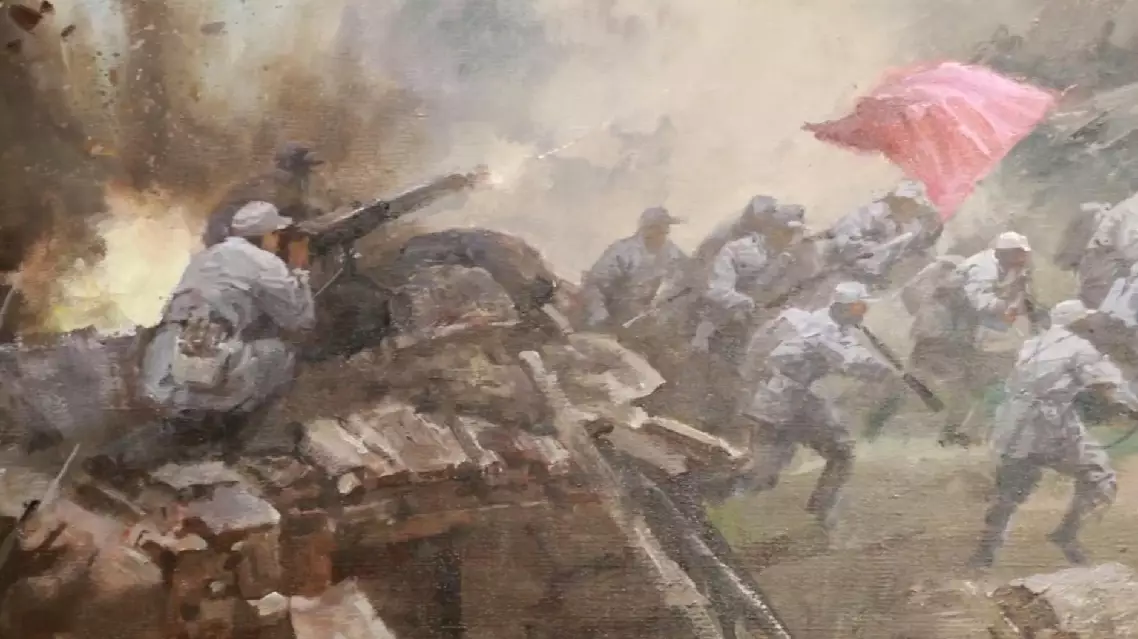
From behind the frontlines, ordinary people witnessed the commitment of the Eighth Route Army and the New Fourth Army under the leadership of the Chinese Communist Party.
"From behind enemy lines, our people could clearly see the operations of the Eighth Route Army and the New Fourth Army. When they fought for the people and got injured, people would immediately rush to help them. Everyone truly felt that this army was different from previous forces. They genuinely shared a mutual understanding and deep connection with civilians. That's why people were willing to send their own children to the battlefield to join the military. This, I believe, reflects a kind of deep sentiment. The common people didn't understand profound theories. They simply knew that if the country was defended and the Japanese invaders defeated, they would have clothes to wear and food to eat. It was such a simple, heartfelt conviction. We can say that, with a backward agricultural society, we managed to defeat a relatively advanced industrialized nation. This had never been seen before in the history of warfare. The Chinese people truly created a miracle in the annals of global military history," he said.
"Western countries often believe that China relied on the United States to defeat Japan, and a major basis for this view is the lend-lease supplies provided by the Americans. They argue that these supplies helped the Chinese people overcome Japanese aggression. However, when did lend-lease assistance actually begin? It truly started in April 1942. From 1931 to 1942, the Chinese people had already been fighting independently for a full decade. During these ten years, the Chinese battlefield had in fact become the main theater in the East of the anti-fascist war. It pinned down the majority of Japan's main military forces, preventing them from advancing eastward, northward, or southward, and making it impossible for Japan to intervene prematurely in the Pacific theater. In fact, before the outbreak of the Pacific War (1941—1945), the United States had consistently pursued a policy of appeasement toward Germany and Italy. It was only after the Pearl Harbor incident, after the U.S. was dragged into World War II, that its stance underwent a comprehensive shift. Prior to that, as long as its national interests remained unharmed, the influences it exerted to contain fascism were extremely limited," Xu said.
Xu also said that as the world marks eight decades since the end of World War II, people should learn from history, draw strength from unity and development, and turn the memories of war into a legacy for peace to illuminate the path forward.
War against Japanese aggression still holds lessons for modern-day China: scholar