WASHINGTON (AP) — Over Labor Day weekend, the Trump administration attempted to remove Guatemalan children who had come to the U.S. alone and were living in shelters or with foster care families in the U.S.
Advocates who represent migrant children in court filed lawsuits across the country seeking to stop the government from removing the children, and on Sunday a federal judge stepped in to order that the kids at least temporarily stay in the U.S.
The Trump administration has argued in court and on social media that they're doing this to reunite the children with their families back home at the behest of the Guatemalan government and blamed advocates and the judge for stepping in.
Advocates who sued said the children they represent have said they fear going home, and that the government, by operating in the dead of night and by bypassing immigration courts, is not following laws designed to protect migrant children.
Here's a look at where things stand now:
There are at least three legal cases going on around the country: Arizona, Washington, D.C., and Illinois. Representatives for unaccompanied migrant children are trying to stop the government from removing Guatemalan children who don't have final orders of removal from the country. Those children are living in a network of shelters or foster care arrangements overseen by the Office of Refugee Resettlement, which falls under the Department of Health and Human Services.
In Illinois, lawyers representing four minor children, who were identified only by their initials, said they had received notice on Aug. 29 that U.S. Immigration and Customs Enforcement intended to take the children from the shelters where they were being held under U.S. government care sometime on Aug. 30 or Sept. 1 and remove them from the U.S.
A judge blocked them from being taken out of the country at least until Wednesday afternoon. A hearing in the case is set for Wednesday morning.
In Arizona, the Florence Immigrant & Refugee Rights Project, which provides legal services for unaccompanied migrant children, filed a lawsuit on behalf of 53 children from Guatemala. The children were between the ages of three and 17 and living in shelters in the Phoenix and Tucson areas that care for unaccompanied migrant children. U.S. District Judge Rosemary Marquez on Sunday blocked the Trump administration from removing those children for at least two weeks. She said some children may have been in the process of being removed at the time, and ordered the government to return them to the U.S. immediately.
In Washington, D.C., Judge Sparkle L. Sooknanan ordered a 14-day temporary restraining order preventing the government from removing Guatemalan children in Office of Refugee Resettlement custody and sending them back to Guatemala.
In July, the head of Guatemala’s immigration service said the government was looking to repatriate 341 unaccompanied minors who were being held in U.S. facilities.
During a news conference on Monday, Guatemalan President Bernardo Arévalo shed more light on the issue.
Arévalo said the country’s foreign affairs minister and ambassador to the United States toured detention facilities for minors and adults in the United States in March and were “very concerned,” especially about minors who were going to turn 18. The government decided it had to act in the best interest of the children to prevent them from being moved to adult detention centers. He said Guatemala told the U.S. that the government was willing to receive “all unaccompanied minors, who wanted to return to Guatemala voluntarily.”
Arévalo explained that his administration began working to identify the minors, their families and make arrangements for those willing to return, those who wanted to wait out their legal process in the U.S. and those who judges allowed to remain in the U.S. with a relative.
Guatemala is capable of receiving about 150 minors per week, he said. “It depends on our capacity to identify relatives to facilitate a safe return,” he said. The goal is that none of the children end up being institutionalized.
The president did not answer when asked if the number to be sent on Sunday surprised Guatemala’s government, or whether he thought the U.S. government carried out due process before putting the minors on planes.
He said his administration has told the U.S. government that once a judge decides an unaccompanied Guatemalan child cannot remain in the U.S., Guatemala will take them and reintegrate them.
“We have been in coordination with the United States about this, but the decision of the sending, the number that they are going to send and the rhythm at which they are going to send is a U.S. government decision,” Arévalo said.
One of the biggest questions outstanding is how many Guatemalan children will be sent back to Guatemala.
The head of Guatemala's immigration service put the number at 341 in July. Then on Friday, Democratic Sen. Ron Wyden of Oregon wrote a letter to the Office of Refugee Resettlement saying that, according to whistleblower accounts, the office was intending to remove nearly 700 Guatemalan children.
Also on Friday, Guatemalan Foreign Affairs Minister Carlos Martínez said the exact number was in flux, but said they were currently discussing a little over 600.
The U.S. government indicated in a status report filed Sunday in the Washington, D.C., case that 76 children had been on planes to go to Guatemala and that those children were being returned to Office of Refugee Resettlement custody after the judge's ruling.
There were believed to be two planes in Harlingen, Texas, and possibly another one in El Paso on Sunday, said the National Immigration Law Center. That is the group that filed a lawsuit Sunday in Washington, D.C., to stop the removals.
But it's not clear if there were other children who had been removed from shelters and were en route to the planes before the judge entered the temporary restraining order.
Migrant children traveling alone are usually entrusted to U.S. government care, and there are various legal protections designed to protect them once they’re in the U.S. and navigating the immigration system.
The Trafficking Victims Protection Reauthorization Act of 2008 is one of the key pieces of legislation designed to protect unaccompanied migrant children. With some limited exceptions, it generally requires that children be placed in the “least restrictive setting possible,” which generally means that they can be released to a sponsor such as a relative in the U.S. while their immigration proceedings play out.
The children can apply for a specially protected status if they can't return to their home country because of abuse or neglect and they can also apply for asylum.
In court filings, advocates for Guatemalan children noted that only an immigration judge can decide whether an unaccompanied minor can voluntarily depart the U.S.
Perez reported from Guatemala City. Associated Press reporter Lindsey Whitehurst in Washington contributed to this report.
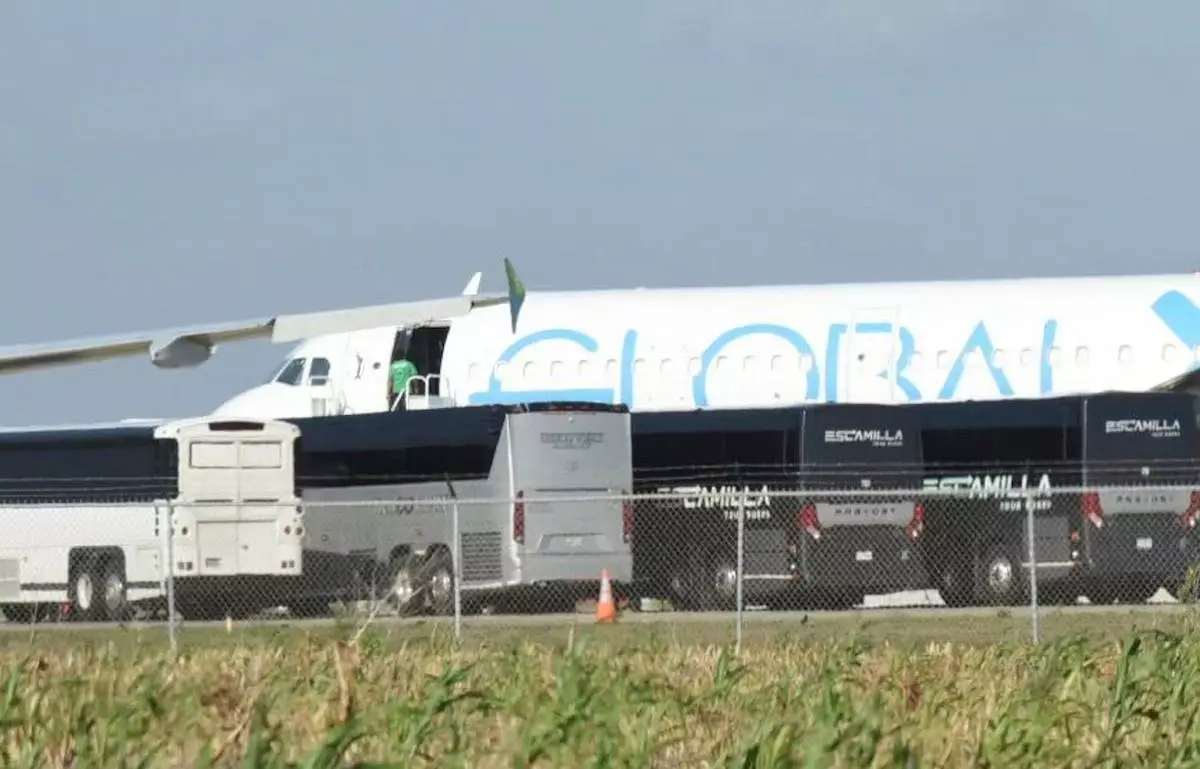
A person boards a plane in Harlingen, Texas Sunday, Aug. 31, 2025, as four charter buses are pulled into the side of the airport to unload dozens of passengers. (AP Photo/Valerie Gonzalez)
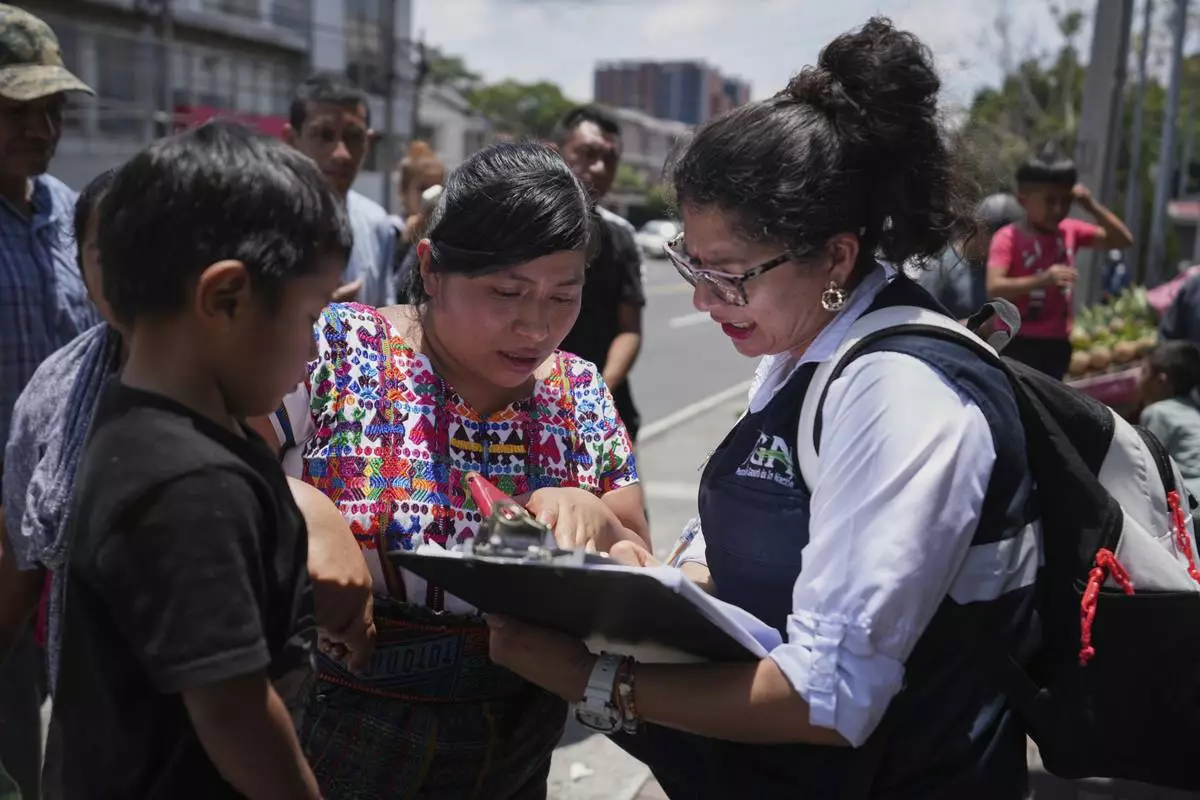
A relative of an unaccompanied minor deported from the United States reviews the list of those deported outside La Aurora International Airport, in Guatemala City, Sunday, Aug. 31, 2025. (AP Photo/Moises Castillo)
NAKHON RATCHASIMA, Thailand (AP) — A construction crane crashed onto a moving passenger train in northeastern Thailand on Wednesday, triggering a fiery derailment that killed at least 32 people and injured dozens more.
The crash occurred in Nakhon Ratchasima, some 200 kilometers (135 miles) northeast of Bangkok, on a section of a planned high-speed rail project that is intended to eventually connect China with much of Southeast Asia.
The province's Public Health Provincial Office said there were 32 fatalities and 64 injured victims, including seven with severe injuries. There were still three passengers missing among the 171 believed to have been on board the train, it said in a statement issued as night fell.
Authorities said the crane was being used to build an elevated part of the railway when it fell as the train was traveling from the capital, Bangkok, to Ubon Ratchathani province. Thailand's Rail Transport Department said the crane was what is called a launching gantry crane, a self-supporting structure with vertical legs that usually runs on rails or wheels for mobility, allowing it to progress along with the construction project that it straddles. Such cranes are often used to help build elevated roads.
Images published in Thai media showed plumes of white, then dark, smoke rising from the crash site, with construction equipment dangling from girders between two concrete support pillars.
Rescue workers stood on top of overturned railway carriages, some of them with gaping holes torn on their sides, video from public broadcaster ThaiPBS showed. What appeared to be sections of the crane were scattered along the track.
Sixty-two year-old Samai Teechantuek, whose house is about 100 meters (yards) from the site of the accident, told The Associated Press of the horror of witnessing the accident, and hearing “the noises screeching, and then bam, bam, bam, all the way over there.”
“When the dust settled, I saw the top of the train carriage. I heard people shouting ‘save the children first!’” she said. "A conductor pulled people out. I saw them pulling many people out. People from the shop over there also ran out to help.”
“My legs were shaking. I was standing there shaking. I didn’t dare going any closer,” she said.
Transport Minister Phiphat Ratchakitprakarn said he ordered an investigation.
In August 2024, a railway tunnel on the planned route, also in Nakhon Ratchasima, collapsed, killing three workers. Days of heavy rainfall were believed to have been a factor in the collapse.
The elevated segment that collapsed is a part of a Thai-Chinese high-speed railway project linking the capital to the northeastern province of Nong Khai, bordering Laos. The two-stage rail project has a total investment cost of more than 520 billion baht ($16.8 billion) and is associated with an ambitious plan to connect China with Southeast Asia under Beijing's Belt and Road Initiative. The section where the accident took place had a budget of more than 179 billion baht ($5.7 billion) and according to its original plans was expected to start operating in 2027.
Anan Phonimdaeng, acting governor of the State Railway of Thailand, said the project's contractor is Italian-Thai Development, with a Chinese company responsible for design and construction supervision.
He said authorities will examine the responsibilities of both parties, and the Railway Department plans to take legal action against the contractor as a first step. Damage to the train was estimated to be more than 100 million baht ($3.2 million), while construction equipment suffered limited damage, said Anan.
A statement posted on the company's website expressed condolences to the victims and said the company would take responsibility for paying compensation to the families of the dead and hospitalization expenses for the injured.
The main contractor for the route's first stage between Bangkok and Nakhon Ratchasima, Italian-Thai Development, was also the directly responsible for construction of the segment where Wednesday's accident occurred.
The rail accident sparked outrage because the company, also known as Italthai, was also the co-lead contractor for the State Audit Building in the Thai capital Bangkok, which collapsed during construction in March during a major earthquake.
About 100 people were killed in the collapse, which was the only major structure in Thailand to suffer such serious damage. Dozens of executives were indicted in connection with the disaster but none have yet been tried.
The involvement of Chinese companies in both projects has also drawn attention, as has Italthai's and Chinese companies' involvement in the construction of several expressway extensions in and around Bangkok where several accidents, some fatal, had occurred.
Prime Minister Anutin Charnvirakul, who was interior minister when the State Audit Building collapsed, said that the Comptroller General’s Department and Transport Ministry are responsible for blacklisting contractors, and the laws could not be amended in the brief time he was interior minister to expedite the matter.
In Beijing, Chinese Foreign Ministry spokesperson Mao Ning said the government was aware of the reports about the accident and had expressed condolences.
“The Chinese government attaches great importance to the safety of projects and personnel, and we are also learning about the situation,” he said. “At present, it appears that the relevant section is being constructed by a Thai company, and the cause of the accident is still under investigation.”
Wasamon reported from Bangkok.
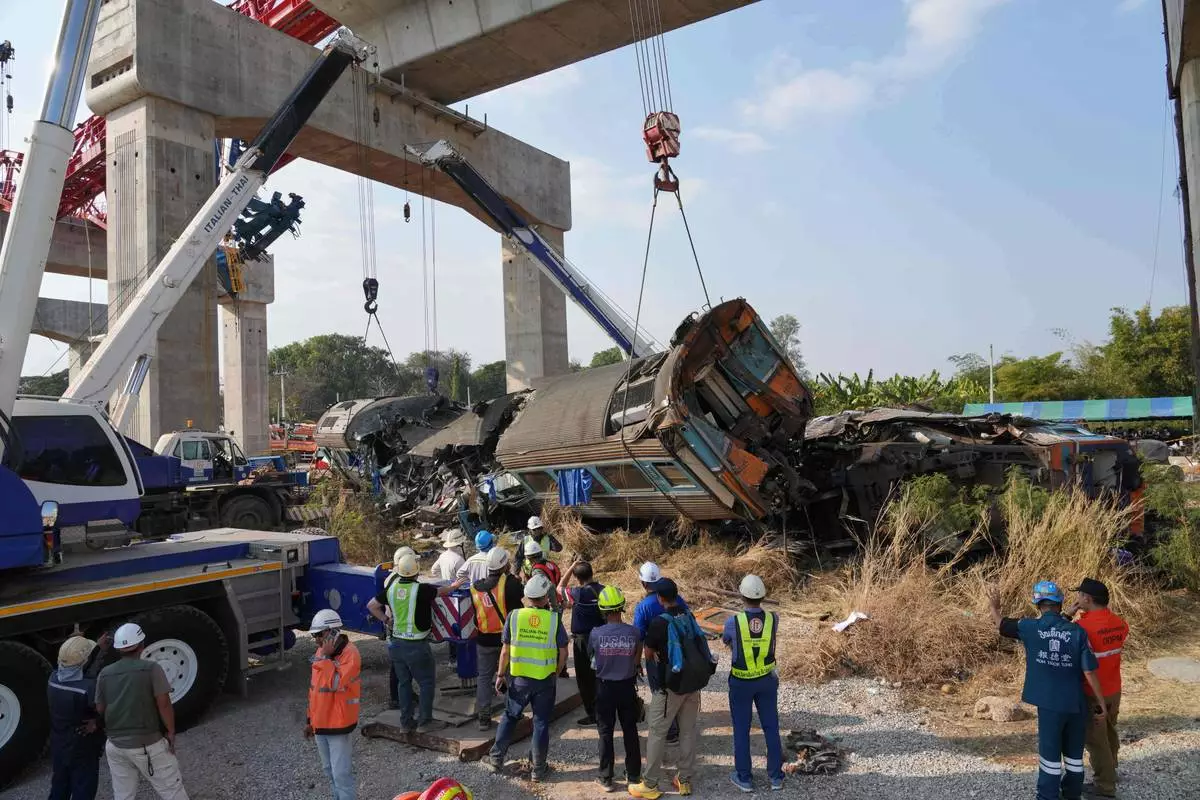
Rescuers try to lift the wreckage after a construction crane fell into a passenger train in Nakhon Ratchasima province, Thailand, Wednesday, Jan.14, 2026. (AP Photo/Sakchai Lalit))
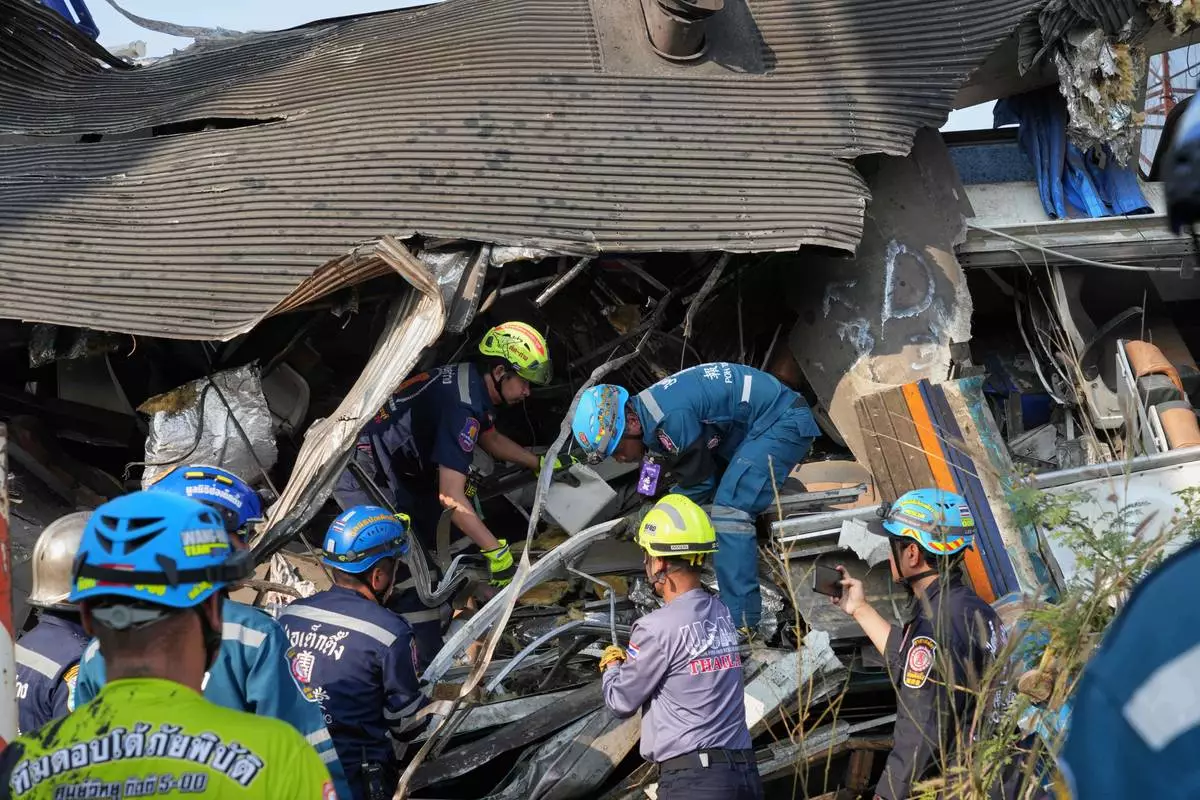
Rescuers work amid the wreckage after a construction crane fell into a passenger train in Nakhon Ratchasima province, Thailand, Wednesday, Jan.14, 2026. (AP Photo/Sakchai Lalit))
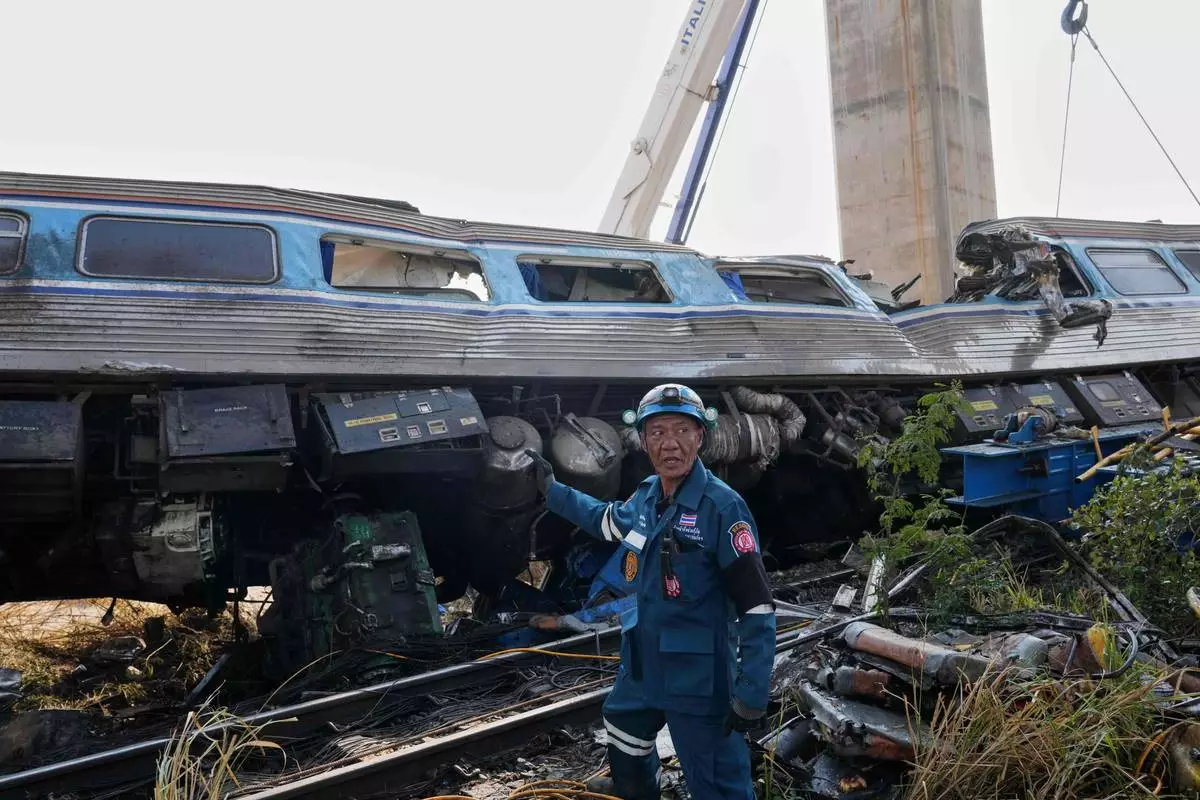
A rescuer stands near the wreckage after a construction crane fell into a passenger train in Nakhon Ratchasima province, Thailand, Wednesday, Jan.14, 2026. (AP Photo/Sakchai Lalit))
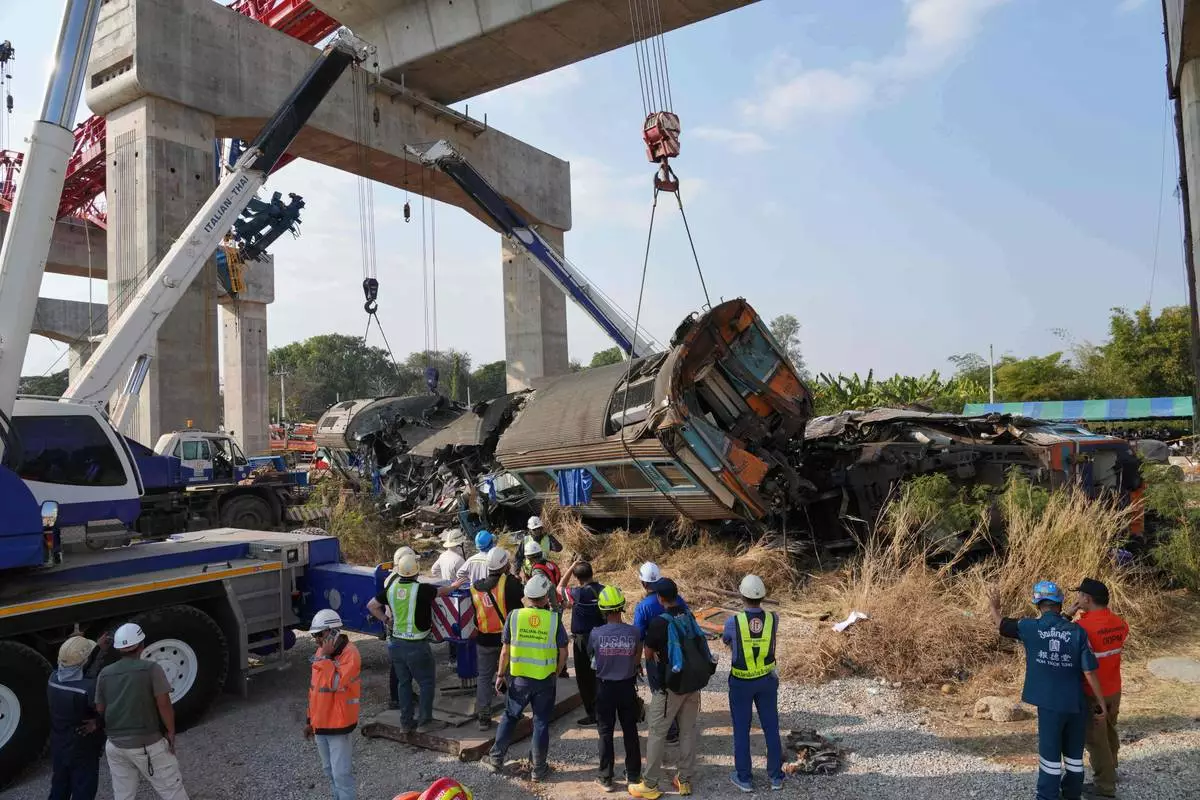
Rescuers try to lift the wreckage after a construction crane fell into a passenger train in Nakhon Ratchasima province, Thailand, Wednesday, Jan.14, 2026. (AP Photo/Sakchai Lalit))
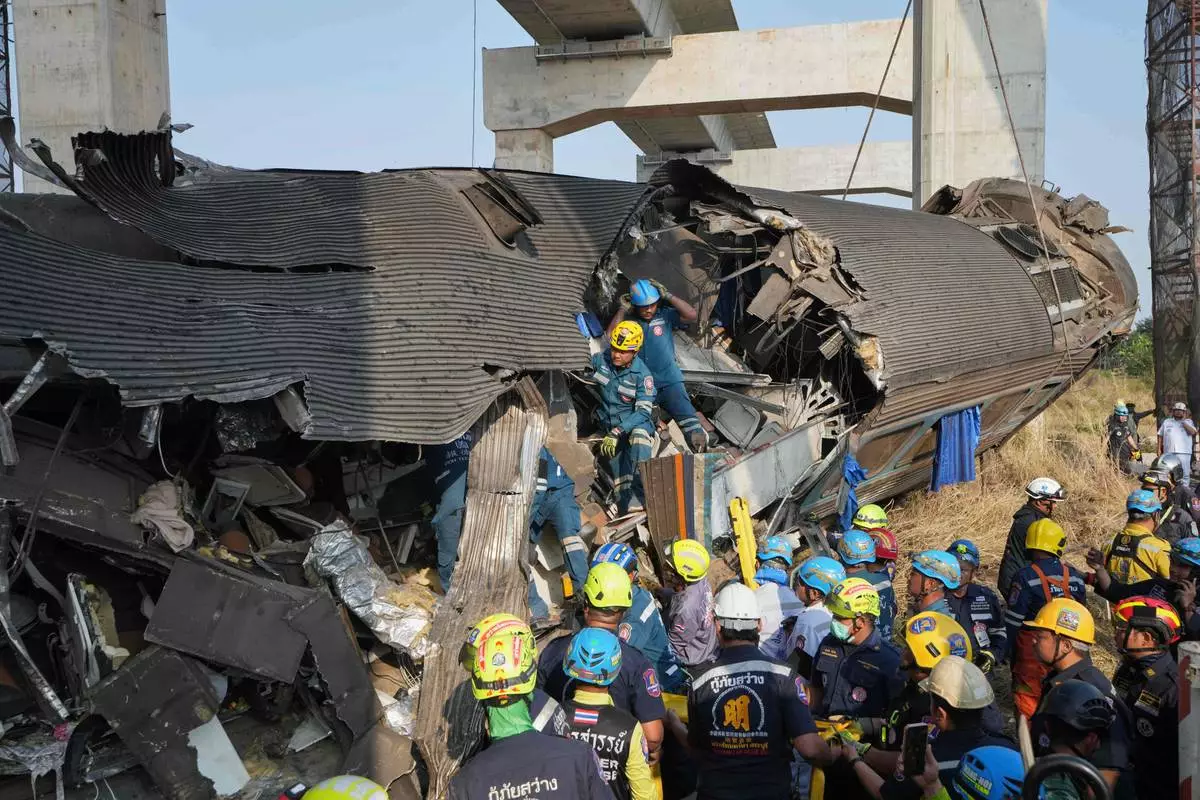
Rescuers work amidst the wreckage after a construction crane fell into a passenger train in Nakhon Ratchasima province, Thailand, Wednesday, Jan.14, 2026. (AP Photo/Sakchai Lalit))
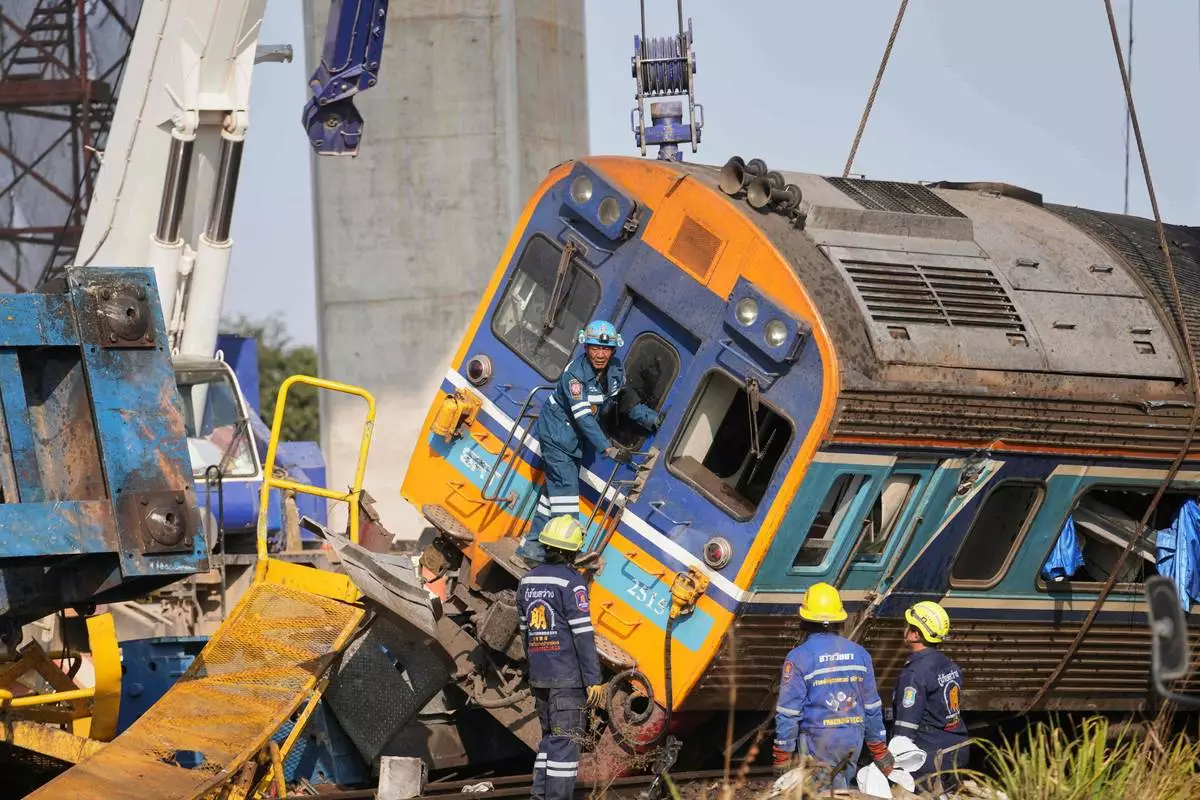
Rescuers work amidst the wreckage after a construction crane fell into a passenger train in Nakhon Ratchasima province, Thailand, Wednesday, Jan.14, 2026. (AP Photo/Sakchai Lalit))
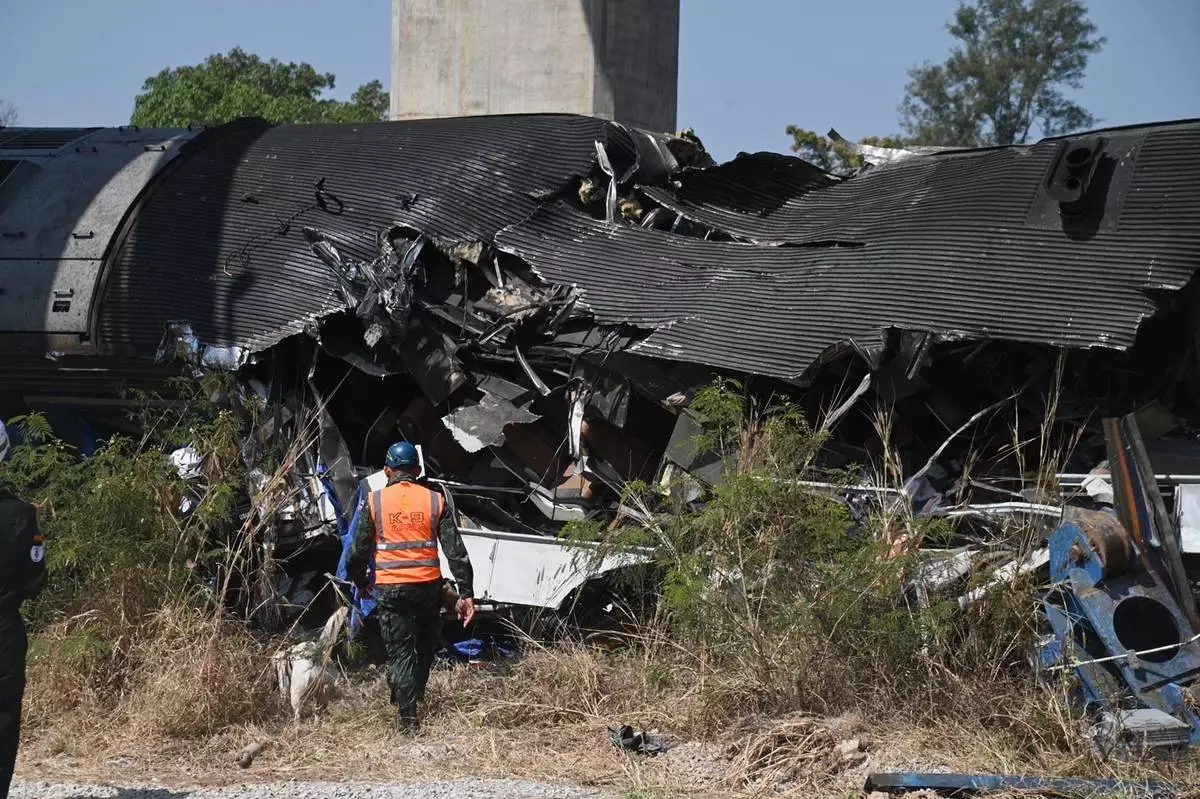
An aid workers at the scene after a construction crane fell into a passenger train in Nakhon Ratchasima province, Thailand, Wednesday, Jan. 14, 2026. (AP Photo/Nathathida Adireksarn)
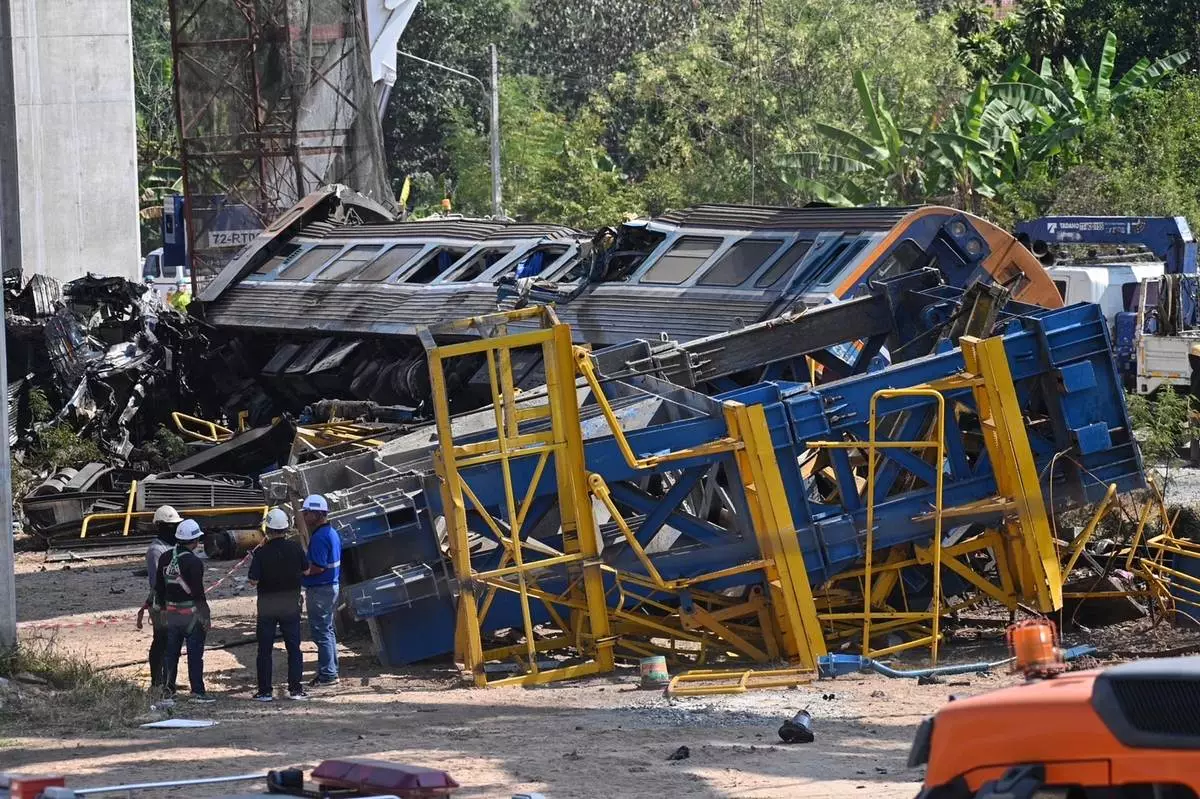
The wreckage after a construction crane fell into a passenger train in Nakhon Ratchasima province, Thailand, Wednesday, Jan. 14, 2026. (AP Photo/Nathathida Adireksarn)
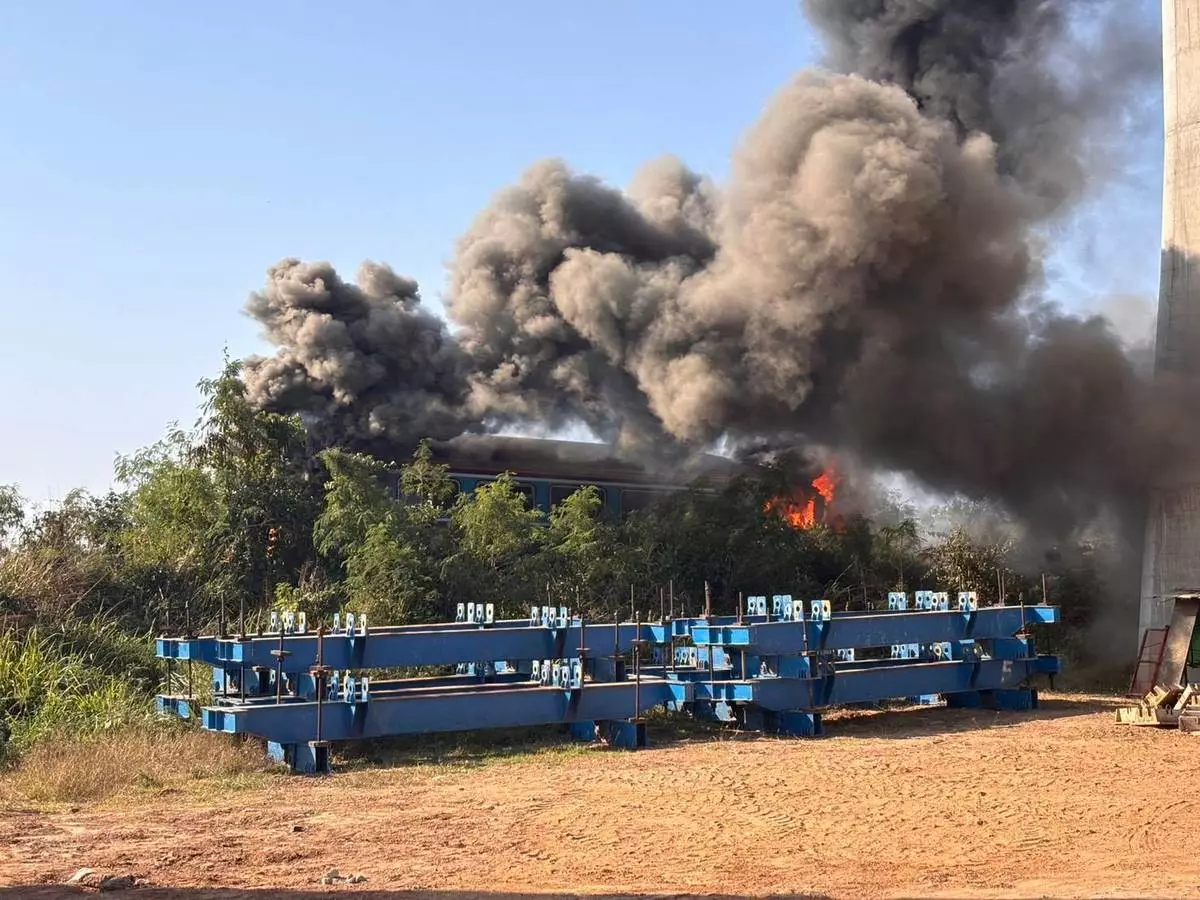
This photo released from Thailand's Ministry of Transport, shows a scene after a construction crane fell into a passenger train in Nakhon Ratchasima province, Thailand Wednesday, Jan. 14, 2026. (Ministry of Transport via AP)
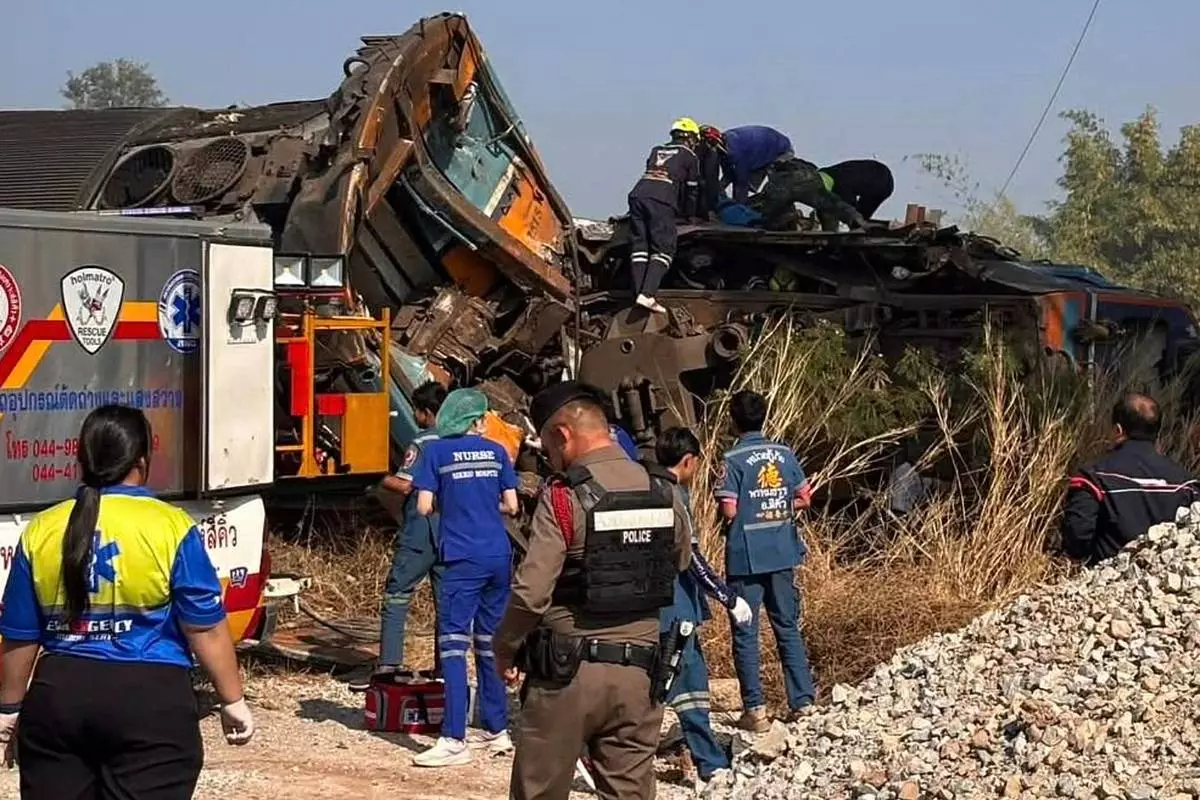
This photo released from State Railway of Thailand, shows aid workers after a construction crane fell into a passenger train in Nakhon Ratchasima province, Thailand Wednesday, Jan. 14, 2026. (State Railway of Thailand via AP)
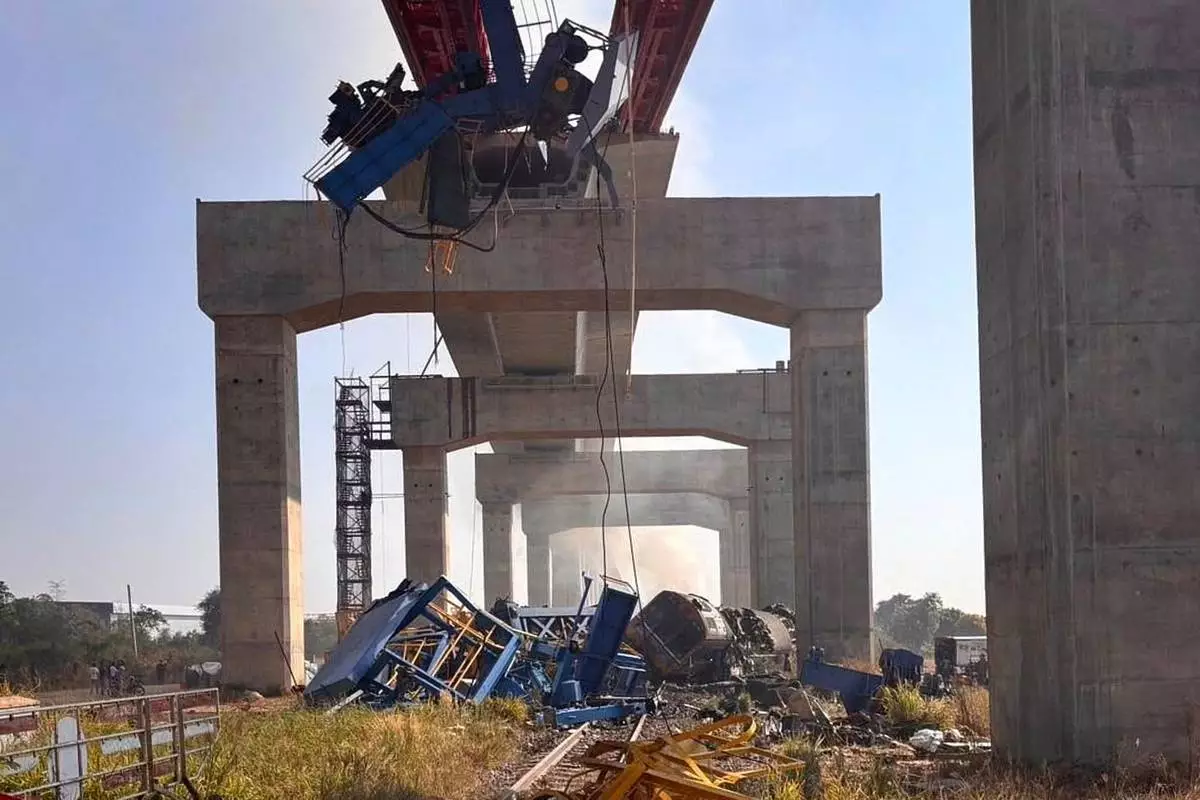
This photo released from State Railway of Thailand, shows a scene after a construction crane fell into a passenger train in Nakhon Ratchasima province, Thailand Wednesday, Jan. 14, 2026. (State Railway of Thailand via AP)
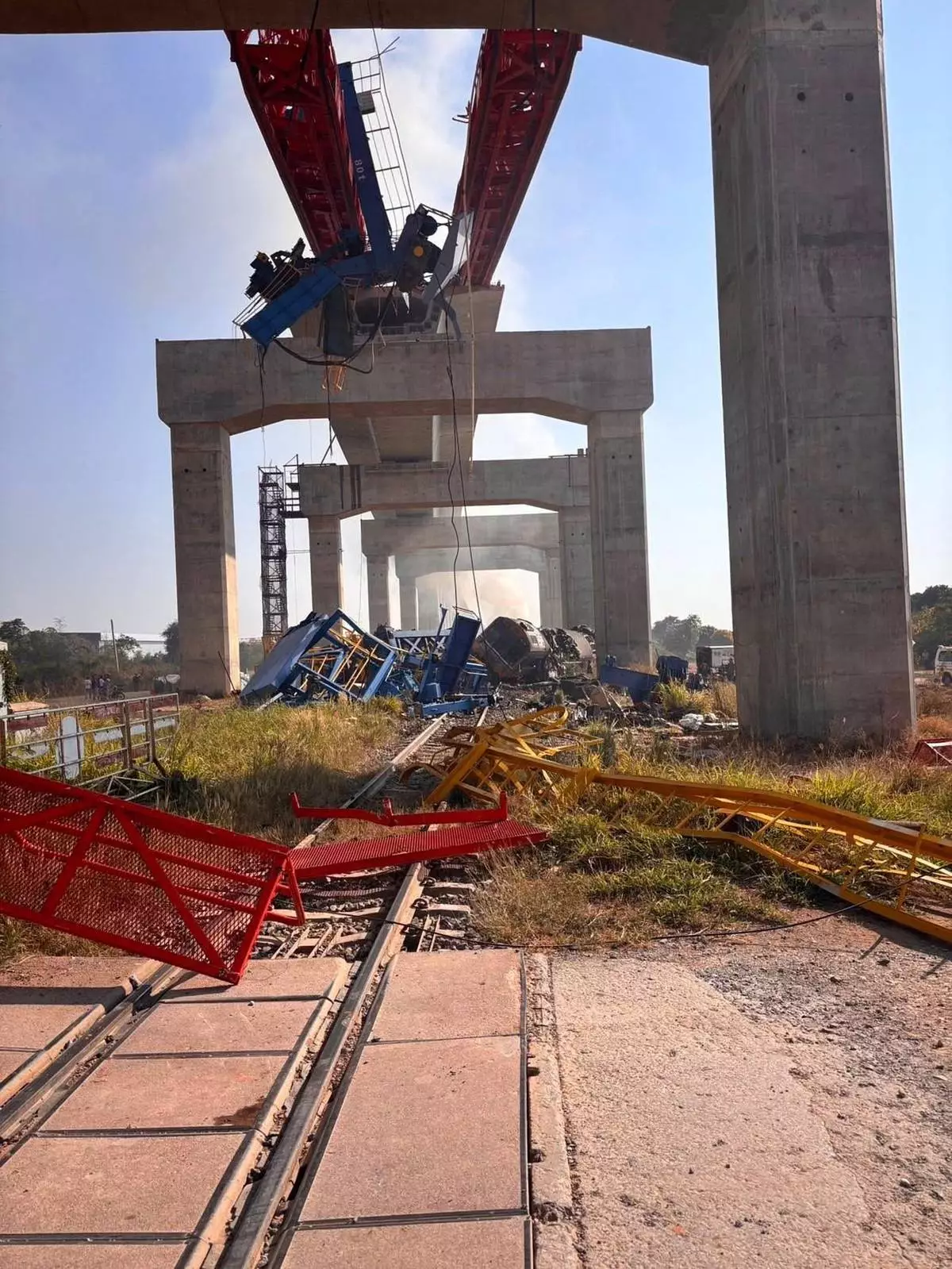
This photo released from State Railway of Thailand, shows a scene after a construction crane fell into a passenger train in Nakhon Ratchasima province, Thailand Wednesday, Jan. 14, 2026. (State Railway of Thailand via AP)
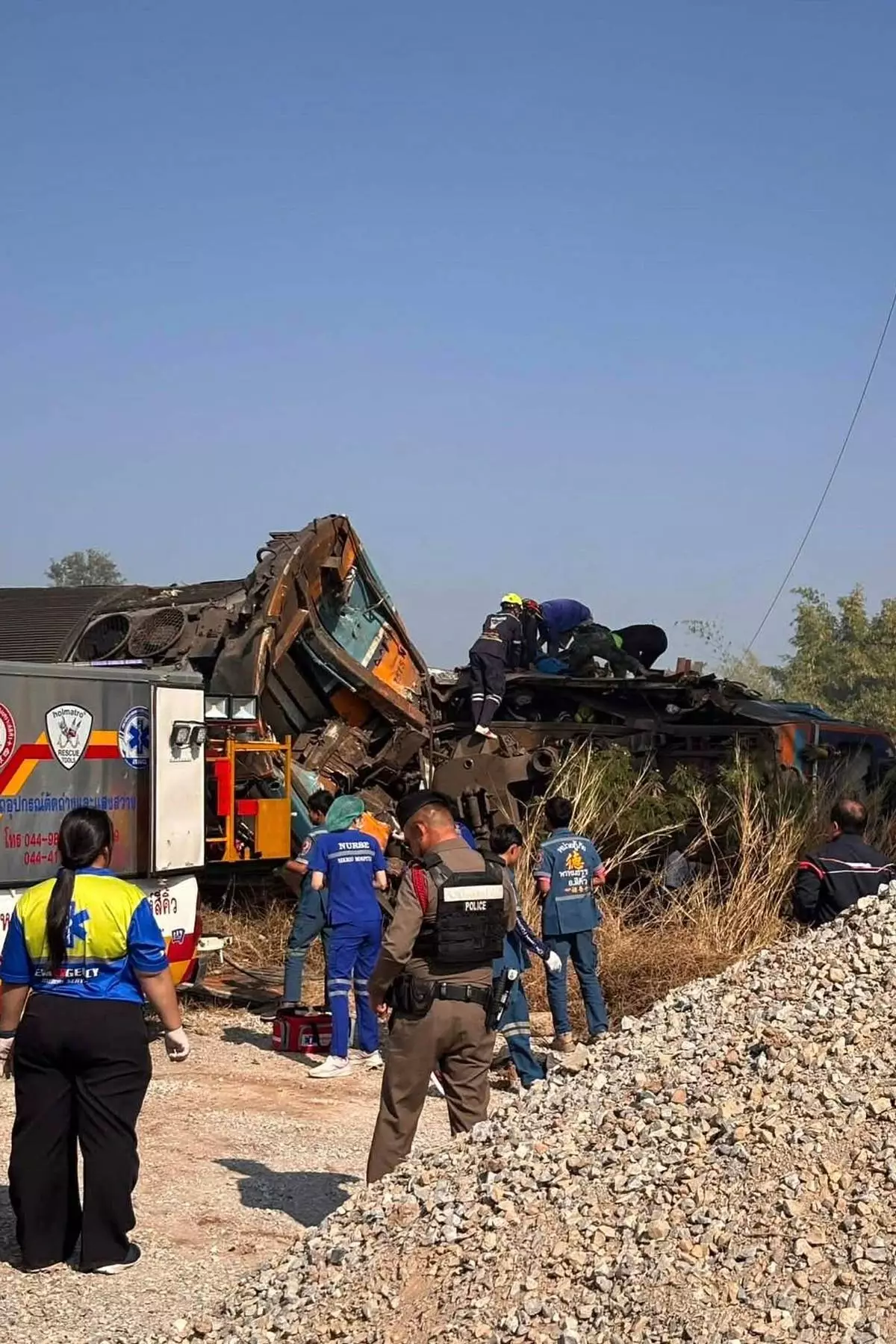
This photo released from State Railway of Thailand, shows aid workers after a construction crane fell into a passenger train in Nakhon Ratchasima province, Thailand Wednesday, Jan. 14, 2026. (State Railway of Thailand via AP)
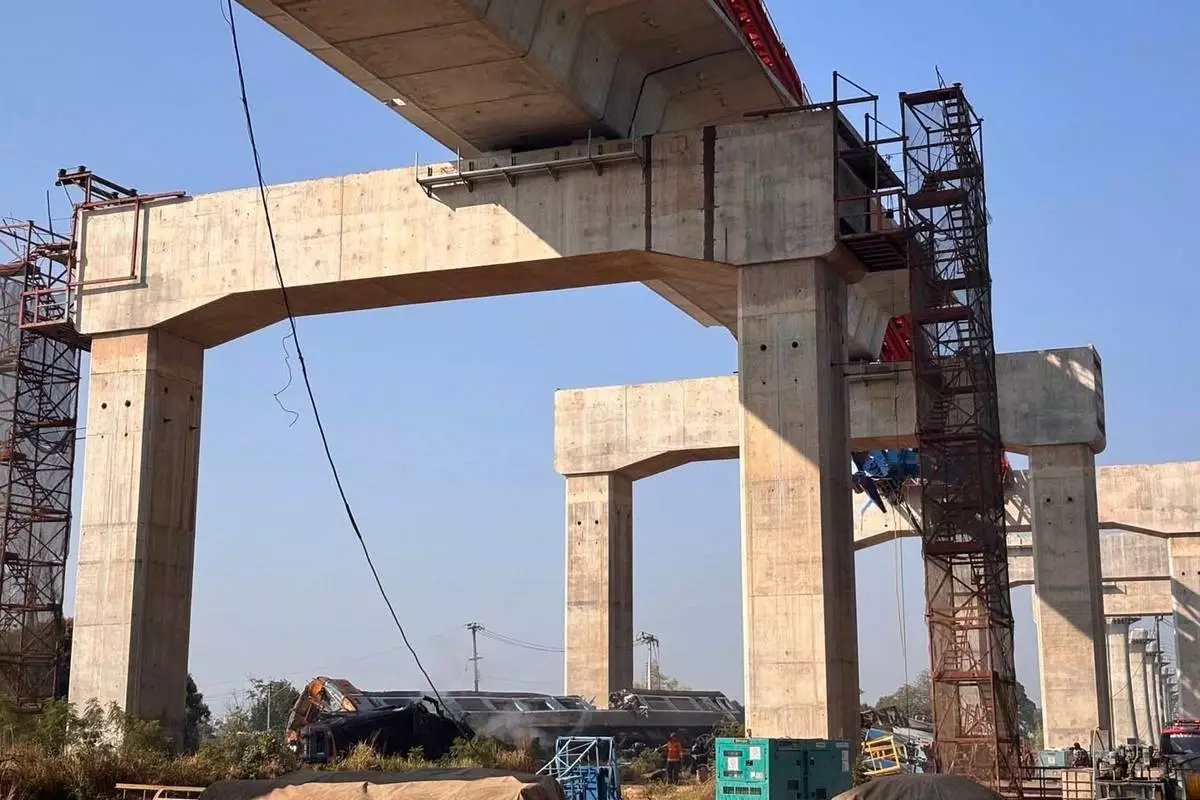
This photo provided by State Railway of Thailand shows a scene after a construction crane fell into a passenger train in Nakhon Ratchasima province, Thailand Wednesday, Jan. 14, 2026. (State Railway of Thailand via AP)