Skip to Content Facebook Feature Image

Kraft Heinz undoes blockbuster merger after a decade of changing tastes

News

Kraft Heinz undoes blockbuster merger after a decade of changing tastes
News

News

Kraft Heinz undoes blockbuster merger after a decade of changing tastes

2025-09-03 06:52 Last Updated At:07:00

NEW YORK (AP) — Kraft Heinz is splitting into two companies a decade after a merger of the brands created one of the biggest food manufacturers on the planet.

One of the companies, currently called Global Taste Elevation Co., will include brands such as Heinz, Philadelphia cream cheese and Kraft Mac & Cheese, Kraft Heinz said Tuesday. The other, currently called North American Grocery Co., will include slower-selling brands like Maxwell House, Oscar Mayer, Kraft Singles and Lunchables. The official names of the two companies will be released later.

Kraft Heinz said in May that it was conducting a strategic review of the company, signaling a potential split. It expects the transaction to close in the second half of 2026.

When the company formed in 2015, it wanted to capitalize on its massive scale. But shifting tastes complicated those plans, with households seeking out healthier options.

Kraft Heinz and other food producers have tried to follow those trends. In 2021, Kraft Heinz sold both its Planters nut business and its natural cheese business, vowing to reinvest the money into higher-growth brands like P3 protein snacks. But the company continued to struggle.

Kraft Heinz's net revenue has fallen every year since 2020, when it saw a pandemic-related bump in sales. In April, Kraft Heinz lowered its full-year sales and earnings guidance, citing weaker customer spending in the U.S. and the impact of President Donald Trump’s tariffs.

“Kraft Heinz’s brands are iconic and beloved, but the complexity of our current structure makes it challenging to allocate capital effectively, prioritize initiatives and drive scale in our most promising areas,” Executive Chairman Miguel Patricio said in a statement.

The path to the merger of Kraft and Heinz began in 2013, when billionaire investor Warren Buffett teamed up with Brazilian investment firm 3G Capital to buy H.J. Heinz Co. At the time, the $23 billion deal was the most expensive ever in the food industry.

3G was also behind the formation of Restaurant Brands International — a merger of Burger King, Tim Hortons and Popeyes — and Anheuser-Busch InBev. It’s known for strict cost controls and so-called zero-based budgeting, which requires all expenses to be justified each quarter.

The deal was intended to help Heinz, which was founded in 1869 in Pittsburgh, expand sales of its condiments and sauces on grocery store shelves. Heinz’s new owners also set about cutting costs, laying off hundreds of workers within months.

At the same time Kraft, based in Chicago, sought for a partner after a 2011 split from its snack division, which became Mondelez International.

In 2015, Buffett and 3G decided to merge Heinz with Kraft. The merger created the 5th largest food and beverage company in the world, with annual revenue of $28 billion. Buffett and 3G each contributed $5 billion for a special dividend for Kraft shareholders.

At the time, the prevailing attitude was that the bigger the conglomerate, the more companies would save through sharing services like accounting, said Russell Zwanka, an associate professor of food marketing at Western Michigan University.

But even at the time of the merger, many consumers were shifting away from the kinds of highly processed packaged foods that Kraft sells, like Velveeta cheese and Kool-Aid. The push to remove artificial flavors and dyes added further costs.

“The customer has become much more diligent in what they’re buying, and so it’s making it more difficult to allocate your resources properly,” Zwanka said.

Kraft Heinz also had trouble distinguishing its products from cheaper store brands. At Walmart, a 14-ounce bottle of Heinz ketchup costs $2.98; the same size bottle of Walmart’s Great Value brand is 98 cents.

In 2019, Kraft Heinz slashed the value of its Oscar Meyer and Kraft brands by $15.4 billion. Many investors blamed the company’s leadership, saying its zeal for cost-cutting was hurting brand innovation.

Buffett told CNBC Tuesday that he’s disappointed that Kraft Heinz decided to go forwarded with the split, which will cost the company $300 million and take a year to complete. He's also frustrated that shareholders won’t get a vote on the move.

Berkshire has held onto its massive 27% Kraft Heinz stake, making it the company's largest shareholder, even as stock price fell roughly 70% since the merger. Buffett has acknowledged in the past that Berkshire overpaid for the investment. Berkshire took a $3.76 billion write-down on the value of its stake in Kraft Heinz in the second quarter of this year.

“It certainly didn’t turn out to be a brilliant idea to put them together, but I don’t think taking them apart will fix it,” Buffett said to CNBC. The Associated Press left messages seeking comment Tuesday with Buffett and 3G.

Zwanka said the split likely won't impact consumers. He thinks individual brands like Oscar Mayer will be bought by other companies.

“These brands have survived over 100 years and they will continue to survive," he said. “You just have to find a company willing to invest the resources in either maintaining a mature category until your competitors drop off or growing a growth category like Philly Cream Cheese and all the Heinz brands.”

Kellogg Co. provided the blueprint when it split into two companies in 2023, Zwanka said. Last year, Mars bought one of the companies, dubbed Kellanova, which owned snack brands like Pringles. Italian confectioner Ferrero announced in July that it planned to buy WK Kellogg, the cereal company.

Other food companies are following in its footsteps. Late last month, Keurig Dr Pepper said it would buy the owner of Peet’s Coffee and then split itself in two, with one company selling coffee and the other selling cold beverages. Keurig and Dr Pepper merged in 2018.

Zwanka said his biggest concern is for Kraft Heinz's 36,000 employees, who now face more than a year of uncertainty before the split is finalized.

“The brands will survive. You just hope the people will move with the brands,” he said.

Carlos Abrams-Rivera will continue to serve as CEO of Kraft Heinz and will become CEO of North American Grocery Co. once the separation is complete. Kraft Heinz said that its board is working with an executive search firm to identify potential CEO candidates for Global Taste Elevation Co.

Kraft Heinz has no plans to change its current headquarter locations in Chicago and Pittsburgh.

Kraft Heinz shares fell nearly 7% Tuesday to close at $26.02 per share.

Durbin reported from Detroit. AP Business Writer Josh Funk contributed from Omaha.
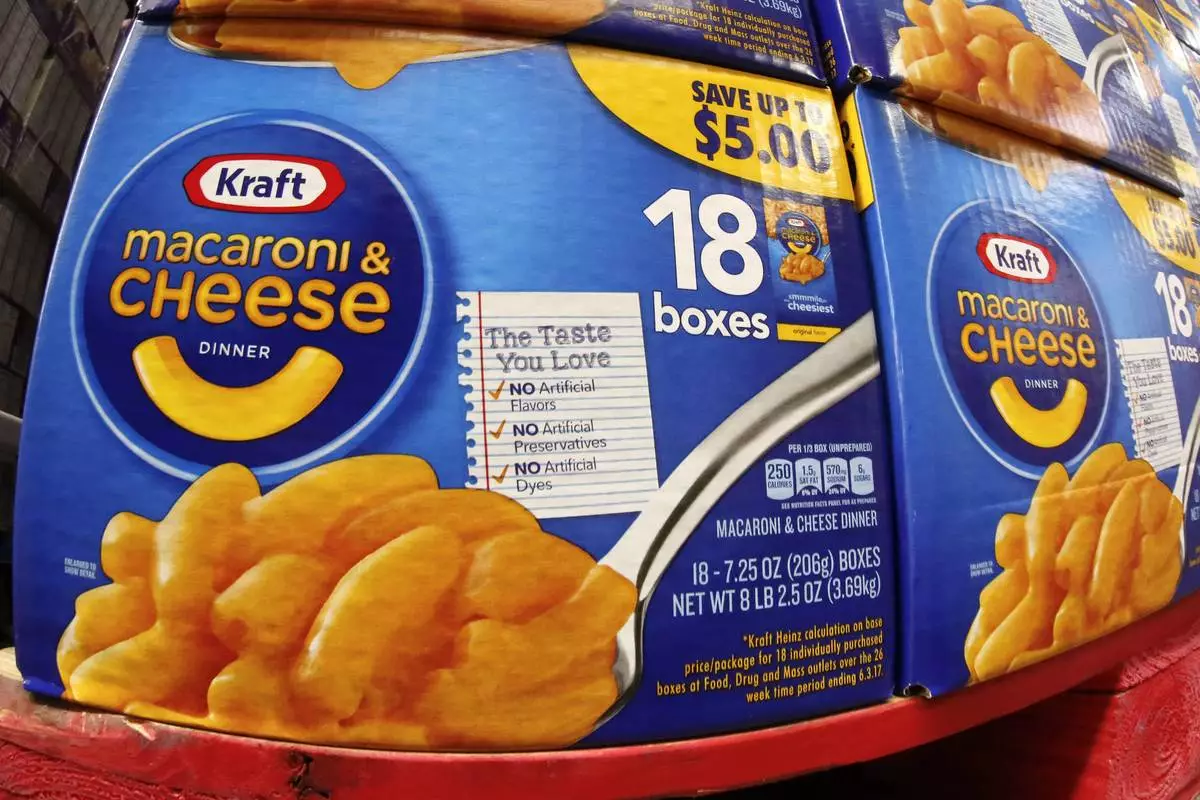
FILE - This Thursday, Feb. 22, 2018 photo shows a display of Kraft macaroni and cheese in a Sam's Club in Pittsburgh. (AP Photo/Gene J. Puskar, File)
FILE - This Thursday, Feb. 22, 2018 photo shows a display of Kraft macaroni and cheese in a Sam's Club in Pittsburgh. (AP Photo/Gene J. Puskar, File)

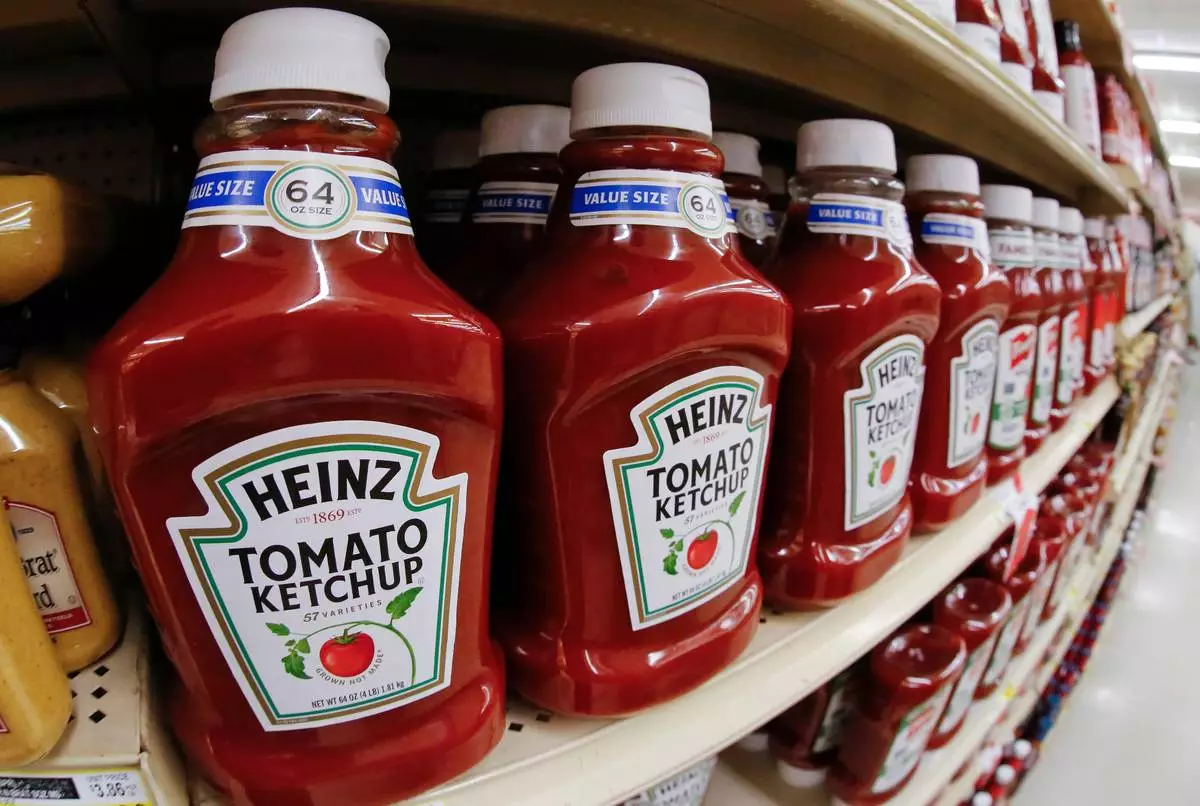
FILE- This Feb. 21, 2018, file photo shows a display of Heinz Ketchup on display in a market in Pittsburgh. (AP Photo/Gene J. Puskar, File)
FILE- This Feb. 21, 2018, file photo shows a display of Heinz Ketchup on display in a market in Pittsburgh. (AP Photo/Gene J. Puskar, File)

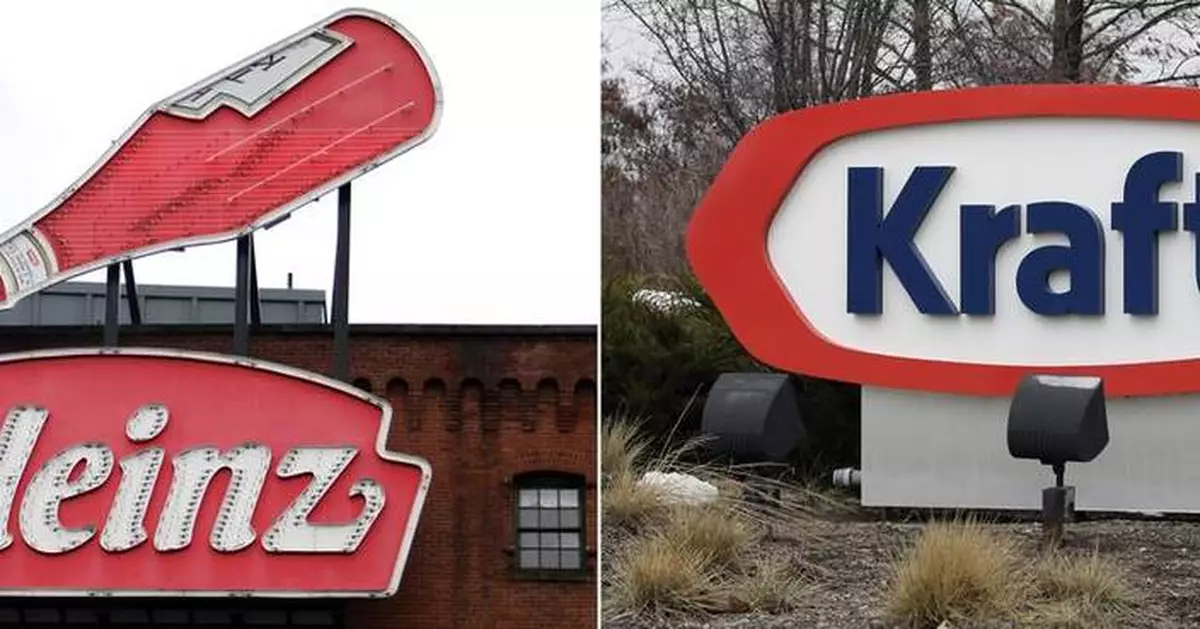
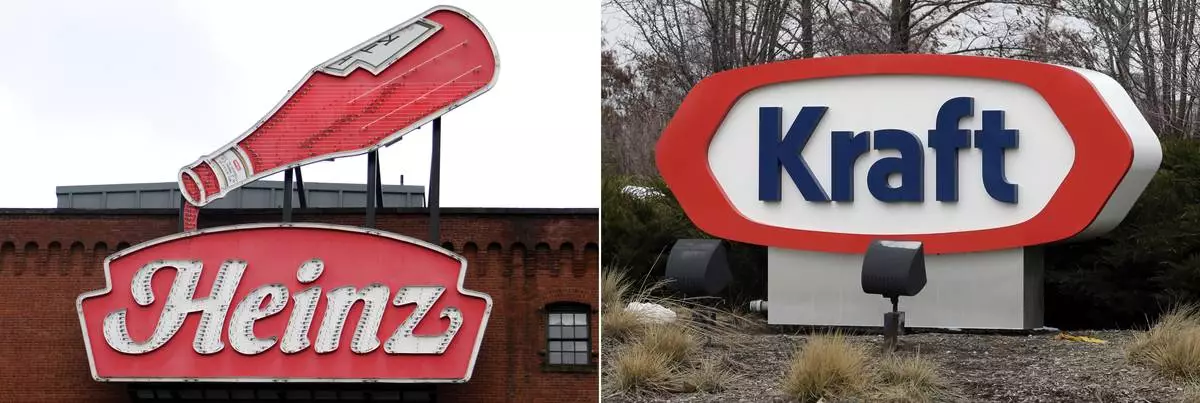
FILE - At left, in a March 25, 2015, file photo, a Heinz ketchup sign is shown on the side of the Senator John Heinz History Center in Pittsburgh. At right, also in a March 25, 2015, file photo, the Kraft logo appears outside of their headquarters in Northfield, Ill. (AP Photo/File)
FILE - At left, in a March 25, 2015, file photo, a Heinz ketchup sign is shown on the side of the Senator John Heinz History Center in Pittsburgh. At right, also in a March 25, 2015, file photo, the Kraft logo appears outside of their headquarters in Northfield, Ill. (AP Photo/File)
MINNEAPOLIS (AP) — President Donald Trump on Thursday threatened to invoke the Insurrection Act and deploy troops to quell persistent protests against the federal officers sent to Minneapolis to enforce his administration's massive immigration crackdown.

The threat comes a day after a man was shot and wounded by an immigration officer who had been attacked with a shovel and broom handle. That shooting further heightened the fear and anger that has radiated across the city since an Immigration and Customs Enforcement agent fatally shot Renee Good in the head.

Trump has repeatedly threatened to invoke the rarely used federal law to deploy the U.S. military or federalize the National Guard for domestic law enforcement, over the objections of state governors.

“If the corrupt politicians of Minnesota don’t obey the law and stop the professional agitators and insurrectionists from attacking the Patriots of I.C.E., who are only trying to do their job, I will institute the INSURRECTION ACT, which many Presidents have done before me, and quickly put an end to the travesty that is taking place in that once great State,” Trump said in social media post.

Presidents have indeed invoked the Insurrection Act more than two dozen times, most recently in 1992 by President George H.W. Bush to end unrest in Los Angeles. In that instance, local authorities had asked for the assistance.

Minnesota Attorney General Keith Ellison responded to Trump's post by saying he would challenge any deployment in court. He's already suing to try to stop the surge by the Department of Homeland Security, which says it has made more than 2,000 arrests in the state since early December. ICE is a DHS agency.

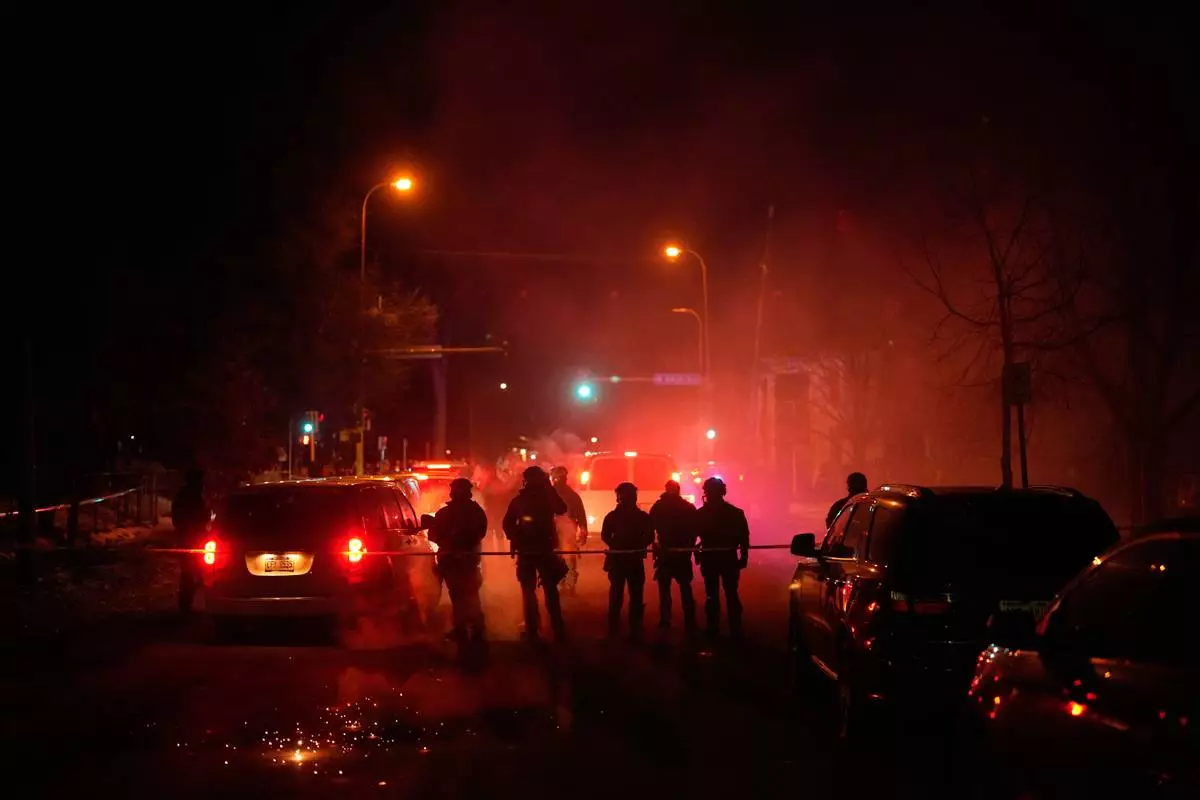
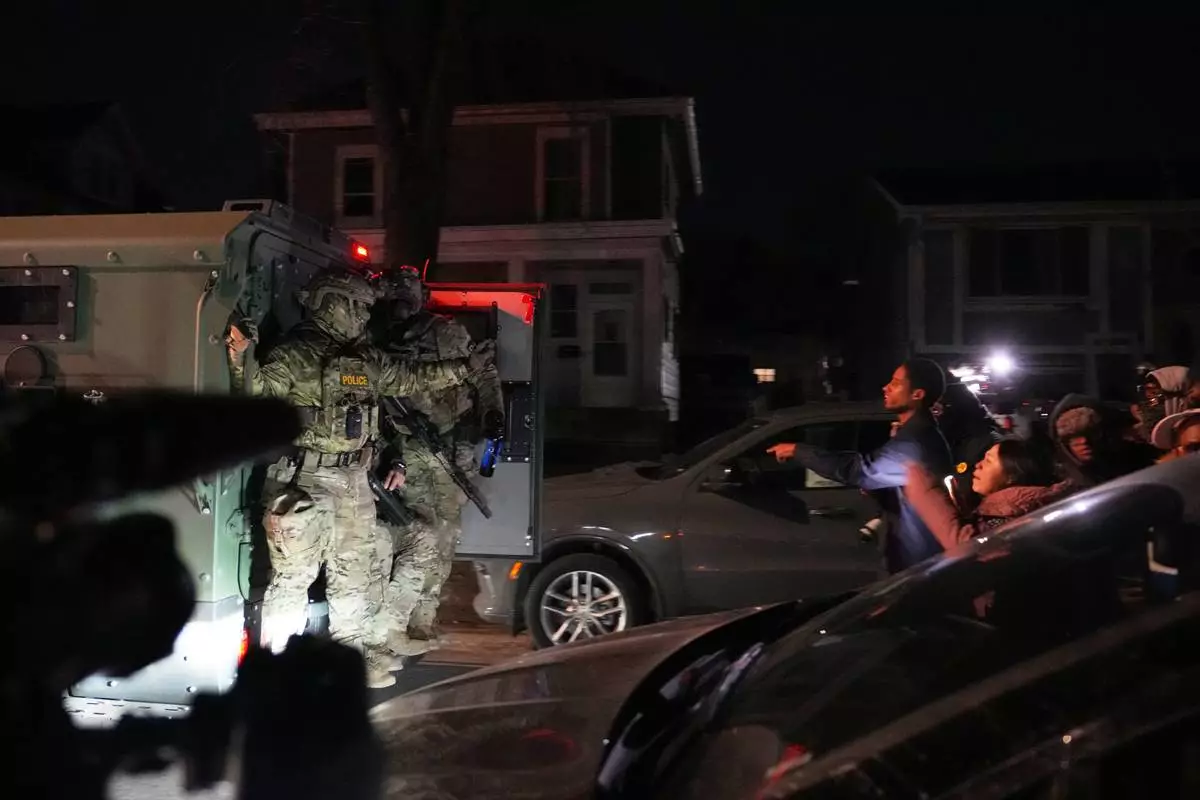
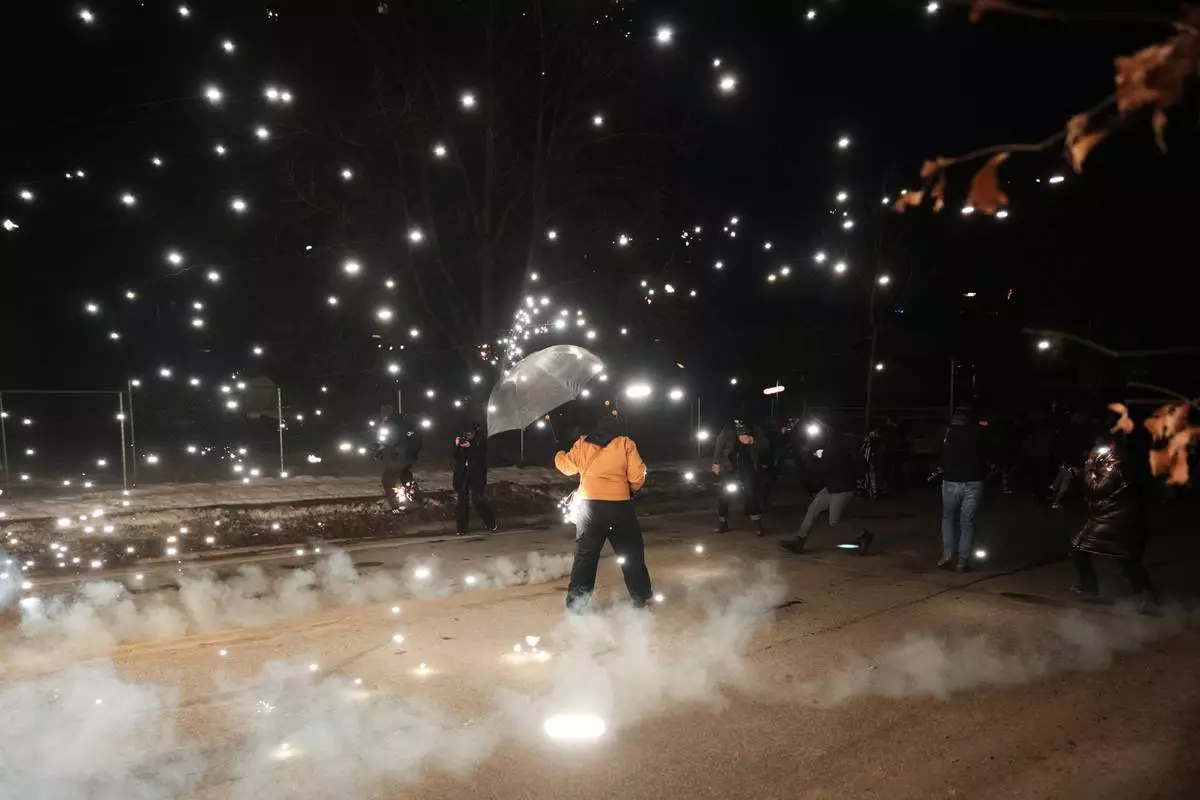
In Minneapolis, smoke filled the streets Wednesday night near the site of the latest shooting as federal officers wearing gas masks and helmets fired tear gas into a small crowd. Protesters responded by throwing rocks and shooting fireworks.

Demonstrations have become common in Minneapolis since Good was fatally shot on Jan. 7. Agents who have yanked people from their cars and homes have been confronted by angry bystanders demanding they leave.

“This is an impossible situation that our city is presently being put in and at the same time we are trying to find a way forward to keep people safe, to protect our neighbors, to maintain order,” Minneapolis Mayor Jacob Frey said.

Frey said the federal force — five times the size of the city’s 600-officer police force — has “invaded” Minneapolis, and that residents are scared and angry.

Homeland Security said in a statement that federal law enforcement officers on Wednesday stopped a driver from Venezuela who is in the U.S. illegally. The person drove off then crashed into a parked car before fleeing on foot, DHS said.

Officers caught up, then two other people arrived and the three started attacking the officer, according to DHS.

“Fearing for his life and safety as he was being ambushed by three individuals, the officer fired a defensive shot to defend his life,” DHS said. The confrontation took place about 4.5 miles (7.2 kilometers) from where Good was killed.

Police chief Brian O’Hara said the shot man was being treated for a non-life-threatening injury. The two others are in custody, DHS said. O’Hara's account of what happened largely echoed that of Homeland Security.

Earlier Wednesday, Gov. Tim Walz described Minnesota said what's happening in the state “defies belief.”

“Let’s be very, very clear: this long ago stopped being a matter of immigration enforcement,” he said. “Instead, it’s a campaign of organized brutality against the people of Minnesota by our own federal government.”

Jonathan Ross, the Immigration and Customs Enforcement officer who killed Good, suffered internal bleeding to his torso during the encounter, a Homeland Security official told The Associated Press.

The official spoke to AP on condition of anonymity in order to discuss Ross’ medical condition. The official did not provide details about the severity of the injuries, and the agency did not respond to questions about the bleeding, how he suffered the injury, when it was diagnosed or his medical treatment.

Good was killed after three ICE officers surrounded her SUV on a snowy street near her home. Bystander video shows one officer ordering Good to open the door and grabbing the handle. As the vehicle begins to move forward, Ross, standing in front, raises his weapon and fires at least three shots at close range. He steps back as the SUV advances and turns.

Homeland Security Secretary Kristi Noem has said Ross was struck by the vehicle and that Good was using her SUV as a weapon — a self-defense claim that has been criticized by Minnesota officials.

Chris Madel, an attorney for Ross, declined to comment.

Good’s family has hired the same law firm that represented George Floyd’s family in a $27 million settlement with Minneapolis. Floyd, who was Black, died after a white police officer pinned his neck to the ground 2020.

Madhani reported from Washington, D.C. Associated Press reporters Bill Barrow in Atlanta; Julie Watson in San Diego; Rebecca Santana in Washington; Ed White in Detroit and Giovanna Dell’Orto in Minneapolis contributed.

A protester holds an umbrella as sparks fly from a flash bang deployed by law enforcement on Wednesday, Jan. 14, 2026, in Minneapolis. (AP Photo/Adam Gray)

A protester holds an umbrella as sparks fly from a flash bang deployed by law enforcement on Wednesday, Jan. 14, 2026, in Minneapolis. (AP Photo/Adam Gray)

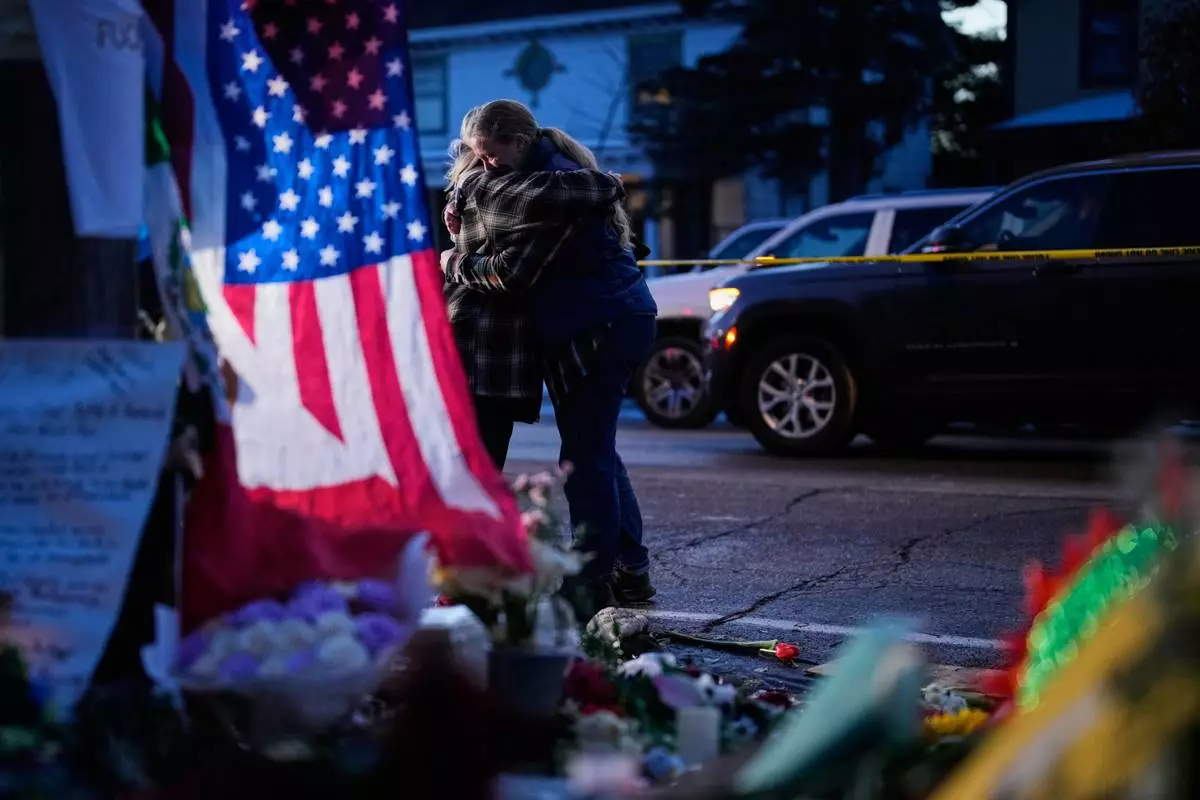
Monica Travis shares an embrace while visiting a makeshift memorial for Renee Good, who was fatally shot by an ICE officer last week, Monday, Jan. 12, 2026, in Minneapolis. (AP Photo/John Locher)

Monica Travis shares an embrace while visiting a makeshift memorial for Renee Good, who was fatally shot by an ICE officer last week, Monday, Jan. 12, 2026, in Minneapolis. (AP Photo/John Locher)

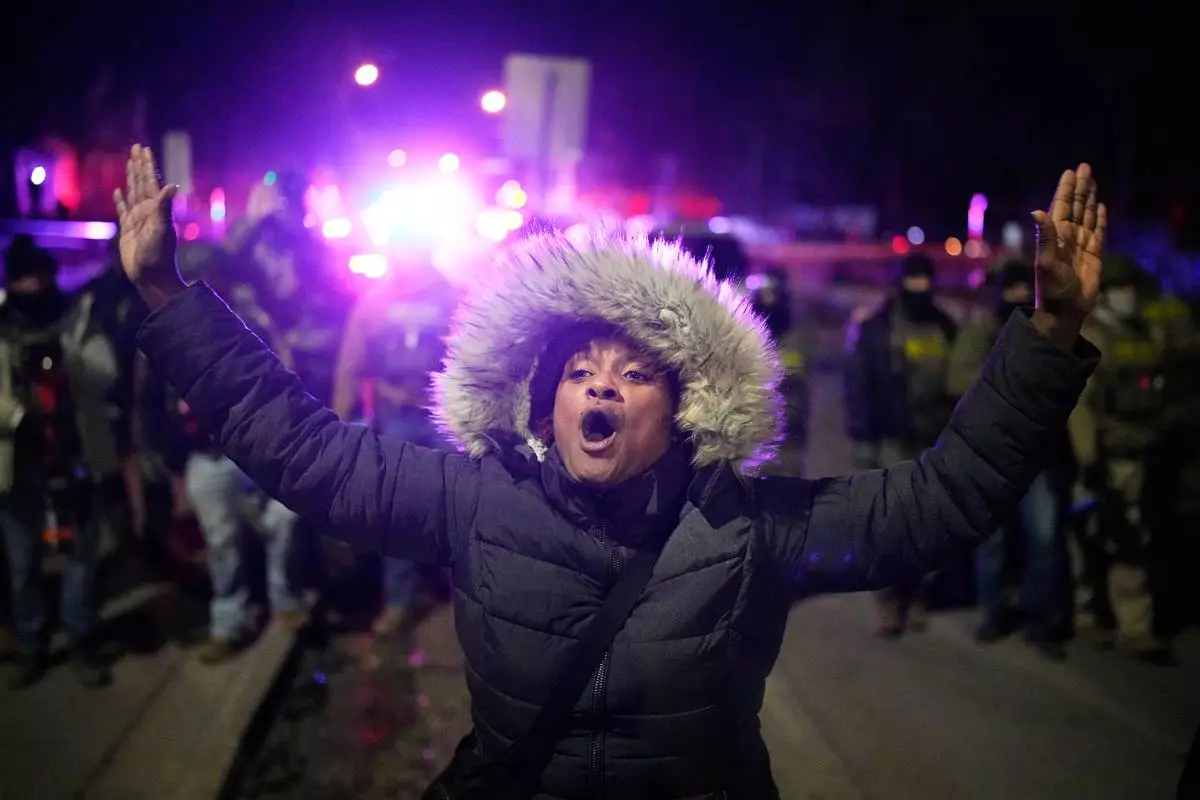
A protester yells in front of law enforcement after a shooting on Wednesday, Jan. 14, 2026, in Minneapolis. (AP Photo/John Locher)

A protester yells in front of law enforcement after a shooting on Wednesday, Jan. 14, 2026, in Minneapolis. (AP Photo/John Locher)

Tear gas surrounds federal law enforcement officers as they leave a scene after a shooting on Wednesday, Jan. 14, 2026, in Minneapolis. (AP Photo/John Locher)

Tear gas surrounds federal law enforcement officers as they leave a scene after a shooting on Wednesday, Jan. 14, 2026, in Minneapolis. (AP Photo/John Locher)

Protesters shout at law enforcement officers after a shooting on Wednesday, Jan. 14, 2026, in Minneapolis. (AP Photo/Abbie Parr)

Protesters shout at law enforcement officers after a shooting on Wednesday, Jan. 14, 2026, in Minneapolis. (AP Photo/Abbie Parr)

Law enforcement officers stand amid tear gas at the scene of a reported shooting Wednesday, Jan. 14, 2026, in Minneapolis. (AP Photo/Adam Gray)

Law enforcement officers stand amid tear gas at the scene of a reported shooting Wednesday, Jan. 14, 2026, in Minneapolis. (AP Photo/Adam Gray)

Recommended Articles