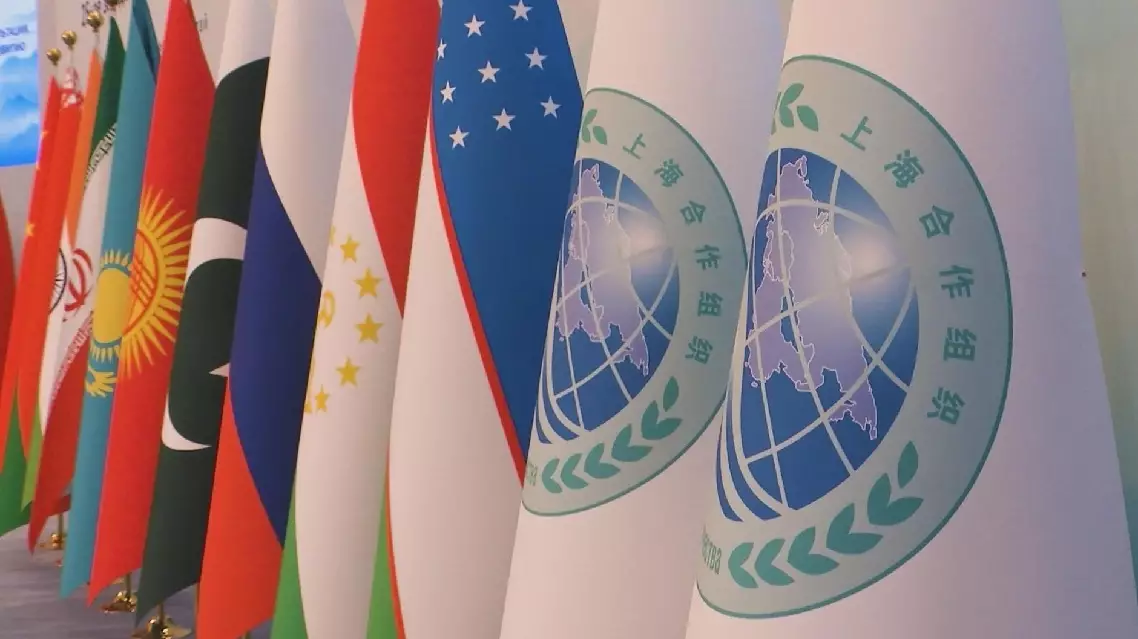
The Global Governance Initiative (GGI) proposed by President Xi Jinping, a key outcome of the Shanghai Cooperation Organization (SCO) Summit 2025, has drawn widespread endorsement for its contribution to the improvement of global governance mechanisms.
The initiative, unveiled at the just-ended SCO summit in the northern Chinese city of Tianjin, outlines five core principles: adhering to sovereign equality, abiding by international rule of law, practicing multilateralism, advocating a people-centered approach, and a focus on real actions.
Xi said that global governance has come to a new crossroads, calling for efforts to promote a more just and equitable global governance system.
The GGI marks the fourth landmark global initiative proposed by Xi over the past several years, following the Global Development Initiative, the Global Security Initiative and the Global Civilization Initiative.
Vladimir Zakharov, former deputy secretary-general of the SCO, said the summit produced some significant results.
"It was a summit with remarkable achievements. China's hosting of two major events successively -- the SCO Summit and commemorations marking the 80th anniversary of the victory in the Chinese People's War of Resistance against Japanese Aggression and the World Anti-Fascist War is not only of importance for the region, but also for the world. On the occasion, I want to highlight the summit's breakthrough outcomes, which is the unanimous support from participating leaders for the Global Governance Initiative and its core principles proposed by President Xi Jinping. The SCO has broad prospects for development, and we are witnessing the organization advancing with determination," said Zakharov.
Vadim Gigin, director general of the National Library of Belarus, said the initiative offers a framework for transitioning to a multipolar world through dialogue.
"One of the most significant outcomes is the Global Governance Initiative proposed by President Xi Jinping at the SCO summit, an influential international platform. We are looking forward to transitioning toward a multipolar world through consultation. The initiative calls for a reconstruction of global political and economic frameworks on a new foundation, and respect for the interests of all countries, regardless of their size or economic contribution. We have seen that leaders of other member states recognize and support this initiative," he said.
German media analyst Guntram Kaiser emphasized the initiative's relevance to today's global challenges.
"Let me remind you of a Chinese saying, 'Uphold the great principle, and the world will follow.' I think these five principles in the Global Governance Initiative are extremely important, because they are all about global challenges that we as human beings are facing today," said Kaiser.
The initiative reflects China's vision for a more just world amid shifting power dynamics, according to Kheir Diabat, a professor of international relations at Qatar University.
"I believe that the Global Governance Initiative reflects China's vision of a more just and balanced world in light of the profound shifts in the balance of power and global challenges. The initiative strives to orient development towards common goals, linking national development to the interests of the international community as a whole with the aim of promoting economic integration," said Diabat.
Mexican expert on international relations Ignacio Martinez praised the initiative as a "clear roadmap" for achieving growth, fair trade, and lasting peace over the next decade.
"President Xi Jinping's proposal for a new path for global governance highlights a development approach centered on the shared interests of humanity. He has provided a clear roadmap for achieving growth, promoting fair trade, and fostering lasting peace and common prosperity over the next decade," said Martinez.
Global Governance Initiative wins broad support from int'l experts