WASHINGTON--(BUSINESS WIRE)--Sep 3, 2025--
Journalist, energy expert and best-selling author Michael Shellenberger will deliver the keynote address at the Sept. 15 premiere screening of The Nuclear Frontier, a new feature documentary narrated by actor Boyd Holbrook ( Narcos, Indiana Jones and the Dial of Destiny ). The public is invited to the 5 p.m. reception and premiere at the John F. Kennedy Center for the Performing Arts. Complimentary admissions are limited due to seating with RSVPs required at TheNuclearFrontier.com.
This press release features multimedia. View the full release here: https://www.businesswire.com/news/home/20250903590016/en/
Directed by award-winning and Emmy-nominated filmmaker Evan Mascagni ( Building a Bridge, Circle of Poison ), the film follows young advocates and business leaders as they push for the expansion of nuclear power in America, where energy demand is surging due to factors including the construction of AI data centers.
“There is today a growing consensus that nuclear power is the cheapest, cleanest, and safest way to make the abundant power we need for AI dominance and energy abundance,” Shellenberger said. “ The Nuclear Frontier documentary is an exciting look inside why nuclear is finally gaining the support it has long deserved. It’s time to build.”
Shellenberger founded news site Public, which was honored with the 2023 Dao Journalism Prize, and also serves as the CBR Chair of Politics, Censorship, and Free Speech at the University of Austin. He also frequently provides expert testimony to Congress on energy issues. He played a pivotal role in preventing nuclear plants from closing around the world including in California. Millions have seen his TED talks on the ecological benefits of nuclear power.
The Nuclear Frontier offers a rare, behind-the-scenes look at how industry, technology and policy are converging to shape America’s next energy chapter, particularly as the country competes against China for leadership in nuclear’s zero-carbon technology. The United States has built just two nuclear reactors in the past 30 years, while China has built 37 in just 10 years and has another 30 under construction. The documentary was filmed at locations including California’s Diablo Canyon Power Plant, which had been slated for closure before a combination of employee efforts and broader pro-nuclear advocacy influenced the decision to extend its operation. Other filming sites included the University of South Carolina and Washington D.C.
The premiere marks the start of a nine-state tour with screenings on 14 college campuses. Mascagni hopes the tour will spark a national conversation on the future of nuclear power and the role of the next generation in building it. The public is invited to the documentary’s premiere screening at the Kennedy Center. The event opens with a reception at 5 p.m. on Monday, Sept. 15, followed by programming and the film’s screening. Complimentary admissions are limited due to seating with RSVPs required at TheNuclearFrontier.com.
This event is an external rental presented in coordination with The Kennedy Center Campus Rentals Office and is not produced by The Kennedy Center.

The Nuclear Frontier promotional poster
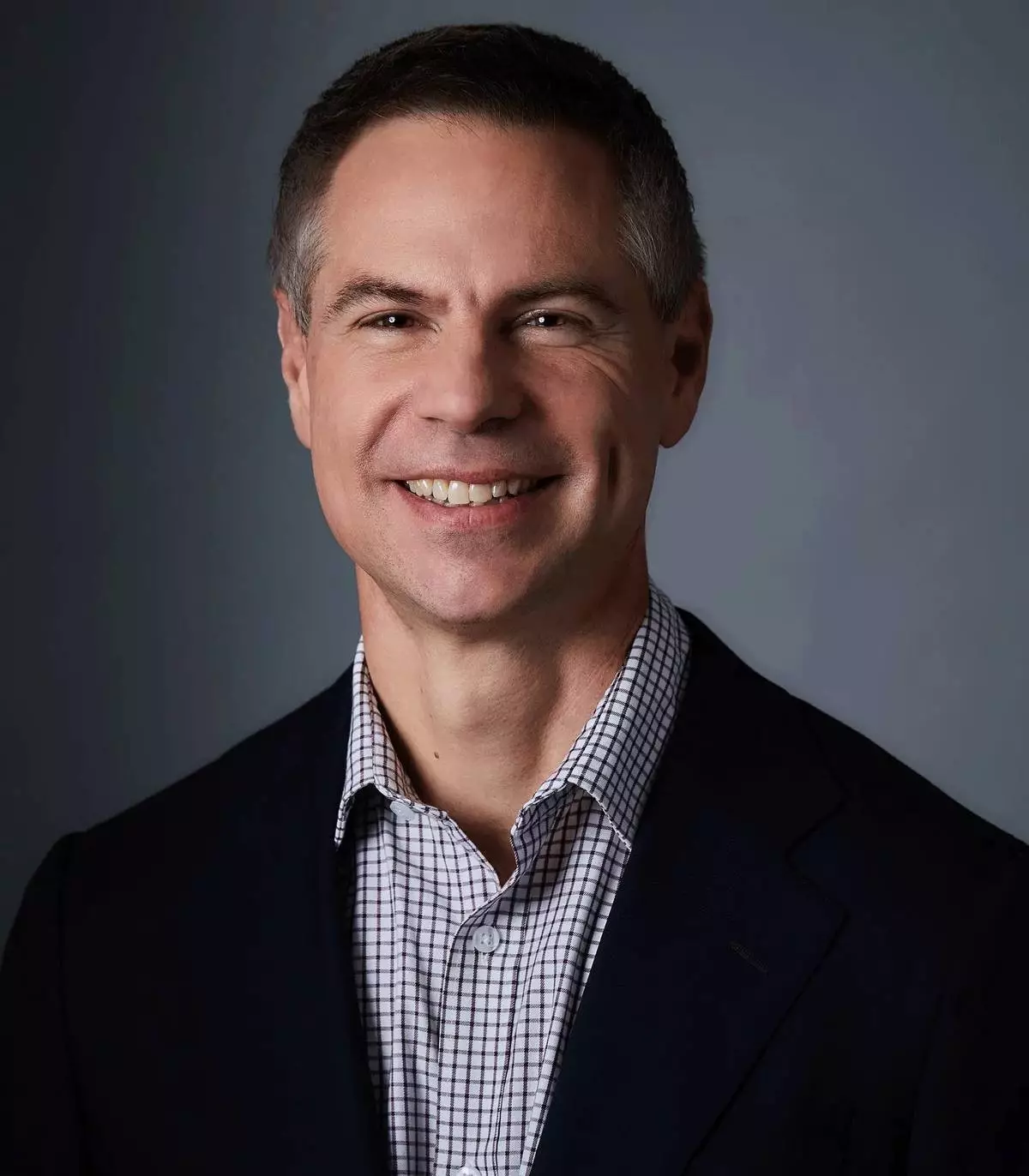
Michael Schellenberger to keynote The Nuclear Frontier's documentary premiere at The Kennedy Center
The risk of a catastrophic explosion at a damaged chemical tank in Southern California has been eliminated following a close overnight inspection that confirmed a crack in the tank relieved pressure and cooled the chemical, authorities said Monday.
Officials said crews conducted tank temperature checks at night to reduce risks to firefighters, avoiding daytime operations when heat from the tank made conditions around it most dangerous. The overnight mission allowed crews to verify the crack and confirm temperatures were falling, Orange County Fire Authority division chief Craig Covey said Monday morning.
Covey said the results of overnight evaluation of the tank — that the temperature inside had dropped and that pressure had been released — was “incredibly positive news.”
However, evacuation orders remained in place for about 50,000 people in Garden Grove, California, located south of Los Angeles.
Covey said falling temperatures and the release of pressure from the tank were allowing officials to “turn the corner on this incident” after days of concern about a possible explosion.
There has been no chemical leak as of early Monday, but the Orange County Fire Authority said the risk to public safety is “ongoing.”'
After the tank overheated Thursday and began venting vapors, firefighters have repeatedly sprayed the tank with water in an attempt to cool the chemical inside, methyl methacrylate, which is used to make plastic parts.
The tank's interior reached 100 degrees (37.7 Celsius) Sunday, an increase of 10 degrees Fahrenheit (5.5 Celsius) since Saturday, according to Democratic state Sen. Tom Umberg. On Monday, Covey said the temperature fell to 93 degrees F (33.9 degrees C).
Gov. Gavin Newsom declared a state of emergency Saturday and said he asked President Donald Trump to issue an emergency declaration to bolster federal support for local and state officials.
The tank at GKN Aerospace Transparency Systems, which makes parts for commercial and military aircraft, holds 6,000 to 7,000 gallons (22,700 to 26,500 liters) of methyl methacrylate used to make plastic parts.
The first goal of firefighters was to cool off the chemical inside the tank to prevent a leak or explosion.
Drones were monitoring temperatures at 10-minute intervals to watch for any spikes. Containment barriers were set up to prevent the chemical from getting into storm drains or reaching creeks or the nearby ocean in the event of a spill, Covey said earlier.
As the interior temperature rises, methyl methacrylate converts from a liquid to a gas and increases the pressure, according to Purdue University engineering professor Andrew Whelton, who had said earlier that the crack could mean product or pressure is being released, reducing the chance of explosion.
“Think of a soda can. If you leave it in a hot car it can explode,” Whelton said. “But if you put a hole in the can, the product is released and the can itself doesn’t explode.”
An explosion that could spread the chemical over a broad area and send shrapnel flying would be the worst-case scenario, he said.
Aerial photos taken by The Associated Press showed streets in the area were empty Sunday, while several evacuation shelters were open. At a high school in neighboring La Palma, people slept in cars or on mats and sleeping bags on the asphalt.
Garden Grove is next to Anaheim, home to Disneyland’s two theme parks, which were not under evacuation orders. Park officials said they were monitoring the situation.
Exposure to methyl methacrylate can cause serious respiratory problems, neurological problems and irritation to the skin, eyes and throat, according to fact sheets about the chemical.
Whelton said if an explosion occurs, it will be crucial to conduct detailed air monitoring specifically for methyl methacrylate and not just generic tests for volatile organic compounds as officials did after a 2023 train derailment in East Palestine, Ohio, which released more than 115,000 gallons (435,000 liters) of vinyl chloride after officials blew open five tank cars and burned the chemical.
Orange County health officials said the chemical is easy to smell and people may notice it over a large area without being harmed.
Some Garden Grove residents filed a class-action federal lawsuit Saturday against GKN Aerospace Transparency Systems, which operates the facility where the tank is located. Lawyers for the residents argued that regardless of what happens, property values in the surrounding community are sure to be impacted.
GKN Aerospace did not comment on the lawsuit but has apologized to residents and businesses forced to evacuate. It said Sunday it was “working around the clock to mitigate the risk of a leak.”
GKN Aerospace agreed in 2025 to pay state regulators more than $900,000 to settle violations involving recordkeeping, permitting issues and nitrogen oxide emissions, according to a report on the South Coast Air Quality Management District website.
Associated Press journalist Ethan Swope in Garden Grove, California, contributed to this report.
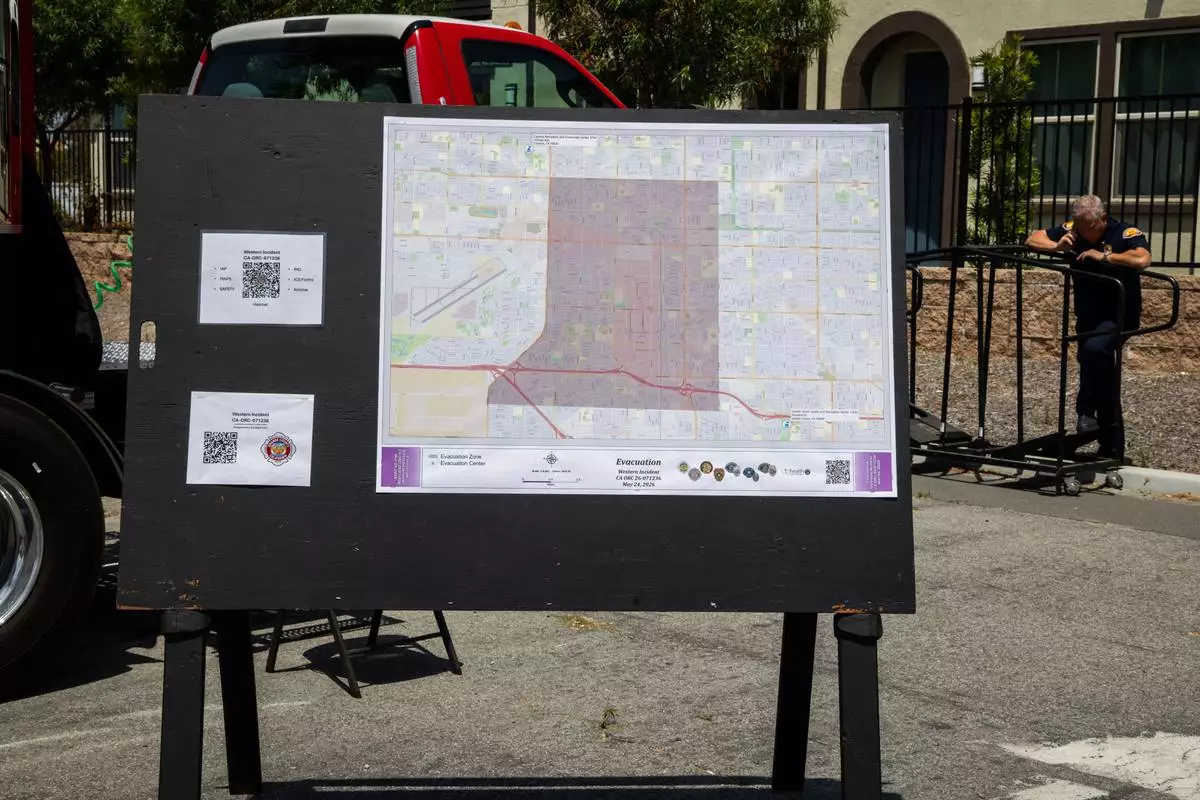
An evacuation map is displayed at the incident command post at the Los Alamitos Race Course in Cypress, Calif., on Sunday, May 24, 2026. (AP Photo/Ethan Swope)
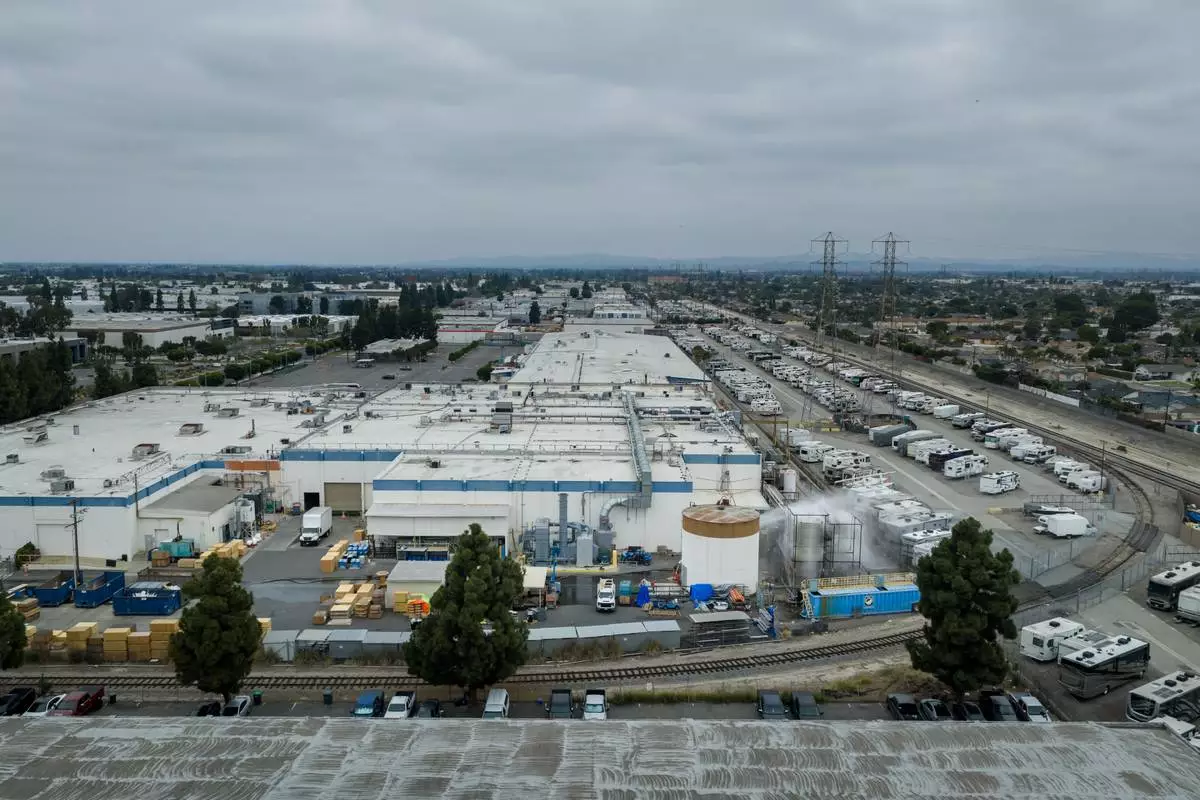
Water is sprayed on a damaged tank at GKN Aerospace in Garden Grove, Calif., on Sunday, May 24, 2026, after the tank containing a chemical used to make plastic parts overheated Thursday. (AP Photo/Ethan Swope)

The streets remain empty in Garden Grove, Calif., on Sunday, May 24, 2026, after a storage tank containing a chemical used to make plastic parts overheated Thursday at an aerospace plastics facility. (AP Photo/Ethan Swope)

Emergency personnel work at the incident command post at the Los Alamitos Race Course Sunday, May 24, 2026, in Cypress, Calif. (AP Photo/Ethan Swope)
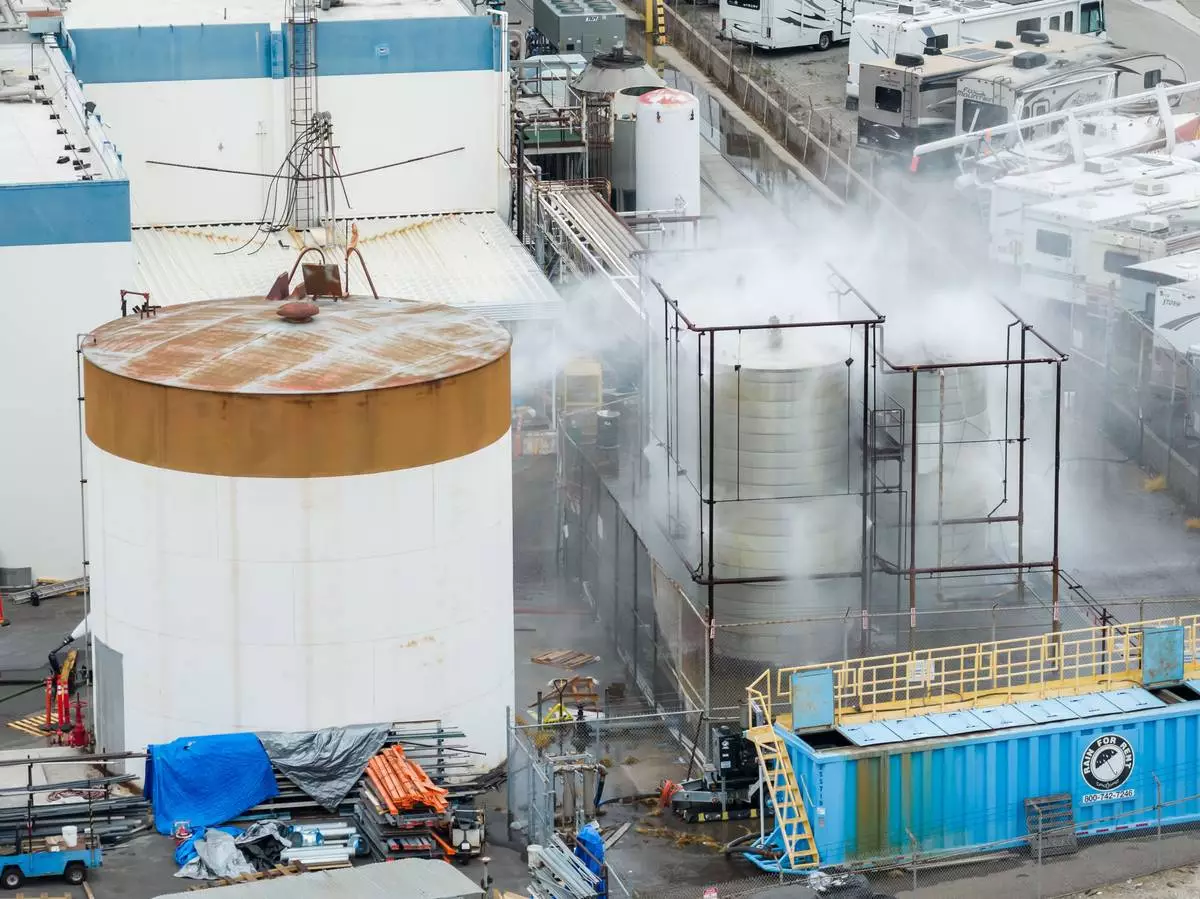
Water is sprayed on a damaged tank at GKN Aerospace in Garden Grove, Calif., on Sunday, May 24, 2026, after the tank containing a chemical used to make plastic parts overheated Thursday. (AP Photo/Ethan Swope)