WASHINGTON (AP) — An unusual alliance emerged in the House on Wednesday as lawmakers who agree on little else rallied support for a bill that would prohibit members of Congress and their families from owning and trading individual stocks.
The group included darlings of the far right, the left, moderates and many in between. They gathered to promote a ban that polls well with voters and appears to be finding new momentum after stalling out in previous sessions of Congress.
“It’s not every day you see this cast of characters up here,” said Rep. Brian Fitzpatrick, a moderate Republican who represents a perennial swing district in Pennsylvania. "You’re all smirking out there. That’s a good thing. It speaks to the power of this cause.”
Congress has discussed proposals for years to keep lawmakers from engaging in trading individual stocks, nodding to the idea that there’s a potential conflict of interest when they are often privy to information and decisions that can dramatically move markets.
A Senate committee has approved legislation from GOP Sen. Josh Hawley of Missouri that would also extend the prohibition on stock trading to future presidents and vice presidents — while notably exempting Republican President Donald Trump. The House bill unveiled this week is limited to Congress, but the sponsors said they were open to extending it to the executive branch if enough support emerged.
Under current law, federal lawmakers are required to disclose their stock sales and purchases. The bill requiring disclosure, The Stock Act, was signed into law in 2012. At the time, lawmakers and government watchdogs predicted that public disclosure would shame lawmakers out of actively buying and selling stock. That hasn’t happened.
The sponsors said they merged their own, individual bills on banning stocks and came together with a single bipartisan effort. Rep. Chip Roy of Texas, the bill's lead sponsor, said the group had been meeting for the last several months, and some sponsors had actually been working on this for years. About a dozen lawmakers from both parties joined Roy onstage. It was an unusually festive moment as the partisan lines in Congress have rarely been sharper.
“I don’t agree with some of these people on anything,” said Rep. Tim Burchett, a Tennessee Republican often aligned with the the ultra-conservative House Freedom Caucus.
Progressive Rep. Alexandria Ocasio-Cortez, D-N.Y., followed Burchett to the podium and fist-bumped him when doing so. She said she felt like the coalition showed how Congress should actually work. “It feels foreign and it feels alien and it’s like, what’s going on here?” she said.
While the legislation would not allow lawmakers to own individual stocks and bonds, they would be allowed to own diversified mutual funds and ETFs and certain commodities. Lawmakers who currently own individual stocks and bonds would have 180 days to divest. New members would have 90 days to divest upon taking office.
The mood was celebratory at Wednesday's unveiling, but even if the bill were to pass the House, it would face a more difficult climb in the Senate. At least 60 votes would be needed to advance the legislation in that chamber and some senators have expressed concerns about the concept.
Rep. Seth Magaziner, D-R.I., acknowledged that members opposed to banning stocks are “persistent.”
“Those of us who support banning stock trading in Congress are very vocal in our position, but that doesn’t mean that there aren’t opponents,” Magaziner said.
Some members expressed urgency in moving the bill through the House. Rep. Anna Paulina Luna, R-Fla., said they have “asked nicely for leadership to put this on the floor" and set a deadline for the end of the month before she would seek to force a vote.
A version of the trading ban that advanced out of one Senate panel was described by Republican Sen. Ron Johnson of Wisconsin as “legislative demagoguery.”
“We do have insider trading laws. We have financial disclosure. Trust me, we have financial disclosure,” Johnson said. “So I don’t see the necessity of this.”
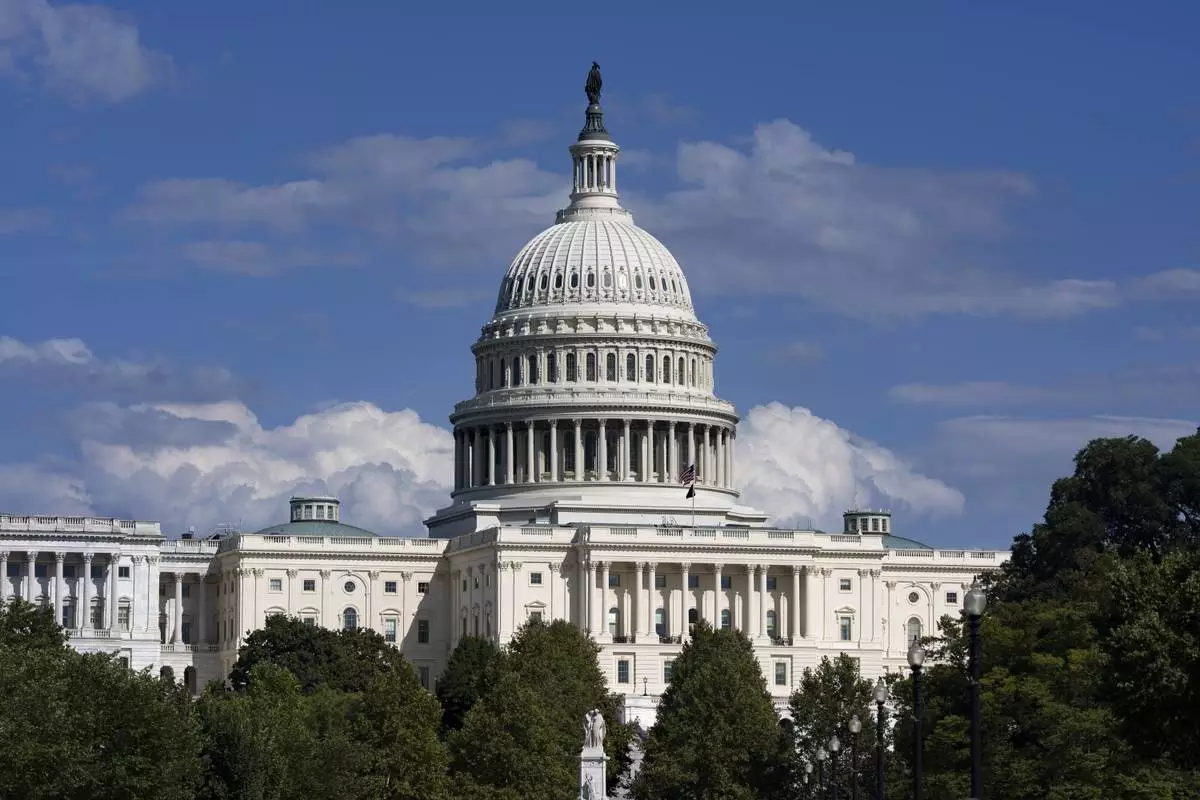
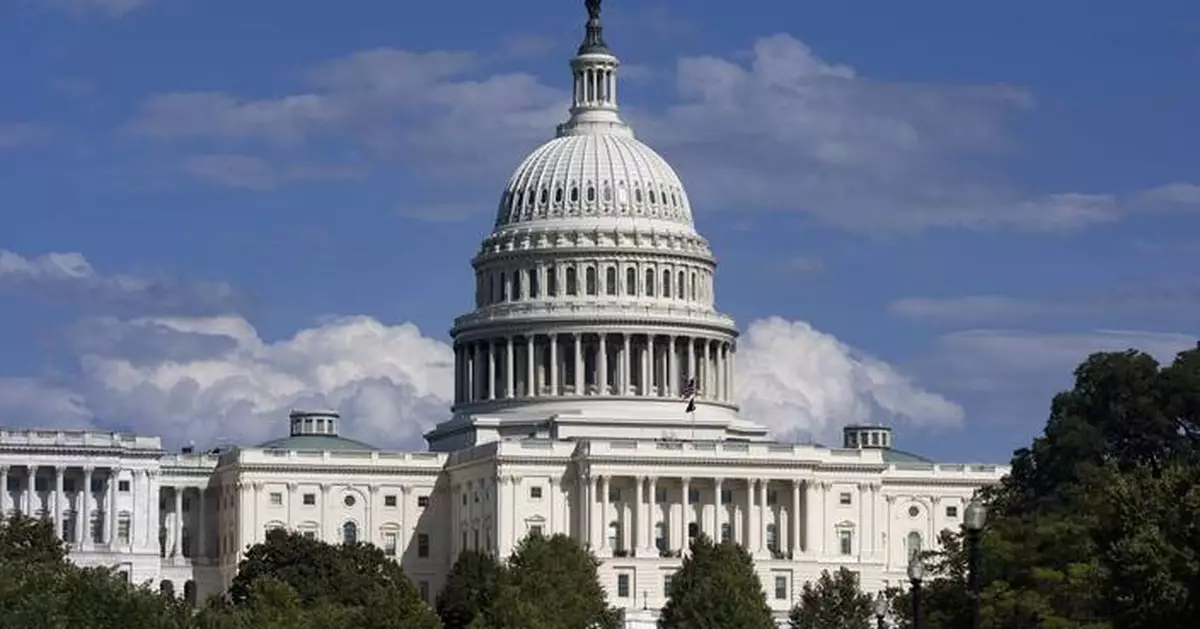
FILE-The Capitol is seen in Washington, Tuesday, Aug. 26, 2025, as Congress is scheduled to return from their August break Tuesday, Sept. 2, 2025, after Labor Day. (AP Photo/J. Scott Applewhite, file)
MINNEAPOLIS (AP) — President Donald Trump on Thursday threatened to invoke the Insurrection Act and deploy troops to quell persistent protests against the federal officers sent to Minneapolis to enforce his administration's massive immigration crackdown.
The threat comes a day after a man was shot and wounded by an immigration officer who had been attacked with a shovel and broom handle. That shooting further heightened the fear and anger that has radiated across the city since an Immigration and Customs Enforcement agent fatally shot Renee Good in the head.
Trump has repeatedly threatened to invoke the rarely used federal law to deploy the U.S. military or federalize the National Guard for domestic law enforcement, over the objections of state governors.
“If the corrupt politicians of Minnesota don’t obey the law and stop the professional agitators and insurrectionists from attacking the Patriots of I.C.E., who are only trying to do their job, I will institute the INSURRECTION ACT, which many Presidents have done before me, and quickly put an end to the travesty that is taking place in that once great State,” Trump said in social media post.
Presidents have indeed invoked the Insurrection Act more than two dozen times, most recently in 1992 by President George H.W. Bush to end unrest in Los Angeles. In that instance, local authorities had asked for the assistance.
Minnesota Attorney General Keith Ellison responded to Trump's post by saying he would challenge any deployment in court. He's already suing to try to stop the surge by the Department of Homeland Security, which says it has made more than 2,000 arrests in the state since early December. ICE is a DHS agency.
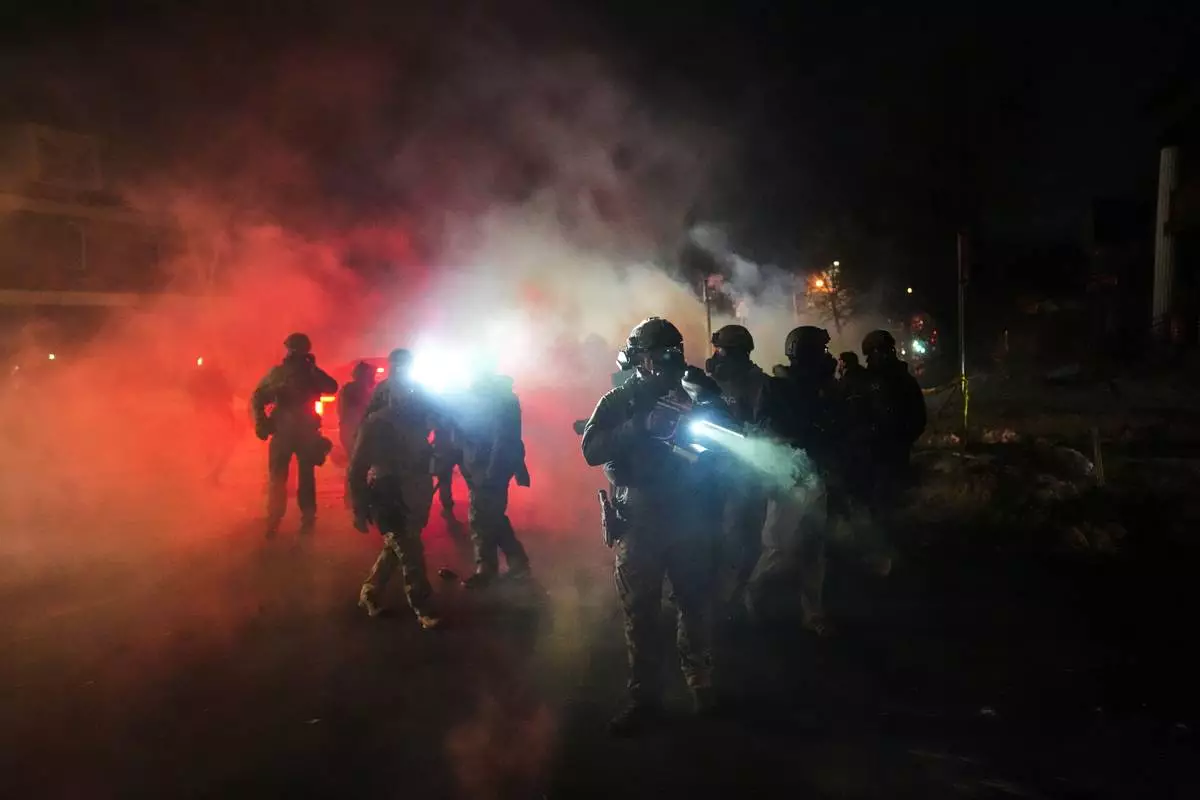
In Minneapolis, smoke filled the streets Wednesday night near the site of the latest shooting as federal officers wearing gas masks and helmets fired tear gas into a small crowd. Protesters responded by throwing rocks and shooting fireworks.
Demonstrations have become common in Minneapolis since Good was fatally shot on Jan. 7. Agents who have yanked people from their cars and homes have been confronted by angry bystanders demanding they leave.
“This is an impossible situation that our city is presently being put in and at the same time we are trying to find a way forward to keep people safe, to protect our neighbors, to maintain order,” Minneapolis Mayor Jacob Frey said.
Frey said the federal force — five times the size of the city’s 600-officer police force — has “invaded” Minneapolis, and that residents are scared and angry.
Homeland Security said in a statement that federal law enforcement officers on Wednesday stopped a driver from Venezuela who is in the U.S. illegally. The person drove off then crashed into a parked car before fleeing on foot, DHS said.
Officers caught up, then two other people arrived and the three started attacking the officer, according to DHS.
“Fearing for his life and safety as he was being ambushed by three individuals, the officer fired a defensive shot to defend his life,” DHS said. The confrontation took place about 4.5 miles (7.2 kilometers) from where Good was killed.
Police chief Brian O’Hara said the shot man was being treated for a non-life-threatening injury. The two others are in custody, DHS said. O’Hara's account of what happened largely echoed that of Homeland Security.
Earlier Wednesday, Gov. Tim Walz described Minnesota said what's happening in the state “defies belief.”
“Let’s be very, very clear: this long ago stopped being a matter of immigration enforcement,” he said. “Instead, it’s a campaign of organized brutality against the people of Minnesota by our own federal government.”
Jonathan Ross, the Immigration and Customs Enforcement officer who killed Good, suffered internal bleeding to his torso during the encounter, a Homeland Security official told The Associated Press.
The official spoke to AP on condition of anonymity in order to discuss Ross’ medical condition. The official did not provide details about the severity of the injuries, and the agency did not respond to questions about the bleeding, how he suffered the injury, when it was diagnosed or his medical treatment.
Good was killed after three ICE officers surrounded her SUV on a snowy street near her home. Bystander video shows one officer ordering Good to open the door and grabbing the handle. As the vehicle begins to move forward, Ross, standing in front, raises his weapon and fires at least three shots at close range. He steps back as the SUV advances and turns.
Homeland Security Secretary Kristi Noem has said Ross was struck by the vehicle and that Good was using her SUV as a weapon — a self-defense claim that has been criticized by Minnesota officials.
Chris Madel, an attorney for Ross, declined to comment.
Good’s family has hired the same law firm that represented George Floyd’s family in a $27 million settlement with Minneapolis. Floyd, who was Black, died after a white police officer pinned his neck to the ground 2020.
Madhani reported from Washington, D.C. Associated Press reporters Bill Barrow in Atlanta; Julie Watson in San Diego; Rebecca Santana in Washington; Ed White in Detroit and Giovanna Dell’Orto in Minneapolis contributed.
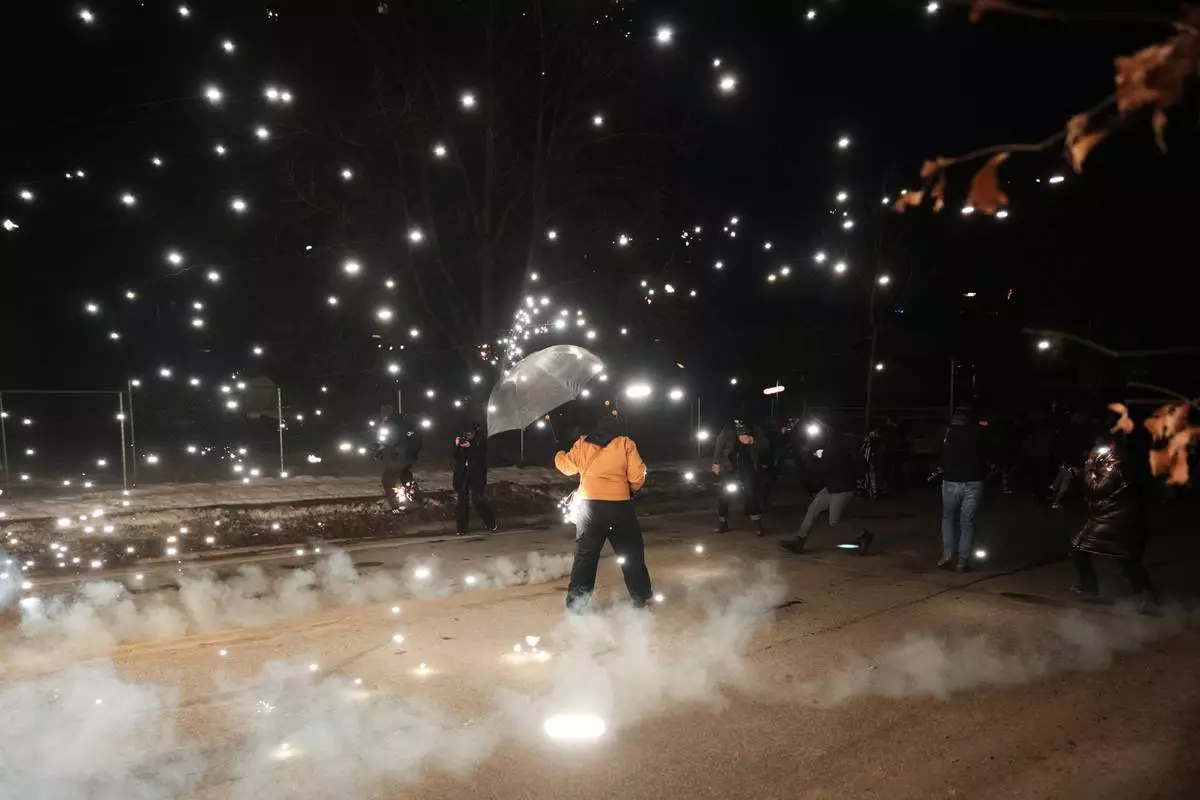
A protester holds an umbrella as sparks fly from a flash bang deployed by law enforcement on Wednesday, Jan. 14, 2026, in Minneapolis. (AP Photo/Adam Gray)
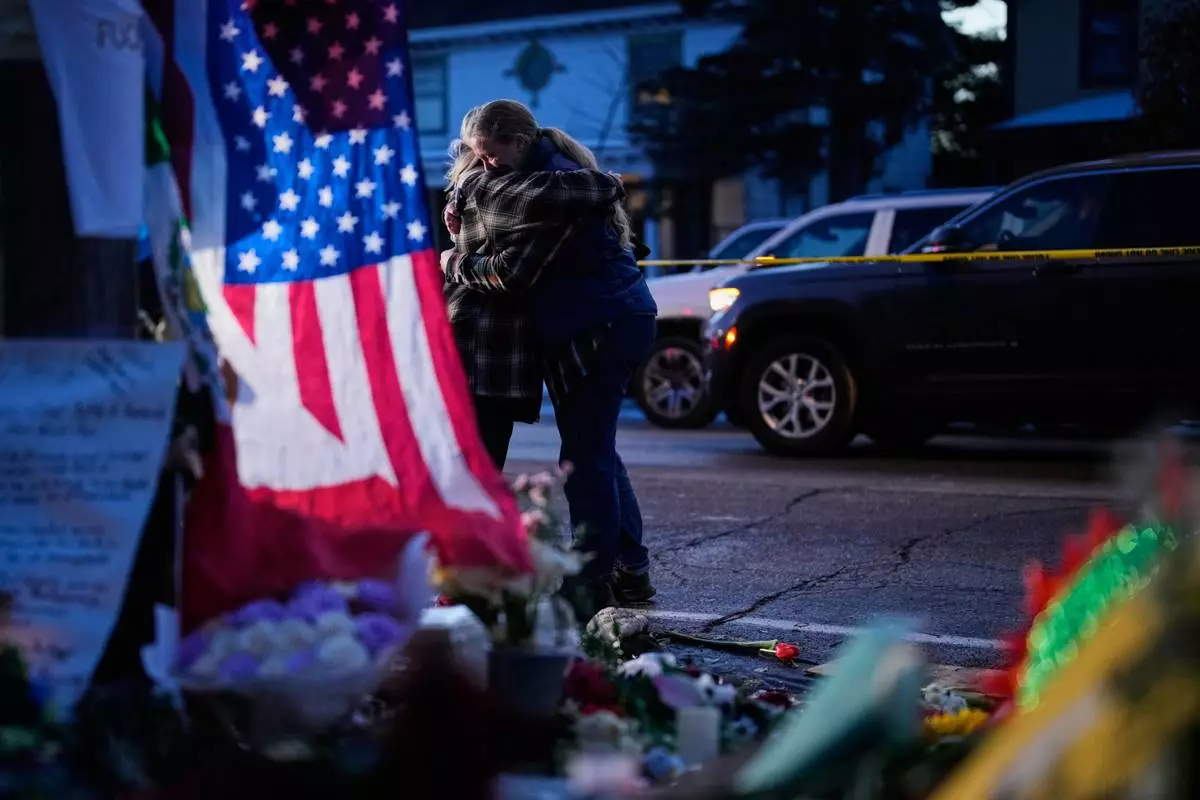
Monica Travis shares an embrace while visiting a makeshift memorial for Renee Good, who was fatally shot by an ICE officer last week, Monday, Jan. 12, 2026, in Minneapolis. (AP Photo/John Locher)
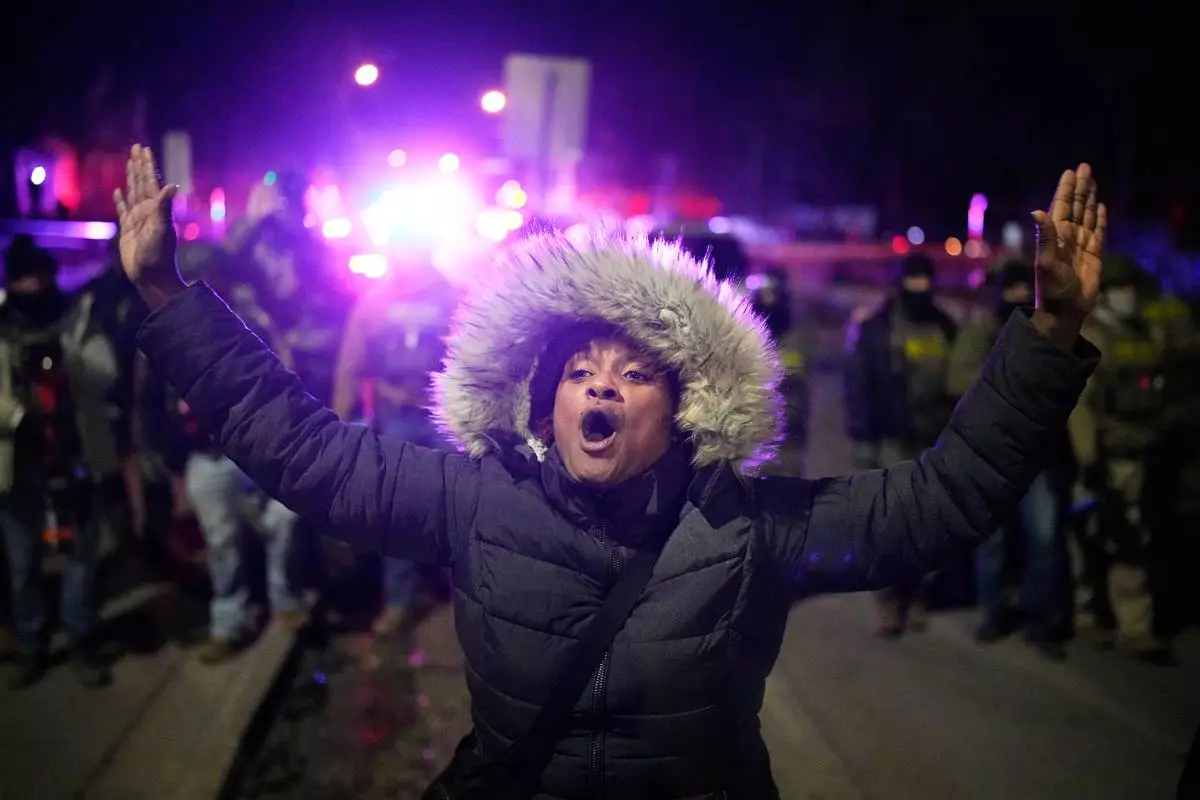
A protester yells in front of law enforcement after a shooting on Wednesday, Jan. 14, 2026, in Minneapolis. (AP Photo/John Locher)
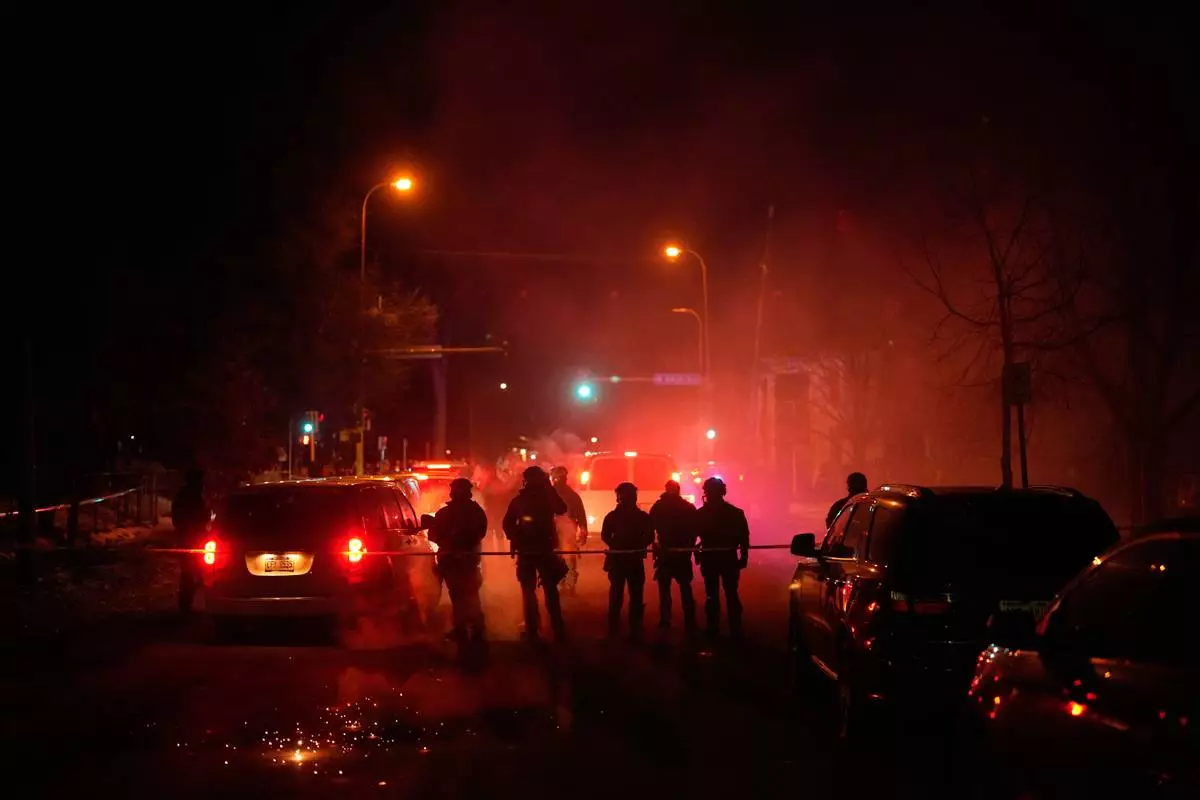
Tear gas surrounds federal law enforcement officers as they leave a scene after a shooting on Wednesday, Jan. 14, 2026, in Minneapolis. (AP Photo/John Locher)
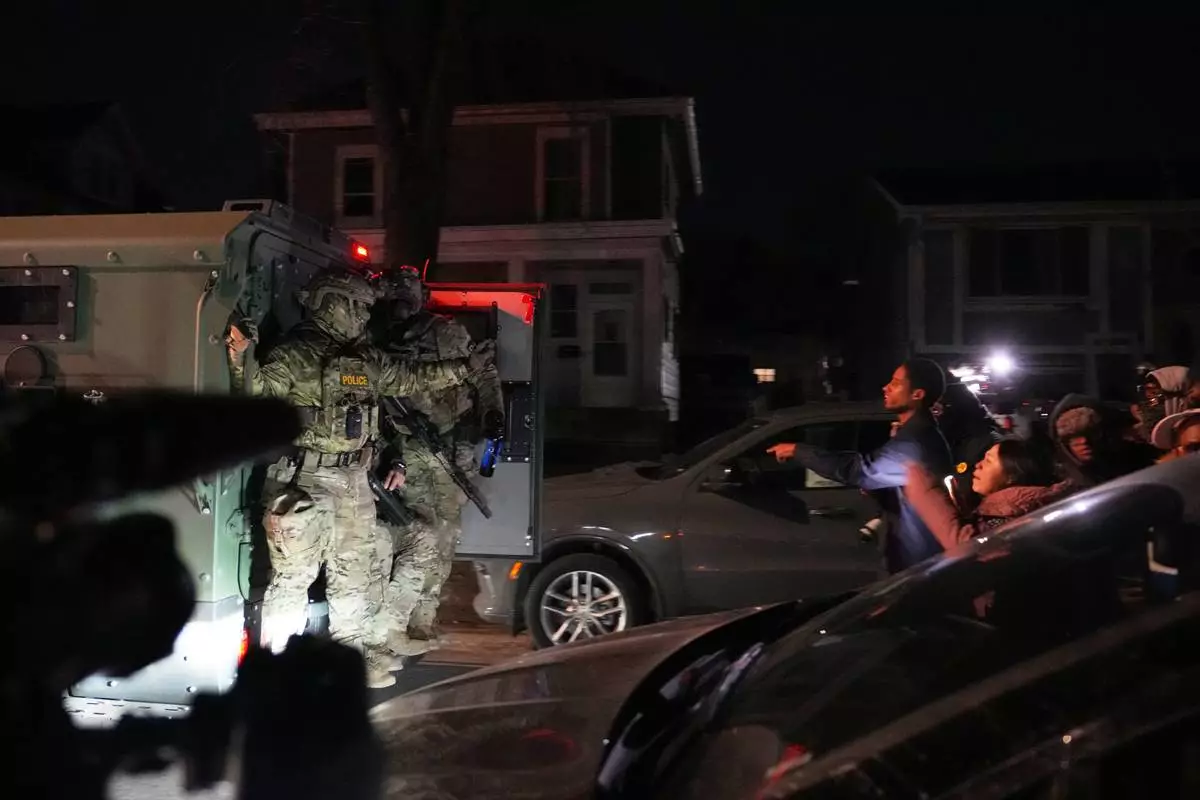
Protesters shout at law enforcement officers after a shooting on Wednesday, Jan. 14, 2026, in Minneapolis. (AP Photo/Abbie Parr)
Law enforcement officers stand amid tear gas at the scene of a reported shooting Wednesday, Jan. 14, 2026, in Minneapolis. (AP Photo/Adam Gray)