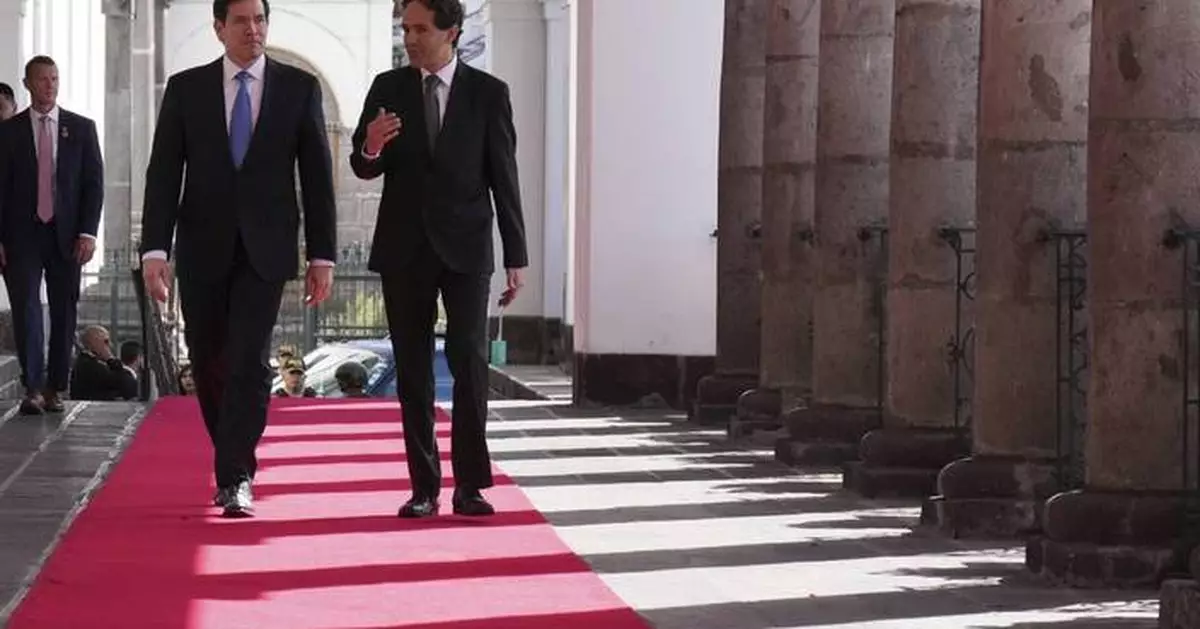
QUITO, Ecuador (AP) — The United States is designating two Ecuadorian gangs as foreign terrorist organizations, marking the Trump administration’s latest step to target criminal cartels in Latin America.
U.S. Secretary of State Marco Rubio made the announcement Thursday while in Ecuador as part of a trip to Latin America overshadowed by an American military strike against a similarly designated gang, Venezuela's Tren de Aragua. That attack has raised concerns in the region about what may follow as President Donald Trump's government pledges to step up military activity to combat drug trafficking and illegal migration.
Click to Gallery
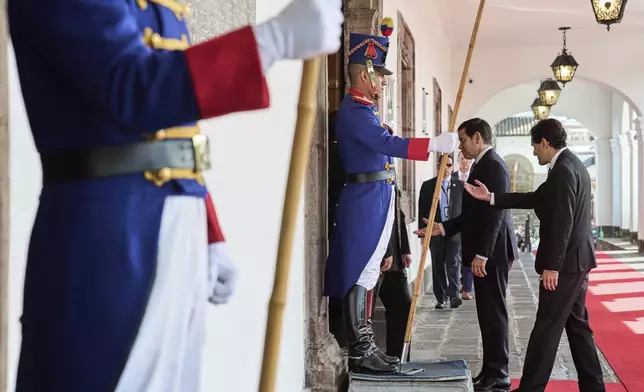
U.S. Secretary of State Marco Rubio, center, arrives at the Palacio de Carondelet to meet with Ecuador's President Daniel Noboa in Quito, Ecuador, Thursday, Sept. 4, 2025. (AP Photo/Jacquelyn Martin, Pool)
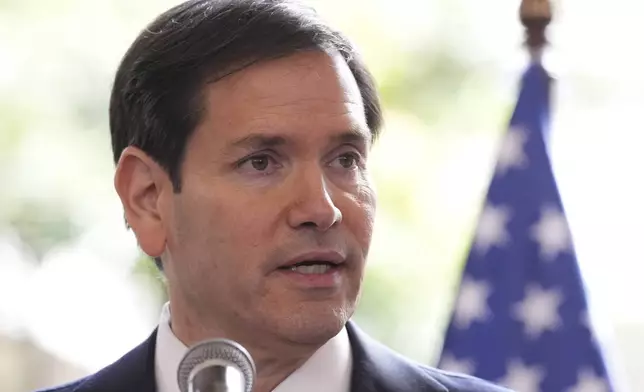
Secretary of State Marco Rubio speaks during a joint news conference with Ecuador's Foreign Minister Gabriela Sommerfeld at the Palacio de Carondelet, in Quito, Ecuador, Thursday, Sept. 4, 2025. (AP Photo/Jacquelyn Martin, Pool)
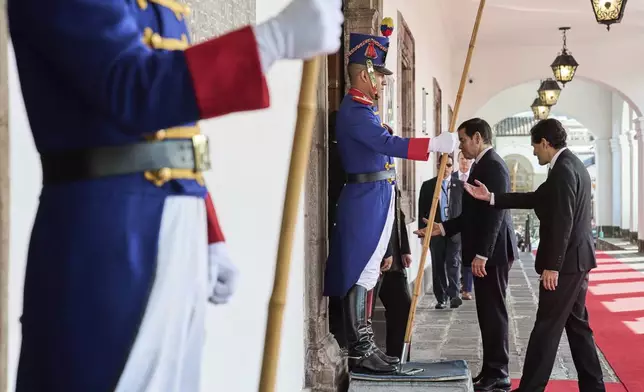
U.S. Secretary of State Marco Rubio, center, arrives at the Palacio de Carondelet to meet with Ecuador's President Daniel Noboa in Quito, Ecuador, Thursday, Sept. 4, 2025. (AP Photo/Jacquelyn Martin, Pool)

U.S. Secretary of State Marco Rubio and Ecuador's President Daniel Noboa, right, preside over an extended meeting at the presidential palace in Quito, Ecuador, Thursday, Sept. 4, 2025. (AP Photo/Jacquelyn Martin, pool)
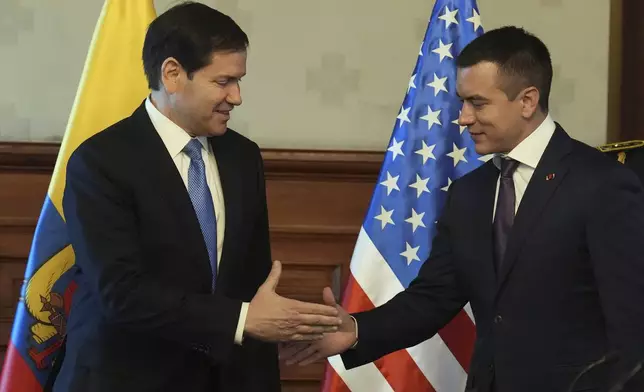
U.S. Secretary of State Marco Rubio and Ecuador's President Daniel Noboa shake hands at the presidential palace in Quito, Ecuador, Thursday, Sep. 4, 2025. (AP Photo/Jacquelyn Martin, pool)
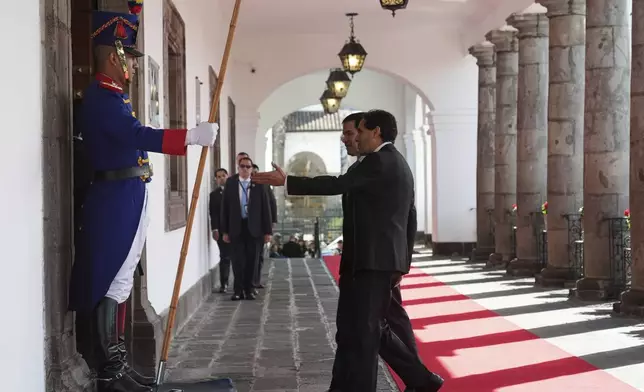
A protocol officer shows the way to U.S. Secretary of State Marco Rubio as he arrives to meet with Ecuador's President Daniel Noboa at the presidential palace in Quito, Ecuador, Thursday, Sep. 4, 2025. (AP Photo/Jacquelyn Martin, pool)
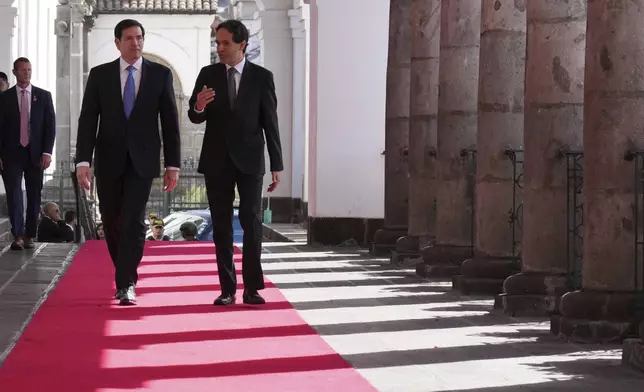
U.S. Secretary of State Marco Rubio, left, arrives to meet with Ecuador's President Daniel Noboa at the presidential palace in Quito, Ecuador, Thursday, Sep. 4, 2025. (AP Photo/Jacquelyn Martin, pool)
“This time, we’re not just going to hunt for drug dealers in the little fast boats and say, ‘Let’s try to arrest them,’” Rubio told reporters in Quito, Ecuador’s capital. “No, the president has said he wants to wage war on these groups because they’ve been waging war on us for 30 years and no one has responded.”
The Defense Department said late Thursday that two Venezuelan military aircraft flew near a U.S. Navy vessel in international waters, calling it “a highly provocative move” and warning President Nicolás Maduro’s government against further actions.
Los Lobos and Los Choneros are Ecuadorian gangs blamed for much of the violence that began during the COVID-19 pandemic. The terrorist designation, Rubio said, brings “all sorts of options” for Washington to work in conjunction with the government of Ecuador to crack down on these groups.
That includes the ability to kill them as well as take action against the properties and banking accounts in the U.S. of the group’s members and those with ties to the criminal organizations, Rubio said. He said the label also would help with intelligence sharing.
Los Choneros, Los Lobos and other similar groups are involved in contract killings, extortion operations and the movement and sale of drugs. Authorities have blamed them for the increased violence in the country as they fight over drug-trafficking routes to the Pacific and control of territory, including within prisons, where hundreds of inmates have been killed since 2021.
The strike has become the focus on Rubio's trip, which included a stop in Mexico on Wednesday.
U.S. officials say the vessel's cargo was intended for the U.S. and that the strike killed 11 people, but they have yet to explain how the military determined that those aboard were Tren de Aragua members.
Rubio said U.S. actions targeting cartels were being directed more toward Venezuela, and not Mexico.
“There’s no need to do that in many cases with friendly governments, because the friendly governments are going to help us,” Rubio told reporters. “They may do it themselves, and we’ll help them do it.”
A day earlier, Rubio justified the strike by saying the boat posed an “immediate threat” to the U.S. and Trump opted to “blow it up” rather than follow what had been standard procedure to stop and board, arrest the crew and seize any contraband on board.
The strike drew a mixed reaction from leaders around Latin America, where the U.S. history of military intervention and gunboat diplomacy is still fresh. Many, like officials in Mexico, were careful not to outright condemn the attack. They stressed the importance of protecting national sovereignty and warned that expanded U.S. military involvement might backfire.
President Daniel Noboa thanked Rubio for the U.S. efforts to “actually eliminate any terrorist threat.” Before their meeting, Rubio said on social media that the U.S. and Ecuador are “aligned as key partners on ending illegal immigration and combatting transnational crime and terrorism."
The latest U.N. World Drug Report says various countries in South America, including Colombia, Ecuador and Peru, reported larger cocaine seizures in 2022 than in 2021. The report does not give Venezuela the outsize role that the White House has in recent months.
“I don’t care what the U.N. says. I don’t care,” Rubio said.
Violence has skyrocketed in Ecuador since the pandemic. Drug traffickers expanded operations and took advantage of the nation’s banana industry. Ecuador is the world’s largest exporter of the fruit, and traffickers find maritime shipping containers filled with it to be the perfect vehicle to smuggle their contraband.
Cartels from Mexico, Colombia and the Balkans have settled in Ecuador because it uses the U.S. dollar and has weak laws and institutions, along with a network of long-established gangs, including Los Choneros and Los Lobos, that are eager for work.
Ecuador gained prominence in the global cocaine trade after political changes in Colombia last decade. Coca bush fields in Colombia have been moving closer to the border with Ecuador due to the breakup of criminal groups after the 2016 demobilization of the rebel group Revolutionary Armed Forces of Colombia, better known by its Spanish acronym FARC.
Ecuador in July extradited to the U.S. the leader of Los Choneros, José Adolfo Macías Villamar. He escaped from an Ecuadorian prison last year and was recaptured in June, two months after being indicted in New York on charges he imported thousands of pounds of cocaine into the U.S.
Lee and Garcia Cano reported from Mexico City. Associated Press writer Adriana Gomez Licon in Fort Lauderdale, Florida, contributed to this report.
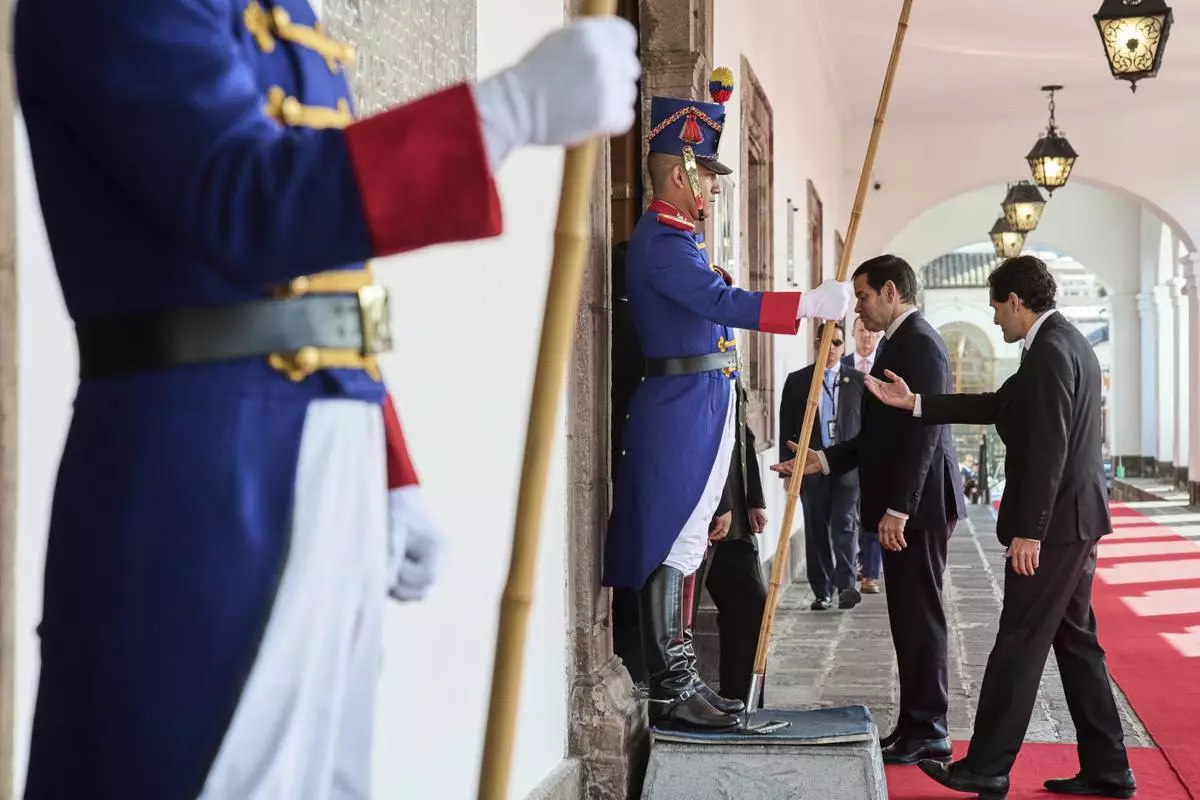
U.S. Secretary of State Marco Rubio, center, arrives at the Palacio de Carondelet to meet with Ecuador's President Daniel Noboa in Quito, Ecuador, Thursday, Sept. 4, 2025. (AP Photo/Jacquelyn Martin, Pool)
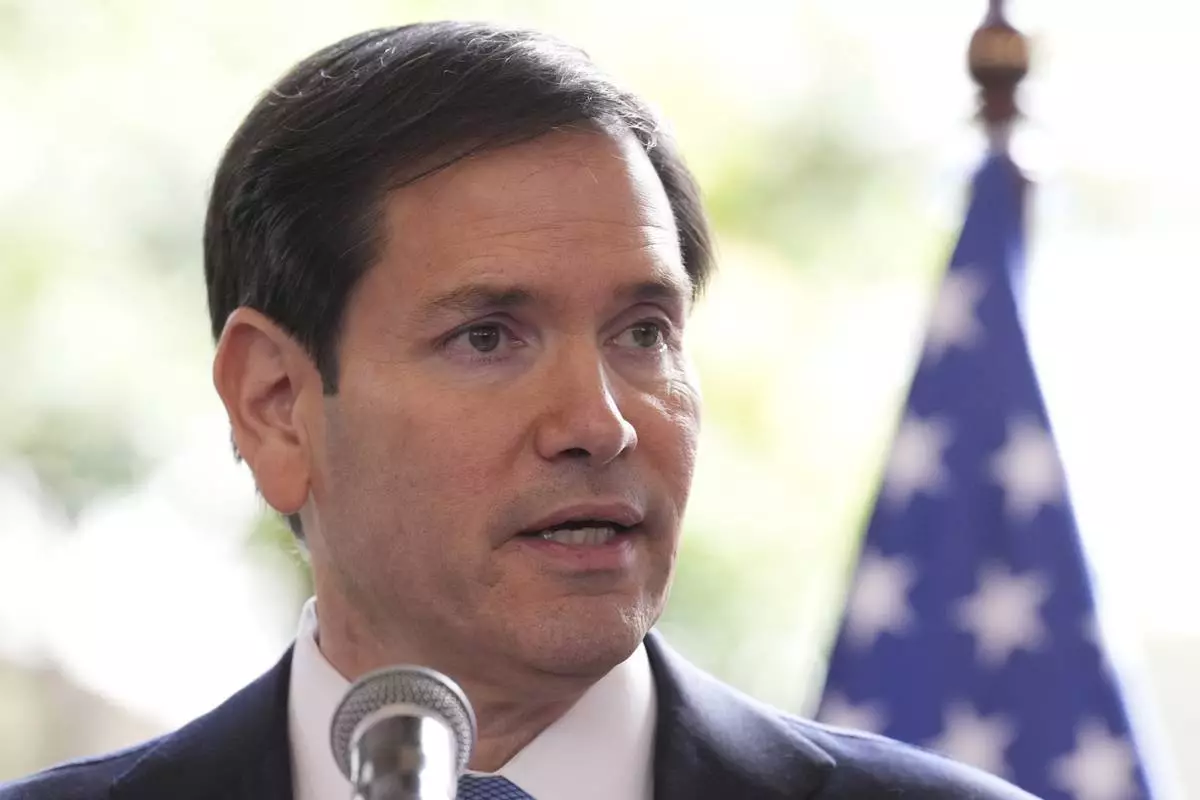
Secretary of State Marco Rubio speaks during a joint news conference with Ecuador's Foreign Minister Gabriela Sommerfeld at the Palacio de Carondelet, in Quito, Ecuador, Thursday, Sept. 4, 2025. (AP Photo/Jacquelyn Martin, Pool)
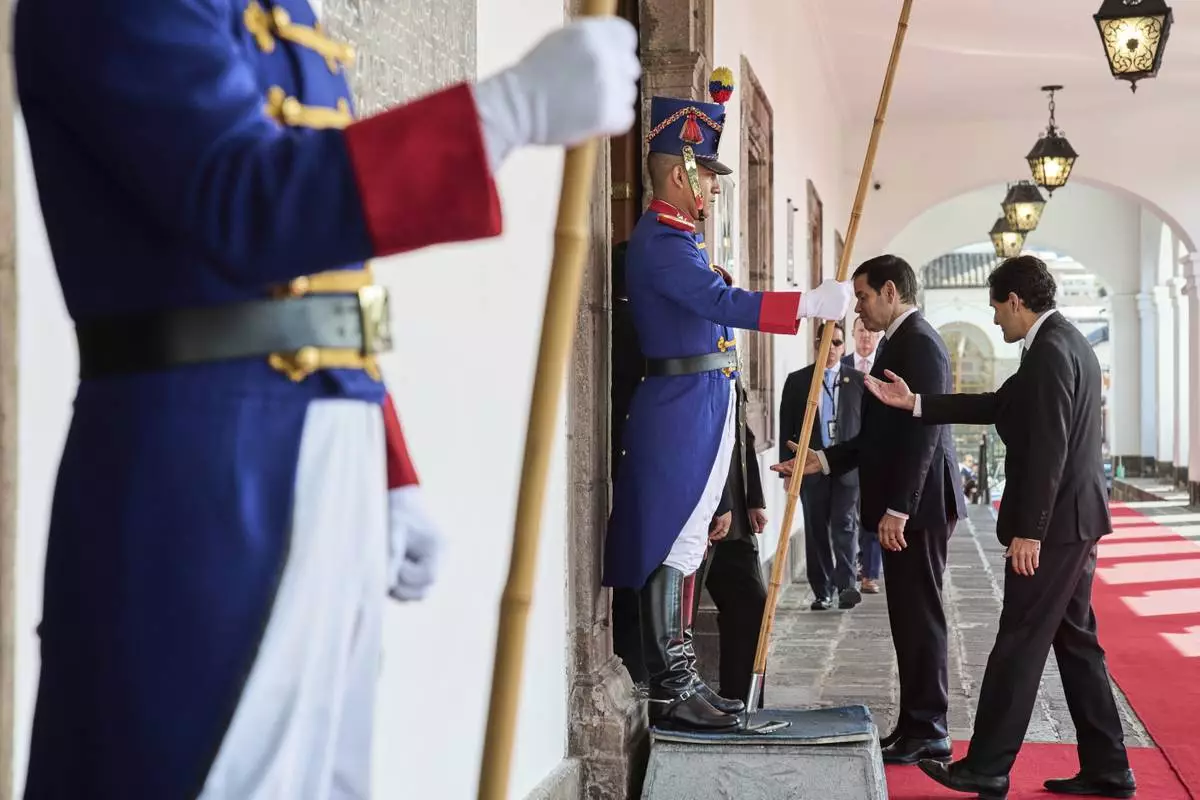
U.S. Secretary of State Marco Rubio, center, arrives at the Palacio de Carondelet to meet with Ecuador's President Daniel Noboa in Quito, Ecuador, Thursday, Sept. 4, 2025. (AP Photo/Jacquelyn Martin, Pool)

U.S. Secretary of State Marco Rubio and Ecuador's President Daniel Noboa, right, preside over an extended meeting at the presidential palace in Quito, Ecuador, Thursday, Sept. 4, 2025. (AP Photo/Jacquelyn Martin, pool)
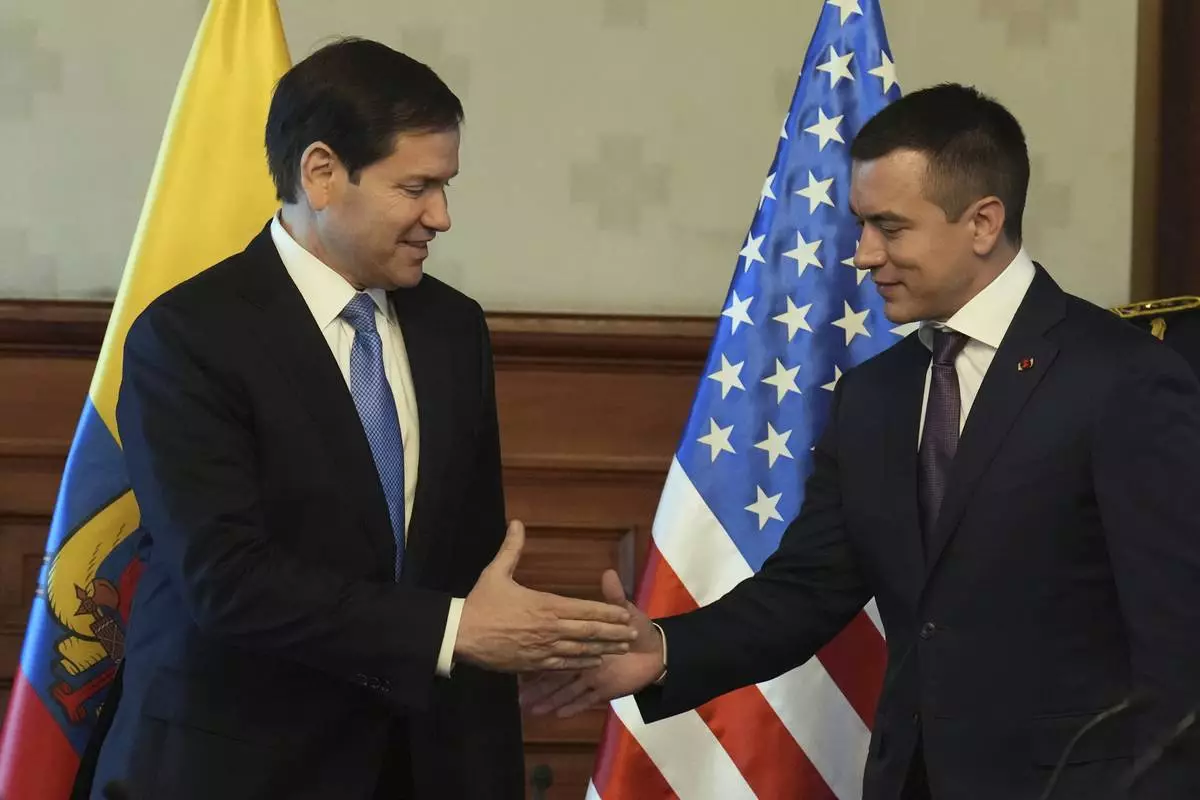
U.S. Secretary of State Marco Rubio and Ecuador's President Daniel Noboa shake hands at the presidential palace in Quito, Ecuador, Thursday, Sep. 4, 2025. (AP Photo/Jacquelyn Martin, pool)
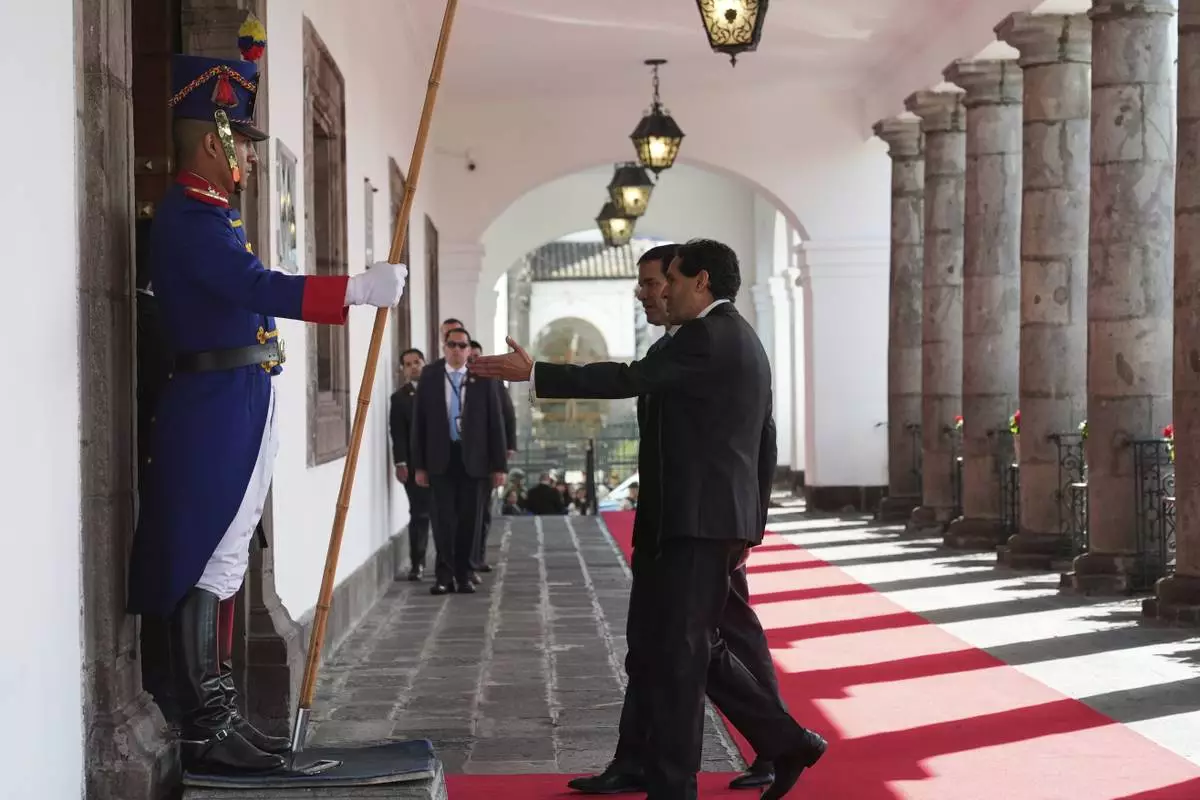
A protocol officer shows the way to U.S. Secretary of State Marco Rubio as he arrives to meet with Ecuador's President Daniel Noboa at the presidential palace in Quito, Ecuador, Thursday, Sep. 4, 2025. (AP Photo/Jacquelyn Martin, pool)
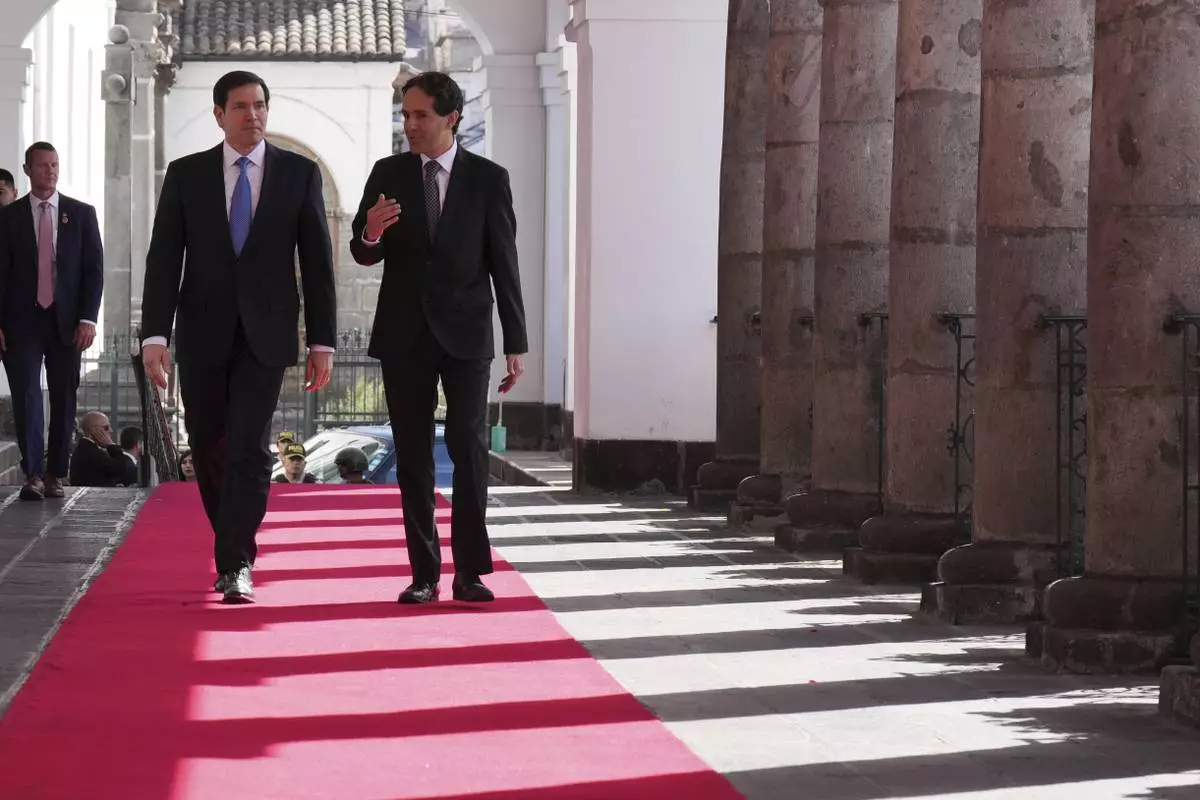
U.S. Secretary of State Marco Rubio, left, arrives to meet with Ecuador's President Daniel Noboa at the presidential palace in Quito, Ecuador, Thursday, Sep. 4, 2025. (AP Photo/Jacquelyn Martin, pool)