WASHINGTON (AP) — President Donald Trump launched Operation Warp Speed in the throes of the COVID-19 pandemic, an effort he has credited with saving tens of millions of lives. During a Cabinet meeting last week, he likened it to “one of the greatest achievements ever.”
Sitting at the table as a proud Trump spoke was Health and Human Services Secretary Robert F. Kennedy Jr., who came under fire at a congressional hearing Thursday for his work to restrict access to vaccines, including the very COVID-19 shots still touted by his boss.
The three-hour hearing exposed an odd dichotomy: One of Trump’s most universal successes in his first term remains Operation Warp Speed, yet his handpicked health chief and a growing cadre of Trump’s “Make America Great Again” supporters are distrustful of the very mRNA vaccine technology that the president has championed.
Highlighting that divide, much of the praise of Trump’s unprecedented effort to find a vaccine for COVID-19 came Thursday from Democrats.
Sen. Maggie Hassan, D-N.H., called Operation Warp Speed “a monumental achievement.” Sen. Raphael Warnock, D-Ga., told Kennedy he was a health hazard and said Trump, “who put forward Operation Warp Speed, which worked,” should fire him. Independent Sen. Bernie Sanders, who caucuses with Democrats, said he doesn’t “usually agree with” Trump but cited the president’s remarks on the COVID-19 vaccine and said the scientific community is aligned behind him.
Republicans were also critical of Kennedy's approach to vaccines.
Sen. Bill Cassidy, R-La., a physician whose vote for Kennedy ensured his narrow confirmation, noted the overarching success of Operation Warp Speed at a time when thousands of people a day were dying from COVID-19, businesses were shuttered and much of everyday life had ground to a halt.
“Others said it couldn’t be done. We saved millions of lives globally. Trillions of dollars. We reopened the economy. An incredible accomplishment,” Cassidy said as he questioned Kennedy. “Do you agree with me that the president deserves a Nobel Prize for Operation Warp Speed?”
When Kennedy answered, “Absolutely, Senator,” Cassidy pivoted sharply.
He pressed Kennedy on denouncing the vaccine in the past, working on lawsuits targeting pharmaceutical makers and filling vacancies on a powerful vaccine advisory committee with expert witnesses who testified against the drugmakers, suggesting they posed a conflict of interest.
“It just seems inconsistent that you would agree with me that the president deserves tremendous amount of credit for this,” Cassidy responded.
Hassan read from a June 2024 post on X in which Kennedy wrote that Trump “has a weakness for swamp creatures, especially corporate monopolies, their lobbyists, and their money” and called the vaccine operation among “the most devastating impact of President Trump’s weakness, but not the only one.”
“If you agree with President Trump that the vaccine saved millions of lives, why have you acted behind closed doors to overrule scientists and limit the freedom of parents to choose the COVID vaccine for their children?” Hassan asked.
Kennedy told Hassan she was “just making stuff up.”
Still, under Kennedy, U.S. regulators have limited the availability of COVID-19 vaccines for many Americans.
Last month, U.S. regulators approved updated COVID-19 shots but limited their use for many Americans — and removed one of the two vaccines available for young children. The new restrictions are a break from the previous U.S. policy, which recommended an annual COVID-19 shot for all Americans 6 months and up, sparking confusion and frustration from some Americans, including parents interested in vaccinating healthy children against the virus.
Many pharmacies are unwilling or legally barred from giving vaccines outside the uses endorsed by the Food and Drug Administration and other federal authorities.
Several administration officials came to Kennedy’s defense on vaccines. Mehmet Oz, the administrator of the Centers for Medicare and Medicaid Services, said what Kennedy wants is “integrity and honesty” in the vaccine review process.
“Democrats are, as usual, being intellectually dishonest to try — and fail — to drive a wedge between President Trump and Secretary Kennedy,” White House spokesman Kush Desai said Thursday. “Instead of playing politics and trying to get stupid sound bites, Democrats should spend more time working with Secretary Kennedy and the rest of the Administration to Make America Healthy Again.”
The White House on Thursday did not directly address the criticism from Cassidy. Asked later about Kennedy's testimony, Trump said he hadn't watched but Kennedy “means very well” and he likes the fact that Kennedy is different.
But the Louisiana Republican was not the only one from his party chastising Kennedy over vaccines.
“If we’re going to make America healthy again, we can’t allow public health to be undermined,” Senate Majority Whip John Barrasso of Wyoming, a staunch Trump ally, told Kennedy. “I’m a doctor. Vaccines work.”
Meanwhile, North Carolina Sen. Thom Tillis had a multitude of questions for Kennedy, including how he really feels about Operation Warp Speed, saying he’d accept Kennedy’s answers later in writing.
Asked in early August about Kennedy’s cancellation of the mRNA contracts, Trump said the effort was “now a long time ago and we’re on to other things,” but said he would continue to speak on it.
“Operation Warp Speed was, whether you’re Republican or Democrat, considered one of the most incredible things ever done in this country,” Trump said. “The efficiency, the way it was done, the distribution, everything about it was, has been amazing.”
But Trump himself has been inconsistent in his attitude toward vaccines.
He said in a social media post this week that the companies were responsible for the recent turmoil at the Centers for Disease Control and Prevention because they were not transparent about the science behind the shots. He has sometimes embraced discredited theories that vaccines could cause autism. Trump has also ferociously opposed vaccine mandates, threatening to withhold funding from schools with such policies.
The anti-vaccine movement within Trump's party has been growing since the early days of the vaccine. Trump himself was booed at an event in December 2021 when he revealed that he had gotten the COVID-19 booster.
He tried, in vain, to rally his supporters back around Operation Warp Speed and remind them of what had been accomplished.
“Look, we did something that was historic. We saved tens of millions of lives worldwide. We together, all of us — not me, we — we got a vaccine done, three vaccines done, and tremendous therapeutics,” Trump said. “This was going to ravage the country far beyond what it is right now. Take credit for it. Take credit for it. … Don’t let them take it away. Don’t take it away from ourselves.”
Kinnard reported from Chapin, S.C. Associated Press writers Thomas Beaumont in Des Moines, Iowa, Lauran Neergaard in Washington, and Jill Colvin and Ali Swenson in New York contributed to this report.
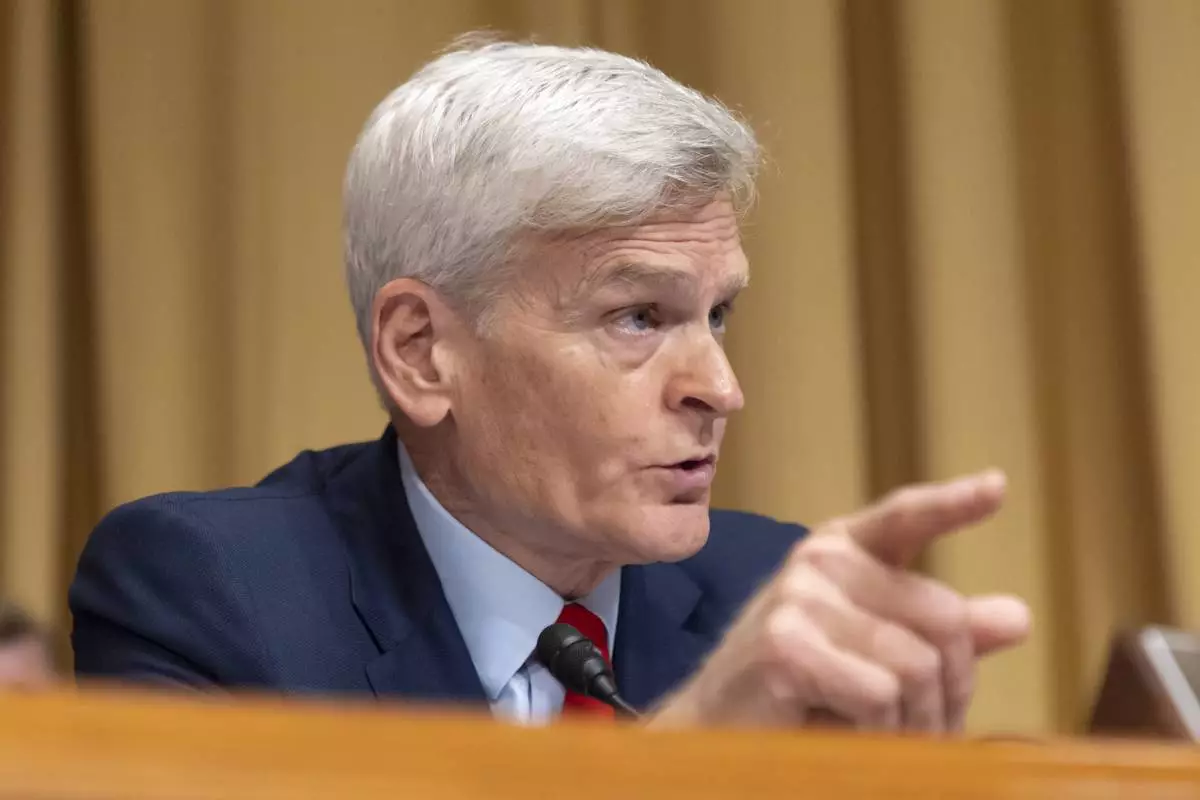
Sen. Bill Cassidy, R-La., speaks as Secretary of Health and Human Services Robert F. Kennedy Jr., appears before the Senate Finance Committee, on Capitol Hill in Washington, Thursday, Sept. 4, 2025. (AP Photo/Mark Schiefelbein)

FILE - Pharmacist Kenni Clark injects Robert Champion, of Lawrence, Mass., with a booster dosage of the Moderna COVID-19 vaccine during a vaccination clinic at City of Lawrence's "The Center," Dec. 29, 2021, in Lawrence, Mass. (AP Photo/Charles Krupa, File)
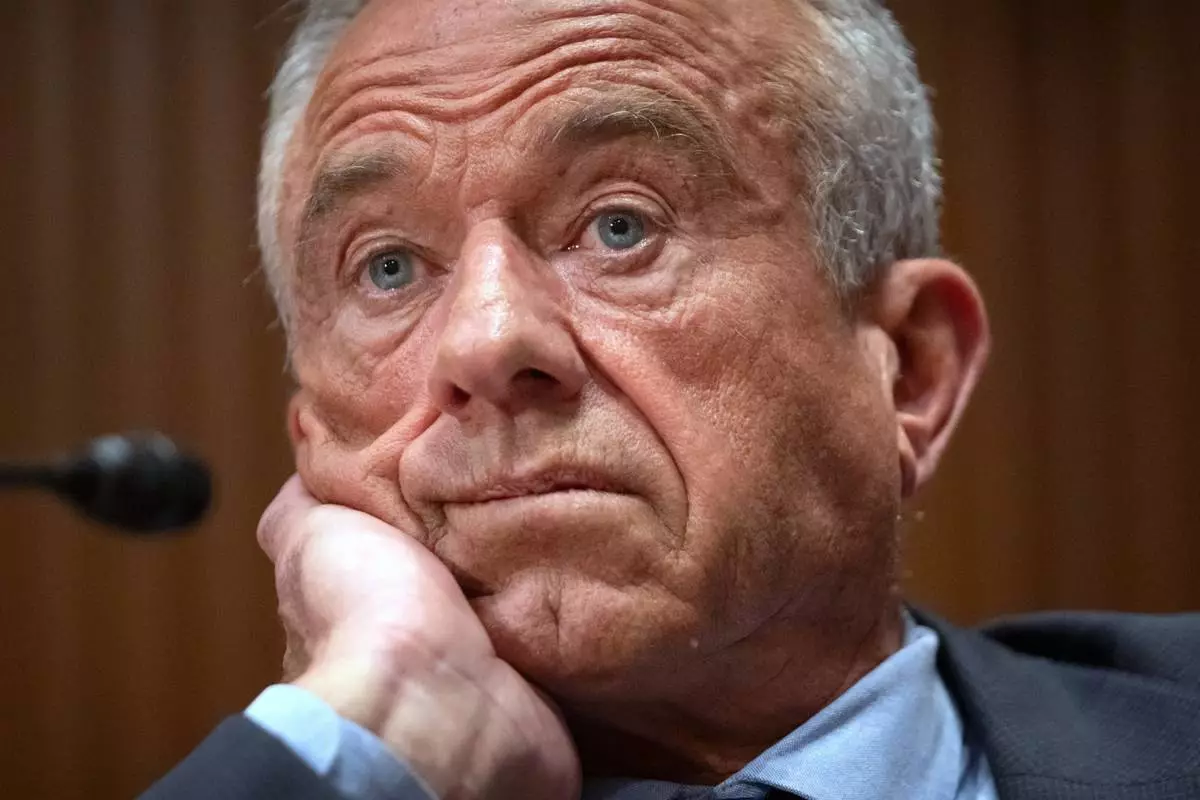
Secretary of Health and Human Services Robert F. Kennedy Jr., appears before the Senate Finance Committee, on Capitol Hill in Washington, Thursday, Sept. 4, 2025. (AP Photo/Mark Schiefelbein)
President Donald Trump threatened on Thursday to invoke the Insurrection Act to justify deploying troops as protests against Immigration and Customs Enforcement persist in Minneapolis.
Trump made the threat to “quickly put an end to the travesty” after a federal officer shot a man in the leg while being attacked with a shovel and broom handle on Wednesday. The incident further heightened the sense of fear and anger radiating across the city a week after an immigration agent fatally shot a woman in the head.
Trump has repeatedly threatened to invoke the rarely used federal law to deploy the U.S. military or federalize the National Guard for domestic law enforcement, over the objections of state governors.
The Latest:
The governor of Maine and the mayors of its two largest cities acknowledged widespread speculation that ICE enforcement actions are imminent in the state, which is home to large immigrant communities from Somalia and other African nations.
Democratic Gov. Janet Mills said aggressive enforcement actions that undermine civil rights are “not welcome” in the state. Mills, the mayors of Portland and Lewiston and Maine’s largest school district all acknowledged that the possibility of ICE enforcement has created a nervous atmosphere in Maine.
“But if they come here, I want any federal agents — and the president of the United States — to know what this state stands for: We stand for the rule of law. We oppose violence. We stand for peaceful protest. We stand for compassion, for integrity and justice,” Mills said in video released Wednesday.
Democrats across the country are proposing state law changes to rein in federal immigration officers and protect the public following the shooting death of a protester in Minneapolis and the wounding of two people in Portland, Oregon.
Many of the measures have been proposed in some form for years in Democratic-led states, but their momentum is growing as legislatures return to work amid President Donald Trump’s national immigration crackdown following the killing of Renee Good by an Immigration and Customs Enforcement agent in Minneapolis. Republicans are pushing back, blaming protesters for impeding enforcement of immigration laws.
When Trump entered office, immigration was among his strongest issues. An AP-NORC Poll published Thursday suggests that it has since faded, a troubling sign for Trump who campaigned on crackdowns to illegal immigration.
Just 38% of U.S. adults approve of how Trump is handling immigration, down from 49% at the start of his second term. The most recent poll was conducted January 8-11, shortly after the death of Renee Good, who was shot and killed by a U.S. Immigration and Customs Enforcement officer in Minneapolis.
There are still signs that Americans give Trump some leeway on immigration issues. Nearly half of Americans — 45% — say Trump has “helped” immigration and border security in his second term.
Homeland Security Secretary Kristi Noem wrote Thursday on social media, “Motor Tanker Veronica had previously passed through Venezuelan waters, and was operating in defiance of President Trump’s established quarantine of sanctioned vessels in the Caribbean.”
The Veronica is the sixth tanker seized by U.S. forces as the Trump administration moves to control the production, refining and global distribution of Venezuela’s oil products, and the fourth since the U.S. ouster of Venezuela President Nicolás Maduro in a surprise nighttime raid almost two weeks ago.
Noem wrote that the raid was carried out with “close coordination with our colleagues” in the military as well as the State and Justice departments.
“Our heroic Coast Guard men and women once again ensured a flawlessly executed operation, in accordance with international law,” Noem added.
The Associated Press has reached out to the offices of Gov. Tim Walz and Minneapolis Mayor Jacob Frey for comment on Trump’s latest threat to invoke the Insurrection Act.
During a televised speech before the latest shooting, Walz described Minnesota as being in chaos, saying what’s happening in the state “defies belief.”
“Let’s be very, very clear, this long ago stopped being a matter of immigration enforcement,” he said. “Instead, it’s a campaign of organized brutality against the people of Minnesota by our own federal government.”
Threatening to invoke the Insurrection Act and send troops to Minneapolis, Trump noted that presidents have used the 19th century law many times. This is true — but they haven’t necessarily done it in the circumstances found in Minneapolis, where the tensions have arisen from Trump already sending federal authorities into the city.
In modern times, the act has been used to mobilize troops to help local authorities or to ensure a federal court order is carried out.
The law was last used in 1992 by President George H.W. Bush to help quell riots in Los Angeles after local officials asked for the assistance. Presidents Dwight Eisenhower, John F. Kennedy and Lyndon Johnson all invoked it during the Civil Rights Movement to help enforce desegregation orders in Southern states where state and local governments were resisting.
A 1964 Justice Department memo said the act can apply in three circumstances: when a state requests help, when deployment is needed to enforce a federal court order, or when “state and local law enforcement have completely broken down.”
In a statement describing the events that led to Wednesday’s shooting, Homeland Security said federal law enforcement officers stopped a person from Venezuela who was in the U.S. illegally. The person drove away and crashed into a parked car before taking off on foot, DHS said.
After officers reached the person, two other people arrived from a nearby apartment and all three started attacking the officer, according to DHS.
“Fearing for his life and safety as he was being ambushed by three individuals, the officer fired a defensive shot to defend his life,” DHS said.
The two people who came out of the apartment are in custody, it said.
Police Chief Brian O’Hara’s account of what happened largely echoed that of Homeland Security. O’Hara said the man shot was in the hospital with a non-life-threatening injury.
Jacob Frey spoke Wednesday night after federal officers wearing gas masks and helmets fired tear gas into a small crowd while protesters threw rocks and shot fireworks.
“This is an impossible situation that our city is presently being put in and at the same time we are trying to find a way forward to keep people safe, to protect our neighbors, to maintain order,” he said.
Frey described a federal force that is five times as big as the city’s 600-officer police force and has “invaded” the city, scaring and angering residents, some of whom want the officers to “fight ICE agents.”
The Department of Homeland Security says it has made more than 2,000 arrests in the state since early December and is vowing to not back down.
Trump made the threat Thursday after a federal officer trying to make an arrest shot a man in the leg Wednesday after being attacked with a shovel and broom handle. The incident further heightened the sense of fear and anger radiating across the city a week after an immigration agent fatally shot a woman in the head.
Trump has repeatedly threatened to invoke the rarely used federal law to deploy the U.S. military or federalize the National Guard for domestic law enforcement, over the objections of state governors.
“If the corrupt politicians of Minnesota don’t obey the law and stop the professional agitators and insurrectionists from attacking the Patriots of I.C.E., who are only trying to do their job, I will institute the INSURRECTION ACT, which many Presidents have done before me, and quickly put an end to the travesty that is taking place in that once great State,” Trump said in social media post.
▶ Read more about Trump’s latest threats to Minnesota
An AP-NORC poll from January found that about 4 in 10 U.S. adults approve of Trump’s performance as president. That’s virtually unchanged from March 2025, shortly after he took office for the second time.
The new poll also shows subtle signs of vulnerability for Trump, mainly regarding the economy and immigration.
Two senators from opposite parties are joining forces in a renewed push to ban members of Congress from trading stocks, an effort that has broad public support but has repeatedly stalled on Capitol Hill.
Democratic Sen. Kirsten Gillibrand of New York and Republican Sen. Ashley Moody of Florida on Thursday plan to introduce legislation, first shared with The Associated Press, that would bar lawmakers and their immediate family members from trading or owning individual stocks.
It’s the latest in a flurry of proposals in the House and the Senate to limit stock trading in Congress, lending bipartisan momentum to the issue. But the sheer number of proposals has clouded the path forward. Republican leaders in the House are pushing their own bill on stock ownership, an alternative that critics have dismissed as watered down.
▶ Read more about the cross-party effort
Senate Republicans voted to dismiss a war powers resolution Wednesday that would have limited Trump’s ability to conduct further attacks on Venezuela after two GOP senators reversed course on supporting the legislation.
Trump put intense pressure on five Republican senators who joined with Democrats to advance the resolution last week and ultimately prevailed in heading off passage of the legislation. Two of the Republicans — Sens. Josh Hawley of Missouri and Todd Young of Indiana — flipped under the pressure.
Vice President JD Vance had to break the 50-50 deadlock in the Senate on a Republican motion to dismiss the bill.
The outcome of the high-profile vote demonstrated how Trump still has command over much of the Republican conference, yet the razor-thin vote tally also showed the growing concern on Capitol Hill over the president’s aggressive foreign policy ambitions.
▶ Read more about the war powers vote
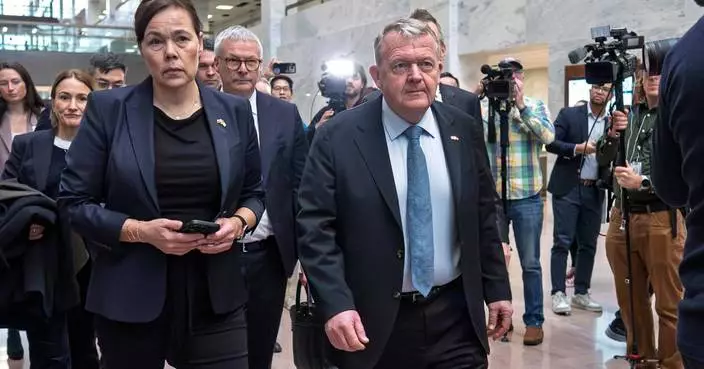
While President Donald Trump says he’ll take action on Greenland whether its people “ like it or not, ” his newly handpicked U.S. special envoy is setting off on his own approach.
Gov. Jeff Landry, appointed as envoy in December, said he is not interested in meeting diplomats. The Republican has not visited the Arctic island and did not attend Wednesday’s meeting at the White House that included Danish officials, Vice President JD Vance and Secretary of State Marco Rubio. However, the governor was scheduled to travel to Washington on Thursday and Friday for meetings that include the topic of Greenland, Landry’s spokesperson Kate Kelly said.
▶ Read more about Landry 's new role
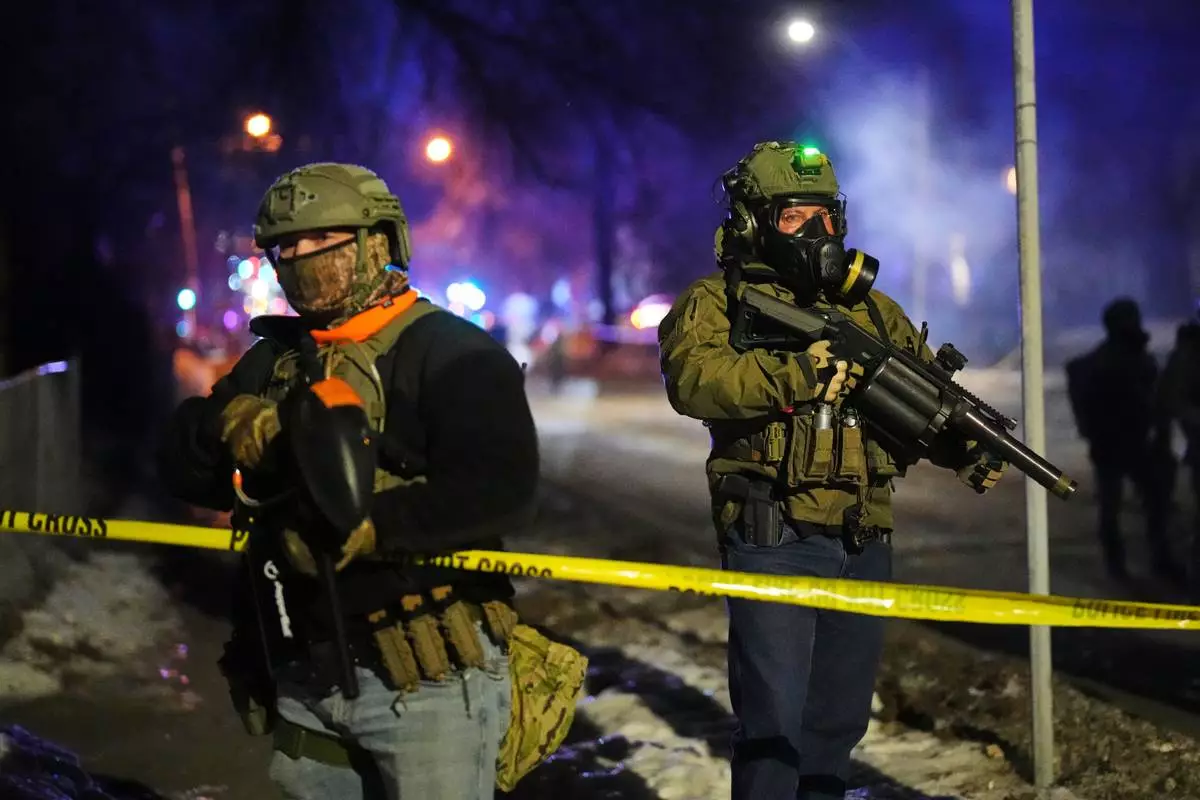
Law enforcement officers at the scene of a reported shooting Wednesday, Jan. 14, 2026, in Minneapolis. (AP Photo/Adam Gray)
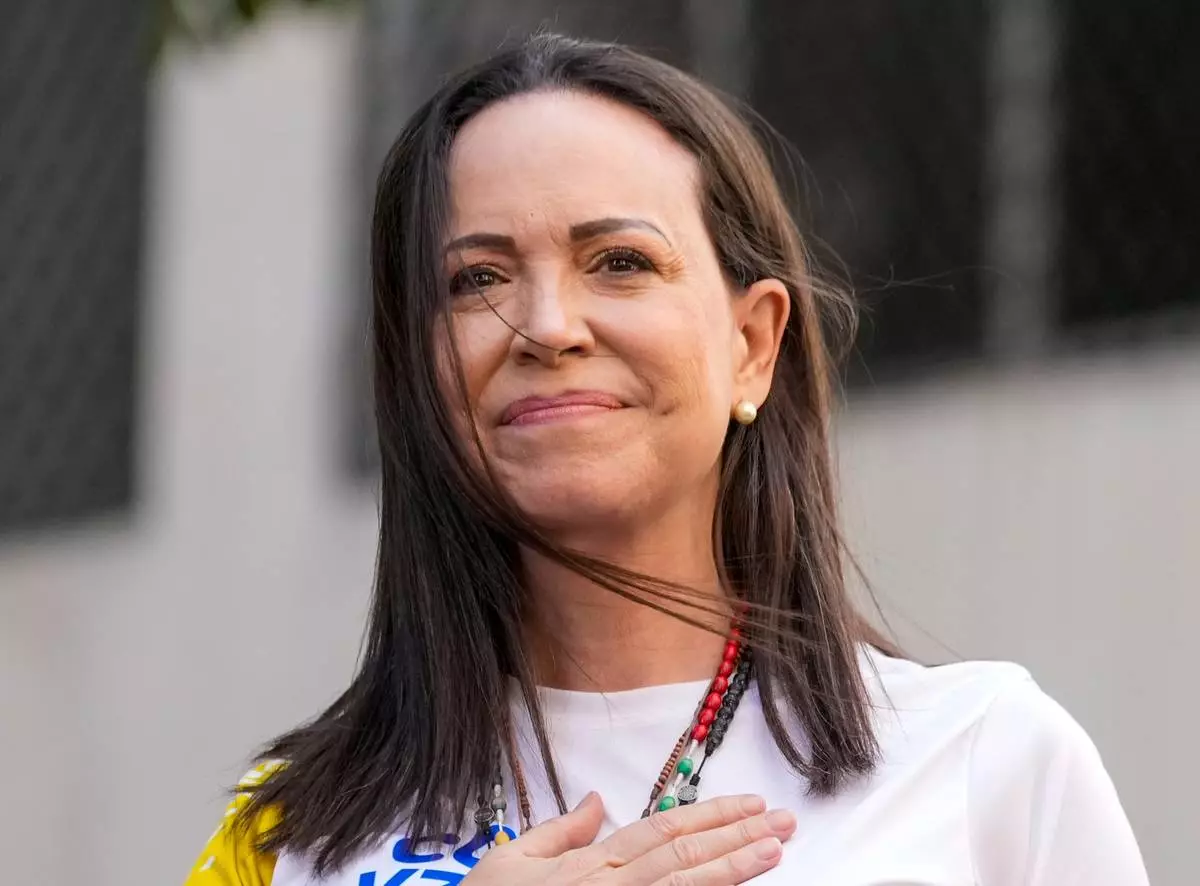
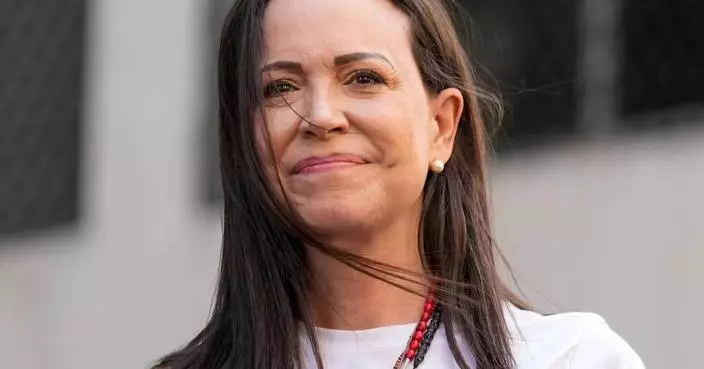
FILE - Opposition leader Maria Corina Machado gestures to supporters during a protest against President Nicolas Maduro the day before his inauguration for a third term, in Caracas, Venezuela, Thursday, Jan. 9, 2025. (AP Photo/Ariana Cubillos, file)
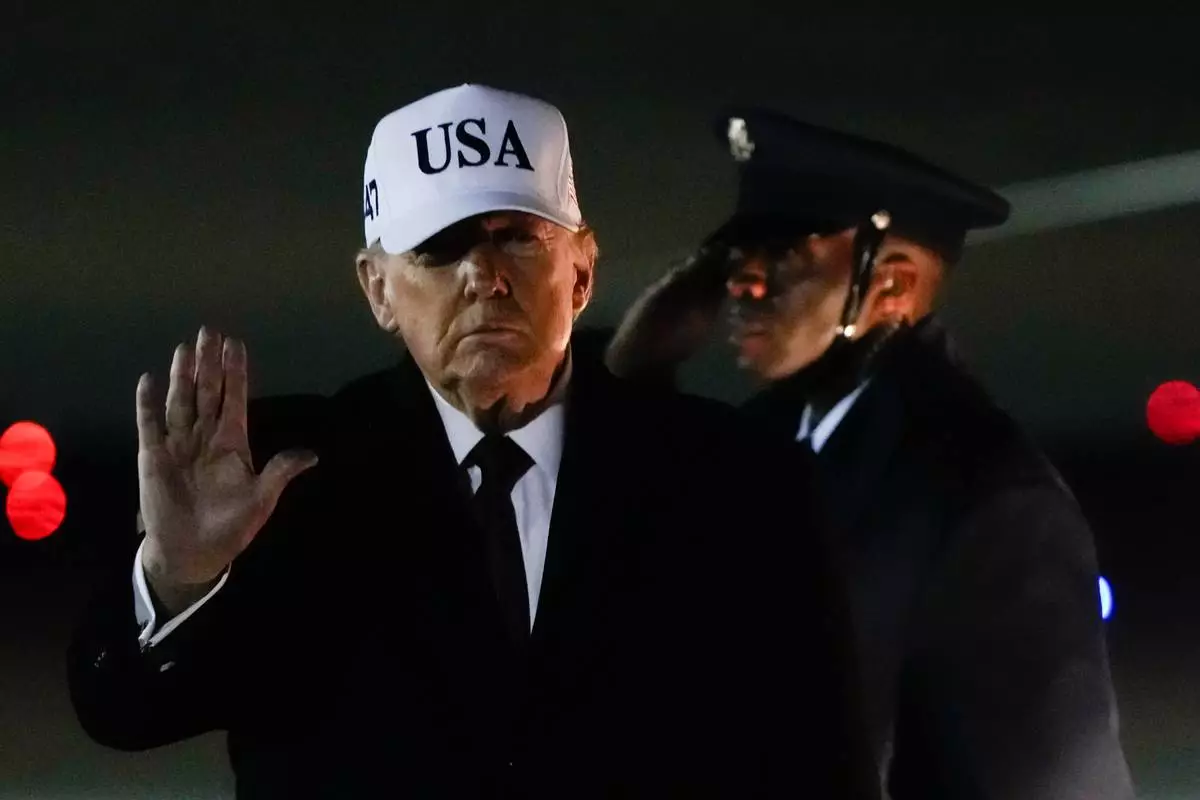
FILE - President Donald Trump waves after arriving on Air Force One from Florida, Jan. 11, 2026, at Joint Base Andrews, Md. (AP Photo/Julia Demaree Nikhinson, File)