Skip to Content Facebook Feature Image

Canada's Carney to delay EV mandate as country deals with Trump's tariffs

News

Canada's Carney to delay EV mandate as country deals with Trump's tariffs
News

News

Canada's Carney to delay EV mandate as country deals with Trump's tariffs

2025-09-06 00:29 Last Updated At:00:40

TORONTO (AP) — Canadian Prime Minister Mark Carney is delaying a requirement for automakers to begin hitting minimum sales levels for electric vehicles next year as the sector deals with U.S. President Donald Trump's tariffs.

Former Canadian Prime Minister Justin Trudeau set the target, requiring that in 2026 20% of passenger vehicles sold should be zero-emission vehicles.

More Images
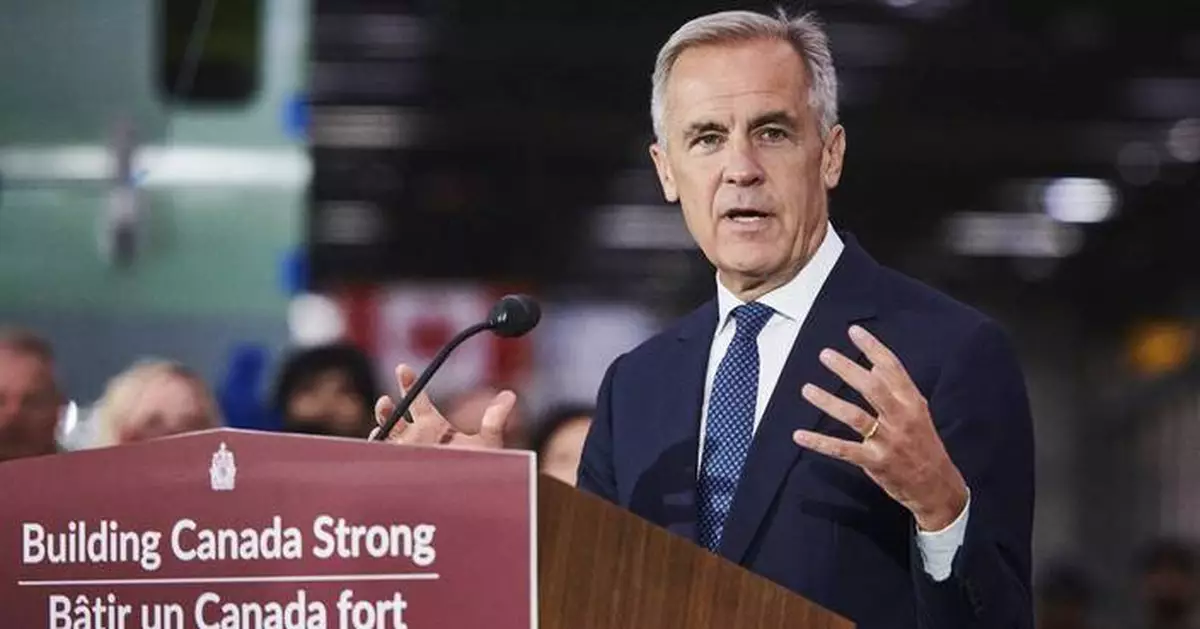
Prime Minister Mark Carney arrives at a press conference in Mississauga, Ont., on Friday, Sept. 5, 2025. (Sammy Kogan/The Canadian Press via AP)
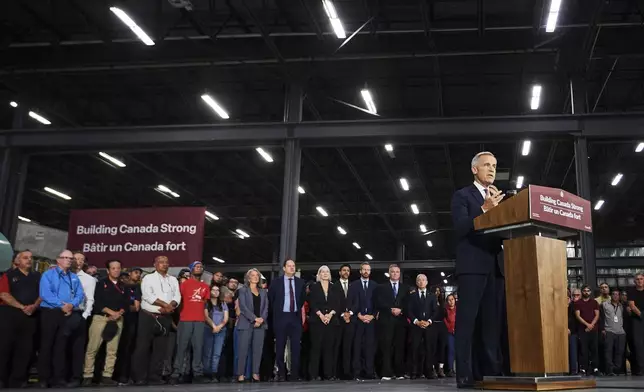
Prime Minister Mark Carney arrives at a press conference in Mississauga, Ont., on Friday, Sept. 5, 2025. (Sammy Kogan/The Canadian Press via AP)

Prime Minister Mark Carney speaks at a press conference in Mississauga, Ont., on Friday, Sept. 5, 2025. (Sammy Kogan /The Canadian Press via AP)
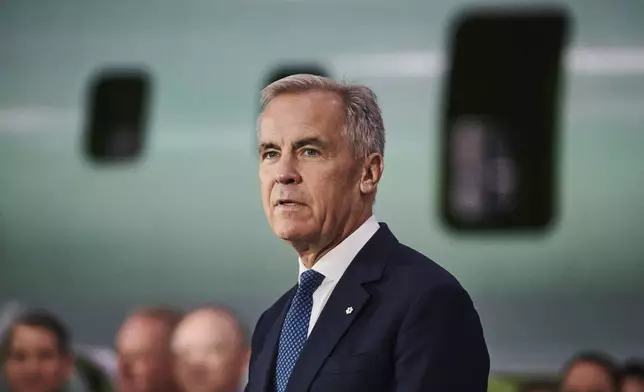
Prime Minister Mark Carney speaks at a press conference in Mississauga, Ont., on Friday, Sept. 5, 2025. (Sammy Kogan /The Canadian Press via AP)
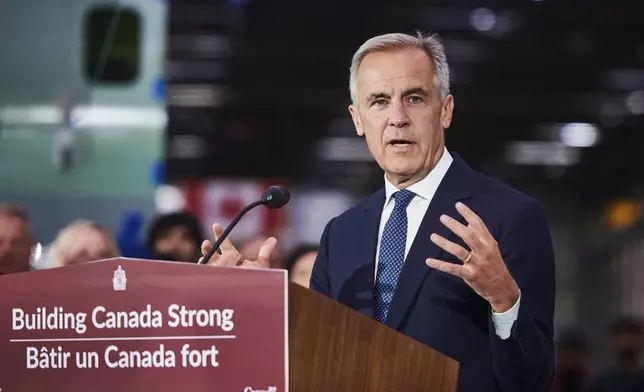
Prime Minister Mark Carney speaks at a press conference in Mississauga, Ont., on Friday, Sept. 5, 2025. (Sammy Kogan /The Canadian Press via AP)

Prime Minister Mark Carney speaks at a press conference in Mississauga, Ont., on Friday, Sept. 5, 2025. (Sammy Kogan /The Canadian Press via AP)

Prime Minister Mark Carney speaks at a press conference in Mississauga, Ont., on Friday, Sept. 5, 2025. (Sammy Kogan /The Canadian Press via AP)

Prime Minister Mark Carney speaks at a press conference in Mississauga, Ont., on Friday, Sept. 5, 2025. (Sammy Kogan /The Canadian Press via AP)

Removing the requirement comes as automakers absorb Trump's tariffs.

“We have an auto sector that because of the massive change in U.S. trade policy is under exteme pressure. We recognize that," Carney said.

“The EV mandate adds to the liquidity issues they have, the financial challenges these producers have. They've got enough on their plate right now so we are taking that off.”

The Canadian Vehicle Manufacturers' Association and others have been lobbying the government to scrap the EV mandate.

Flavio Volpe, Automotive Parts Manufacturers Associated president, noted the U.S. has ended EV incentives and industrial support and is going back to “pickup trucks and dinosaurs.”

Volpe said auto factories in Canada are geared to push product to the U.S., and Canada doesn't have much choice in the short term.

“I’m glad that we punted," Volpe said. “The White House has turned on the industry."

Carney also announced measures for workers and businesses in those sectors most impacted by the U.S. tariffs and trade disruptions. The government is also making employment insurance more flexible and with extended benefits.

“We can't rely on our most important trading partner like we once did,” Carney said.

Most imports from Canada and Mexico are still protected by the United States-Mexico-Canada trade pact, but Trump has some sector-specific tariffs that do apply for Canada despite the USMCA — known as 232 tariffs — which are having an impact on the Canadian economy and the auto sector in particular. There is the 50% tariff on steel and aluminum imports, for example.

The Big 3 American automakers, General Motors, Ford and Jeep-maker Stellantis, who all build in Canada, face the 50% tariff on steel and aluminum and a 25% tariff on parts and finished vehicles, with some exceptions for products covered under the USMCA.

Autos are Canada’s second-largest export and the sector employs 125,000 Canadians directly and almost another 500,000 in related industries. Volpe said Canadians buy about 2 million vehicles a year and make just under 2 million.

Carney said the government is also launching a new $370 million Canadian (US$268 million) production incentive to help Canada’s canola producers. China hit Canadian canola with a 75.8% tariff last month, a measure widely seen as a response to Canada’s 100% tariff on Chinese electric vehicles.
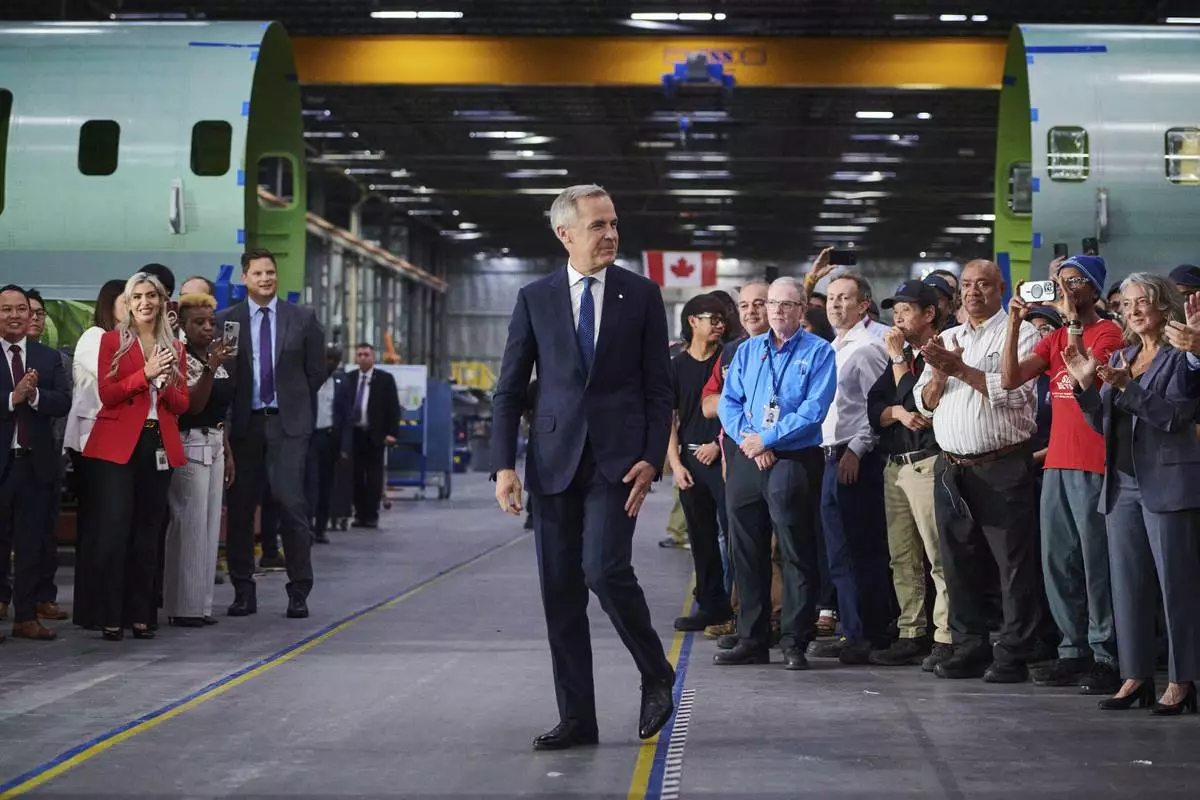
Prime Minister Mark Carney arrives at a press conference in Mississauga, Ont., on Friday, Sept. 5, 2025. (Sammy Kogan/The Canadian Press via AP)
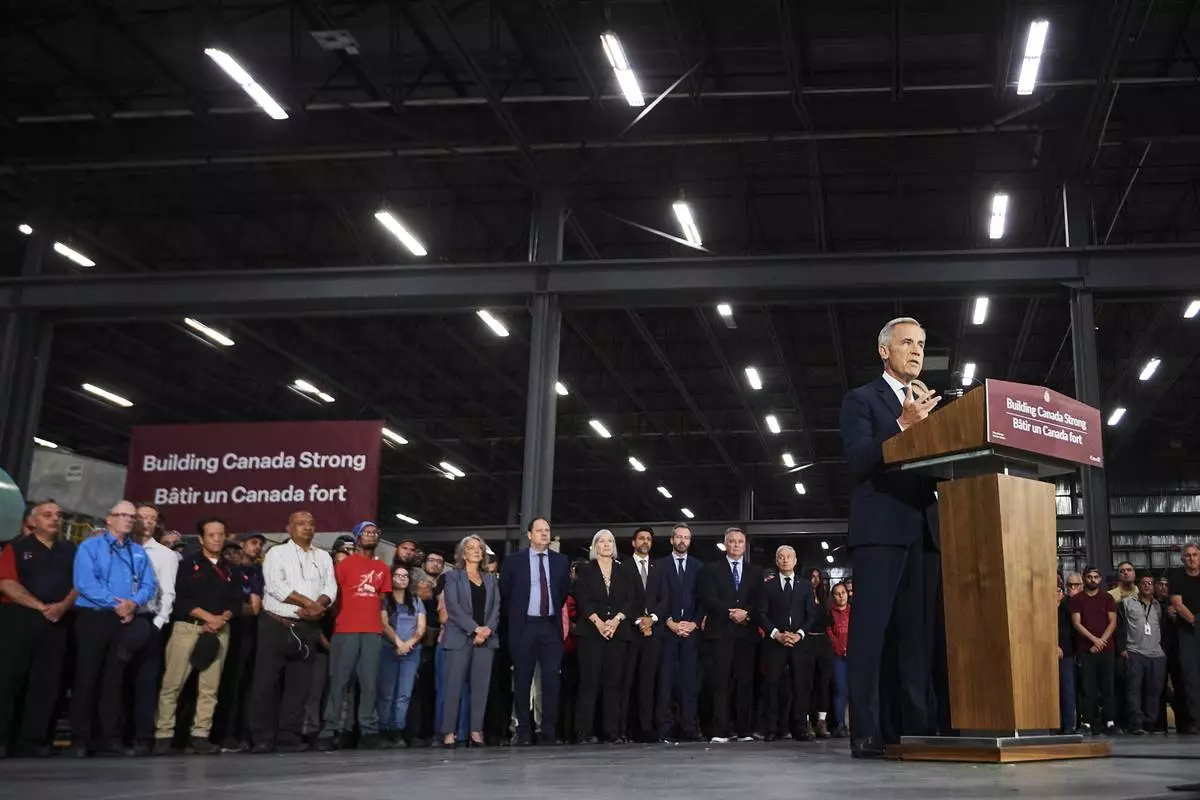
Prime Minister Mark Carney arrives at a press conference in Mississauga, Ont., on Friday, Sept. 5, 2025. (Sammy Kogan/The Canadian Press via AP)

Prime Minister Mark Carney speaks at a press conference in Mississauga, Ont., on Friday, Sept. 5, 2025. (Sammy Kogan /The Canadian Press via AP)
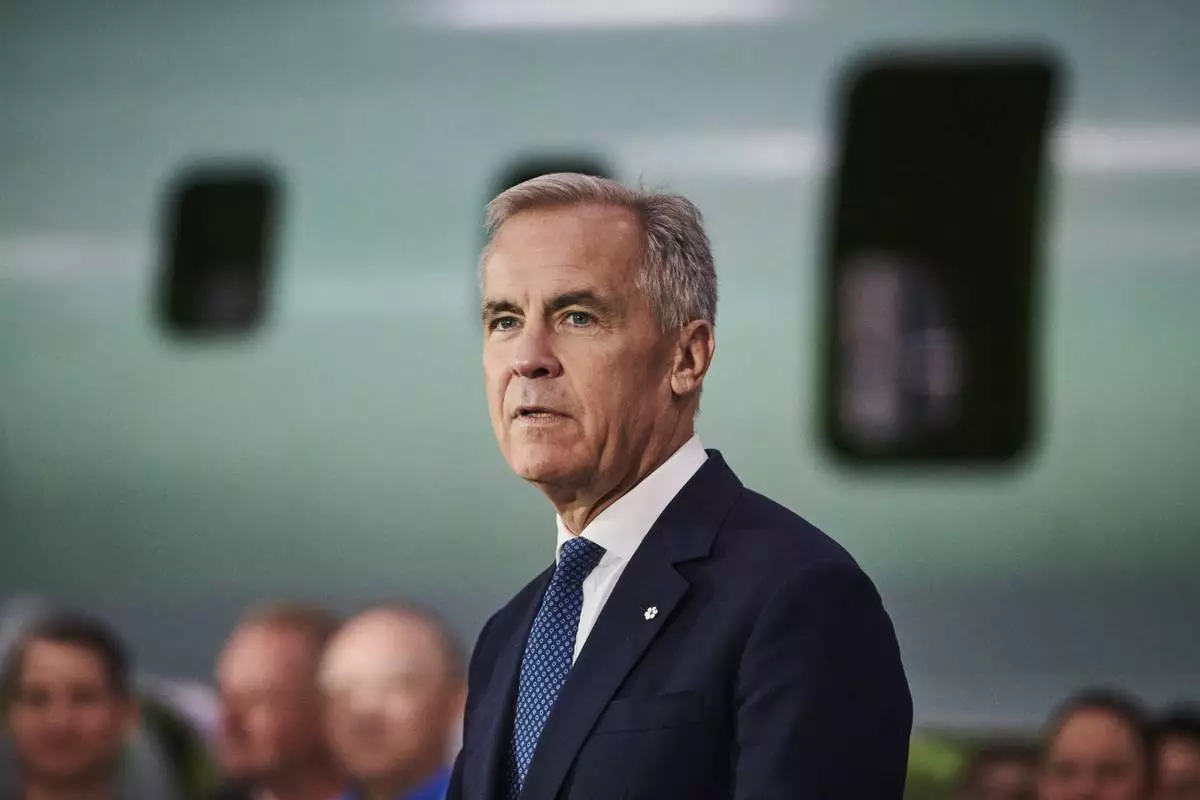
Prime Minister Mark Carney speaks at a press conference in Mississauga, Ont., on Friday, Sept. 5, 2025. (Sammy Kogan /The Canadian Press via AP)
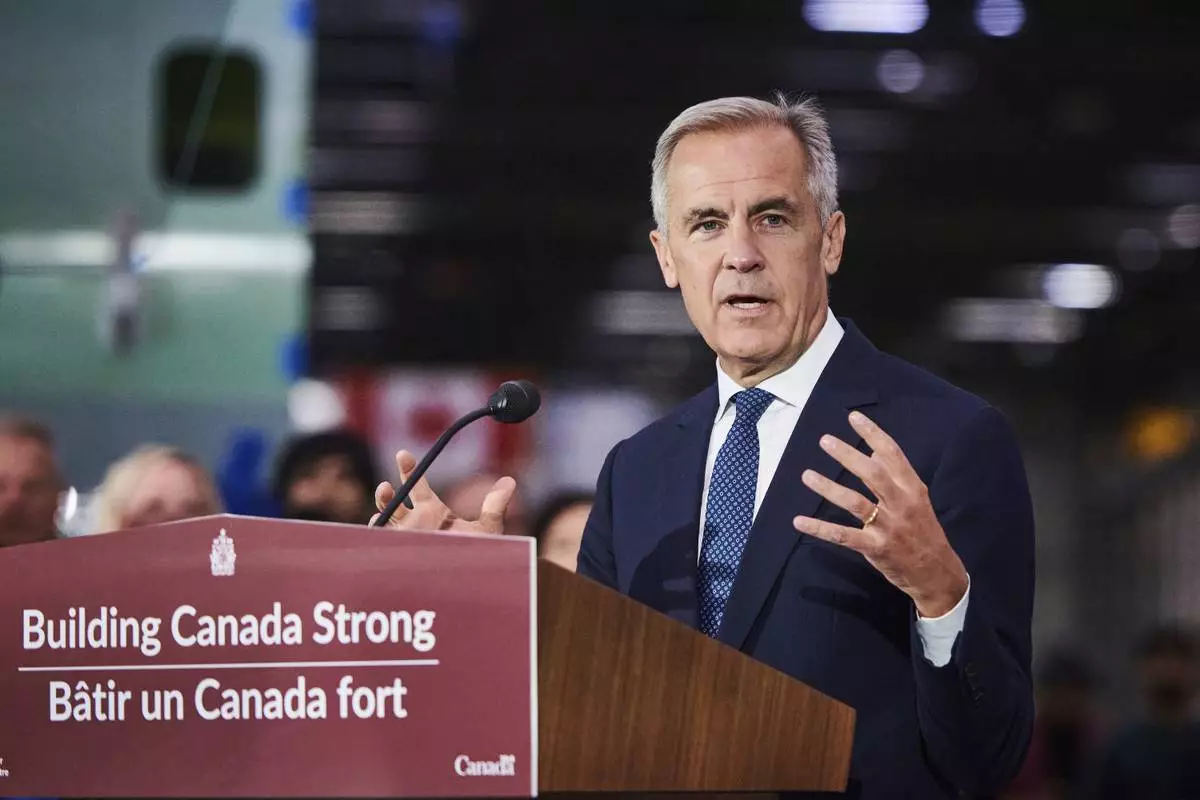
Prime Minister Mark Carney speaks at a press conference in Mississauga, Ont., on Friday, Sept. 5, 2025. (Sammy Kogan /The Canadian Press via AP)
Prime Minister Mark Carney speaks at a press conference in Mississauga, Ont., on Friday, Sept. 5, 2025. (Sammy Kogan /The Canadian Press via AP)
Prime Minister Mark Carney speaks at a press conference in Mississauga, Ont., on Friday, Sept. 5, 2025. (Sammy Kogan /The Canadian Press via AP)
Prime Minister Mark Carney speaks at a press conference in Mississauga, Ont., on Friday, Sept. 5, 2025. (Sammy Kogan /The Canadian Press via AP)
NUUK, Greenland (AP) — For several weeks, international journalists and camera crews have been scurrying up to people in Greenland's capital to ask them for their thoughts on the twists and turns of a political crisis that has turned the Arctic island into a geopolitical hot spot.

President Donald Trump insists he wants to control Greenland but Greenlanders say it is not for sale. The island is a semiautonomous territory of Denmark and the prime minister of that country has warned that if the U.S. tries to take Greenland by force, it could potentially spell the end of NATO.

Greenlanders walking along the small central shopping street of the capital Nuuk have a hard time avoiding the signs that the island is near the top of the Western news agenda.

Scores of journalists have arrived from outlets including The Associated Press, Reuters, CNN, the BBC and Al Jazeera as well as from Scandinavian countries and Japan.

They film Nuuk's multicolored houses, the snowcapped hills and the freezing fjords where locals go out in small boats to hunt seals and fish. But they must try to cram their filming into about five hours of daylight — the island is in the far north and the sun rises after 11 a.m. and sets around 4 p.m.

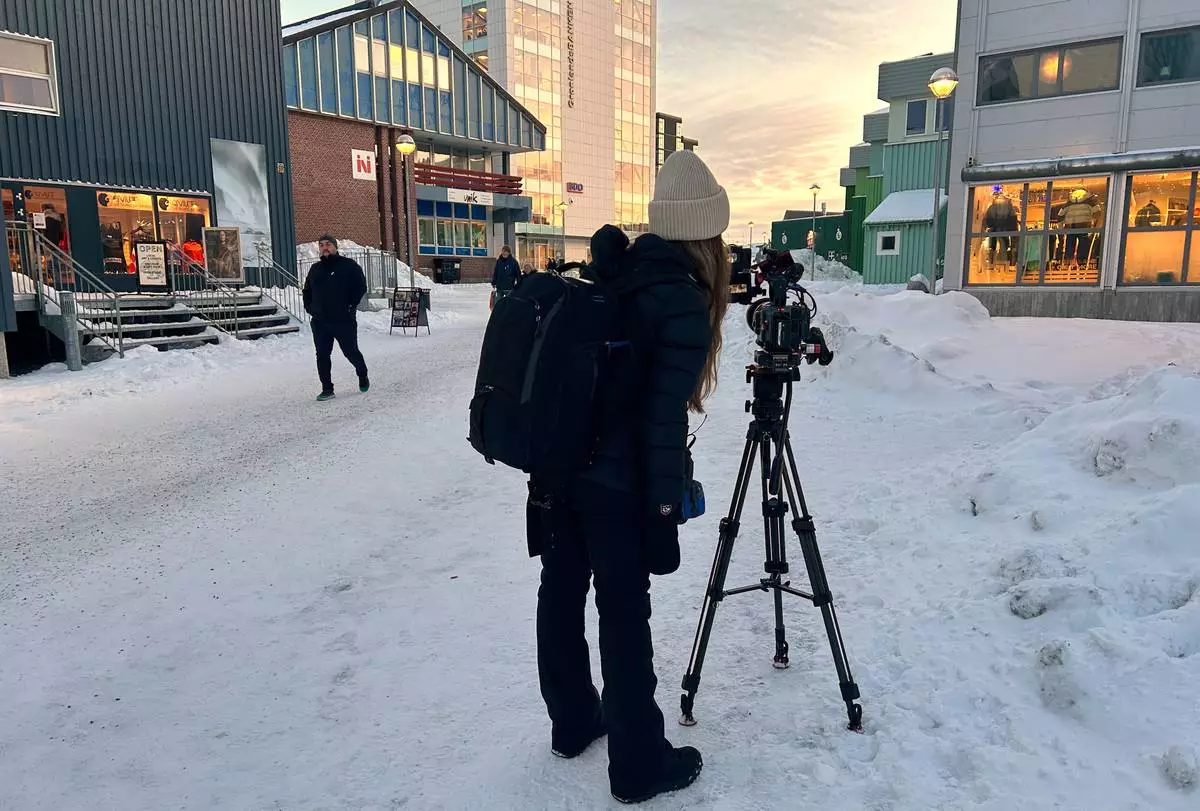
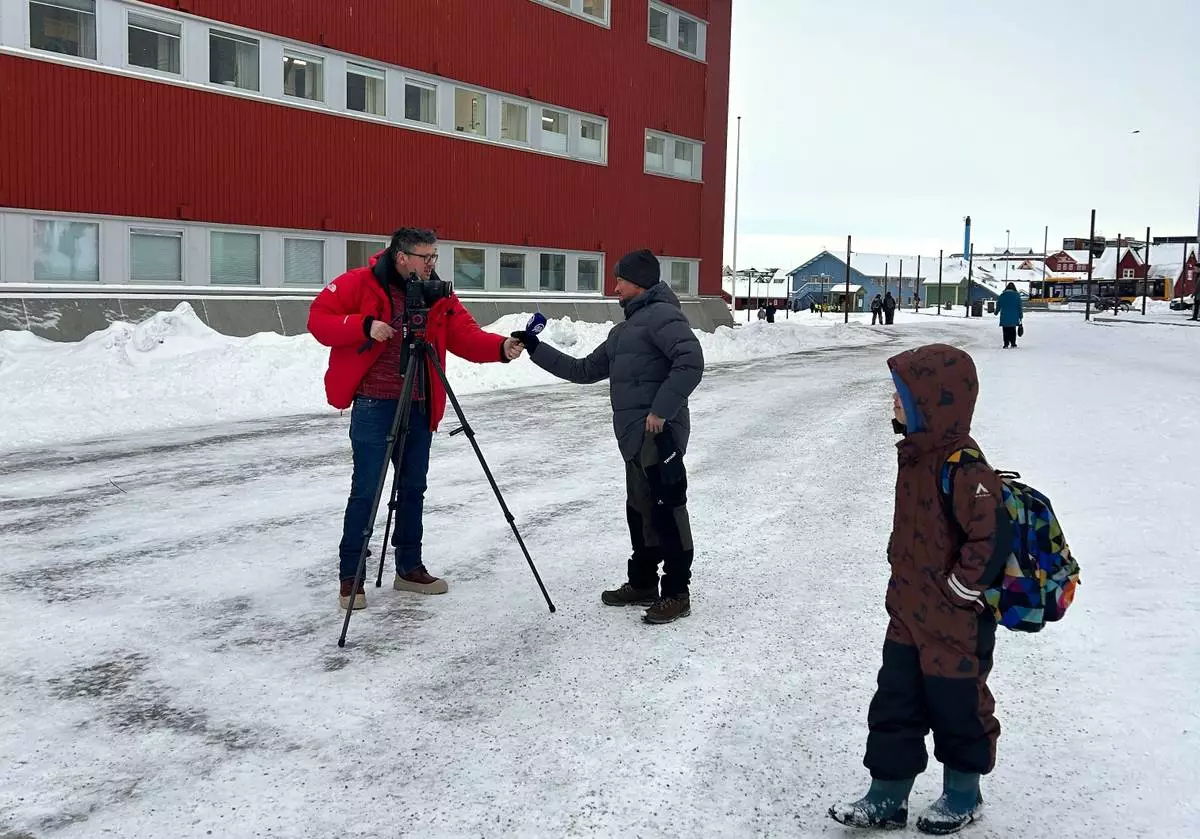
Along the quiet shopping street, journalists stand every few meters (feet), approaching locals for their thoughts, doing live broadcasts or recording stand-ups.

Local politicians and community leaders say they are overwhelmed with interview requests.

Juno Berthelsen, MP for the Naleraq opposition party that campaigns for independence in the Greenlandic parliament, called the media attention “round two,” referring to an earlier burst of global interest following Trump's first statements in 2025 that he wanted to control Greenland.

Trump has argued repeatedly that the U.S. needs control of Greenland for its national security. He has sought to justify his calls for a U.S. takeover by repeatedly claiming that China and Russia have their own designs on Greenland, which holds vast untapped reserves of critical minerals.

Berthelsen said he has done multiple interviews a day for two weeks.

“I'm getting a bit used to it,” he said.

Greenland's population is around 57,000 people —- about 20,000 of whom live in Nuuk.

“We’re very few people and people tend to get tired when more and more journalists ask the same questions again and again,” Berthelsen said.

Nuuk is so small that the same business owners are approached repeatedly by different news organizations — sometimes doing up to 14 interviews a day.

Locals who spoke to the AP said they want the world to know that it's up to Greenlanders to decide their own future and suggested they are perplexed at Trump's desire to control the island.

“It’s just weird how obsessed he is with Greenland,” said Maya Martinsen, 21.

She said Trump is “basically lying about what he wants out of Greenland,” and is using the pretext of boosting American security as a way to try to take control of “the oils and minerals that we have that are untouched.”

The Americans, Martinsen said, “only see what they can get out of Greenland and not what it actually is.”

To Greenlanders, she said, “it's home.”

“It has beautiful nature and lovely people. It’s just home to me. I think the Americans just see some kind of business trade.”

Kwiyeon Ha contributed to this report.

A journalist films in Nuuk, Greenland, Thursday, Jan. 15, 2026. (AP Photo/Emma Burrows)

A journalist films in Nuuk, Greenland, Thursday, Jan. 15, 2026. (AP Photo/Emma Burrows)

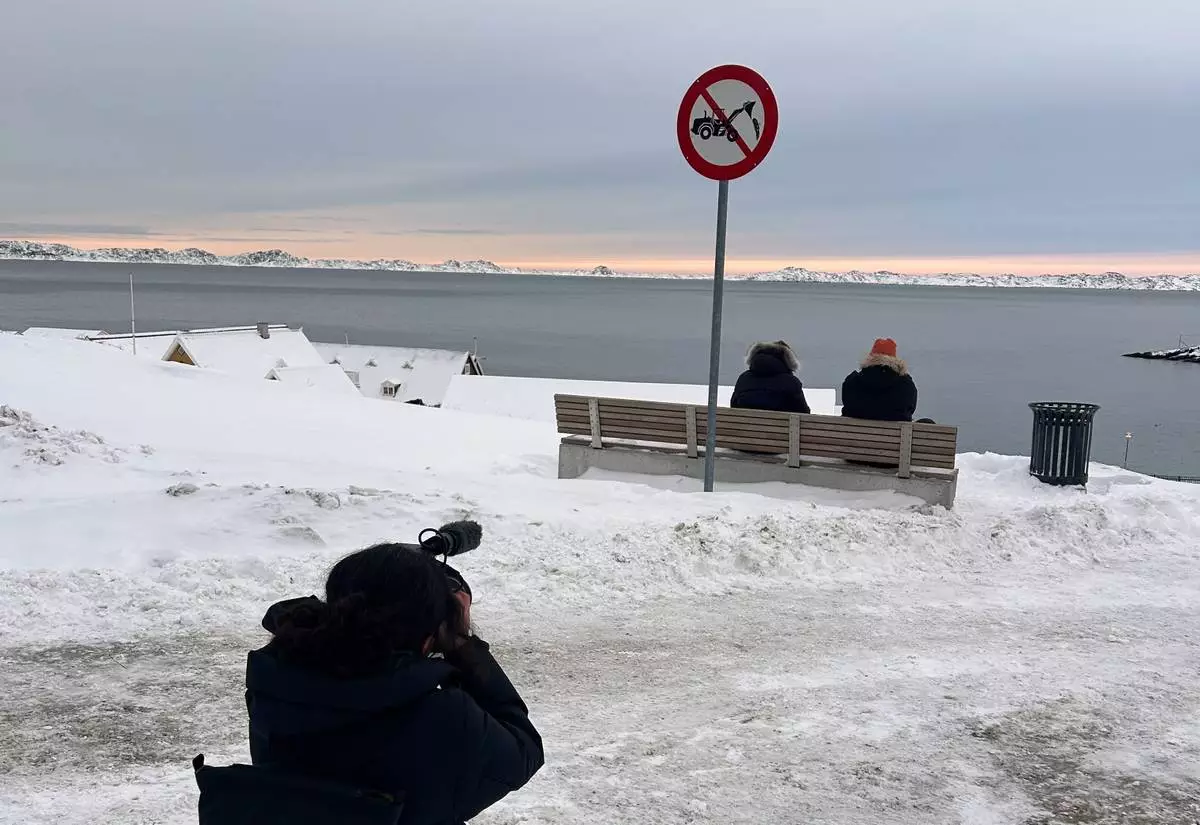
An AP journalist films people sitting by the sea in Nuuk, Greenland, Thursday, Jan. 15, 2026. (AP Photo/Emma Burrows)

An AP journalist films people sitting by the sea in Nuuk, Greenland, Thursday, Jan. 15, 2026. (AP Photo/Emma Burrows)

A journalist conducts an interview in Nuuk, Greenland, Thursday, Jan. 15, 2026. (AP Photo/Emma Burrows)

A journalist conducts an interview in Nuuk, Greenland, Thursday, Jan. 15, 2026. (AP Photo/Emma Burrows)

Recommended Articles