WASHINGTON (AP) — President Donald Trump, once a casino owner and always a man in search of his next deal, is fond of a poker analogy when sizing up partners and adversaries.
“We have much bigger and better cards than they do,” he said of China last month. Compared with Canada, he said in June, “we have all the cards. We have every single one.” And most famously, he told Ukrainian President Volodymyr Zelenskyy in their Oval Office confrontation earlier this year: “You don’t have the cards.”
The phrase offers a window into the worldview of Trump, who has spent his second stint in the White House amassing cards to deploy in pursuit of his interests.
Seven months into his second term, he has accumulated presidential power that he has used against universities, media companies, law firms, and individuals he dislikes. A man who ran for president as an angry victim of a weaponized “deep state” is, in some ways, supercharging government power and training it on his opponents.
And the supporters who responded to his complaints about overzealous Democrats aren’t recoiling. They’re egging him on.
“Weaponizing the state to win the culture war has been essential to their agenda,” said David N. Smith, a University of Kansas sociologist who has extensively researched the motivations of Trump voters. “They didn’t like it when the state was mobilized to restrain Trump, but they’re happy to see the state acting to fight the culture war on their behalf.”
Trump began putting the federal government to work for him within hours of taking office in January, and he’s been collecting and using power in novel ways ever since. It's a high-velocity push to carry out his political agendas and grudges.
This past month, hundreds of federal agents and National Guard troops fanned out across Washington after Trump drew on a never-used law that allows him to take control of law enforcement in the nation’s capital. He’s threatened similar deployments in other cities run by Democrats, including Baltimore, Chicago, New York and New Orleans. He also fired a Federal Reserve governor, pointing to unproven claims of mortgage fraud.
Trump, his aides and allies throughout the executive branch have trained the government, or threatened to, on a dizzying array of targets:
—He threatened to block a stadium plan for the Washington Commanders football team unless it readopted the racial slur it used as a moniker until 2020.
—He revoked security clearances and tried to block access to government facilities for attorneys at law firms he disfavors.
—He revoked billions of dollars in federal research funds and sought to block international students from elite universities. Under pressure, Columbia University agreed to a $220 million settlement, the University of Pennsylvania revoked records set by transgender swimmer Lia Thomas and presidents resigned from the University of Virginia and Northwestern University.
—He has fired or reassigned federal employees targeted for their work, including prosecutors who worked on cases involving him.
—He dropped corruption charges against New York Mayor Eric Adams to gain cooperation in his crackdown on immigrants living in the country illegally.
—He secured multimillion-dollar settlements against media organizations in lawsuits that were widely regarded as weak cases.
—Attorney General Pam Bondi is pursuing a grand jury review of the origins of the Trump-Russia investigation and appointed a special prosecutor to scrutinize New York Attorney General Letitia James and U.S. Sen. Adam Schiff.
That's not weaponizing government, says White House spokesperson Harrison Fields; it's wielding power.
“What the nation is witnessing today is the execution of the most consequential administration in American history,” Fields said, “one that is embracing common sense, putting America first, and fulfilling the mandate of the American people.”
There’s a push and a pull to power. It is both given and taken. And through executive orders, personnel moves, the bully pulpit and sheer brazenness, Trump has claimed powers that none of his modern predecessors came close to claiming.
He has also been handed power by many around him. By a fiercely loyal base that rides with him through thick and thin. By a Congress and Supreme Court that so far have ceded power to the executive branch. By universities, law firms, media organizations and other institutions that have negotiated or settled with him.
The U.S. government is powerful, but it’s not inherently omnipotent. As Trump learned to his frustration in his first term, the president is penned in by the Constitution, laws, court rulings, bureaucracy, traditions and norms. Yet in his second term, Trump has managed to eliminate, steamroll, ignore or otherwise neutralize many of those guardrails.
Leaders can exert their will through fear and intimidation, by determining the topics that are getting discussed and by shaping people's preferences, Steven Lukes argued in a seminal 1974 book, “Power: A Radical View.” Lukes, a professor emeritus at New York University, said Trump exemplifies all three dimensions of power. Trump's innovation, Lukes said, is “epistemic liberation” — a willingness to make up facts without evidence.
“This idea that you can just say things that aren’t true, and then it doesn’t matter to your followers and to a lot of other people ... that seems to me a new thing,” at least in liberal democracies, Lukes said. Trump uses memes and jokes more than argument and advocacy to signal his preferences, he said.
Central to Trump’s 2024 campaign was his contention that he was the victim of a “ vicious persecution ” perpetrated by “the Biden administration’s weaponized Department of Injustice.”
Facing four criminal cases in New York, Washington and Florida, Trump said in 2023 that he yearned not to end the government weaponization, but to harness it. “IF YOU GO AFTER ME, I’M COMING AFTER YOU!” Trump wrote on Truth Social on Aug. 4, 2023.
“If I happen to be president and I see somebody who’s doing well and beating me very badly, I say, ‘Go down and indict them,’” he said in a Univision interview on Nov. 9, 2023. And given a chance by a friendly Fox News interviewer to assure Americans that he would use power responsibly, he responded in December that year that he would not be a dictator “ except on day one.”
He largely backed off those threats as the election drew closer, even as he continued to campaign against government weaponization. When he won, he declared an end to it.
“Never again will the immense power of the state be weaponized to persecute political opponents — something I know something about,” Trump said in his second inaugural address.
A month later: “I ended Joe Biden’s weaponization soon as I got in,” Trump said in a Feb. 22 speech at the Conservative Political Action Conference outside Washington. And 10 days after that: “We’ve ended weaponized government, where, as an example, a sitting president is allowed to viciously prosecute his political opponent, like me.”
Two days later, on March 6, Trump signed a sweeping order targeting a prominent law firm that represents Democrats. And on April 9, he issued presidential memoranda directing the Justice Department to investigate two officials from his first administration, Chris Krebs and Miles Taylor.
With that, the weaponization has come full circle. Trump is no longer surrounded by tradition-bound lawyers and government officials, and his instinct to play his hand aggressively faces few restraints.
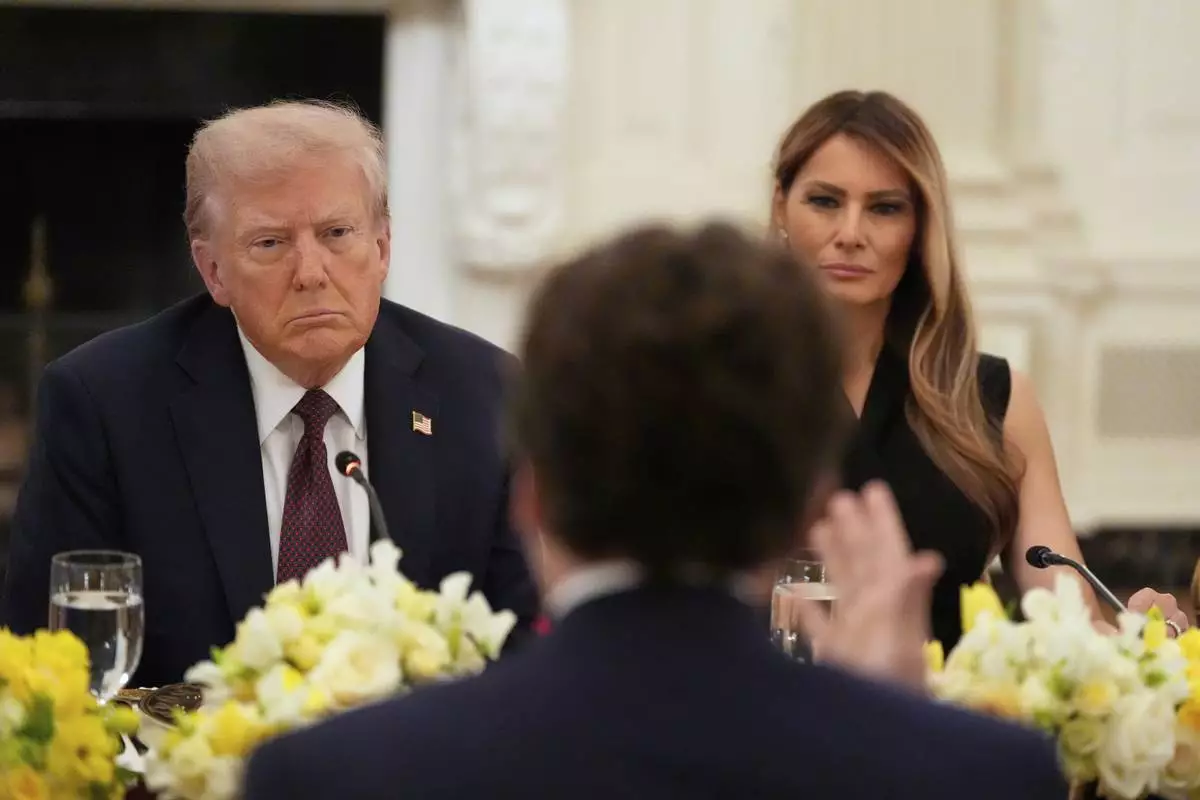
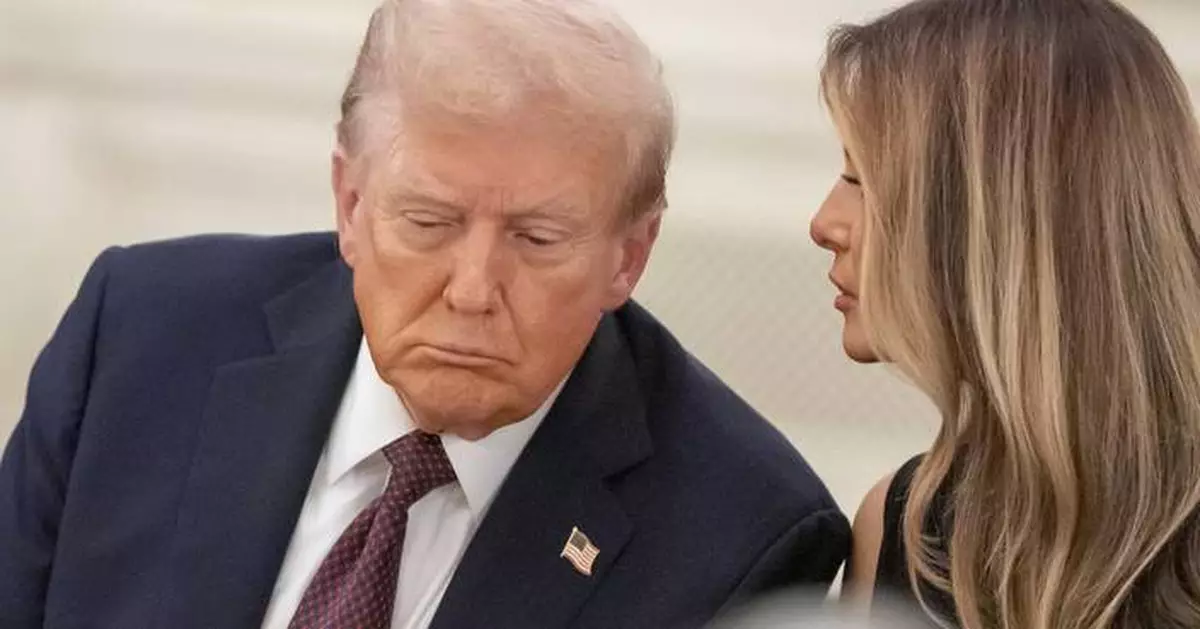
President Donald Trump and first lady Melania Trump listen during a dinner in the State Dinning Room of the White House, Thursday, Sept. 4, 2025, in Washington. (AP Photo/Alex Brandon)
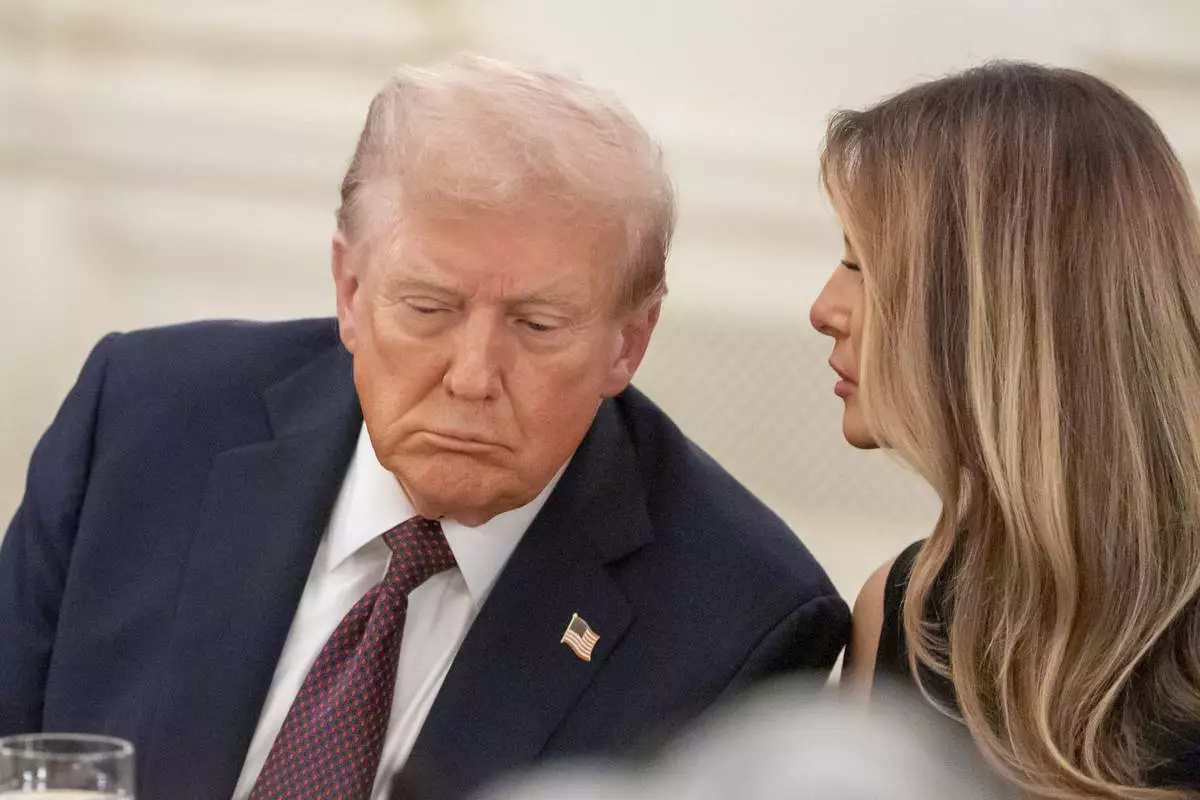
President Donald Trump listens as first lady Melania Trump repeats a question for him during a dinner in the State Dinning Room of the White House, Thursday, Sept. 4, 2025, in Washington. (AP Photo/Alex Brandon)