A village in the northwestern county of Ruoqiang in Xinjiang Uygur Autonomous Region, China's largest county known for harsh arid desert climate, has embarked on a fast track to prosperity by leveraging it's unique natural resources to cultivate a thriving red date industry.
In orchards across the county's Gule Airike Village, ripe red dates hang heavily on branches in the annual harvest season, filling the air with a sweet fragrance.
Ruoqiang dates are known for their thick flesh, rich flavor, and high sugar content, all thanks to the region's unique climate -- long sunny days and large temperature fluctuations between day and night. This gives the dates a taste that's second to none.
"First of all, Ruoqiang red dates benefit from long sun exposure, because the daylight hours here are quite long. Second, the large difference in temperature is also good for the dates, helping improve their quality and resulting in the thin skin, thick flesh, and small pits that Ruoqiang dusty red dates are known for. The taste is sweet, with a delightful aftertaste, and they are highly nutritious. This year's harvest turned out great, with an average increase per mu (about 0.067 hectare) of about 100 to 200 kilograms compared to last year," said Jia Hui, local Party secretary and chief of Gule Airike Village.
"We choose to stock up on high-quality dates from Ruoqiang, working with Secretary Jia and his cooperative, because they deliver the best quality," said Wang Dongfeng, head of a dried fruits wholesale distribution center.
According to Jia, the cooperative frequently hires experienced date farmers from the village. Occasionally, it also invites specialists from the Municipal Bureau of Agriculture and Rural Affairs, as well as other relevant technical experts, to provide on-site technical guidance.
Jia always engages in negotiations over a price difference of a little money. This seemingly tiny margin could mean thousands of extra yuan, equivalent to hundreds of U.S. dollars, in income for the villagers -- a reflection of their tireless work throughout the year.
"We used to grow wheat and corn, but getting by wasn't easy. Now that we grow red dates, things have gradually gotten much better, and life has truly improved for everyone," said Yasin Yusup, manager of a red date cooperative.
"My parents also grow red dates. My brother and I relied on red dates to graduate from university, and later to build up our own families and careers. Many villagers share similar experiences. Red dates have secured their basic living needs, and now they are able to pursue a better life. In the future, I hope our village will have better public facilities and higher collective income, and that farmers' pockets will grow fuller and fuller," Jia said.
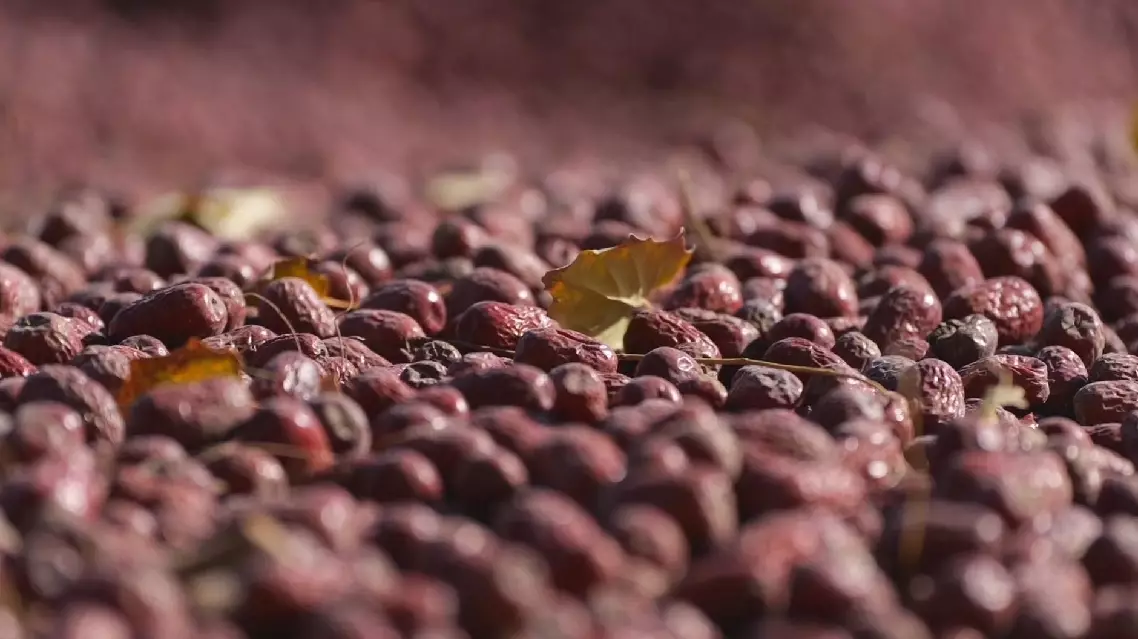
Xinjiang village thrives through climate-smart red date industry