Camels, long known as the "ships of the desert," are now driving economic growth in Keping County, northwest China's Xinjiang Uygur Autonomous Region, where the camel industry has become a pathway to rural prosperity.
Keping, with a population of just 60,000, has seen its camel population rise from 8,000 in 2021 to more than 56,000 today, nearly one camel per person, making it the top camel-raising county in Xinjiang.
At around 09:00, local camel herders wait in lines outside milk processing factories to deliver their fresh camel milk. So far, more than 600 households have engaged in camel-based dairy production.
Inside local factories, automated production lines are running at full speed. Two major camel milk companies now purchase up to 40 tons of fresh milk from villagers each day. The camel milk powder products are sold online nationwide.
"In just one hour of livestreaming, I sold products worth more than 40,000 yuan (5,610 U.S. dollars). Our annual sales are doubling every year," said Su Jianye, sales manager at Keping Dairy Company. Once a national-level poverty-stricken county, Keping turned to the camel milk industry to generate stable, long-term income for locals. In the past, villagers used to raise camels solely as livestock to sell, on a small scale, with low profits. Many once doubted that camels could truly generate wealth through milk production.
"We've brought in camel milk processing enterprises and shifted from scattered small-scale herding to more industrialized, intensive and scientific farming. We've also introduced eight support policies to boost farmers' enthusiasm," said Chang Cheng'en, a member of the Standing Committee of the Communist Party of China (CPC) Committee in Keping County.
Thanks to government subsidies, the villagers now receive support for buying camels and building livestock houses. They also participate in free technical training to improve camel milk yield. Last year, each household raising camels saw an average increase of over 90,000 yuan (126,22 U.S. dollars) in income.
"Our income has really increased a lot, encouraging us to buy the vehicle to deliver the milk," said Merban Nurdihali, a camel herder.
The camel-based economy now includes milk processing, camel hair production, and tourism. In 2024, this industry contributed two billion yuan (280 million U.S. dollars) to the local economy and created over 6,000 new jobs in Keping.
One of those new jobs belongs to college graduate Gulimiremu Dawuti, who now works as a quality inspector at a local camel milk factory.
"The factory is close to home, the salary is great, and I'm really interested in the industry," she said.
Thriving local characteristic industries are increasing incomes of local people across Xinjiang.
In Altay, the roughly 19,000 hectares of cultivated sea buckthorn yield over 15,000 yuan (2,100 U.S. dollars) in annual income per farmers. In Changji, over 40 kinds of chickpea-based products dominate 80 percent of China's market. Kashgar has become China's largest plum producer and seller, with a supply chain valued at over six billion yuan (840 million U.S. dollars).
Over the past decade, the per capita disposable income in the region has nearly doubled, increasing an average of 7 percent annually.
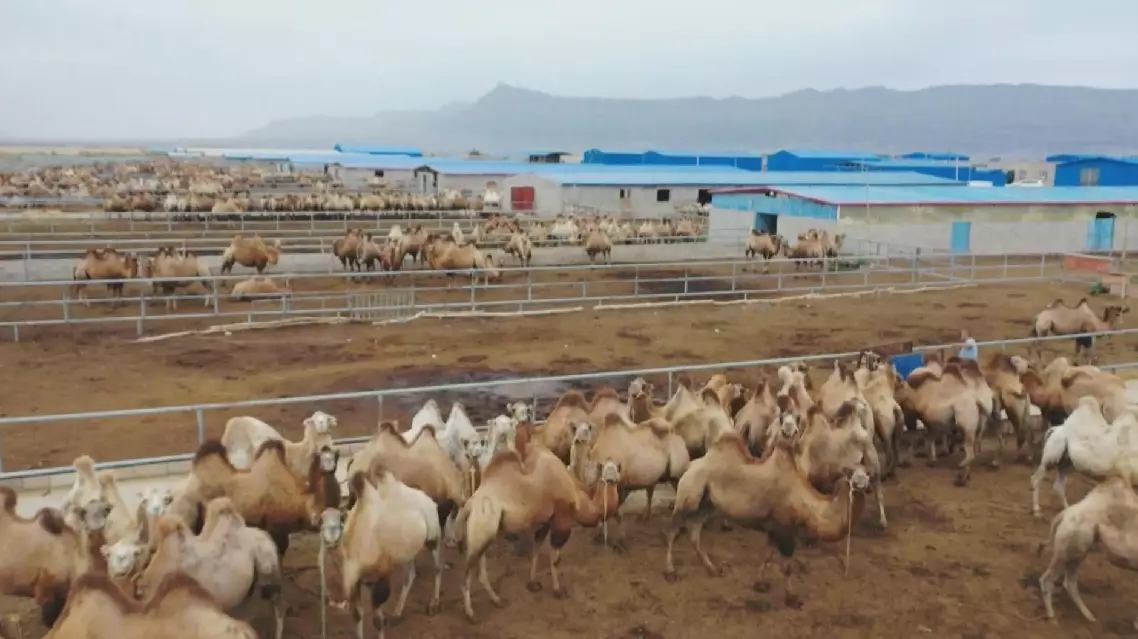
Camel industry fuels rural prosperity in Xinjiang