NEW YORK (AP) — Songwriter Bobby Hart, a key part of the Monkees' multimedia empire who teamed with Tommy Boyce on such hits as “Last Train to Clarksville” and “I’m Not Your Steppin’ Stone,” has died. He was 86.
Hart died at his home in Los Angeles, according to his friend and co-author, Glenn Ballantyne. He had been in poor health since breaking his hip last year.
Boyce and Hart were a prolific and successful duo in the mid-1960s, especially for the Monkees, the made-for-television group promoted by Don Kirshner. They wrote the Monkees' theme song, with its opening shot, "Here we come, walkin' down the street," and enduring chant, "Hey, hey, we're the Monkees," and their first No. 1 hit, “Last Train to Clarksville.” The Monkees' eponymous, million-selling debut album included six songs from Boyce and Hart, who also served as producers and used their own backing musicians, the Candy Store Prophets, as session players.
"I always credit them not only with writing many of our biggest hits, but, as producers, being instrumental in creating the unique Monkee sound we all know and love," the Monkees' Micky Dolenz wrote in a foreword to Hart's memoir, "Psychedelic Bubblegum," published in 2015.
As Boyce and Hart grew in fame and the Monkees took more control of their work, they pursued their own careers, releasing the albums "Test Patterns" and "I Wonder What She's Doing Tonite" and appearing on such sitcoms as "I Dream of Jeannie" and "Bewitched." They also were politically active. They campaigned for Robert F. Kennedy when he ran for president in 1968 and wrote the brassy "L.U.V. (Let Us Vote)" in support of the 26th Amendment, which in 1971 lowered the voting age from 21 to 18. Their other songs included the Monkees' melancholy "I Wanna Be Free" and the theme to the daytime soap opera "Days of Our Lives."
They were covered by everyone from Dean Martin ("Little Lovely One") to the Sex Pistols ("I'm Not Your Steppin' Stone").
In the 1970s and '80s, Hart managed several hits with other collaborators and even contributed material to another TV act, the Partridge Family. He worked with Austin Roberts on "Over You," an Oscar-nominated ballad performed by Betty Buckley in "Tender Mercies," and with Dick Eastman on "My Secret (Didja Gitit Yet?)" for New Edition. He and Bryce toured with Dolenz and fellow Monkee Davy Jones in the '70s, put out the album "Dolenz, Jones, Boyce & Hart" and received renewed attention when the Monkees enjoyed a comeback in the 1980s.
Boyce, who died in 1994, and Hart were the subjects of a 2014 documentary "The Guys Who Wrote 'Em." Hart was married twice, most recently to singer Mary Ann Hart, and had two children from his first marriage.
He was a minister's son, born Robert Luke Harshman in Phoenix, Arizona. In his memoir, he remembered himself as a shy kid with a "strong desire to distinguish" himself, as he wrote in "Psychedelic Bubblegum." Music was the answer. By high school, he had learned piano, guitar and the Hammond B-3 organ. He also started his own amateur radio station, eventually adding a console, turntables and microphones. After graduating from high school and serving in the Army reserves, he settled in Los Angeles in the late 1950s, hoping first to become a disc jockey, but soon working as a songwriter and session musician. His name shortened to Bobby Hart, he toured as a member of Teddy Randazzo and the Dazzlers, and with Randazzo and Bobby Weinstein wrote "Hurt So Bad," a hit for Little Anthony and the Imperials later covered by Linda Ronstadt.
He also befriended Boyce, a singer and songwriter from Charlottesville, Virginia, with a "very unusual personality, spontaneous and extroverted, yet very cool at the same time." Boyce and Hart helped write the top 10 hit "Come a Little Bit Closer" for Jay and the Americans and were a strong enough combination that Kirshner recruited them for his Screen Gems songwriting factory: They were assigned to the Monkees. Asked to come up with songs for a quartet openly modeled on the Beatles, they devised a twangy guitar line similar to the one for the "Paperback Writer" and wrote "Last Train to Clarksville," a chart topper in 1966 based in part on Hart's mishearing of the Beatles hit (he thought Paul McCartney was singing “take the last train” near the end; McCartney was singing “paperback writer”).
When Kirshner suggested a song with a girl's name in the title, they turned out "Valleri" and reached the top 5. For the show's theme song, a stroll outside was enough.
"Boyce began strumming his guitar and I joined in by snapping my fingers & making noises with my mouth that simulated an open & closed hi-hat cymbal," Hart wrote in his memoir. "We had created the perfect recipe for inspiration and started singing about just what we were doing: 'Walkin' down the street.'"
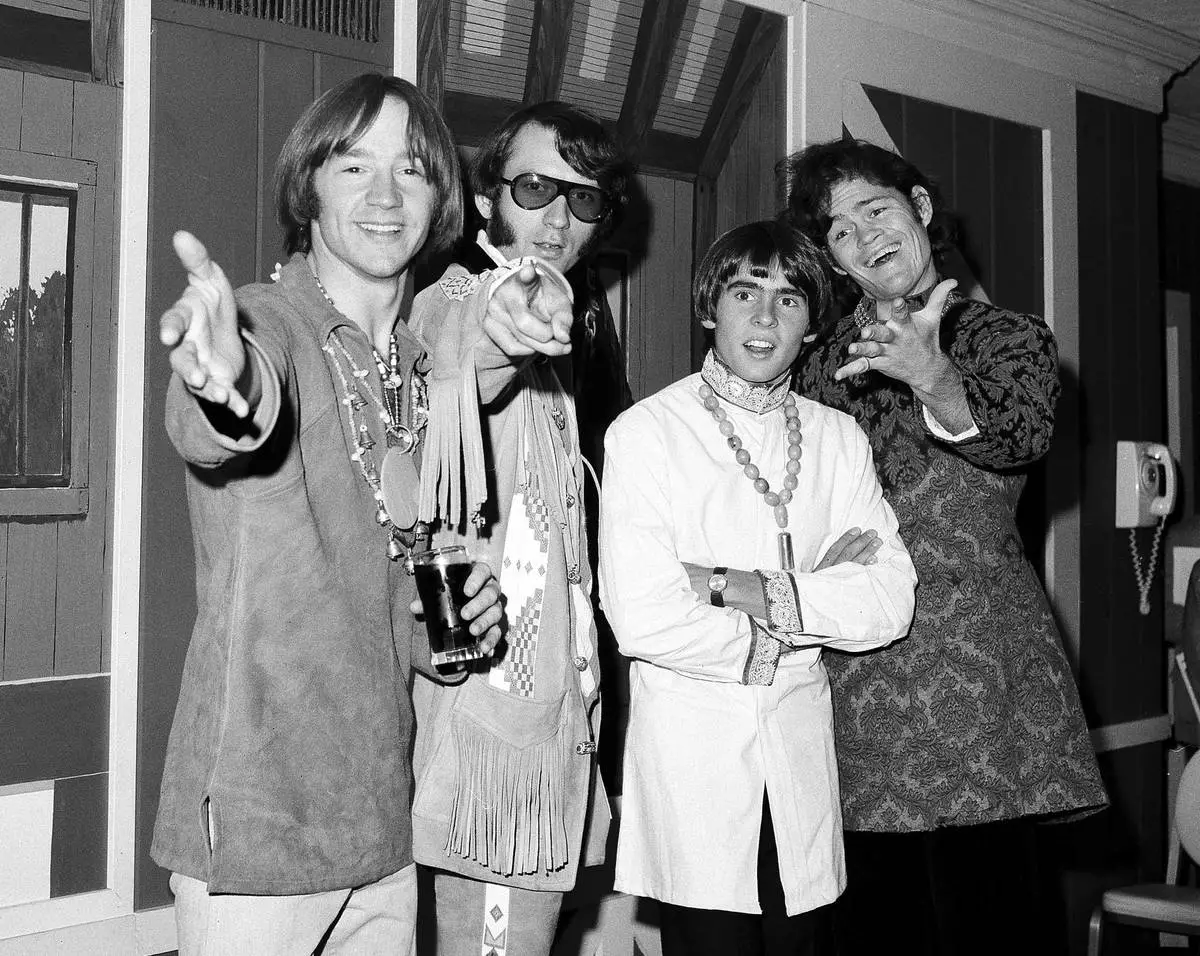
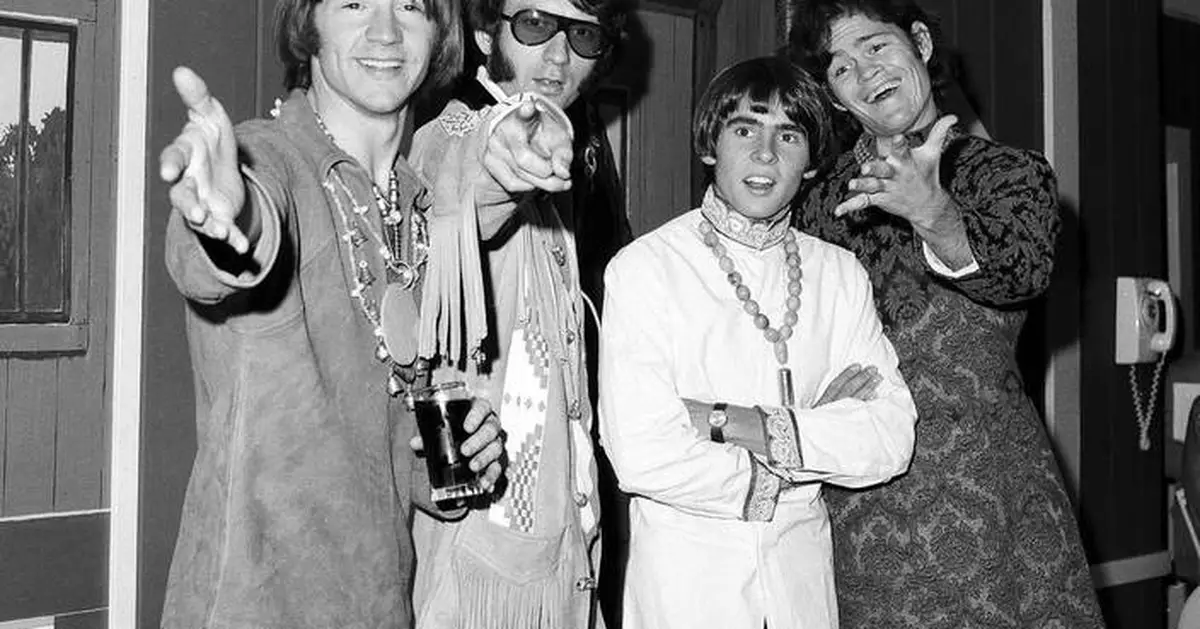
FILE - This July 6, 1967 file photo shows the musical group, The Monkees, from left, Peter Tork, Mike Nesmith, David Jones, and Micky Dolenz at a news conference at the Warwick Hotel in New York. (AP Photo/Ray Howard, file)
WASHINGTON (AP) — A federal judge Thursday cleared the way for a New York offshore wind project to resume construction, a victory for the developer who said a Trump administration order to pause it would likely kill the project in a matter of days.
District Judge Carl J. Nichols, an appointee of President Donald Trump, ruled construction on the Empire Wind project could go forward while he considers the merits of the government’s order to suspend the project. He faulted the government for not responding to key points in Empire Wind’s court filings, including the contention that the administration violated proper procedure.
Norwegian company Equinor owns Empire Wind. Spokesperson David Schoetz said they welcome the court's decision and will continue to work in collaboration with authorities. It’s the second developer to prevail in court against the administration this week.
The Trump administration froze five big offshore wind projects on the East Coast days before Christmas, citing national security concerns. Trump has targeted offshore wind from his first days back in the White House, most recently calling wind farms “losers” that lose money, destroy the landscape and kill birds.
Developers and states sued seeking to block the order. Large, ocean-based wind farms are the linchpin of plans to shift to renewable energy in East Coast states that have limited land for onshore wind turbines or solar arrays.
New York Gov. Kathy Hochul applauded the court decision, telling reporters the projects had been “stopped under the bogus pretense of national security.”
“When I heard this I said one thing: I’m the governor of New York, if there is a national security threat off the coast of New York, you need to tell me what it is. I want a briefing right now. Well, lo and behold, they had no answer,” she said.
On Monday, a judge ruled that the Danish energy company Orsted could resume its project to serve Rhode Island and Connecticut. Senior Judge Royce Lamberth said the government did not sufficiently explain the need for a complete stop to construction. That wind farm, called Revolution Wind, is nearly complete. It’s expected to meet roughly 20% of the electricity needs in Rhode Island, the smallest state, and about 5% of Connecticut’s electricity needs.
Orsted is also suing over the pause of its Sunrise Wind project for New York, with a hearing still to be set. Dominion Energy Virginia, which is developing Coastal Virginia Offshore Wind, plans to ask a judge Friday to block the administration’s order so it can resume construction, too.
Trump has also dismissed offshore wind developments as ugly, but the Empire project is about 14 miles (22.5 kilometers) offshore and the Sunrise project is about 30 miles (48 kilometers) offshore.
The fifth paused project is Vineyard Wind, under construction in Massachusetts. Vineyard Wind LLC, a joint venture between Avangrid and Copenhagen Infrastructure Partners, joined the rest of the developers in challenging the administration on Thursday. They filed a complaint in District Court in Boston.
In contrast to the halted action in the U.S., the global offshore wind market is growing, with China leading the world in new installations. Nearly all of the new electricity added to the grid in 2024 was renewable. The British government said Wednesday it secured a record 8.4 gigawatts of offshore wind in Europe’s largest offshore wind auction, enough clean electricity to power more than 12 million homes.
Robin Shaffer, president of Protect Our Coast New Jersey, said the Trump administration was right to stop construction on national security grounds. He urged officials to immediately appeal the adverse rulings and seek to halt all work pending appellate review. Opponents of offshore wind projects are particularly vocal and well-organized in New Jersey.
Empire Wind is 60% complete and designed to power more than 500,000 homes. Equinor said the project was in jeopardy due to the limited availability of specialized vessels, as well as heavy financial losses.
During a hearing Wednesday, Judge Nichols said the government’s main security concern seemed to be over operation of the wind turbines, not construction, although the government pushed back on that contention.
In presenting the government’s case, Associate Attorney General Stanley Woodward, Jr. was skeptical of the perfect storm of horrible events that Empire Wind said would derail their entire project if construction didn’t resume. He disagreed with the contention that the government’s main concern was over operation.
“I don’t see how you can make this distinction,” Woodward said. He likened it to a nuclear project being built that presented a national security risk. The government would oppose it being built, and it turning on.
Molly Morris, Equinor’s senior vice president overseeing Empire Wind, said in an interview that the company wants to build this project and deliver a major, essential new source of power for New York.
McDermott reported from Providence, Rhode Island. Associated Press writer Anthony Izaguirre contributed to this report from Albany, New York.
The Associated Press’ climate and environmental coverage receives financial support from multiple private foundations. AP is solely responsible for all content. Find AP’s standards for working with philanthropies, a list of supporters and funded coverage areas at AP.org.
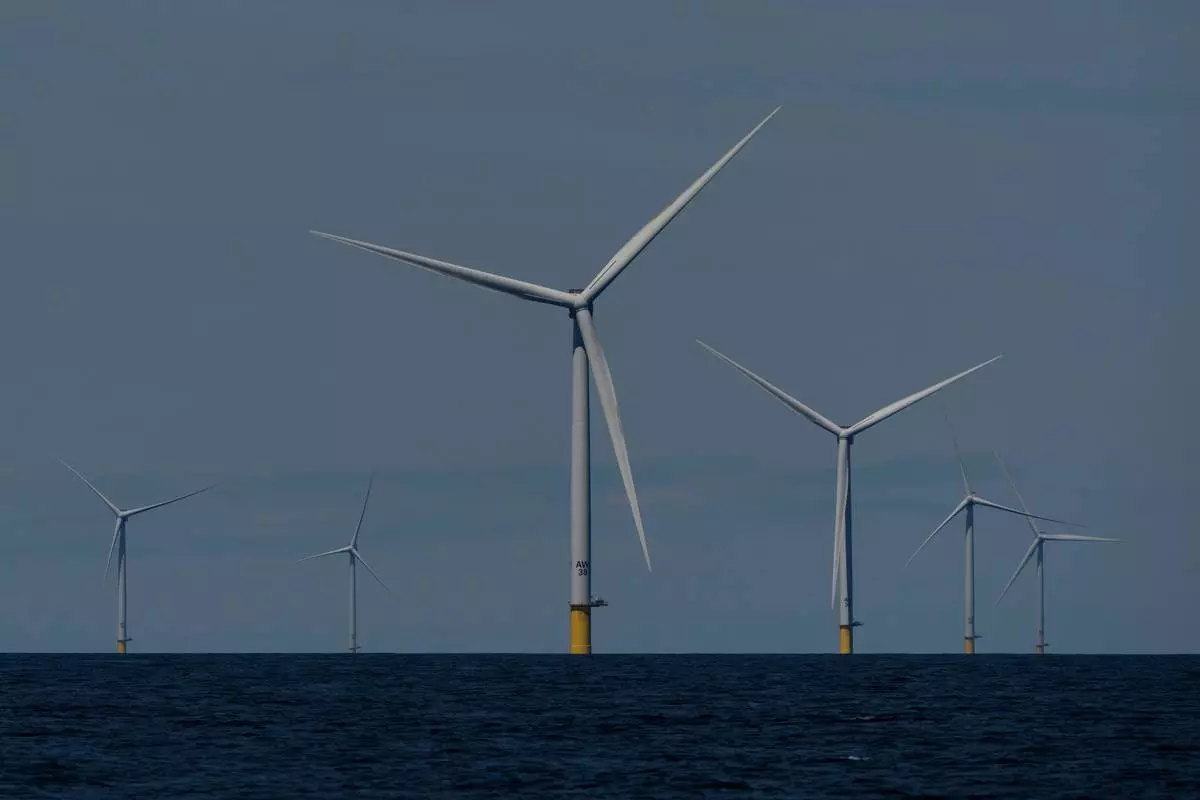
FILE - Wind turbines operate at Vineyard Wind 1 offshore wind farm off the coast of Massachusetts, July 19, 2025. (AP Photo/Carolyn Kaster, File)
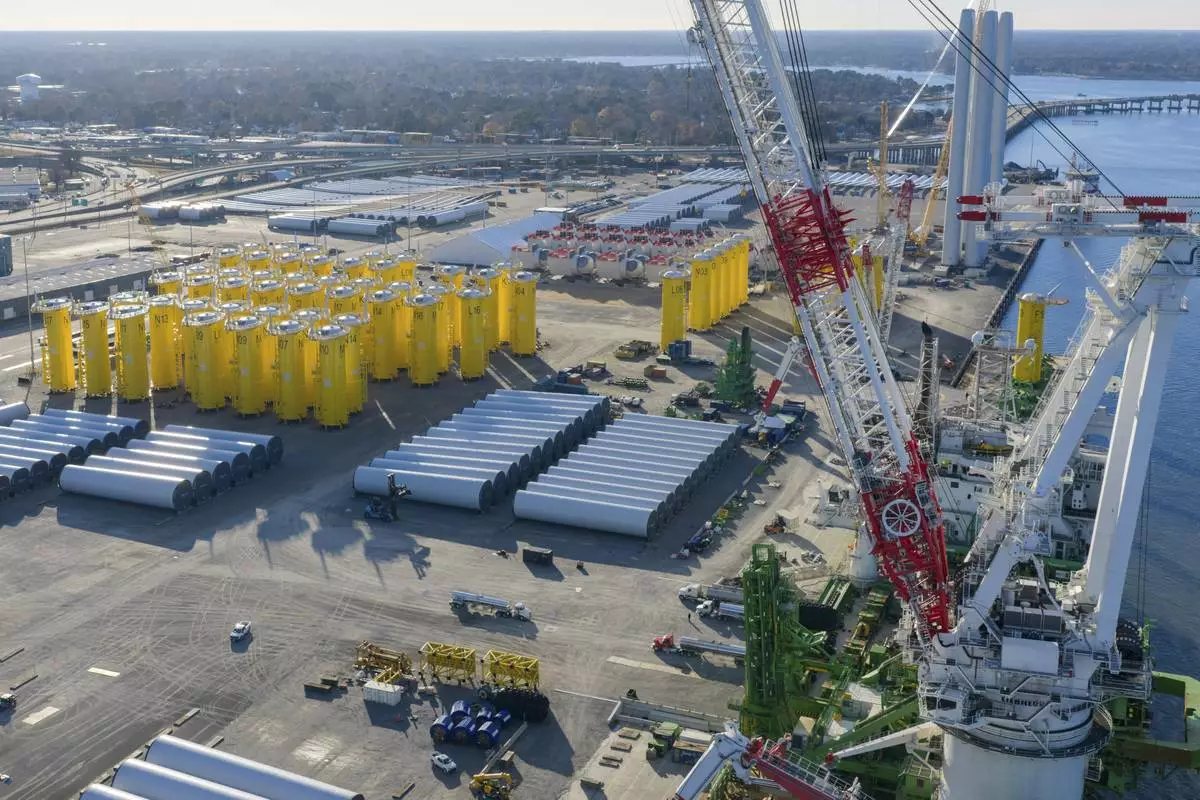
FILE - Wind turbine bases, generators and blades sit along with support ships at The Portsmouth Marine terminal that is the staging area for Dominion Energy Virginia, which is developing Coastal Virginia Offshore Wind, Dec. 22, 2025, in Portsmouth, Va. (AP Photo/Steve Helber, File)

FILE - A sign for the company Equinor is displayed on Oct. 28, 2020, in Fornebu, Norway. (Håkon Mosvold Larsen/NTB Scanpix via AP, File)
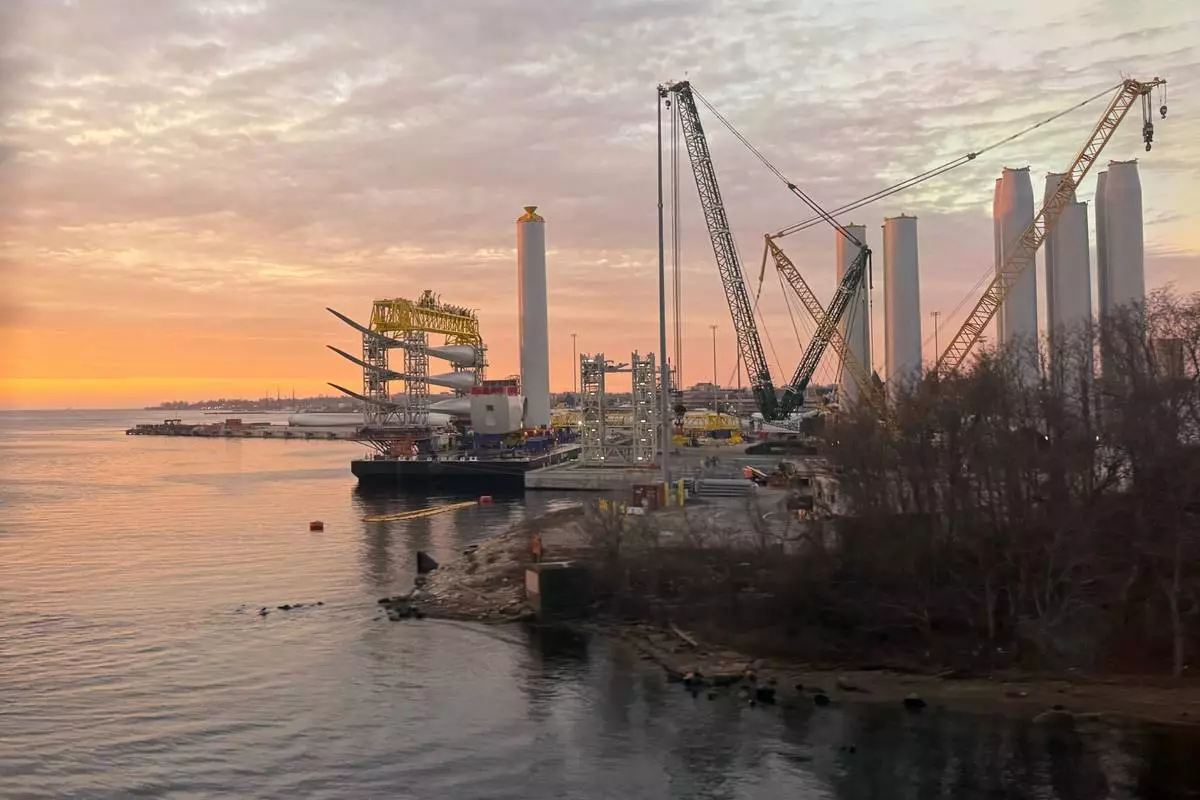
Blades and turbine bases for offshore wind sit at a staging area at New London State Pier, Wednesday, Jan. 14, 2026, in New London, Conn. (AP Photo/Matt O'Brien)