Skip to Content Facebook Feature Image

A Greek island has 1,000 private chapels. Families maintain them for faith and community

News

A Greek island has 1,000 private chapels. Families maintain them for faith and community
News

News

A Greek island has 1,000 private chapels. Families maintain them for faith and community

2025-09-15 13:02 Last Updated At:13:21

TINOS, Greece (AP) — More than a thousand chapels dot the Greek island of Tinos. In a rare centuries-old tradition, the mostly simple, room-sized stone structures are painstakingly maintained by the ordinary families that own them.

These private whitewashed chapels with miniature bell towers belong to octogenarians and Generation Z, goat farmers and hotel owners, Orthodox Christians and Catholics who worship daily and de facto atheists.

More Images
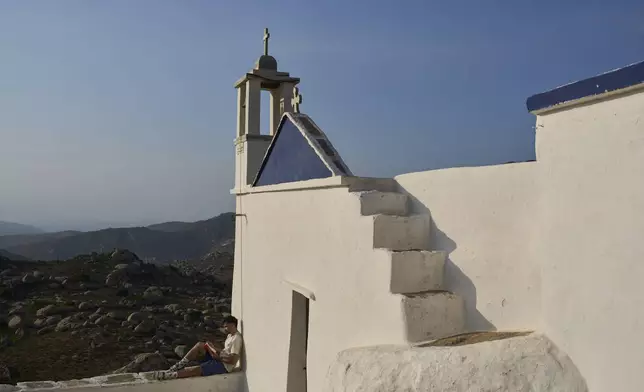
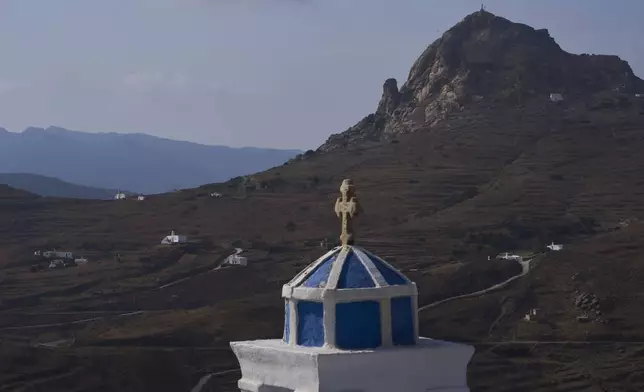
Giannis Kafantaris 26, reads a book outside Panagia Theoskespasti, the chapel his family co-owns near the village of Falatados, on the Aegean island of Tinos, Greece, Friday, Sept. 5, 2025. (AP Photo/Petros Giannakouris)
Giannis Kafantaris 26, reads a book outside Panagia Theoskespasti, the chapel his family co-owns near the village of Falatados, on the Aegean island of Tinos, Greece, Friday, Sept. 5, 2025. (AP Photo/Petros Giannakouris)

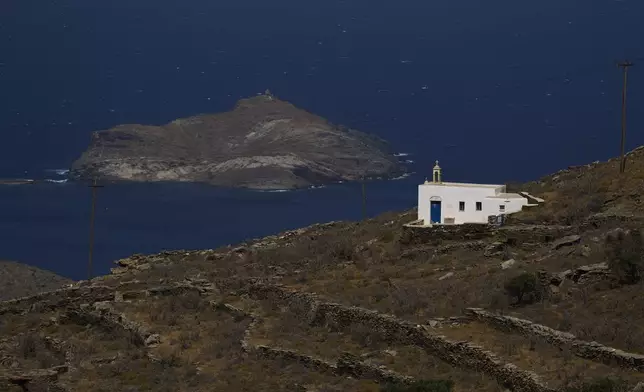
Family-owned chapels stand on the Aegean Sea island of Tinos, Greece, Sunday, Sept. 7, 2025. (AP Photo/Petros Giannakouris)
Family-owned chapels stand on the Aegean Sea island of Tinos, Greece, Sunday, Sept. 7, 2025. (AP Photo/Petros Giannakouris)

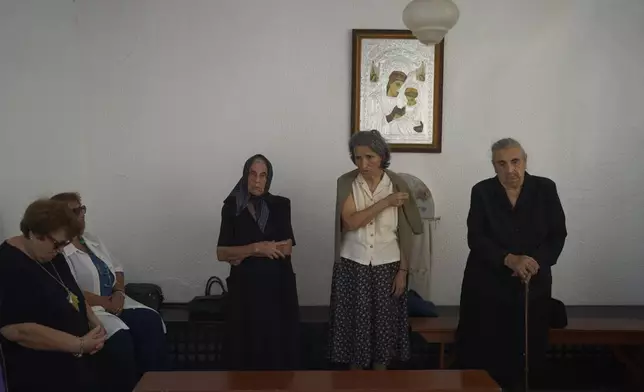
Worshippers make the Sign of the Cross during a liturgy at the family-owned Agios Sostis chapel on the island of Tinos, Greece, Monday, Sept. 8, 2025. (AP Photo/Petros Giannakouris)
Worshippers make the Sign of the Cross during a liturgy at the family-owned Agios Sostis chapel on the island of Tinos, Greece, Monday, Sept. 8, 2025. (AP Photo/Petros Giannakouris)

A family-owned chapel on the island of Tinos, Greece, with the isle of Planitis in the background, is seen on Saturday, Sept. 6, 2025. (AP Photo/Petros Giannakouris)
A family-owned chapel on the island of Tinos, Greece, with the isle of Planitis in the background, is seen on Saturday, Sept. 6, 2025. (AP Photo/Petros Giannakouris)

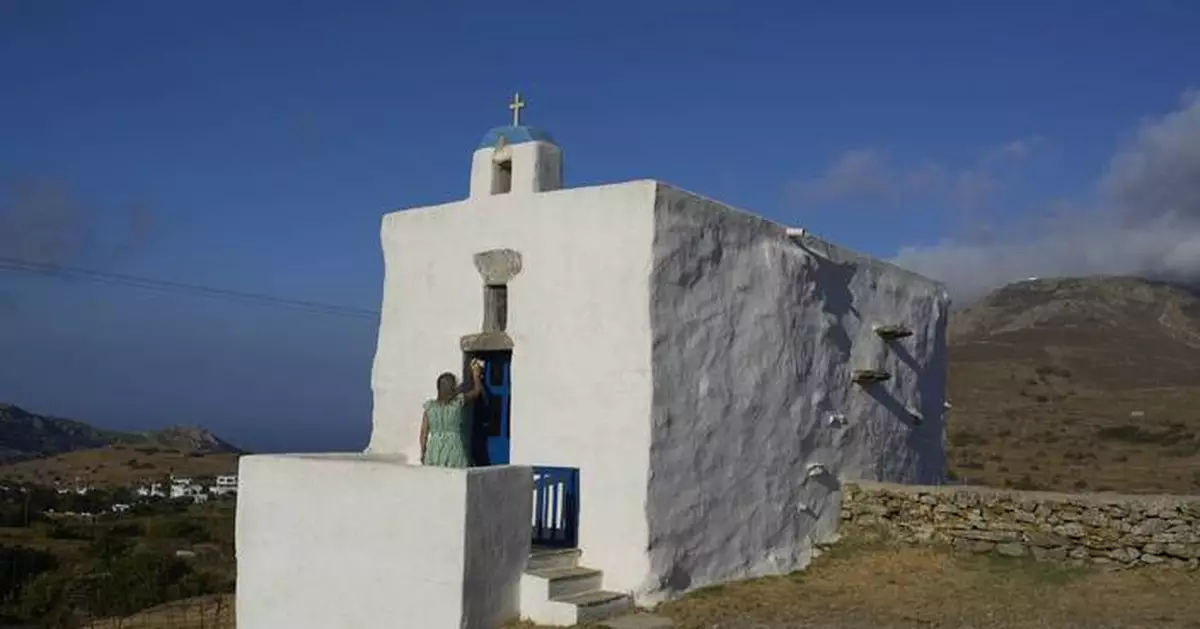
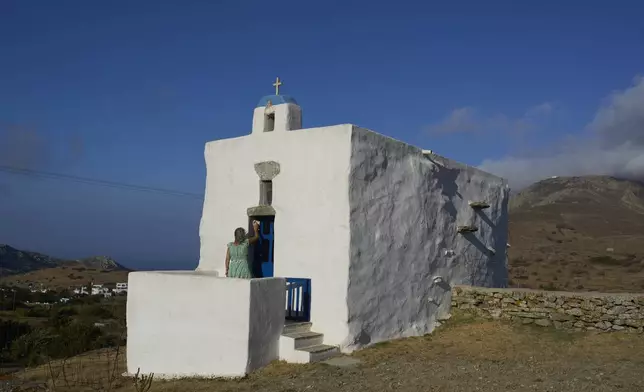
Bernadette Foskolos cleans her Agios Athanasios family-owned chapel at the village of Steni, on the island of Tinos, Greece, Saturday, Sept. 6, 2025. (AP Photo/Petros Giannakouris)

Bernadette Foskolos cleans her Agios Athanasios family-owned chapel at the village of Steni, on the island of Tinos, Greece, Saturday, Sept. 6, 2025. (AP Photo/Petros Giannakouris)

What they have in common is an unwavering dedication to preserving the diminutive churches their ancestors built — and to throwing a liturgical and community celebration called panigiri around the feast day of the Virgin Mary or saint they honor.

“This tradition and custom that connect us between members of the family is part of our identity. I’m fully committed to maintaining and passing them down to my children,” said Ioanna Krikelli during the September festival at her family’s church, Agios Sostis, established in the 17th century.

Perched on a rocky promontory on the Aegean Sea facing Mykonos, the chapel with its twin bell towers topped by simple crosses hosted an hourlong evening liturgy. Hundreds of faithful packed the front yard festooned with small Greek flags and string lights.

“What you see here is very deep,” Krikelli said, as family members — including two who had traveled from Iceland and the United Kingdom for the occasion — served homemade raki liqueur and sweets after the service.

For centuries, European aristocrats built private chapels, usually in their palaces. Today, many homes in predominantly Orthodox Greece have a tiny chapel nearby. Beyond the spiritual, tax breaks for houses of worship can extend to attached buildings.

But in the Cycladic islands, particularly Sifnos and Tinos, there’s more than one chapel per 10 residents. The reasons trace back to past empires, which successively oversaw these strategic islands providing a bridge between Europe and Asia.

The Venetians, who ruled Tinos from the 13th to the early 18th century, granted land rights to Tinos’ farmers as a buffer to the Ottomans. After taking over, the Ottomans allowed the locals to keep and build hundreds of chapels on their farmland, said Maria Vidali, an architect from Tinos who researched the chapels.

Then there are the many chapels built by sailors’ families as vows for their safe passage, those constructed for deceased family members, and those erected in honor of the Virgin Mary, Vidali added. One of Greece’s most important Marian shrines, Panagia Evaggelistria, is in Tinos' main town.

Even though almost all chapels share the iconic Cycladic style — cubic forms, flat roofs, touches of blue paint on mostly white surfaces — “every mason added his own flourish,” said the Rev. Markos Foskolos. The Tinos native has been a Catholic priest on the island for more than 50 years and authored its history.

Most chapels are always open, with a supply of oil for candle wicks as well as candy and bottled water for pilgrims.

“It’s as if they expect visitors,” said Nikos Levantis at Agios Giorgos, a friend’s 200-year-old chapel squeezed among massive granite boulders.

Levantis’ family owns three chapels, and he recalls as a child carrying blankets for sleepovers with a dozen cousins before the morning liturgy. His mother, Eleftheria Levanti, remembers how the festivals were essential social events for islanders decades ago. Young men often proposed by putting a flower alongside meat on their fork and handing it to a girl, she said.

Offering food to pilgrims was a practical need, Foskolos said, when people walked long distances to reach the chapels and did so while fasting before receiving Communion. Feeding poor people was also part of the social contract for those who owned farmland.

“All this helps to form a sense of community. In these little chapels, one becomes a brother with everyone else,” Foskolos said.

Community gathering remains a crucial part of today’s celebrations, though many are scaled down.

Brothers Romanos and Konstantinos Vasilopoulos host about 80 people for the feast at their family church, Panagia Faneromeni, built in the early 1800s over the vestiges of a 17th century chapel. There’s still no running water or electricity, and a giant eucalyptus leans into the second-floor kitchen with views to Mykonos and beyond.

They’re keeping up the custom together with two cousins “to honor the family and religion and tradition,” Romanos Vasilopoulos said. Even though he’s not a regular Sunday service goer, he finds something unique at his chapel.

“The feeling is serenity. I lose the time here. It’s just the stones and the view, and they carry stories and memories,” he said.

For Levantis, prayer also feels different at the family chapels.

“It’s better here, because you find God closer. You can concentrate more on faith,” he said.

Steeped in family and community, the chapels and their festivals can become tools of evangelization, according to Foskolos.

“Because people go there … and there are so many that you can find one every day of the year,” the Catholic priest said.

His sister, Bernadette Foskolos, helped set up at the Agios Sostis festival — an Orthodox celebration — and also takes care of her own chapel, Agios Athanasios, near the inland village of Steni. Its walls follow the uneven contours of stones and a touch of blue tops the rounded bell tower.

“When they offered me the church, I was just enthusiastic,” she said of being made caretaker of the family chapel, where she decorates the altar with fresh flowers.

In the nearby village of Falatados, Nicoleta Nazou walks daily the short distance from her house to her husband’s family’s marble-covered church, Agia Paraskevi, to make sure there’s oil to keep a candle burning.

“It’s our responsibility first of all, it goes from generation to generation as an heirloom,” said Nazou, who estimates the chapel dates to the 1600s.

Nondas Chrisochoidis’ chapel only traces back to the mid-1980s, when his father had it built in honor of his namesake, St. Constantine, near Agios Sostis. Chrisochoidis said he’s less observant than his parents, but he’s optimistic that the tradition won’t be lost despite growing secularization across Europe.

“There’s a strong tendency, which deviates our children and grandchildren from the traditional path of religion — visiting churches, honoring the saints and the Virgin Mary and Jesus,” he said. “But we do everything we can to keep it up and alive, because it’s our life.”

Even though he doesn’t identify as religious and doesn’t live on the island, Giannis Kafantaris shares the sentiment. The 26-year-old’s family shares ownership of Panagia Theoskepasti, perched on a remote mountainside.

He goes often to the chapel because it’s a quiet place to relax with a book. And he has no intention of giving up the site or the festival.

“Christianity has religious aspects but also cultural aspects. It brings a lot of people together,” he said. “I want to keep it going,”

Associated Press religion coverage receives support through the AP’s collaboration with The Conversation US, with funding from Lilly Endowment Inc. The AP is solely responsible for this content.
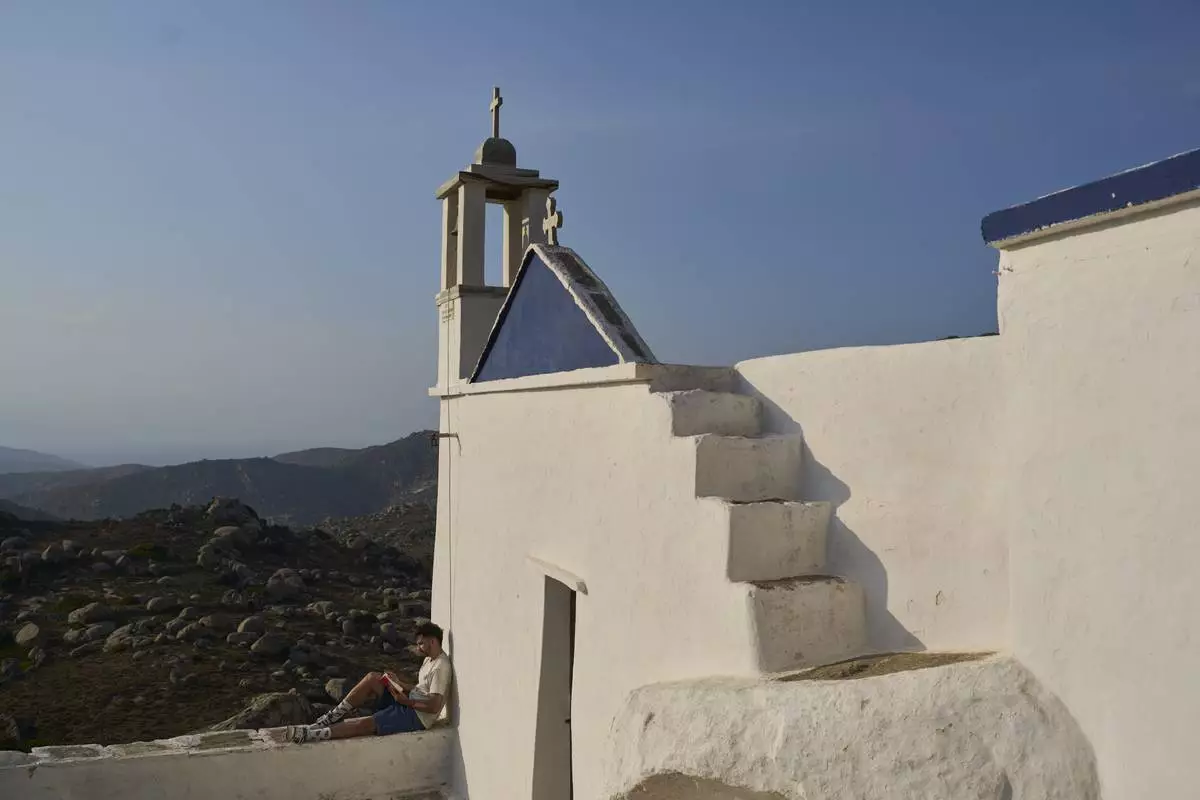
Giannis Kafantaris 26, reads a book outside Panagia Theoskespasti, the chapel his family co-owns near the village of Falatados, on the Aegean island of Tinos, Greece, Friday, Sept. 5, 2025. (AP Photo/Petros Giannakouris)
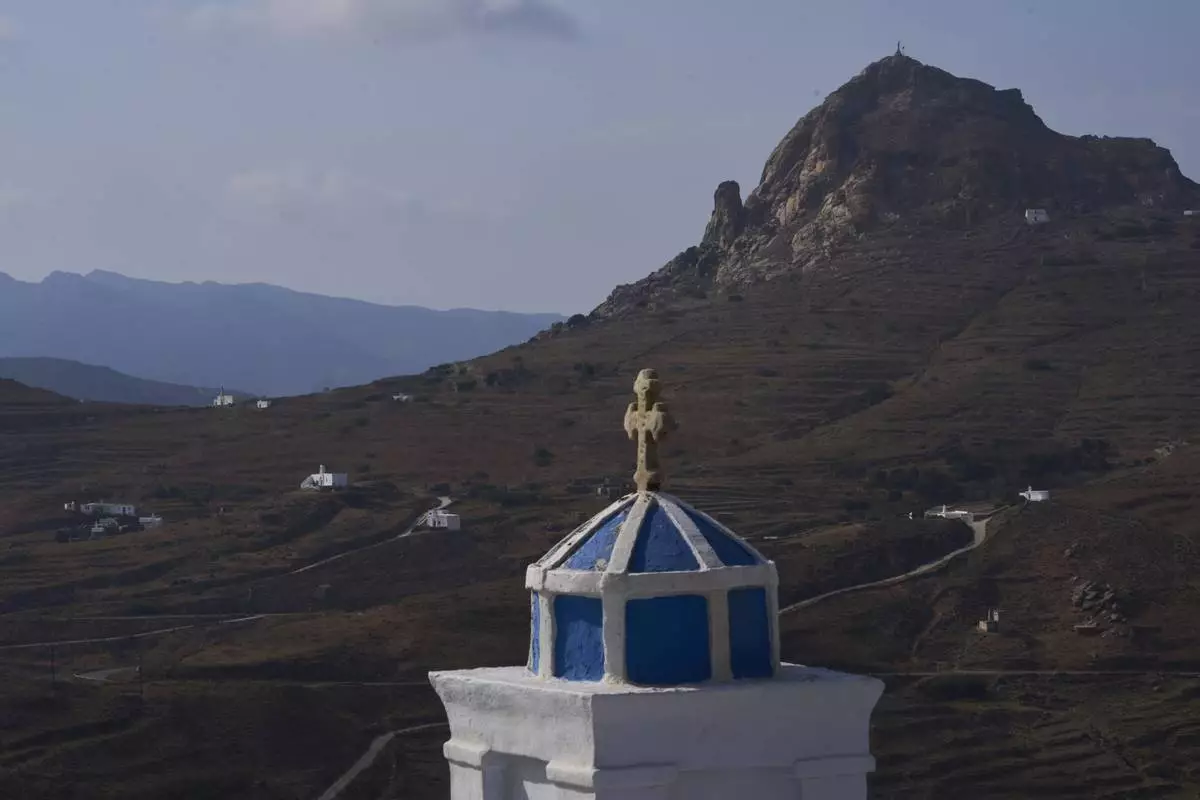
Giannis Kafantaris 26, reads a book outside Panagia Theoskespasti, the chapel his family co-owns near the village of Falatados, on the Aegean island of Tinos, Greece, Friday, Sept. 5, 2025. (AP Photo/Petros Giannakouris)

Family-owned chapels stand on the Aegean Sea island of Tinos, Greece, Sunday, Sept. 7, 2025. (AP Photo/Petros Giannakouris)
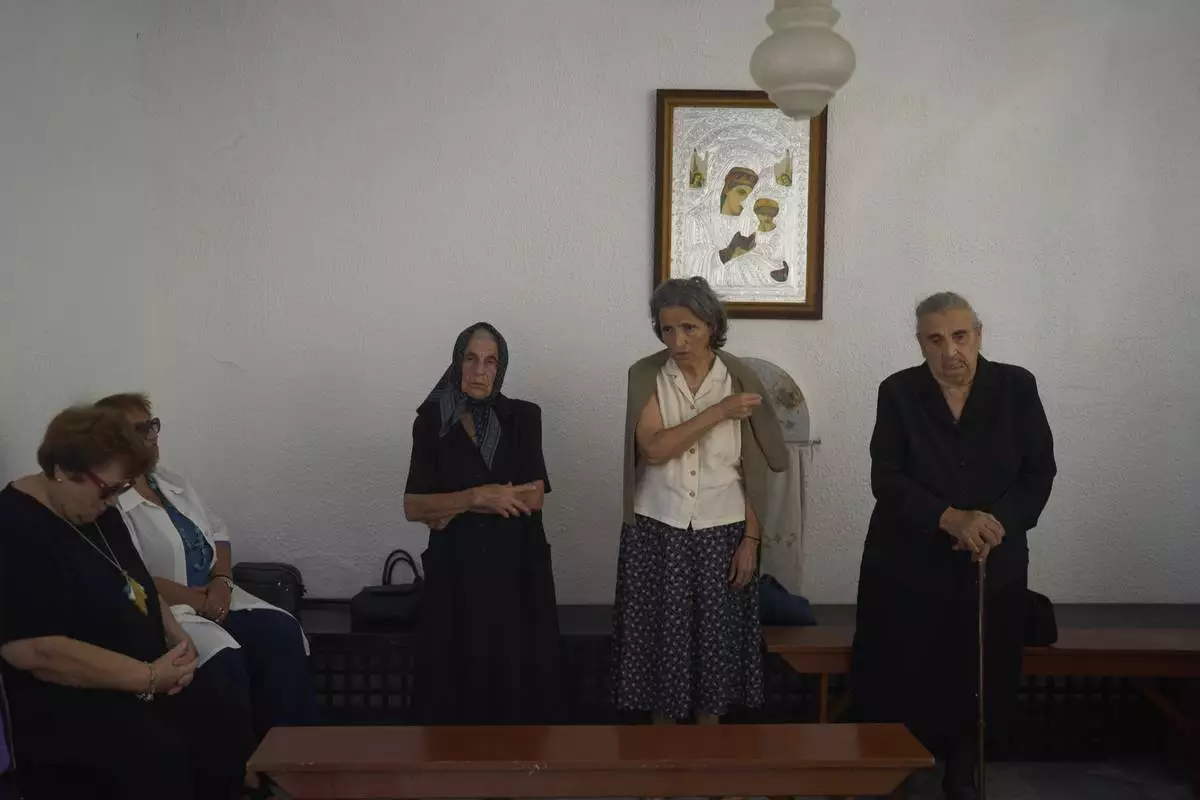
Family-owned chapels stand on the Aegean Sea island of Tinos, Greece, Sunday, Sept. 7, 2025. (AP Photo/Petros Giannakouris)

Worshippers make the Sign of the Cross during a liturgy at the family-owned Agios Sostis chapel on the island of Tinos, Greece, Monday, Sept. 8, 2025. (AP Photo/Petros Giannakouris)
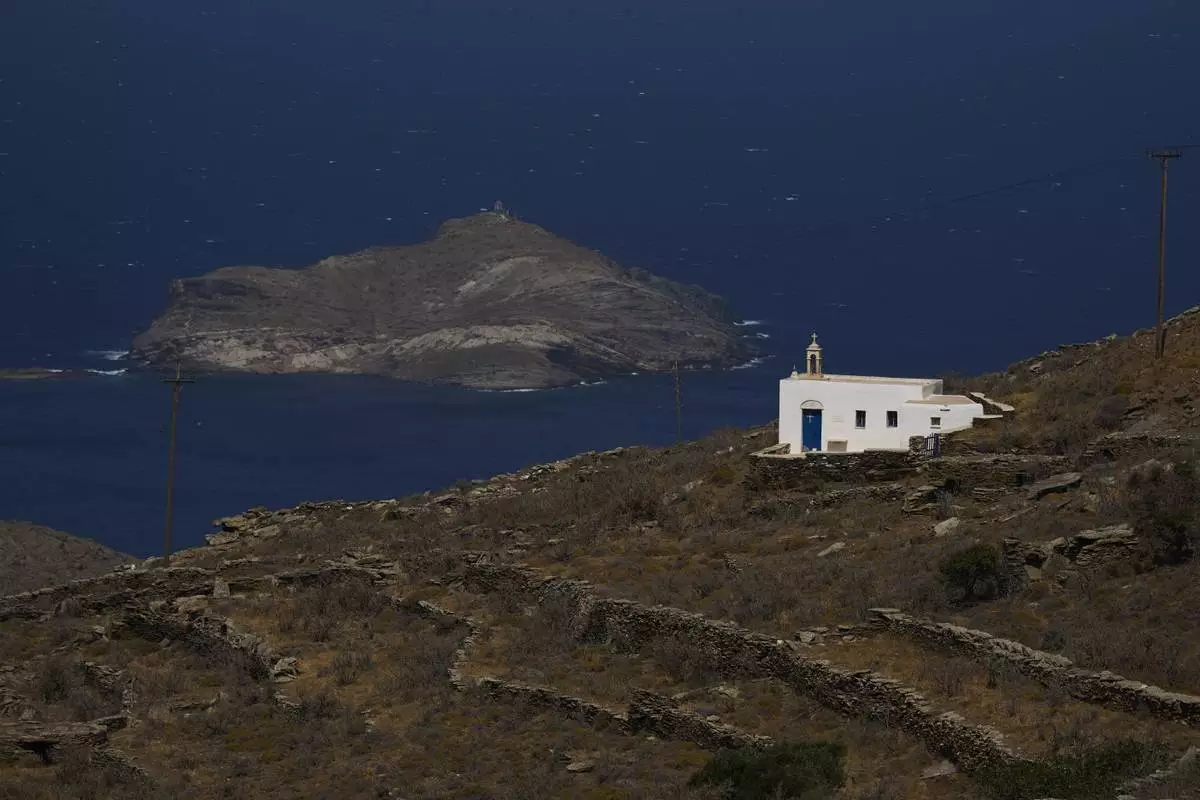
Worshippers make the Sign of the Cross during a liturgy at the family-owned Agios Sostis chapel on the island of Tinos, Greece, Monday, Sept. 8, 2025. (AP Photo/Petros Giannakouris)

A family-owned chapel on the island of Tinos, Greece, with the isle of Planitis in the background, is seen on Saturday, Sept. 6, 2025. (AP Photo/Petros Giannakouris)
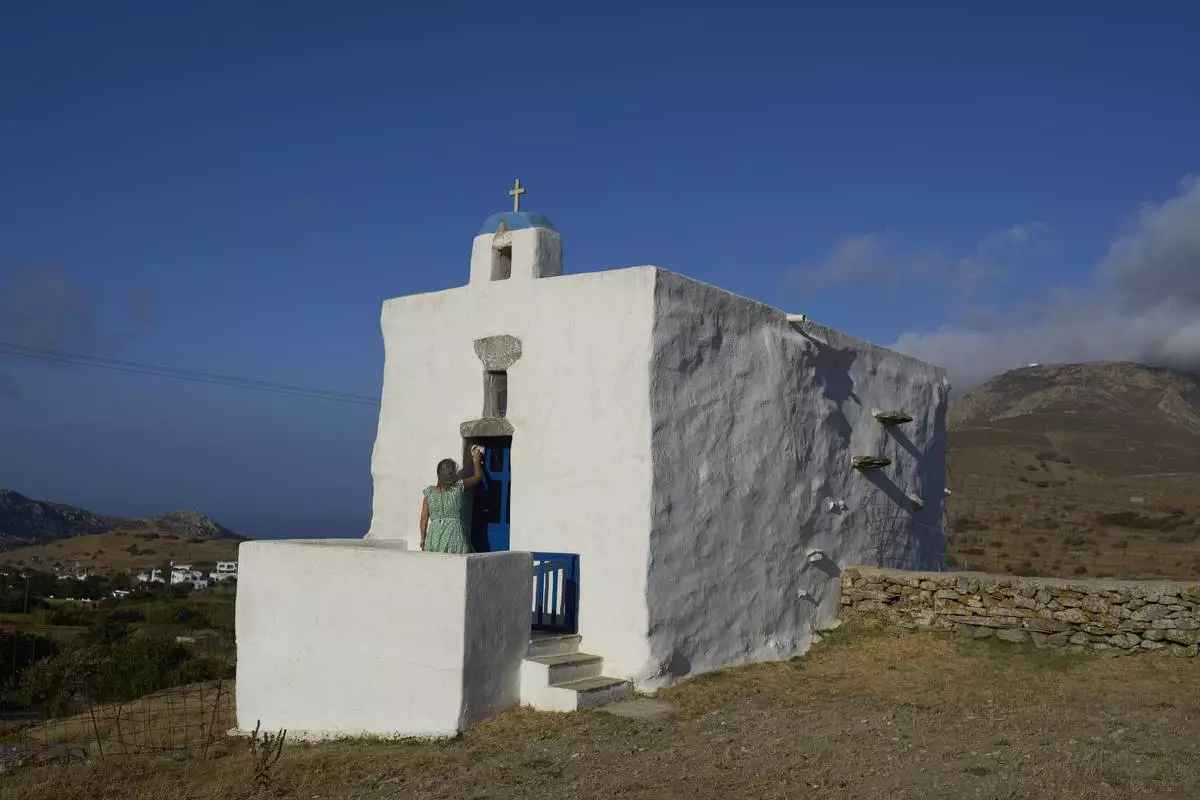
A family-owned chapel on the island of Tinos, Greece, with the isle of Planitis in the background, is seen on Saturday, Sept. 6, 2025. (AP Photo/Petros Giannakouris)

Bernadette Foskolos cleans her Agios Athanasios family-owned chapel at the village of Steni, on the island of Tinos, Greece, Saturday, Sept. 6, 2025. (AP Photo/Petros Giannakouris)
Bernadette Foskolos cleans her Agios Athanasios family-owned chapel at the village of Steni, on the island of Tinos, Greece, Saturday, Sept. 6, 2025. (AP Photo/Petros Giannakouris)

NUUK, Greenland (AP) — A bipartisan U.S. congressional delegation on Saturday sought to reassure Denmark and Greenland of their support following President Donald Trump's threat to punish countries with tariffs if they don’t back the U.S. taking over the strategic Arctic island.

Delegation leader Sen. Chris Coons, a Delaware Democrat, said the current rhetoric around Greenland is causing concern across the Danish kingdom. He said he wants to de-escalate the situation.

“I hope that the people of the Kingdom of Denmark do not abandon their faith in the American people,” Coons said in Copenhagen, adding that the U.S. has respect for Denmark and NATO “for all we’ve done together.”

Meanwhile, Danish Major Gen. Søren Andersen, leader of the Joint Arctic Command, told The Associated Press that Denmark does not expect the U.S. military to attack Greenland, or any other NATO ally, and that European troops were recently deployed to Nuuk for Arctic defense training.

He said the goal isn’t to send a message to the Trump administration, even through the White House hasn’t ruled out taking the territory by force.

“I will not go into the political part, but I will say that I would never expect a NATO country to attack another NATO country,” he told the AP on Saturday aboard a Danish military vessel docked in Nuuk. “For us, for me, it’s not about signaling. It is actually about training military units, working together with allies.”

The Danish military organized a planning meeting Friday in Greenland with NATO allies, including the U.S., to discuss Arctic security on the alliance’s northern flank in the face of a potential Russian threat. The Americans were also invited to participate in Operation Arctic Endurance in Greenland in the coming days, Andersen said.

In his 2 1/2 years as a commander in Greenland, Andersen said he has not seen any Chinese or Russian combat vessels or warships despite Trump's claims that they were off the island's coast.

But in the unlikely event of American troops using force on Danish soil, Andersen confirmed a Cold War-era law governing Danish rules of engagement.

“But you are right that it is Danish law that a Danish soldier, if attacked, has the obligation to fight back,” he said.

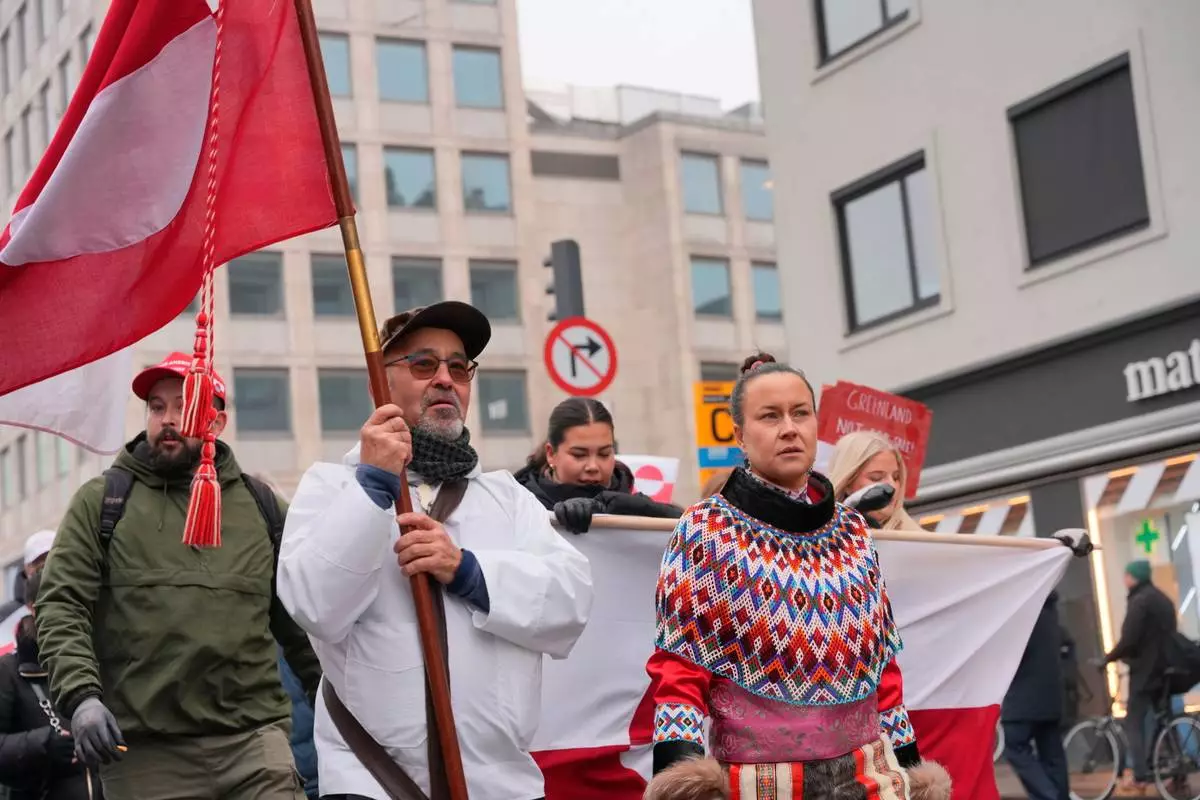
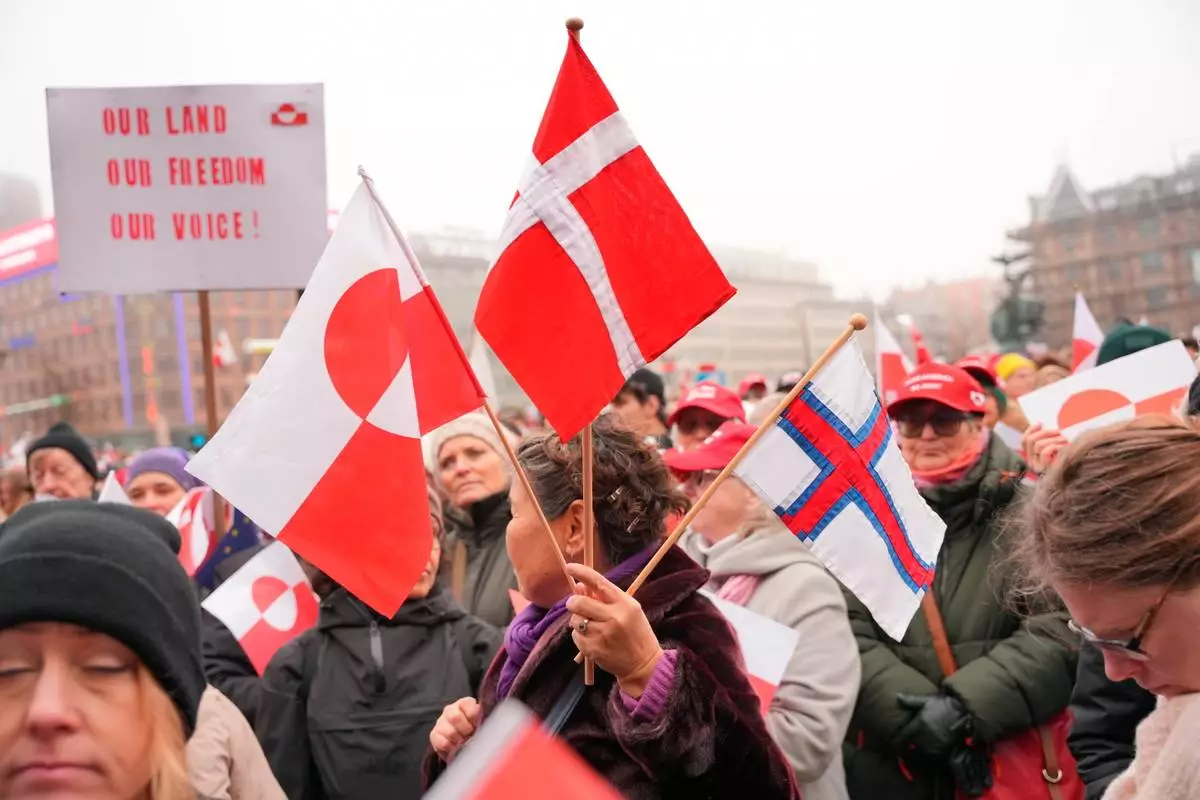
Thousands of people marched through Copenhagen, many of them carrying Greenland’s flag, on Saturday afternoon in support of the self-governing island. Others held signs with slogans like “Make America Smart Again” and “Hands Off.”

“This is important for the whole world,” Danish protester Elise Riechie told The Associated Press as she held Danish and Greenlandic flags. “There are many small countries. None of them are for sale.”

Other rallies were planned in Nuuk, the Greenlandic capital, and elsewhere in the Danish kingdom.

Coons’ comments contrasted with that emanating from the White House. Trump has sought to justify his calls for a U.S. takeover by repeatedly claiming that China and Russia have their own designs on Greenland, which holds vast untapped reserves of critical minerals. The White House hasn’t ruled out taking the territory by force.

“There are no current security threats to Greenland,” Coons said.

Trump for months has insisted that the U.S. should control Greenland, a semiautonomous territory of NATO ally Denmark, and said earlier this week that anything less than the Arctic island being in U.S. hands would be “unacceptable.”

During an unrelated event at the White House about rural health care, he recounted Friday how he had threatened European allies with tariffs on pharmaceuticals.

“I may do that for Greenland, too,” Trump said. “I may put a tariff on countries if they don’t go along with Greenland, because we need Greenland for national security. So I may do that,” he said.

He had not previously mentioned using tariffs to try to force the issue.

Earlier this week, the foreign ministers of Denmark and Greenland met in Washington with U.S. Vice President JD Vance and Secretary of State Marco Rubio.

That encounter didn’t resolve the deep differences, but did produce an agreement to set up a working group — on whose purpose Denmark and the White House then offered sharply diverging public views.

European leaders have insisted it is only for Denmark and Greenland to decide on matters concerning the territory, and Denmark said this week that it was increasing its military presence in Greenland in cooperation with allies.

“There is almost no better ally to the United States than Denmark,” Coons said. “If we do things that cause Danes to question whether we can be counted on as a NATO ally, why would any other country seek to be our ally or believe in our representations?”

__

Niemann reported from Copenhagen, Denmark. Associated Press writer Stefanie Dazio in Berlin contributed to this report.

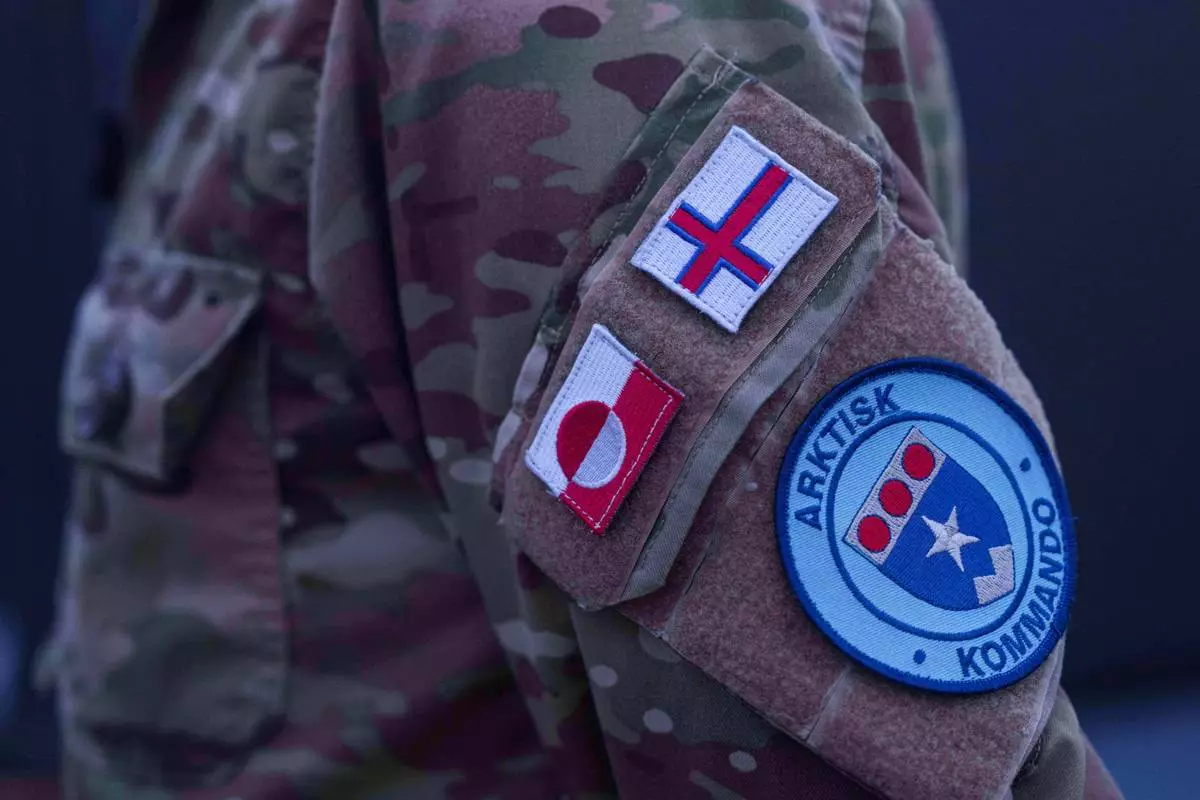
A patch of the Joint Arctic Command is seen on o jacket of Major General Søren Andersen standing onboard a military vessel HDMS Knud Rasmussen of the Royal Danish Navy docked in Nuuk, Greenland, on Saturday, Jan. 17, 2026. (AP Photo/Evgeniy Maloletka)

A patch of the Joint Arctic Command is seen on o jacket of Major General Søren Andersen standing onboard a military vessel HDMS Knud Rasmussen of the Royal Danish Navy docked in Nuuk, Greenland, on Saturday, Jan. 17, 2026. (AP Photo/Evgeniy Maloletka)

People gather for a pro- Greenlanders demonstration, in Copenhagen, Denmark, Saturday, Jan. 17, 2026. (Emil Helms/Ritzau Scanpix via AP)

People gather for a pro- Greenlanders demonstration, in Copenhagen, Denmark, Saturday, Jan. 17, 2026. (Emil Helms/Ritzau Scanpix via AP)

People gather for a pro- Greenlanders demonstration, in Copenhagen, Denmark, Saturday, Jan. 17, 2026. (Emil Helms/Ritzau Scanpix via AP)

People gather for a pro- Greenlanders demonstration, in Copenhagen, Denmark, Saturday, Jan. 17, 2026. (Emil Helms/Ritzau Scanpix via AP)

People march during a pro- Greenlanders demonstration, in Copenhagen, Denmark, Saturday, Jan. 17, 2026. (Emil Helms/Ritzau Scanpix via AP)

People march during a pro- Greenlanders demonstration, in Copenhagen, Denmark, Saturday, Jan. 17, 2026. (Emil Helms/Ritzau Scanpix via AP)

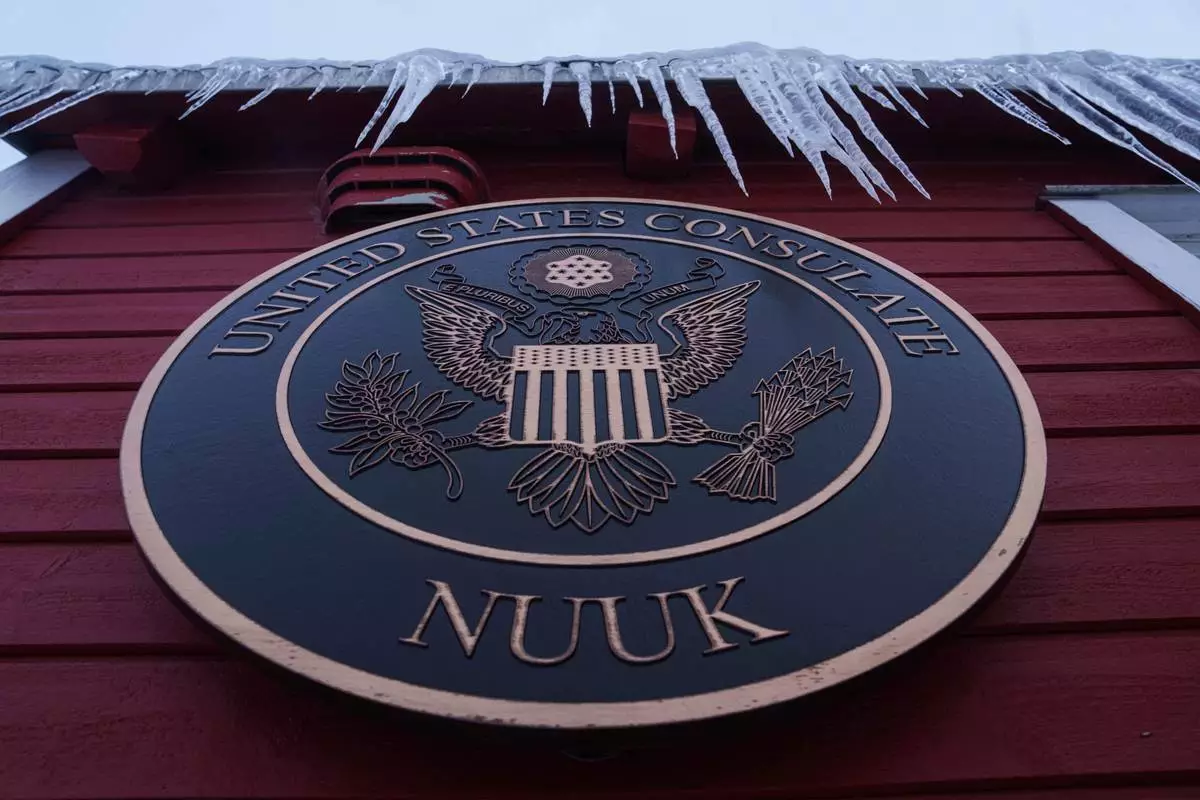
Icicles hang from the roof of the US consulate in Nuuk, Greenland, on Friday, Jan. 16, 2026. (AP Photo/Evgeniy Maloletka)

Icicles hang from the roof of the US consulate in Nuuk, Greenland, on Friday, Jan. 16, 2026. (AP Photo/Evgeniy Maloletka)

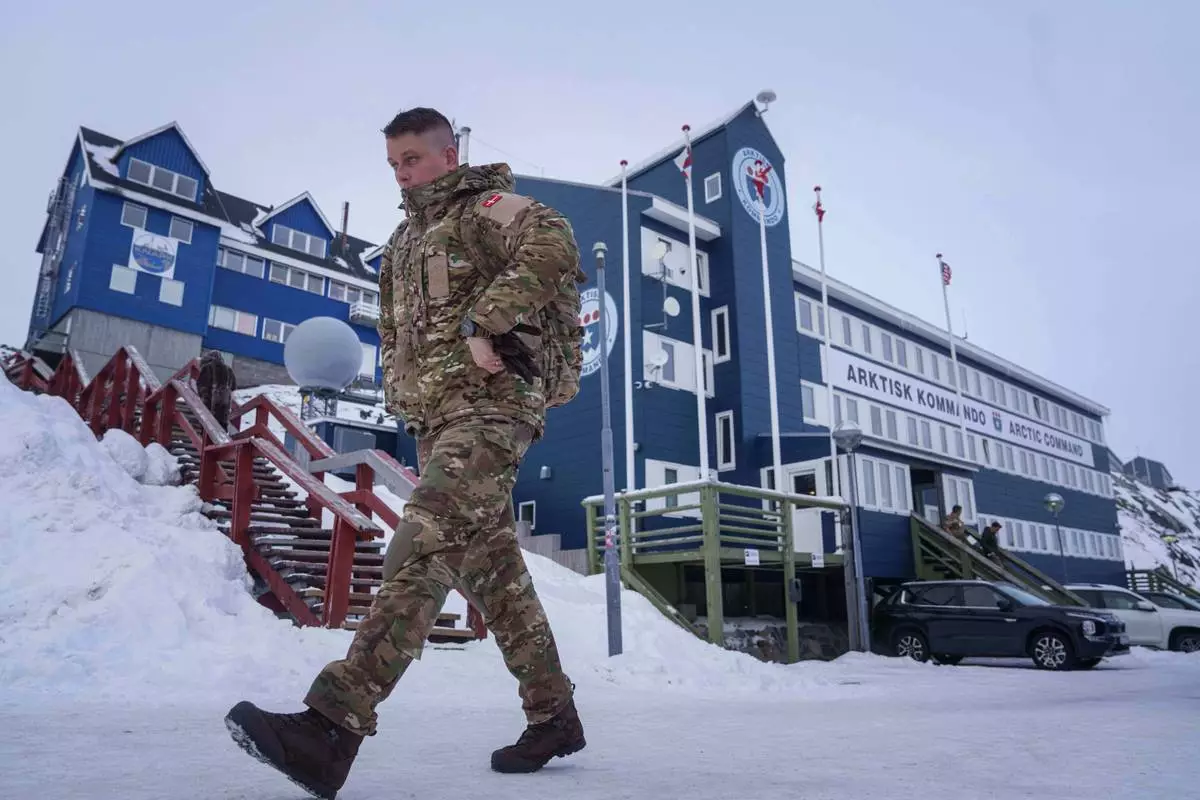
A Danish serviceman walks in front of Joint Arctic Command center in Nuuk, Greenland, on Friday, Jan. 16, 2026. (AP Photo/Evgeniy Maloletka)

A Danish serviceman walks in front of Joint Arctic Command center in Nuuk, Greenland, on Friday, Jan. 16, 2026. (AP Photo/Evgeniy Maloletka)

Senator Chris Coons from the Democratic Party speaks during a press conference with the American delegation, consisting of senators and members of the House of Representatives, in Copenhagen, Denmark, Saturday, Jan. 17, 2026. (Ida Marie Odgaard/Ritzau Scanpix via AP)

Senator Chris Coons from the Democratic Party speaks during a press conference with the American delegation, consisting of senators and members of the House of Representatives, in Copenhagen, Denmark, Saturday, Jan. 17, 2026. (Ida Marie Odgaard/Ritzau Scanpix via AP)

Recommended Articles