The potential re-imposition of sanctions on Iran may threaten the country's health system, impacting vulnerable families who already struggle to obtain necessary imported medical supplies.
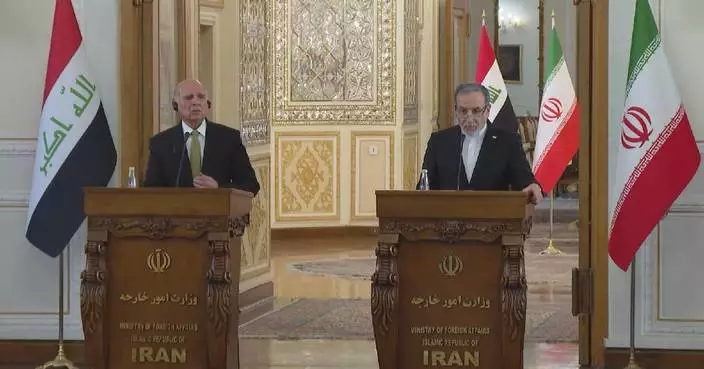
France, Britain and Germany, collectively known as the E3, as well as the European Union (EU) have informed Iran of their intention to reinstate sanctions on Tehran, saying that they plan to officially notify the United Nations Security Council (UNSC) of the start of the process to trigger the snapback mechanism, according to a statement from the Iranian Foreign Ministry.
The "snapback" clause, part of a 2015 nuclear deal, formally known as the Joint Comprehensive Plan of Action (JCPOA) between Iran and world powers, allows the other parties to reimpose international sanctions if Iran fails to comply with the deal.
The statement said that the Europeans also voiced their readiness to find a diplomatic solution within the next 30 days to resolve the differences and prevent the return of the UNSC's sanction resolutions.
The international sanctions on Iran had been suspended under the JCPOA. Iran signed the JCPOA with six major countries -- Britain, China, France, Germany, Russia, and the United States -- in July 2015, accepting restrictions on its nuclear program in return for sanctions relief. However, the U.S. withdrew from the deal in May 2018 and reinstated sanctions, prompting Iran to scale back some of its nuclear commitments.
In the small home on the outskirts of Tehran, the two girls -- Raahil and Rahaa -- are suffering Epidermolysis Bullosa (EB), a rare disease that causes their skin blister and tear from the slightest touch. The threat of the snapback sanctions looms heavily over the family, as they could make vital treatments even more difficult to obtain.
The daily routine of their parents is a painstaking and painful process of wound care, a task made nearly impossible without the proper medical supplies.
"Imagine that from the day you are born, one wound might heal, but a new one always appears on another part of your body. You never have a single day without wounds," said Raahil.
"For an EB patient, the suffering and pain begins the moment they wake up and continues through changing their clothes and taking a shower," said Mojtaba, their father.
The most effective treatment requires specialized bandages produced in Europe. However, following the U.S. withdrawal from the 2015 Iran nuclear deal and the re-imposition of sanctions, many European companies stopped trading with Iran, fearing penalties from the U.S. This has created a critical shortage of essential medical supplies.
EB patients like the two girls depend on Swedish bandages, now very hard to obtain due to sanctions.
"Families of EB patients face enormous costs for special bandages, ointments, disinfectants, and nutritional supplements. Most are imported with no domestic alternative, and they are not covered by state insurance," said Narges Nematzadeh, a pharmacist.
"These bandages must be used with a special cream. A worker like me cannot afford them. In the best case, I might be able to buy one tube every three months," said Mojtaba.
Despite the sanctions and crippling costs, an active charity in Iran has managed to secure part of the treatment payments by attracting donors from inside and outside the country.
"For example, my children need ten bandages a month. If we didn't have the EB Home charity, I would have to buy them all on the open market. They help provide seven bandages. Before the sanctions, these bandages were accessible. The Health Ministry distributed them, and they were available elsewhere," said the father.
Before the 2015 nuclear deal, when Iran was under severe international sanctions, patients with rare diseases endured extreme hardship. Now, they fear a return to those days.
"A few years ago, during a period of tougher sanctions, I remember we had no bandages at all for months," said Raahil
The prospect of further sanctions fills these patients with dread, threatening to make their already difficult lives impossible.
"Without these bandages, life becomes very hard. We feel like we can't do anything for our wounds. We fear we will lose the strength to cope," said Raahil.
"I dream of a day when I can do what I love. I wish to experience days with less pain. I wish showering didn't hurt. I wish changing my bandages wasn't agony," said Rahaa.
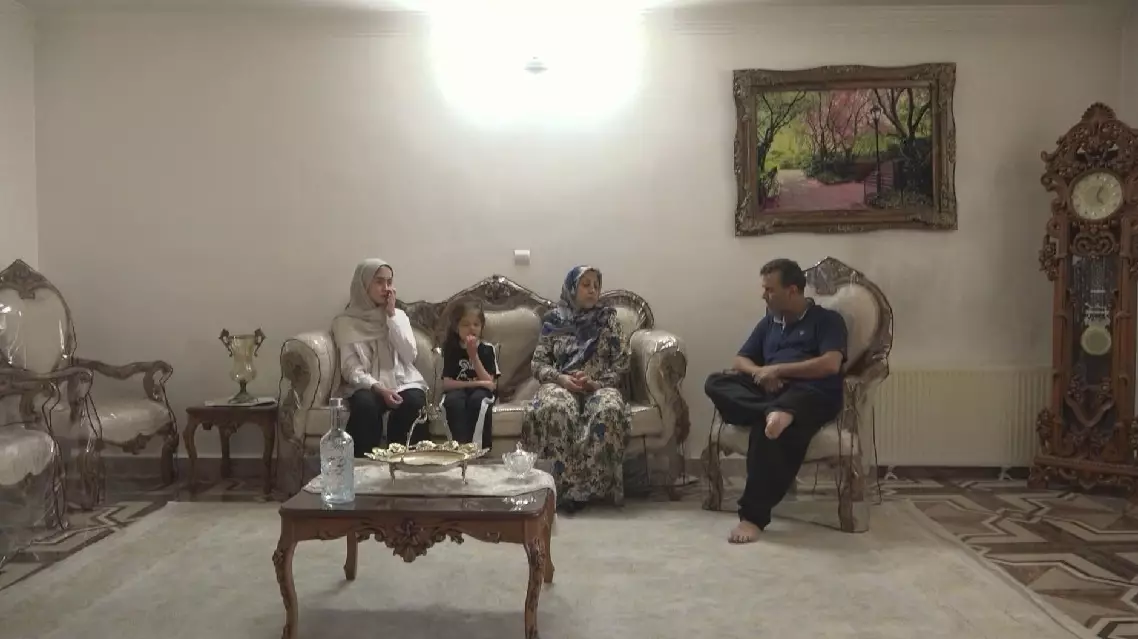
Looming threat of renewed sanctions hangs heavy on Iranian girls suffering from rare diseases