Two weeks after a major U.S. military strike on Venezuela and the and the illegal capture of President Nicolas Maduro, the Venezuelan government has begun to implement a series of recovery and post-conflict initiatives.
On Saturday, Venezuela's acting president Delcy Rodriguez ordered the immediate start of repair work on buildings damaged during the attack.
Post-conflict cleanup and restoration efforts are now steadily advancing across Caracas. The Fuerte Tiuna military base was one of the areas most severely damaged in the U.S. airstrikes, with over 463 apartments sustaining damage. Rodriguez said that most of the aid needed for housing repairs has already been secured.
She also announced the launch of several special community programs. These initiatives include special care activities and psychological support services for children in affected communities. The government also plans to implement food supply deployments, set up open-air markets, establish mobile supply points, and provide comprehensive assistance, including medical and health services.
Meanwhile, legal experts and representatives from social organizations across Venezuela have voiced strong condemnation against the U.S. actions during a legal conference held on Friday.
They demanded that the United States respect international law and Venezuelan sovereignty by immediately releasing President Maduro and his wife, Cilia Flores, who were forcibly removed from the country.
"What we are demanding from Venezuela is that international law must be respected and saved, because once we fall into a state of disorder, what follows is war. We have already seen peace being trampled upon. The sovereignty of a country, officially declared a 'territory of peace' by the international community, has been violated. This has never happened before," said Indhriana Parada Rodriguez, a Venezuelan legal professional.
"We firmly demand the release of President Maduro and his wife, Cilia Flores. They were forcibly taken from their homeland in violation of all basic norms of international law," said Silio Sanchez, vice rector of territorial development of the Bolivarian University of Venezuela.
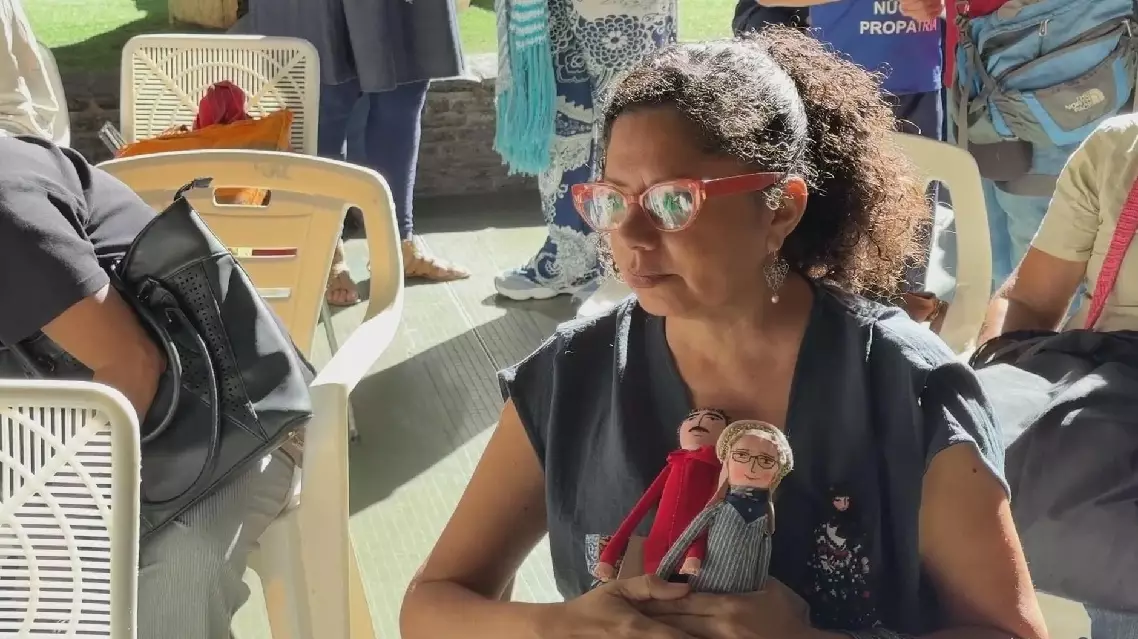
Call for Maduro's release continues as Venezuela moves to deal with aftermath of U.S. military strike
Myanmar President Min Aung Hlaing has lauded the achievements of China's modernization drive, noting that its development model offers valuable lessons for Myanmar to learn from.
He made the comments in an interview with China Media Group in Beijing on Wednesday, during his five-day state visit to China which ended on Friday. The trip marked his 13th visit to the country and his first since assuming the office of president.
During his extensive past tours, Min Aung Hlaing visited multiple Chinese provinces and cities, gaining firsthand insight into the nation's sweeping modernization efforts.
"Since entering the new era, China has made remarkable progress, and this is clear for all to see. China is developing at a rapid pace, and I often see news reports about China's technological innovation. China's younger generation is diligent and enterprising. They are the main force driving the country's development. I have visited many provinces and cities in China, and development achievements can be seen across the country, not only in the places you mentioned. In addition, China's development is relatively balanced. For example, Beijing, Shanghai, Chongqing and Guangzhou are roughly on par in terms of development, with only slight differences among them. Therefore, China's development model is worth learning from," said Min Aung Hlaing.
He outlined a wide array of high-value sectors ripe for expanded partnership, including advanced engineering, electronics, aerospace, agriculture, and industrial manufacturing.
"China offers valuable lessons for Myanmar in many fields. Infrastructure development is one key area where the two sides should focus their cooperation. Besides, China has advanced engineering, electronics, aerospace, seed breeding, and industrial manufacturing - all of which offer significant cooperation opportunities. We should continue to broaden the scope of Myanmar-China cooperation, while also increasing investment between the two sides and expanding the scale of bilateral trade," said the president.
China has been Myanmar's largest trading partner for many years, as well as its largest source of imports and most important source of investment. Bilateral trade reached 19.4 billion U.S. dollars in 2025, up 19.1 percent year on year, according to official data.
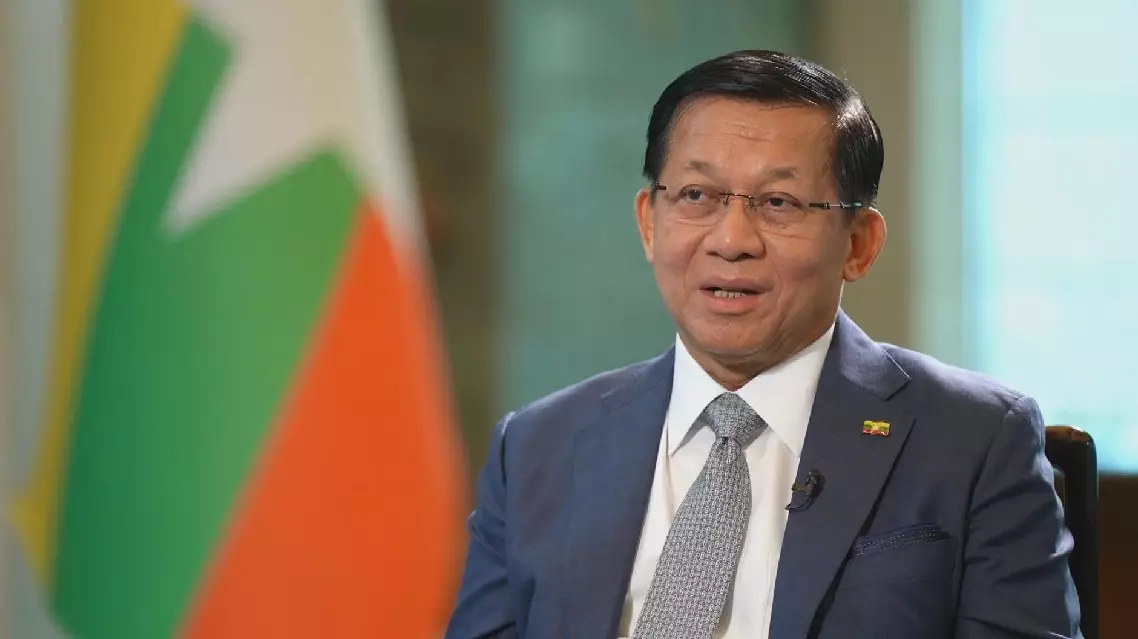
Myanmar president hails China's modernization achievements, calls for expanded cooperation