Skip to Content Facebook Feature Image

China's winter tourism blends ice landscapes with immersive experiences

China

China

China

China's winter tourism blends ice landscapes with immersive experiences

2026-01-18 17:46 Last Updated At:20:17

An exciting wave of innovative winter tourism experiences is drawing visitors to the icy parts of China, as destinations transform ice and snow resources into immersive, experience-driven attractions that boost local consumption and development.

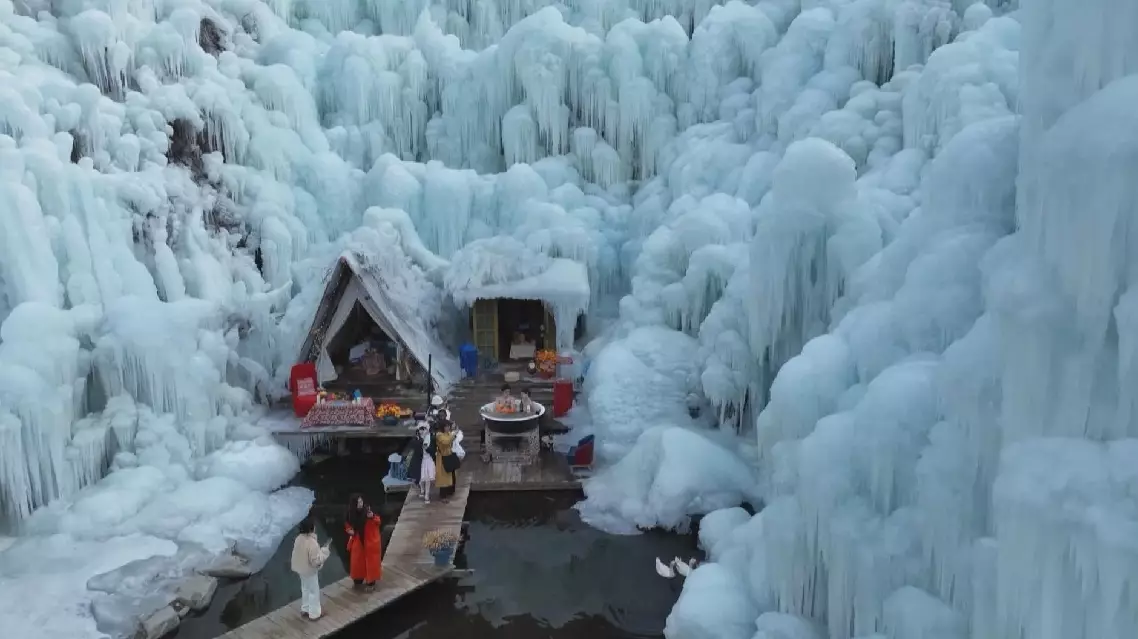
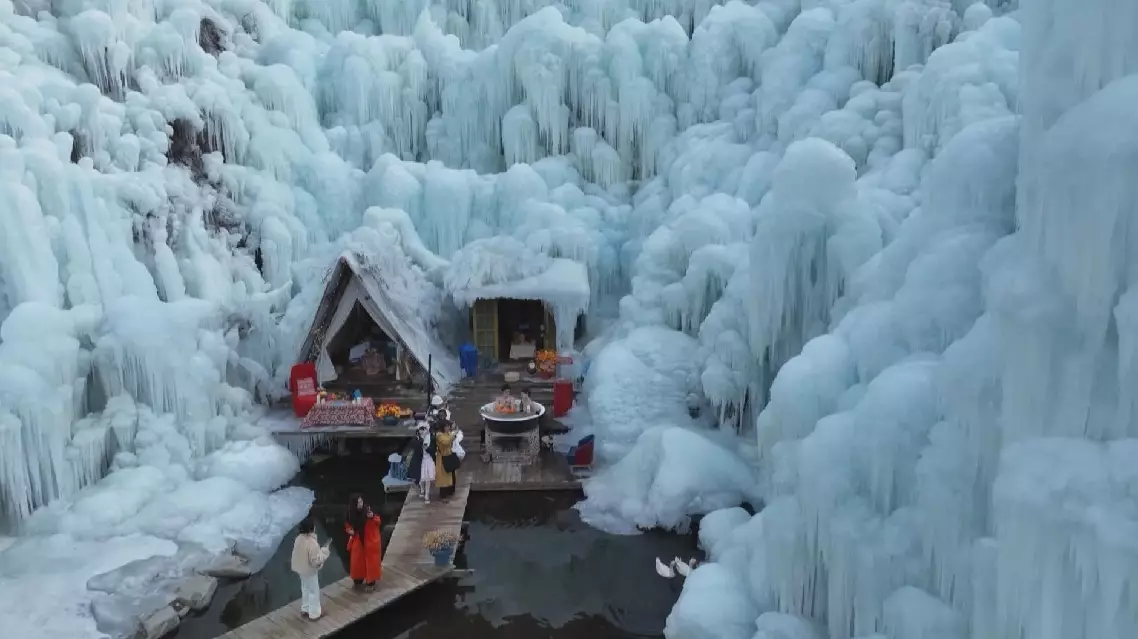
In Jiuru Mountain Scenic Area in Jinan City, east China's Shandong Province, towering icefalls formed by the area's canyon terrain and sustained winter cold create a spectacular frozen landscape.

Covering around 30,000 square meters, dense icicles and ice curtains hang like crystal glass, offering visitors a prime viewing season.

This winter, the scenic area has creatively incorporated fire elements, installing more than 100 stoves and log cabins throughout the park, creating a unique scene with "a stove available every few steps and a wooden cabin every 100 meters."

"The experience is really amazing and far beyond my expectations," said a tourist named Tian Yujuan.

Beyond sightseeing, the tourist attraction has also introduced more than 20 creative handicraft studios where visitors can make sachets and chocolates, while its snow play park that features ice sleds and snow tubing has become especially popular with families.

Since the New Year's Day, both visitor numbers and operating revenues at the site have more than doubled year on year.

In Yinchuan City, northwest China's Ningxia Hui Autonomous Region, local attractions are also expanding winter offerings through a "snow and ice plus" model.

On the Yuehai Lake, tourists wearing specially designed red protective suits float calmly in icy water in an activity known as "ice floating". The suits feature heat-locking inner layers and high-buoyancy outer layers, ensuring warmth and safety, while on-site photography services use drones and cameras to capture the experience.

"On weekends, I am willing to come to nearby cities to experience this kind of effortless relaxation. I find it quite stress-relieving," said a tourist.

In Pingxiliang Village, a small mountain village in suburban Urumqi, northwest China's Xinjiang Uygur Autonomous Region, ice and snow tourism has become a catalyst for rural revitalization.

Once an extremely impoverished village, Pingxiliang has developed winter cultural tourism by leveraging local resources.

Nowadays, more than 80 percent of households in the village operate homestays, and 236 villagers work in tourism, with related income accounting for over 70 percent of the total revenue.

Meanwhile, at the Sayram Lake in Xinjiang, winter visitors are flocking to newly created blue ice waterfalls -- each about 10 meters high and covering a total area of 15,000 square meters.

Built by staff who erected supports and sprayed water starting in November, the frozen formations preserve the natural shape of cascading water, creating a striking man-made icefall.

Shared widely on social media, the blue ice waterfalls have become a new must-see destination for winter tourists to the Sayram Lake.
China's winter tourism blends ice landscapes with immersive experiences
China's winter tourism blends ice landscapes with immersive experiences


China's winter tourism blends ice landscapes with immersive experiences

China's winter tourism blends ice landscapes with immersive experiences

Contagious diseases, including cholera and dengue fever, are spreading rapidly in Sudan due to the prolonged conflict that has severely damaged the country's medical and health system.

According to data from the World Health Organization, Sudan has reported over 120,000 cases of infection and more than 3,000 deaths since the outbreak of a new round of cholera in the country in July 2024.

Since the second half of 2025, power infrastructure in multiple regions, including the capital city of Khartoum, has been repeatedly targeted by drone attacks, resulting in widespread power outages and the collapse of water supply systems. Residents have been compelled to consume untreated river or well water lacking proper disinfection and purification, thereby increasing the risk of waterborne disease transmission.

"There was a significant increase in malaria cases in 2025, with around 76,000 new infections. In contrast, the number of new cases in the same period of 2024 did not exceed 45,000. Since the autumn of 2025, the incidence of dengue fever has also been on the rise," said Montaser Osman, head of the department of epidemiology and disease control within Sudan's Ministry of Health.

"The rescue center treated me for malaria, but the fever kept recurring and my condition never fully improved," said Kaltoum Osman, a patient.

Moreover, the continuous deterioration of the sanitary environment is also a major factor contributing to the spread of infectious diseases. The long-term conflict has caused severe damage to infrastructure in many areas of Sudan, leaving the public service system nearly paralyzed. As a result, garbage collection, drainage maintenance, and environmental disinfection cannot be carried out as usual, creating conditions for large-scale breeding of mosquitoes and flies and further increasing the risk of disease transmission.

"Since autumn last year, the number of mosquitoes increased obviously, and the number of infection cases rose accordingly, mainly dengue fever. Among the suspected cases that were tested, the confirmed rate once reached as high as 50 percent," said Sulafa Ali, a doctor.

Sudan has been engulfed in a deadly conflict since April 15, 2023, when fighting broke out between the Sudanese Armed Forces and the paramilitary Rapid Support Forces, leaving tens of thousands dead and millions displaced within the country and across its borders.

Under the combined impact of the escalating conflict, deepening humanitarian crisis, and the collapse of the public service system, Sudan's healthcare system is facing unprecedented pressure. If the conflict cannot be de-escalated promptly, the risk of recurrent epidemics will persist in the long term.

Contagious diseases spread fast in Sudan amid conflict

Contagious diseases spread fast in Sudan amid conflict

Recommended Articles