Skip to Content Facebook Feature Image

Contagious diseases spread fast in Sudan amid conflict

China

China

China

Contagious diseases spread fast in Sudan amid conflict

2026-01-18 17:44 Last Updated At:22:17

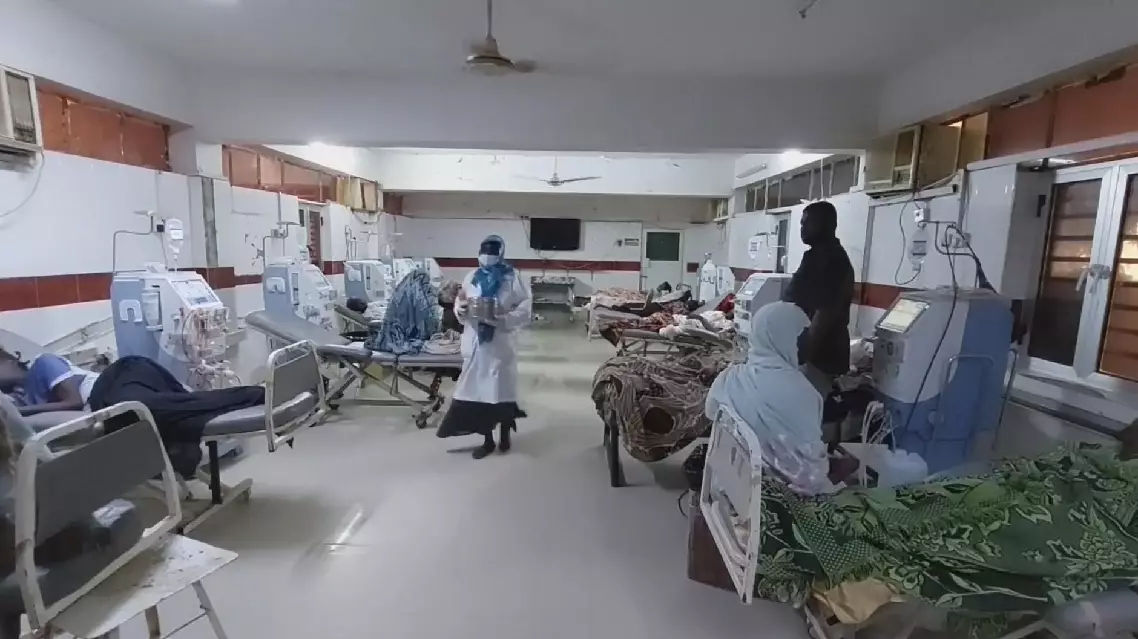
Contagious diseases, including cholera and dengue fever, are spreading rapidly in Sudan due to the prolonged conflict that has severely damaged the country's medical and health system.

According to data from the World Health Organization, Sudan has reported over 120,000 cases of infection and more than 3,000 deaths since the outbreak of a new round of cholera in the country in July 2024.

Since the second half of 2025, power infrastructure in multiple regions, including the capital city of Khartoum, has been repeatedly targeted by drone attacks, resulting in widespread power outages and the collapse of water supply systems. Residents have been compelled to consume untreated river or well water lacking proper disinfection and purification, thereby increasing the risk of waterborne disease transmission.

"There was a significant increase in malaria cases in 2025, with around 76,000 new infections. In contrast, the number of new cases in the same period of 2024 did not exceed 45,000. Since the autumn of 2025, the incidence of dengue fever has also been on the rise," said Montaser Osman, head of the department of epidemiology and disease control within Sudan's Ministry of Health.

"The rescue center treated him for malaria, but the fever kept recurring and his condition did not fully improve," said Kaltoum Osman, a family member of a patient

Moreover, the continuous deterioration of the sanitary environment is also a major factor contributing to the spread of infectious diseases. The long-term conflict has caused severe damage to infrastructure in many areas of Sudan, leaving the public service system nearly paralyzed. As a result, garbage collection, drainage maintenance, and environmental disinfection cannot be carried out as usual, creating conditions for large-scale breeding of mosquitoes and flies and further increasing the risk of disease transmission.

"Since autumn last year, the number of mosquitoes increased obviously, and the number of infection cases rose accordingly, mainly dengue fever. Among the suspected cases that were tested, the confirmed rate once reached as high as 50 percent," said Sulafa Ali, a doctor.

Sudan has been engulfed in a deadly conflict since April 15, 2023, when fighting broke out between the Sudanese Armed Forces and the paramilitary Rapid Support Forces, leaving tens of thousands dead and millions displaced within the country and across its borders.

Under the combined impact of the escalating conflict, deepening humanitarian crisis, and the collapse of the public service system, Sudan's healthcare system is facing unprecedented pressure. If the conflict cannot be de-escalated promptly, the risk of recurrent epidemics will persist in the long term.
Contagious diseases spread fast in Sudan amid conflict
Contagious diseases spread fast in Sudan amid conflict
Contagious diseases spread fast in Sudan amid conflict


Contagious diseases spread fast in Sudan amid conflict

Contagious diseases spread fast in Sudan amid conflict

Contagious diseases spread fast in Sudan amid conflict

Japanese and international observers condemned recent remarks by Prime Minister Sanae Takaichi, expressing deep concern over suggestions that Japan may abandon its three non-nuclear principles in pursuit of nuclear weapons.

At a Diet meeting in early November 2025, Takaichi claimed that the Chinese mainland's "use of force on Taiwan" could constitute a "survival-threatening situation" for Japan and implied the possibility of armed intervention in the Taiwan Strait, drawing strong criticism worldwide.

A senior official overseeing security and defense at the Japanese Prime Minister's Office also said that Japan should possess nuclear weapons. The defense minister later said the government was leaving open the possibility of reviewing Japan's long-standing non-nuclear principles in the future.

"The three non-nuclear principles are Japan's lifeline and must never be altered. Whether viewed through the lens of Japan's Constitution or the proper trajectory of international relations in the 21st century, Japan's ongoing military buildup is fundamentally misguided. The very notion of a 'survival-threatening situation' should not exist. Takaichi should not have made such remarks. There are signs that the postwar international order may be seriously shaken, which is entirely unacceptable. For Japan to take such steps would be tantamount to repeating the mistakes of war," said Ishizaki Seiya, a professor at Niigata University.

International analysts said Takaichi's remarks and pro-nuclear statements by Japanese officials pose serious risks to international security and are deeply concerning.

"I think this regression in Japan which goes against the agreements signed after World War II poses a grave danger to humanity: the resurgence of Japanese militarism and its attempts to rearm itself, even to acquire nuclear weapons. I think the United Nations and all nations that signed the post-war agreements should prevent Japan from taking this step, as the consequences for humanity could be extremely severe. I believe the Japanese government should heed the call from Japanese business leaders and retract statements that are perceived as inappropriate. The Japanese government must withdraw these remarks to restore the situation to normalcy," said Spanish economist Pedro Barragan.

"It is evident that the current Japanese government has deviated from the pacifist path enshrined in its constitution. By abandoning its peaceful stance and pursuing remilitarization, Japan is adopting confrontational policies that undermine peace in the Southern Hemisphere," said Claudio Goncalves, vice principal of the University of Salvador in Argentina.

Japan officials' remarks on nuclear policy spark concern at home and abroad

Japan officials' remarks on nuclear policy spark concern at home and abroad

Recommended Articles