Numerous Iraqi people on Friday and Saturday took to the streets in Baghdad, the capital city of Iraq to protest against the U.S moves against Tehran, expressing fury at Washington and solidarity with Iran.
Demonstrators held signs reading "We Are With You", waved Iraqi and Iranian flags, and chanted slogans condemning the United States.
The voices on the street are echoed by some Iran-aligned militia groups.
Harakat Hezbollah al-Nujaba -- one of several groups recently designated by the United States as a foreign terrorist organization -- said it would retaliate if Washington were to intervene militarily against Iran.
"This is about managing a broader confrontation. If required, we are fully prepared and ready to stand alongside the Islamic Republic and take part on the front lines in confronting any American aggression," said Hussein al-Moussawi, deputy secretary-general and spokesperson of Harakat Hezbollah al-Nujaba.
Others close to Resistance Axis in Iraq issued warnings of escalation.
"Among the Resistance factions, there is currently a position that avoids targeting American interests. But if Iran were to be attacked, God forbid, the response would be clear, and the consequences would be serious," said Wael al-Rikabi, vice president of National Media Observatory.
There were also messages of concern for the impact on the region.
"Any American intervention in Iran would have far-reaching consequences, destabilizing the entire region politically, economically, socially, and in terms of security. It would plunge the Middle East into chaos, blurring all borders," Wael al-Rikabi added.
Some Iraqis also criticized the U.S. recent intervention in Venezuela.
"Interference in the sovereignty of states has become a central policy for the United States and Israel. Their interventions in the internal affairs of countries have created chaos and instability across the region," said Mohammed al-Yasiri, political affairs researcher of Jihad and Construction Movement.
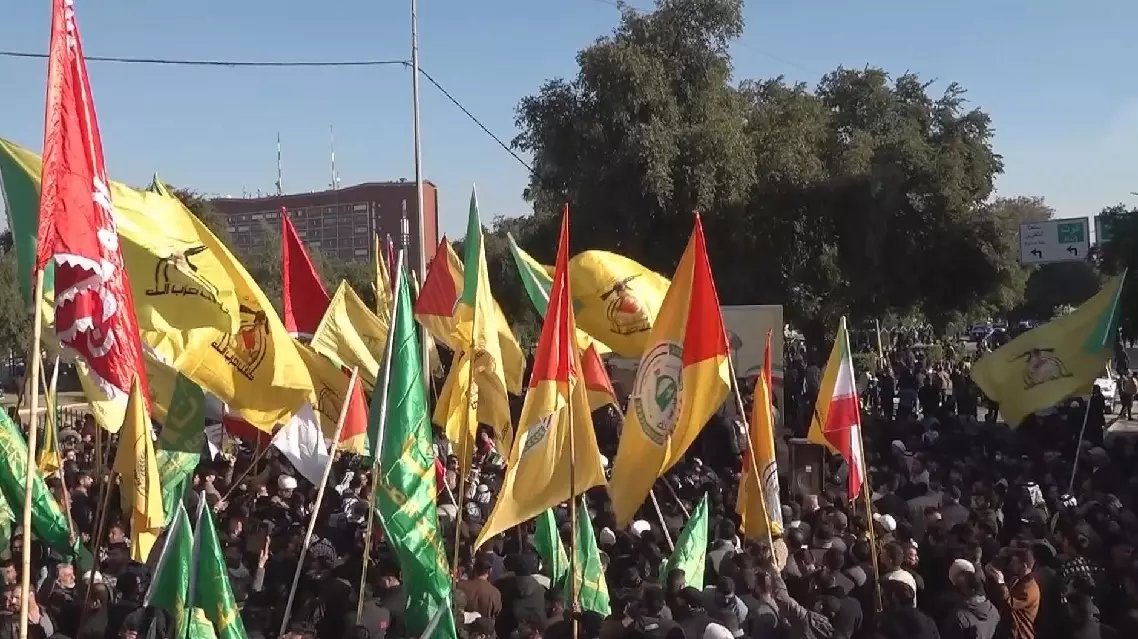
Protest erupts in Baghdad to condemn US intervention policies
Two weeks after a major U.S. military strike on Venezuela and the and the illegal capture of President Nicolas Maduro, the Venezuelan government has begun to implement a series of recovery and post-conflict initiatives.
On Saturday, Venezuela's acting president Delcy Rodriguez ordered the immediate start of repair work on buildings damaged during the attack.
Post-conflict cleanup and restoration efforts are now steadily advancing across Caracas. The Fuerte Tiuna military base was one of the areas most severely damaged in the U.S. airstrikes, with over 463 apartments sustaining damage. Rodriguez said that most of the aid needed for housing repairs has already been secured.
She also announced the launch of several special community programs. These initiatives include special care activities and psychological support services for children in affected communities. The government also plans to implement food supply deployments, set up open-air markets, establish mobile supply points, and provide comprehensive assistance, including medical and health services.
Meanwhile, legal experts and representatives from social organizations across Venezuela have voiced strong condemnation against the U.S. actions during a legal conference held on Friday.
They demanded that the United States respect international law and Venezuelan sovereignty by immediately releasing President Maduro and his wife, Cilia Flores, who were forcibly removed from the country.
"What we are demanding from Venezuela is that international law must be respected and saved, because once we fall into a state of disorder, what follows is war. We have already seen peace being trampled upon. The sovereignty of a country, officially declared a 'territory of peace' by the international community, has been violated. This has never happened before," said Indhriana Parada Rodriguez, a Venezuelan legal professional.
"We firmly demand the release of President Maduro and his wife, Cilia Flores. They were forcibly taken from their homeland in violation of all basic norms of international law," said Silio Sanchez, vice rector of territorial development of the Bolivarian University of Venezuela.
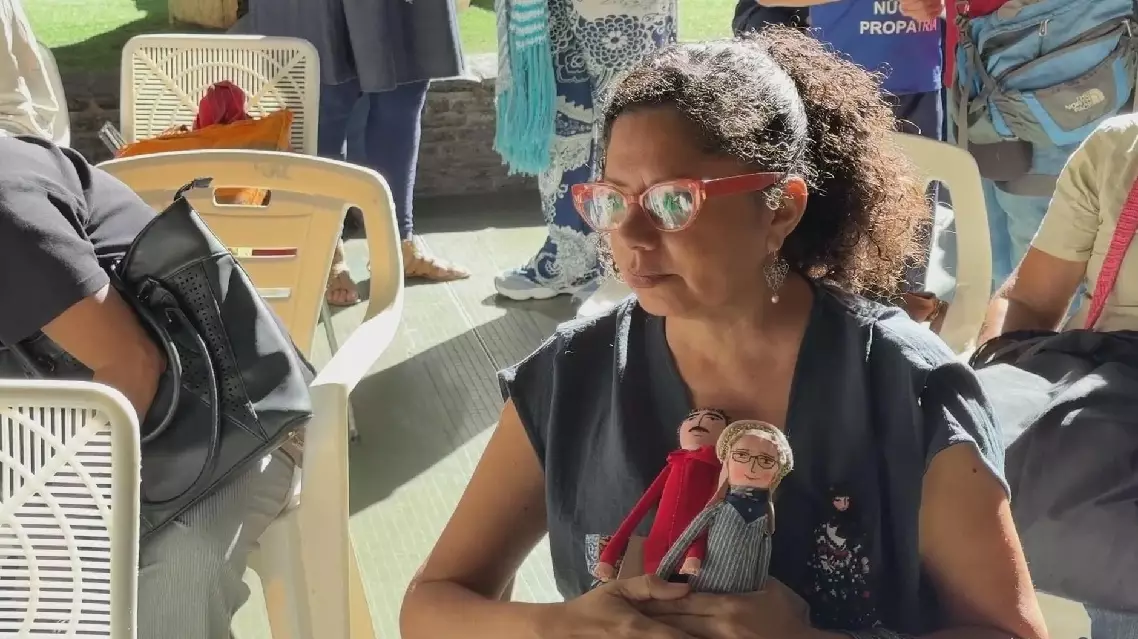
Call for Maduro's release continues as Venezuela moves to deal with aftermath of U.S. military strike