A Chinese man's entrepreneurial spirit is turning the lamb meat from Xinjiang's Karajol Township from a local delicacy to a national sensation.
Zhang Dong was just a traveler passing through Karajol until a single bite of the local lamb—aromatic, tender, and flavorful—changed everything. Drawn by the lamb's unique flavor, Zhang settled in the town and launched a new venture.
"When I tasted the lamb here, I noticed it was different from lamb found anywhere else, even in Northern Xinjiang. Karajol is also famous for its Chinese herbs. It's a national-level licorice reserve. It's a hymn to nature, the earth, the mountains and rivers, and our homeland. There are also over 1 million mu (about 67,000 hectares) of red willow reserve. The ecology is truly pristine. Their way of raising animals is referred to as drinking spring water and eating Chinese herbs. That's indeed what I've seen. I'm very optimistic about the market for beef and lamb from here. That's why I stayed here and set up the Karajol Farmers Market," he said.
Zhang founded the "Karajol Farmers Market," using livestreaming and e-commerce to bring high-quality, grass-fed beef and lamb from this remote region to tables across China.
"The purpose of this market is simple. It's to bring Karajol beef and lamb to markets beyond Xinjiang, and build their nationwide popularity," he said.
His efforts go beyond husbandry. Partnering with local intangible cultural heritage inheritor, he also helps train herdsmen in the traditional art of felt-making—turning craftsmanship into income while preserving culture for the future.
"In winter, herdsmen have more free time. How do they spend their time? We offer them the chance here. They can earn money in their spare time. Everyone can learn a skill," said the entrepreneur.
To Zhang, Karajol is a true land of fortune—its riches are found not only in the mountains and grasslands, but also in the hardworking hands and dreams of its people.
"After arriving here, I came to appreciate the simplicity and warmth of the people here. I want to stay here and do something. The official media of Karajol has a slogan: Karajol, a land of fortune. We hope that through livestreaming and e-commerce platforms, we can promote Xinjiang's high-quality beef and lamb. We want to build recognition for the Karajol brand," he said.
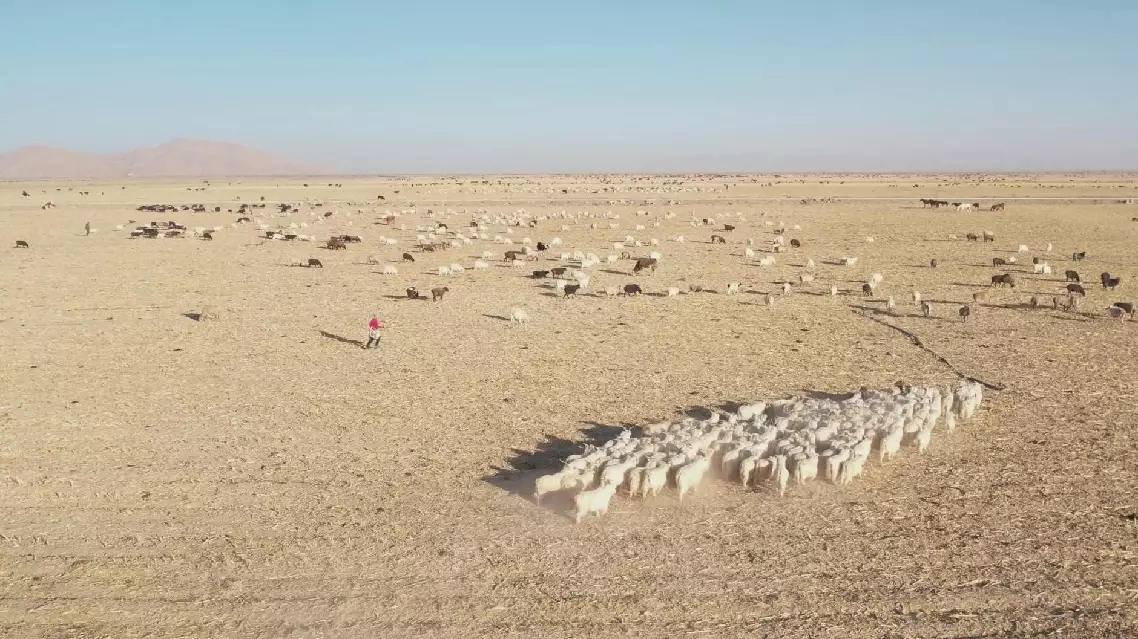
Uniquely flavorful lamb from Xinjiang's Karajol brings new incomes for local ranchers
A video featuring a former member of Unit 731, a notorious Japanese germ-warfare unit during World War II (WWII), was released on Thursday in northeast China's Harbin, revealing details of how the unit used meteorological data to conduct horrific bacterial experiments on human beings.
The video was released by the Exhibition Hall of Evidence of Crimes Committed by Unit 731 of the Japanese Imperial Army, in which former Unit 731 member Tsuruo Nishijima detailed how the unit used meteorological data to carry out a bacterial dispersal experiment.
The video was recorded in 1997 by Japanese scholar Fuyuko Nishisato and donated to the exhibition hall in 2019, according to the hall, which was built on the former site of the headquarters of Unit 731 in Harbin, the capital city of Heilongjiang Province.
Jin Shicheng, director of the Department of Publicity, Education and Exhibition of the exhibition hall, said that Nishijima joined Unit 731 in October 1938 and served in the unit's meteorological squad. The squad was not a simple observation section but rather an auxiliary force supporting the unit's field human experiments by measuring wind direction, wind speed, and other conditions to ensure optimal experimental results, according to Jin.
Nishijima confirmed in the footage that "the meteorological squad had to be present at every field experiment." He testified to the "rainfall experiments" conducted by Unit 731, which involved aircraft releasing bacterial agents at extremely low altitudes.
At a field-testing site in Anda City, Heilongjiang, Unit 731 aircraft descended to about 50 meters above the ground. They sprayed bacterial culture liquids onto "maruta" -- human test subjects -- who were tied to wooden stakes. Each experiment involved about 30 people, spaced roughly 5 meters apart. After the experiments, the victims were loaded into sealed trucks and transported back to the unit, where their symptoms and disease progression were recorded over a period of several days.
"Unit 731's bacterial weapons were dropped by aircraft from a height of 50 meters in the open air. Therefore, the meteorological squad needed to observe wind direction and speed, which directly affected the precision and accuracy of the bacterial weapons deployment," said Jin.
Nishijima recounted the harrowing experience of the human test subjects.
"They were fully aware that inhaling the substances would certainly lead to death, so they closed their eyes and held their breath to avoid breathing them in. Their resistance prevented the experiment from proceeding. To compel them to comply, they were forced at gunpoint to open their mouths and lift their heads," said Nishijima.
These experiments, disguised as "scientific research," were in fact systematic tests of biological warfare weapons conducted by the Japanese military. The data generated from these inhumane activities became "research findings" shared among the Japanese army medical school, the medical community, and the military at large.
"At that time, the entire Japanese medical community tacitly approved, encouraged, and even participated in the criminal acts of Unit 731. The unit comprised members from Japan's medical and academic sectors who served the Japanese war of aggression against China. Thus, Unit 731 was not just a military unit but represented an organized and systematic criminal enterprise operating from the top down," said Jin.
Unit 731 was a top-secret biological and chemical warfare research base established in Harbin as the nerve center for Japanese biological warfare in China and Southeast Asia during WWII.
At least 3,000 people were used for human experiments by Unit 731, and Japan's biological weapons killed more than 300,000 people in China.

Video offers details of Japan's germ-warfare crimes in northeast China