Skip to Content Facebook Feature Image

First group of Russian tourists enter China under visa-free policy

China

China

China

First group of Russian tourists enter China under visa-free policy

2025-09-15 21:01 Last Updated At:22:07

The first group of Russian tourists enjoying China's trial visa-free policy arrived on Monday in Suifenhe City, China's northeastern gateway from Pogranichny in Russia's Primorsky Krai.

China in early September announced a trial visa-free policy for Russian citizens holding ordinary passports starting from September 15 this year to September 14 next year, according to the Ministry of Foreign Affairs.

Russian citizens holding ordinary passports who come to China for business, tourism, visiting relatives and friends, exchange visits and transit for no more than 30 days can enter China visa-free, the ministry said.

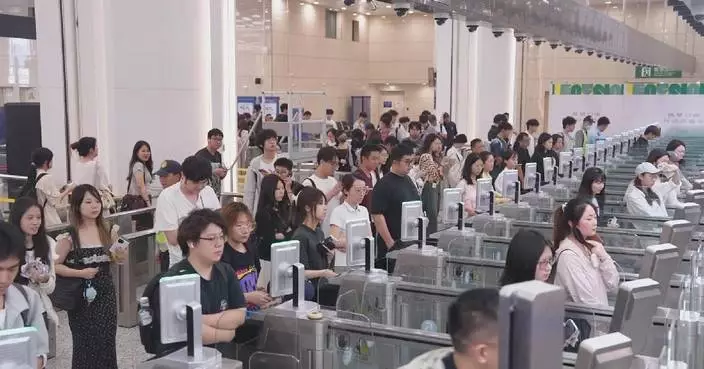
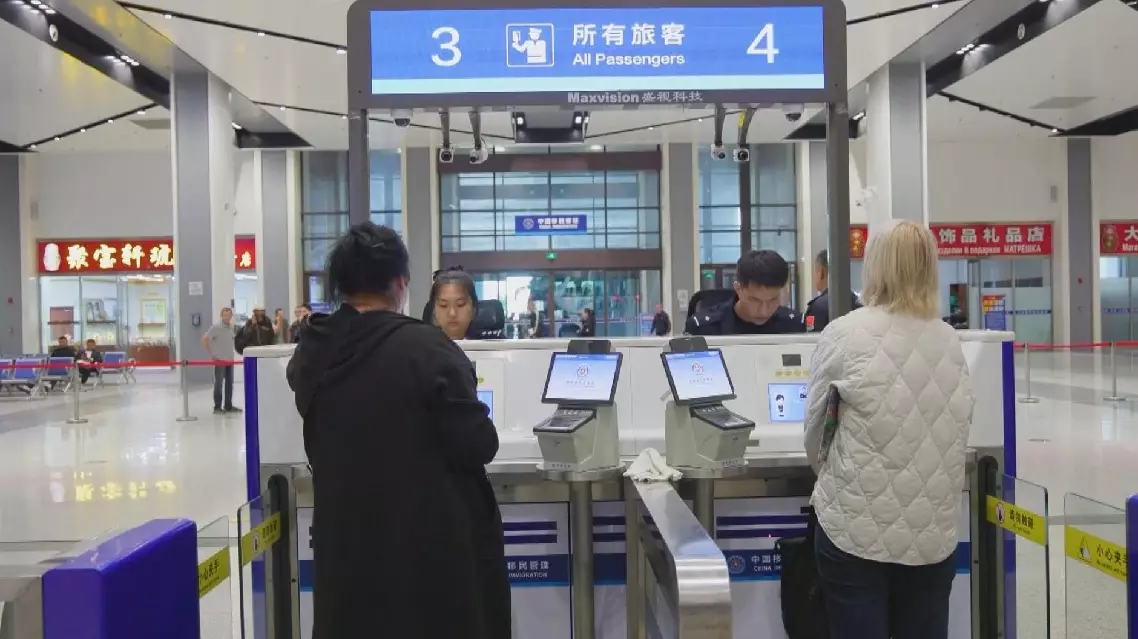
Early Monday morning at the Suifenhe highway port, Russian tourists had their passports and biometric information checked in long queues. Thanks to simplified customs clearance, each tourist spent no more than two minutes passing through the border on average.

"Previously, we thought entering China meant dealing with visas and passports. It all felt so complicated. But now, everything has been simplified. All we need is our passport, and we can travel easily without any hassle. It's that simple," said Aleksiiva, a Russian tourist.

To handle the potential increase in passenger flow following the visa-free policy, customs authorities have optimized clearance procedures and enhanced service support to ensure fast and convenient entry.

"We have strengthened staffing, upgraded intelligent monitoring equipment, and also improved emergency response plans to provide green channel services for special groups of passengers," said Sun Dongge, an official of the Suifenhe Customs.

Many Russian travelers entering through Suifenhe are heading to traditional popular destinations such as Harbin, the capital city of Heilongjiang Province, and Beijing, while others are choosing border areas for cultural tours and shopping experiences. Local businesses are also preparing to welcome more visitors.

"Russian visitors can enjoy an 11 percent tax refund on purchases when leaving the country. We strictly control product quality and provide Russian language training for our employees at the same time. Next, we will fully update the product labels in the store to bilingual tags to help Russian customers quickly understand product information and enjoy a smooth shopping experience," said Tai Guirong, store manager of a shopping mall in Suifenhe City.

According to the city's tourism authorities, industries such as cross-border tourism, catering, and accommodation are expected to see new opportunities, as the visa-free policy will significantly improve travel convenience for Russian tourists and boost inbound passenger flows at the Suifenhe highway port.
First group of Russian tourists enter China under visa-free policy
First group of Russian tourists enter China under visa-free policy

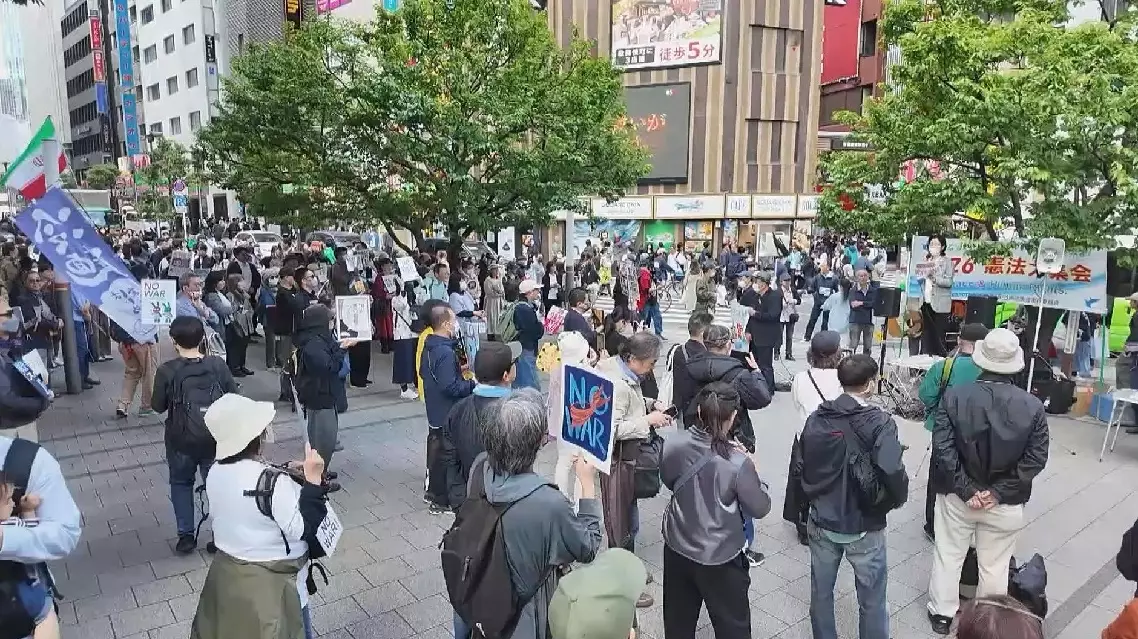
Japanese citizens took to the streets of Tokyo's Shinjuku district on Saturday, voicing strong opposition to Prime Minister Sanae Takaichi's administration for lifting the ban on lethal weapons exports, advancing a "National Intelligence Agency" bill, and pushing for the revision of the country's postwar pacifist constitution.

On Tuesday, the Japanese government, led by Prime Minister Sanae Takaichi, officially revised the "three principles on transfer of defense equipment and technology" and their implementation guidelines.

The revisions scrap the restrictions that had limited arms exports to five non-combat categories, allow, in principle, the export of lethal weapons, permit transfers to nations engaged in active conflict under specified circumstances, and sideline parliament from the decision-making process, crossing a line that previous governments had at least nominally upheld.

"Allowing the export of lethal weapons and even attempting to possess nuclear arms, the Takaichi administration is leading Japan toward war, despite our postwar commitment of never starting a war again. Many people are worried. This must be stopped," said a protester.

The cornerstone of Japan's pacifist constitution is Article 9, which renounces the nation's right to engage in war or to resort to military force to resolve international conflicts. For decades, this article has been a fundamental constraint on Japan's military endeavors.

"I am firmly opposed to amending the Constitution. Takaichi claims 'the time has come,' but that's just her own decision. Without Article 9 of the Constitution, Japan could be swept into America's wars. That must not happen," said another participant.

"Japan once invaded other Asian countries and has maintained a pacifist constitution ever since. But now the government has arbitrarily decided to lift the ban on exporting lethal weapons without sufficient parliamentary debate. It's unacceptable," said another demonstrator.

"If we abandon our stance as a peaceful nation under the constitution, it would be absolutely intolerable. Thanks to Article 9, Japan hasn't waged war or been pulled into conflict. For Japan's place in the international community, Article 9 must not be changed," said another protester.

Tokyo protesters oppose Takaichi’s lethal weapons export, constitution revision plans

Tokyo protesters oppose Takaichi’s lethal weapons export, constitution revision plans

Tokyo protesters oppose Takaichi’s lethal weapons export, constitution revision plans

Tokyo protesters oppose Takaichi’s lethal weapons export, constitution revision plans

Recommended Articles