More than 7.2 million Malawians went to the polls on Tuesday in a tightly contested general election, casting ballots for the presidency, 229 parliamentary seats, and 509 local council positions.
The vote featured 17 presidential contenders, including incumbent Lazarus Chakwera, former presidents Peter Mutharika and Joyce Banda, and other prominent figures such as Vice President Michael Usi, United Transformation Movement’s Dalitso Kabambe, and Atupele Muluzi, son of former President Bakili Muluzi.
Polling stations opened at 06:00 and closed at 16:00 local time, with long queues reported nationwide as voters turned out in large numbers to choose new leadership across all levels of government.
Chakwera, who leads the ruling Malawi Congress Party, and Mutharika, head of the main opposition Democratic Progressive Party, are widely seen as the frontrunners in a race defined by deep political rivalry and competing visions for the country’s future.
As polls closed, ballot counting began immediately, with first-round results expected within eight days. The vote followed a dramatic political move on Monday evening, when President Chakwera dissolved his cabinet just hours before the election, centralizing ministerial responsibilities under his office.
Widely viewed as a pivotal moment for Malawi, the election drew high voter turnout, especially among young voters, reflecting growing public demand for change and accountability.
"Most of the people think that to vote is for elderly people, it's for our parents. But no, this vote is for our young people, for our youth and we have to vote to change these things that are happening. One vote can change everything," said Brenda Mwechumu, Lilongwe resident.
Malawi Electoral Commission officials monitored the elections closely, ensuring procedures were followed across thousands of polling centers.
The nation now waits with anticipation for the results, hoping that the newly elected administration can deliver on promises of economic reform and improved standards of living.
"I'm looking forward to an improved livelihood after this election. I hope our future is going to be better, compared to how things are at the moment," said Thom Dalikeni, Lilongwe resident.

Malawi votes in pivotal general election as ballot counting gets underway
Russia said its forces have hit Ukrainian targets like defense industrial enterprises and energy facilities, while Ukraine reported strikes over major Russian facilities.
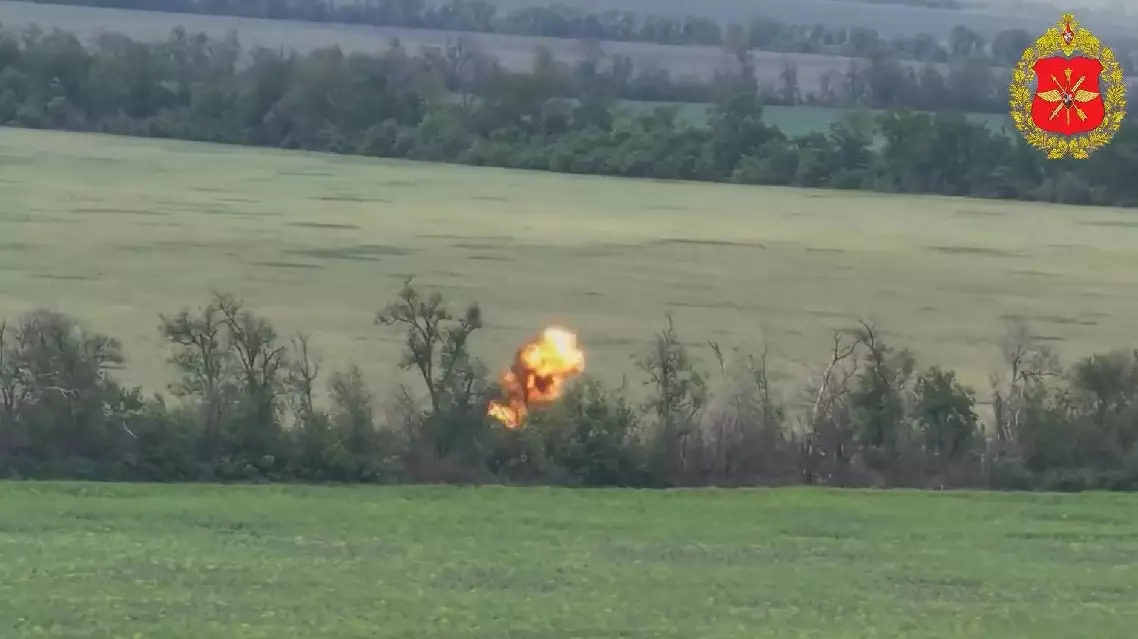
The Russian Defense Ministry on Saturday said in its latest report that over the past 24 hours, its forces struck Ukrainian defense industrial enterprises, energy facilities used by the Ukrainian military, as well as assembly and storage sites for long-range drones. The military also reported hitting temporary deployment points of Ukrainian forces and foreign mercenaries in 142 locations.
Russian air defense units shot down eight guided aerial bombs and 800 fixed-wing drones during the same period, according to the report.
The General Staff of the Armed Forces of Ukraine reported on Saturday that its troops conducted precision strikes on multiple key Russian targets, including an oil terminal on the Black Sea coast. Ukrainian strikes also targeted logistical warehouses, ammunition depots, and communication nodes on the eastern front.
Ukrainian President Volodymyr Zelensky on Saturday said in a social media post that Ukrainian forces carried out a long-range strike against a major chemical plant in Russia's Perm Krai region.
The death toll from a Ukrainian attack on a college dormitory in Starobelsk in the Luhansk region has risen to 21, with many others being injured, the Russian Ministry of Emergency Situation said on Saturday.
The ministry said on Friday a large-scale overnight drone assault hit the campus of Starobelsk College, affiliated with Luhansk Padagogical University, causing the collapse of the student dormitory building.
A total of 86 students aged 14 to 18, along with one staff member, were inside the building at the time of the strike, said local health authorities.
The Russian-appointed governor of the Luhansk region declared May 24 and 25 as days of morning for the victims of the attack.
Russian President Vladimir Putin said on Friday that the attack was "not an accident," claiming that "there are no military facilities, security service sites or related agencies near the dormitory."
Ukraine's General Staff denied targeting civilian infrastructure, saying its forces strike only military facilities and objects used for military purposes in accordance with international humanitarian law.
Russia says targeting Ukrainian defense enterprises, Ukraine reports strikes on major Russian facilities