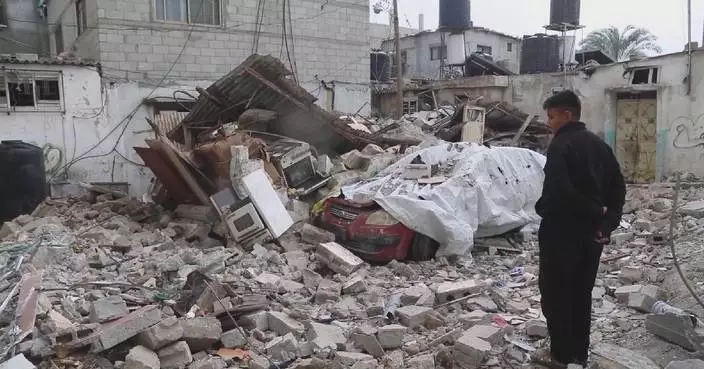
The pager explosions that took place in Beirut, Lebanon from September 17 to 18 have completely changed local people's life, said a survivor of the attack staged by Israel.
According to official statistics from Lebanon, the explosions killed 39 and injured about 3,000 others.
Twenty nine-year-old Lebanese youth Chady, a computer technician, lives in southern Beirut.
He recalled that at around 14:30 on Sept 17 last year, he and his fiancee were at home preparing for their wedding, which was scheduled to be held several days late, when the explosion happened.
"I saw a message on pager. It wrote 'error, press arrow up and arrow down and OK," Chady said.
Just a few seconds later, Chady's pager exploded. He recalled that as he heard the sound of Israeli drones over the southern suburbs of Beirut, he thought he had been hit by an air strike.
"I was in great pain. It felt like being hit on the face by something hard, not like a football but like a bowling ball. At that time, I felt dizzy and shocked. I collapsed on the ground and gradually realized what had happened. I raised my left hand, and found my fingers were broken, one like this and another like that. My fingers were thus blasted and severed," said Chady.
The explosion caused Chady to lose his eyesight, suffer hearing impairment and become disabled in both hands. After a year of rehabilitation, Chady began to pursue a doctoral degree in computer science.
In speaking of the future, he remains optimistic.
"We love life and we want to continue our development. We should build a prosperous and unified country and a wealthy and elegant society, which is the greatest driving force for our future development. Despite the difficulties and challenges, we will still keep moving forward," he said.

Pager explosion in Lebanon completely changes local life: survivor
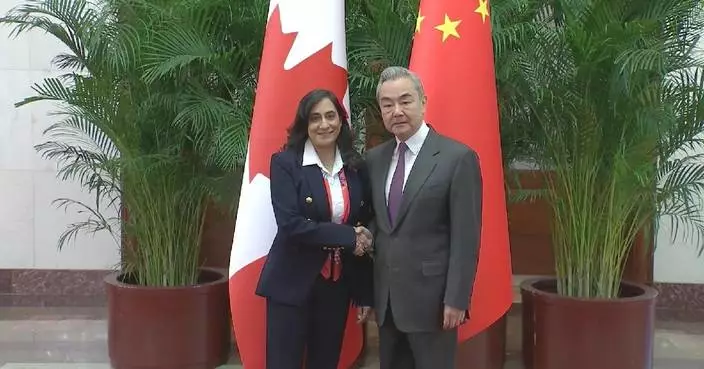
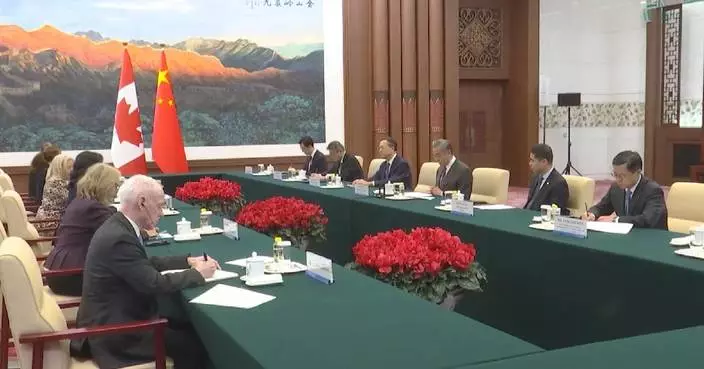
Canadian Prime Minister Mark Carney's official visit to China signals a policy shift towards building a more pragmatic relationship between the two countries, according to a Canadian researcher.
Carney arrived in Beijing on Wednesday to begin an official visit to China through Saturday, which marks the first trip by a Canadian Prime Minister to the country in eight years.
Robert Hanlon, director and principal investigator of Canada and the Asia Pacific Policy Project (CAPPP) at Thompson Rivers University in British Columbia, told the China Global Television Network (CGTN) that Carney's visit indicates Canada is recalibrating its strategic perception of China, which could cement the foundation for the country's economic diversification efforts and boost the development of bilateral cooperation.
"I think it's a clear message that he has moved Canada's strategy to a much more pragmatic, interest-based, -focused relationship with our trading partners, moving away from values-based narratives that we might have heard on previous governments. Canada has spoken about moving from what the Prime Minister's Office is calling "from reliance to resilience", and that means diversifying our economies and our trade everywhere in the world. And so China being our second largest trading partner, it makes perfect sense for our PM to head to Beijing," he said.
The scholar also noted the huge cooperation potential between the two sides in economic and trade fields, citing Canada's efforts to step up shipments of liquefied natural gas (LNG) and the planned construction of an oil pipeline in Alberta which aims to increase export access to Asian markets. "Canada and China both share tremendous economic opportunities together and so finding ways to enhance our exports. Canada specifically looking to build out its LNG and oil, kind of export market. We know Canada is a major producer of critical minerals and China is a buyer. And so there's a lot of synergy between that kind of those kind of markets," he said.

Canadian PM's visit to China paves way for more pragmatic trade ties: scholar