From seafood to solar mega projects, new forms of economy is thriving in China's Taklimakan Desert which is often called the "Sea of Death" and once symbolized ecological fragility and rural poverty in southern Xinjiang.
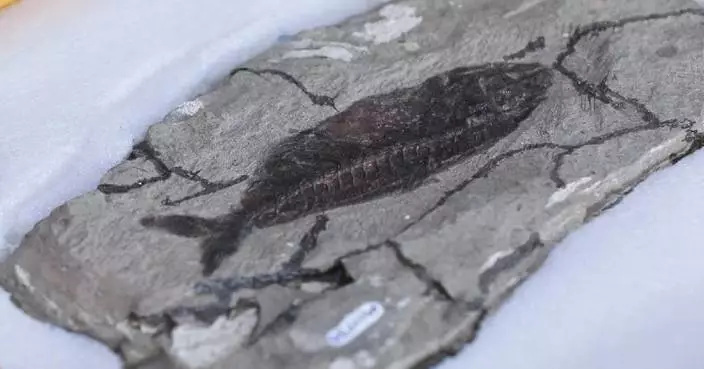
In Qiemo County, naturally salty groundwater has been used to mimic seawater, allowing local farms to raise marine life such as black seabream, groupers, and even pearl mussels, in the middle of the desert.
The technique relies on local brackish groundwater and a formula to make it work for sea life, according to the head of an aquatic product company.
"We take the local saline-alkaline groundwater, and with our microbial formulas, turn it into modern seawater. That's all there is to it," said Gong Yonghong, chairman of Qiemo County Shishi Fresh Aquatic Products Company.
Noting that mullet, golden pomfret and even crabs are all being farmed, he said that soon pearls will be harvested using oysters hand reared from eggs.
"Our pearl oysters start out no bigger than grains of sand -- literally from fertilized eggs. If we rear them specifically for cultured pearls, we can implant the nucleus. Eight to nine months later, we open the shells to harvest," said Gong.
With expansion plans already in place, the farm expects to boost jobs, incomes and even exports, which will also help fight desertification, according to local officials.
"This desert lies downstream of the water system, so water is plentiful and of excellent quality -- ideal conditions for seafood farming. By introducing seafood aquaculture, we’ve turned weakness into strength and opened a new path for desertification control," said Ge Mingyu, secretary of Tatirang Township Committee of the Communist Party of China.
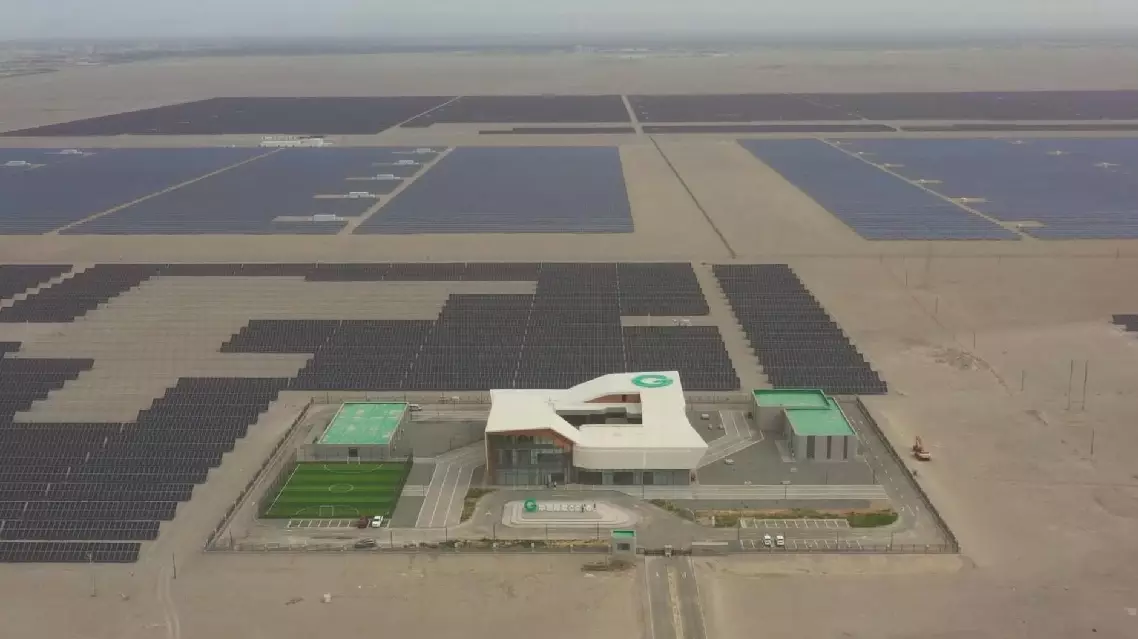
In Ruoqiang County, another desert transformation is taking shape, with sands becoming a renewable energy powerhouse.
Since switching on in May, the facility has already produced hundreds of gigawatt hours of electricity, lowering carbon emissions, according to local energy company workers.
"The project covers 7,600 hectares and has an installed capacity of four gigawatts. It is currently the world’s largest single-site solar farm. Annual generation is forecast at 6.9 terawatt-hours, enough to power two million households for a full year. This displaces 2.08 million tonnes of coal and cuts 5.71 million tonnes of CO2," said Shen Jinxing from Ruoqiang Regional Operation and Maintenance Center at CGDG Xinjiang Zhonglv Electric Technology.
Shen said the location was chosen for its abundant sunshine and wide tracts of unused land.
"Ruoqiang County enjoys exceptional solar resources -- over 3,000 hours of annual sunshine, strong solar radiation, and dry, cloud-free air -- making it perfect for large-scale PV development," he said.
Shen noted that with drones, robots, and digital monitoring, it is one of the most advanced solar bases in the world.
"We are creating an unmanned, intelligent, fully digitalized plant with a centralized, smart-terminal management system that enables centralized monitoring and minimal on-site staffing," he said.
Aquaculture, clean energy projects new drivers for development in China's Xinjiang