In the heart of China's Xinjiang Uygur Autonomous Region, far from any ocean, the salmon industry is booming in this landlocked northwest China region that was once known primarily for its deserts and lamb skewers.
Fed by glacial meltwater from the Tianshan Mountains, salmon farms in Nilka County are producing thousands of tons of fish annually, with deliveries reaching dining tables across China within 24 hours.
The water temperature, which ranges from 8 to 12 degrees Celsius, creates the ideal condition for salmon to thrive, said Ayhen Baghdaulet, a purchasing specialist of Xinjiang Tianyun Organic Agriculture Co., Ltd.
"The water in Nilka County comes from melted snow from over 100 river valleys of the Tianshan Mountains. That's why our fish are high quality in texture and appearance. Our salmon farming is fully automated. With a single button, we control feeding schedules and amounts down to the minute. We have three water quality monitoring platforms and underwater cleaning robots. If any issues are detected, we conduct on-site inspections immediately," said Baghdaulet.
The equipment keeps the water healthy by removing fish waste and leftover feed, safeguarding both the salmon and the ecosystem, said Baghdaulet.
Baghdaulet also said that as a former herder, he is glad to have learned a new skill while earning a higher income.
"We have a diverse team from various ethnic backgrounds, including Kazakh, Mongolian, Kyrgyz and Uygur. Over 800 people now work in our company. The salmon industry has not only created more jobs here, but also provided a new source of income for local families," said Baghdaulet.
The flourishing salmon industry in Xinjiang is not just powered by local fishermen, but also by outside professionals, thanks to a government-supported talent attraction program. As of early September, the government investment in the industry has exceeded 110 million yuan (about 15.1 million U.S. dollars).
"Since we began operation, we have received strong support from all levels of government, helping us bring in experts from the fishery sector. We have also benefited from tax reductions and subsidies when purchasing equipment," said Hong Yonggang, manager of Administrative Department of Xinjiang Tianyun Organic Agriculture Co., Ltd.
In the first half of 2025, Xinjiang's salmon output exceeded 5,000 tons, marking a 30-percent increase year on year.
To cater to rising standards and growing demand for product diversity among Chinese consumers, Hong's company has expanded its production beyond fresh fish. It has developed a range of value-added goods, including fish cakes, smoked salmon, fish bone powder, and salmon oil, effectively enhancing the overall value of its offerings.
Despite rapid growth, sustainability remains a priority.
"The salmon industry is still relatively new in Xinjiang. No matter how fast we develop, we must make sure to protect the natural resource and ecosystem," Hong said.
Nilka County is also promoting green development, eco-tourism alongside aquaculture.
"Nilka County has 113 river valleys. Each one has a unique landscape. I'd like to welcome all visitors to come and experience the beautiful scenery for themselves," said Yang Xuefen, director of the Service Center of Nilka County under the Ministry of Agriculture and Rural Affairs.
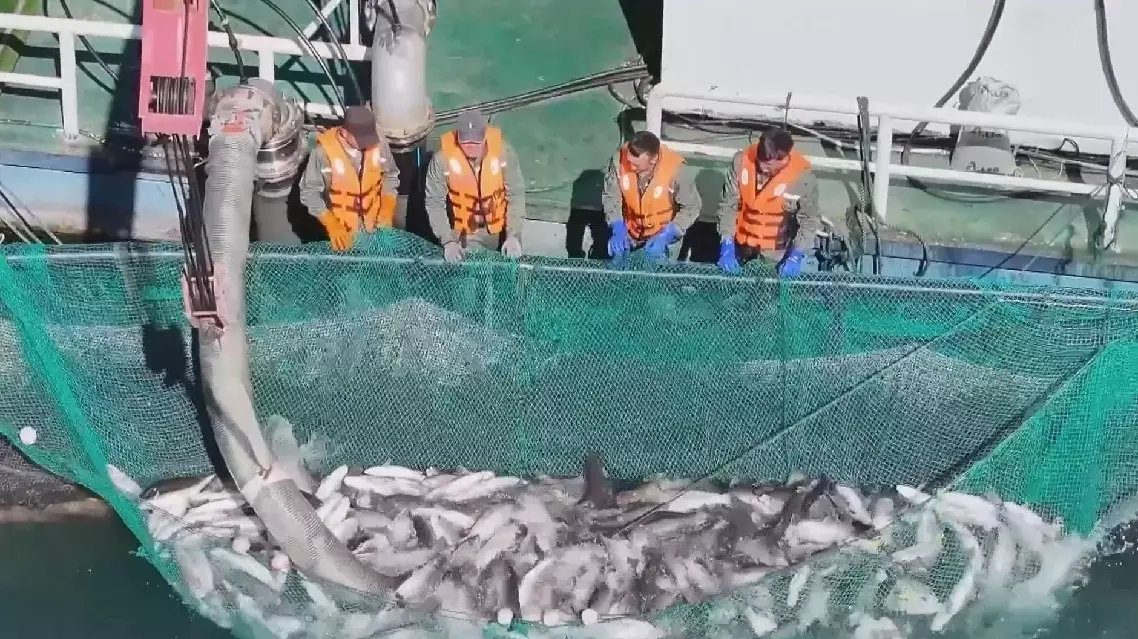
Salmon industry thrives in northwest China's landlocked Xinjiang