MEMPHIS, Tenn. (AP) — A Missouri woman who tried to use a fake company and forged documents to sell off Elvis Presley's Graceland for millions of dollars in a brazen and unrealistic foreclosure sale of the home-turned-museum was sentenced Tuesday to more than four years in federal prison.
U.S. District Judge John T. Fowlkes Jr. questioned the likelihood of the plot's success when he sentenced Lisa Jeanine Findley in federal court in Memphis to four years and nine months behind bars, plus an additional three years of probation. Findley, 54, declined to speak on her own behalf during the hearing.
Findley pleaded guilty in February to a charge of mail fraud related to the scheme. She also had been indicted on a charge of aggravated identity theft, but that charge was dropped as part of a plea agreement.
Findley, of Kimberling City, falsely claimed Presley’s daughter borrowed $3.8 million from a bogus private lender and had pledged Graceland as collateral for the loan before her death in January 2023, prosecutors said when Findley was charged in August 2024. She then threatened to sell Graceland to the highest bidder if Presley’s family didn’t pay a $2.85 million settlement, according to authorities.
Findley posed as three different people allegedly involved with the fake lender, fabricated loan documents and published a fraudulent foreclosure notice in a Memphis newspaper announcing the auction of Graceland in May 2024, prosecutors said. A judge stopped the sale after Presley’s granddaughter sued.
Experts were baffled by the attempt to sell off one of the most storied pieces of real estate in the country using names, emails and documents that were quickly suspected to be phony.
Graceland served as Presley's home in Memphis before he died in August 1977 at the age of 42. It opened as a museum and tourist attraction in 1982 and draws hundreds of thousands of visitors each year. A large Presley-themed entertainment complex across the street from the museum is owned by Elvis Presley Enterprises.
The public notice for the foreclosure sale of the 13-acre (5-hectare) estate said Promenade Trust, which controls the Graceland museum, owed $3.8 million after failing to repay a 2018 loan. Actor Riley Keough, Presley’s granddaughter, inherited the trust and ownership of the home after the death of her mother, Lisa Marie Presley.
Keough filed a lawsuit claiming fraud, and a judge halted the proposed auction with an injunction. Naussany Investments and Private Lending — the bogus lender authorities say Findley created — said Lisa Marie Presley had used Graceland as collateral for the loan, according to the foreclosure sale notice. Keough’s lawsuit alleged that Naussany presented fraudulent documents regarding the loan in September 2023 and that Lisa Marie Presley never borrowed money from Naussany.
Kimberly Philbrick, the notary whose name is listed on Naussany’s documents, indicated she never met Lisa Marie Presley nor notarized any documents for her, according to the estate’s lawsuit. The judge said the notary’s affidavit brought into question the authenticity of the signature.
A statement emailed to The Associated Press after the judge stopped the sale said Naussany would not proceed with the sale because a key document in the case and the loan were recorded and obtained in a different state, meaning “legal action would have to be filed in multiple states.” The statement, sent from an email address for Naussany listed in court documents, did not specify the other state.
After the scheme fell apart, Findley, who has a criminal history that includes attempts at passing bad checks, tried to make it look like the person responsible was a Nigerian identity thief, prosecutors said. An email sent May 25, 2024, to the AP from the same email as the earlier statement said in Spanish that the foreclosure sale attempt was made by a Nigerian fraud ring that targets old and dead people in the U.S. and uses the internet to steal money.
In arguing for a three-year sentence, defense attorney Tyrone Paylor noted that Presley's estate did not suffer any loss of money and countered the prosecution's stance that the scheme was executed in a sophisticated manner.
Paylor added that the plot was a “concocted idea” that had no real possibility of success.
Fowlkes, the judge, said it would have been a “travesty of justice” if the sale had been completed. Fowlkes also questioned how Findley thought the sale could be accomplished.
“This was a highly sophisticated scheme to defraud,” he said.
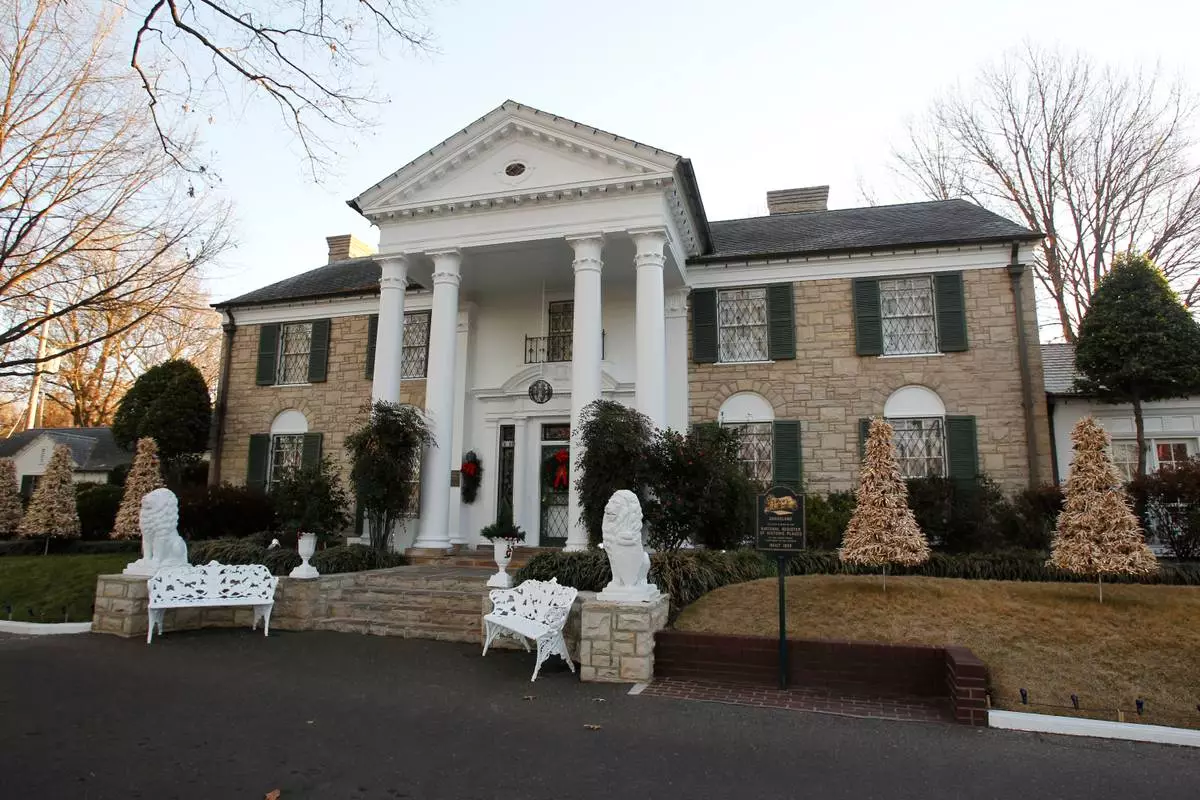
FILE - Graceland, Elvis Presley's home, is pictured, Jan. 7, 2011, in Memphis, Tenn. (AP Photo/Mark Humphrey, File)
Several Middle Eastern allies of the United States have urged the Trump administration to hold off on strikes against Iran for the government’s deadly crackdown on protesters, according to an Arab diplomat familiar with the matter.
Top officials from Egypt, Oman, Saudi Arabia and Qatar have raised concerns in the last 48 hours that a U.S. military intervention would shake the global economy and destabilize an already volatile region, said the diplomat who spoke on condition of anonymity to describe the sensitive conversations.
Oil prices fell Thursday as the markets appeared to take note of President Donald Trump’s shifting tone as a sign that he’s leaning away from attacking Iran after days of launching blistering threats at Tehran for its brutal crackdown.
Nevertheless, White House press secretary Karoline Leavitt on Thursday maintained that “all options remain on the table” for Trump as he deals with Iran.
Here's the latest:
The White House and a bipartisan group of governors are pressuring the operator of the mid-Atlantic power grid to take urgent steps to boost energy supply and curb price hikes, holding a Friday event aimed at addressing a rising concern among voters about the enormous amount of power used for artificial intelligence ahead of elections later this year.
The White House said its National Energy Dominance Council and the governors of several states, including Pennsylvania, Ohio and Virginia, want to try to compel PJM Interconnection to hold a power auction for tech companies to bid on contracts to build new power plants.
The Trump administration and governors will sign a statement of principles toward that end Friday.
▶ Read more about the administration and AI-driven power shortages
The Justice Department’s investigation into Federal Reserve Chair Jerome Powell has brought heightened attention to a key drama that will play out at the central bank in the coming months: Will Powell leave the Fed when his term as chair ends, or will he take the unusual step of remaining a governor?
Powell’s term as Fed chair ends May 15, but because of the central bank’s complex structure, he has a separate term as one of seven members of its governing board that lasts until January 31, 2028. Historically, nearly all Fed chairs have stepped down from the board when they’re no longer chair. But Powell could be the first in nearly 50 years to stay on as a governor.
Many Fed-watchers believe the criminal investigation into Powell’s testimony about cost overruns for Fed building renovations was intended to intimidate him out of taking that step. If Powell stays on the board, it would deny the White House a chance to gain a majority, undercutting the Trump administration’s efforts to seize greater control over what has for decades been an institution largely insulated from day-to-day politics.
▶ Read more about Federal Reserve Chair Jerome Powell
Trump on Thursday announced the outlines of a health care plan he wants Congress to take up as Republicans have faced increasing pressure to address rising health costs after lawmakers let subsidies expire.
The cornerstone is his proposal to send money directly to Americans for health savings accounts so they can handle insurance and health costs as they see fit. Democrats have rejected the idea as a paltry substitute for the tax credits that had helped lower monthly premiums for many people.
Trump’s plan also focuses on lowering drug prices and requiring insurers to be more upfront with the public about costs, revenues, rejected claims and wait times for care.
Trump has long been dogged by his lack of a comprehensive health care plan as he and Republicans have sought to unwind former President Barack Obama’s signature legislation, the Affordable Care Act. Trump was thwarted during his first term in trying to repeal and replace the law.
▶ Read more about Trump’s health care plan
Most American presidents aspire to the kind of greatness that prompts future generations to name important things in their honor.
Donald Trump isn’t leaving it to future generations.
As the first year of his second term wraps up, his Republican administration and allies have put his name on the U.S. Institute of Peace, the Kennedy Center performing arts venue and a new class of battleships.
That’s on top of the “Trump Accounts” for tax-deferred investments, the TrumpRx government website soon to offer direct sales of prescription drugs, the “Trump Gold Card” visa that costs at least $1 million and the Trump Route for International Peace and Prosperity, a transit corridor included in a deal his administration brokered between Armenia and Azerbaijan.
On Friday, he plans to attend a ceremony in Florida where local officials will dedicate a 4-mile (6-kilometer) stretch of road from the airport to his Mar-a-Lago estate in Palm Beach as President Donald J. Trump Boulevard.
▶ Read more about Trump’s renaming efforts
Nearly a year into his second term, Trump’s work on the economy hasn’t lived up to the expectations of many people in his own party, according to a new AP-NORC survey.
The poll from The Associated Press-NORC Center for Public Affairs Research finds a significant gap between the economic leadership Americans remembered from Trump’s first term and what they’ve gotten so far as he creates a stunning level of turmoil at home and abroad.
Just 16% of Republicans say Trump has helped “a lot” in addressing the cost of living, down from 49% in April 2024, when an AP-NORC poll asked Americans the same question about his first term.
At the same time, Republicans are overwhelmingly supportive of the president’s leadership on immigration — even if some don’t like his tactics.
There is little sign overall, though, that the Republican base is abandoning Trump. The vast majority of Republicans, about 8 in 10, approve of his job performance, compared with 4 in 10 for adults overall.
▶ Read more about the poll’s findings
Several Middle Eastern allies of the United States have urged the Trump administration to hold off on strikes against Iran for the government’s deadly crackdown on protesters, according to an Arab diplomat familiar with the matter.
Top officials from Egypt, Oman, Saudi Arabia and Qatar have raised concerns in the last 48 hours that a U.S. military intervention would shake the global economy and destabilize an already volatile region, said the diplomat who spoke on condition of anonymity to describe the sensitive conversations.
Oil prices fell on Thursday as the markets appeared to take note of President Donald Trump’s shifting tone as a sign that he’s leaning away from attacking Iran after days of launching blistering threats at Tehran for its brutal crackdown.
Nevertheless, White House press secretary Karoline Leavitt on Thursday maintained that “all options remain on the table” for Trump as he deals with Iran.
▶ Read more about Trump and Iran
— Matthew Lee, Aamer Madhani and Ben Finley
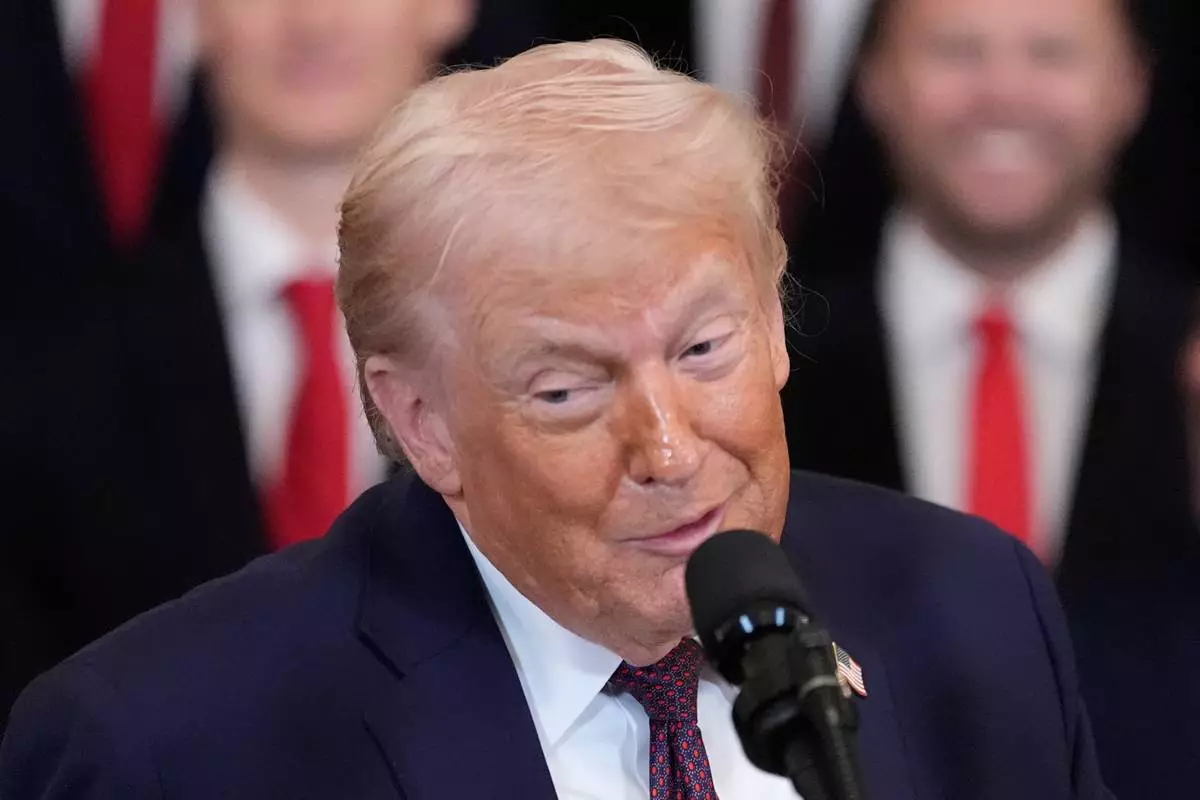
President Donald Trump speaks during an event to honor the 2025 Stanley Cup Champion Florida Panthers in the East Room of the White House, Thursday, Jan. 15, 2026, in Washington. (AP Photo/Alex Brandon)