High in the Pamir Plateau of northwest China's Xinjiang region, in Taxkorgan Tajik Autonomous County, a young Tajik man is turning his ancestral home into a welcoming guesthouse, blending tradition, music, and heartfelt stories to keep his culture alive.
Abduxamer Abduhelel, a graduate of the College of Dance at Minzu University of China, now runs Panyang Homestay — named after the Pamir sheep, a rare local breed known as the "spirits of the highlands."
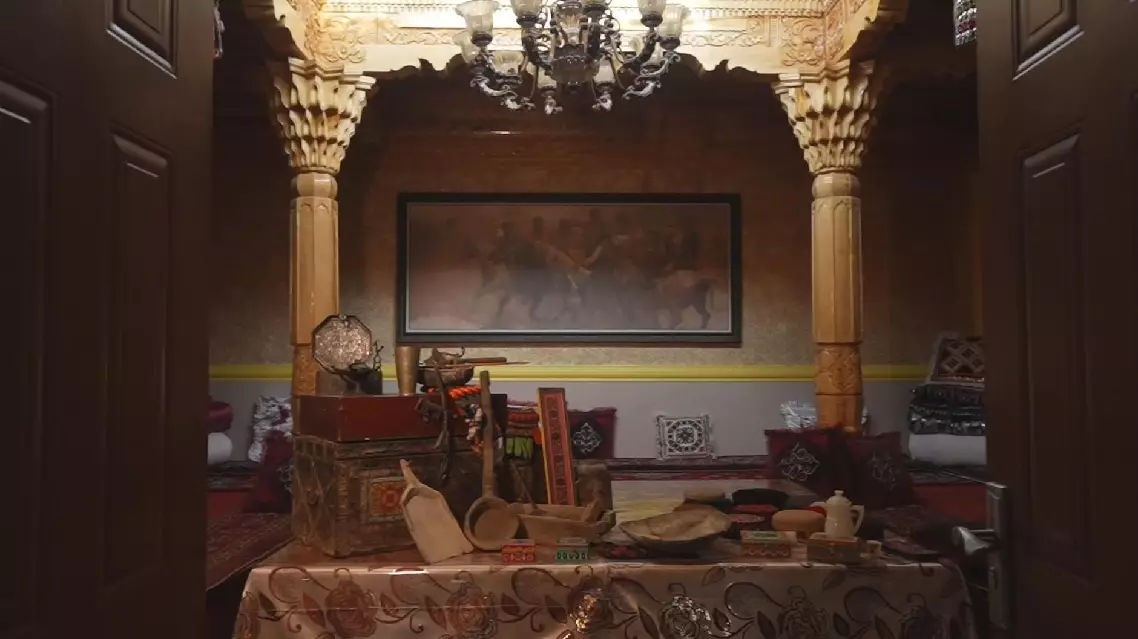
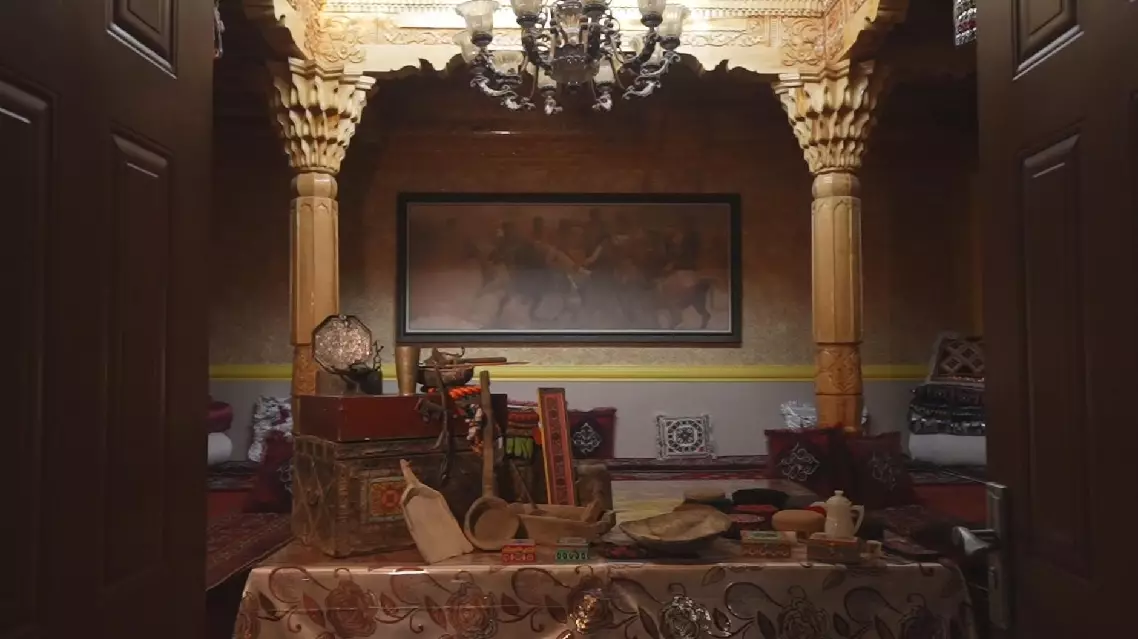
His guesthouse reflects the charm of traditional Tajik architecture. Inside, guests are greeted by colorful ethnic carpets, antique ornaments, and musical instruments that echo the stories of his people.
"My guesthouse has 14 rooms. Starting from late May, we're almost always fully booked. Travelers from all over China love the authentic Tajik-style atmosphere here. I share stories with them — about these musical instruments, and the origins of the cultural pieces they see around them," he said.
Dancing was his first passion — he trained in ballet, classical, Chinese traditional, ethnic, and modern dance before an injury ended his performing career. While touring, he often stayed in guesthouses, which later inspired him to open one in his hometown as tourism in Taxkorgan flourished.
"Over the years, I traveled widely for shows, often staying in guesthouses like this one. When I returned home, I saw how much tourism in Taxkorgan had grown. And I had an idea—why not open a guesthouse of my own, a place that truly reflects Tajik culture? So, I started building Panyang Homestay. The house is filled with traditional Tajik musical instruments. Some were collected by me, while others have been passed down in my family," said him. He often shares his past stories and experiences with the visitors. After hearing them, they often feel a sense of regret, but also think it's wonderful that he devoted himself to folk culture and tourism.
The visitors also applauded the young man's work, saying that by opening a homestay, he can stay close to his parents while contributing the development of tourism in his hometown.
"I hope to expand the guesthouse someday, so more travelers can experience the rich culture of the Tajik people, the vast beauty of Xinjiang, and the breathtaking landscapes of Kashgar and the Pamir Plateau," he said.
Tajik youth preserves cultural heritage through Panyang homestay in Xinjiang
Tajik youth preserves cultural heritage through Panyang homestay in Xinjiang
Despite attempts by the Democratic Progressive Party (DPP) authorities in the Taiwan region to obstruct normal exchanges and cooperation between the two sides of the Taiwan Strait, extensive cross-Strait interactions continue to thrive.
The recent moves by the DPP authorities are sinister in intent and aimed at pursuing their secessionist goal, according to Zhang Hua, a research fellow at the Institute of Taiwan Studies, Chinese Academy of Social Sciences.
"The DPP authorities have manipulated the so-called narrative of 'anti-China and resistance against China,' which is gravely harmful as it exacerbates social rifts in Taiwan. Currently, due to factors such as 'political mobilization' and the 'political election market,' contrasting emotions among the public in Taiwan have been persistent. Furthermore, differences in words have led to a situation characterized by 'green terror,' which naturally further worsens social rifts on the island," said Zhang.
"In March 2025, the DPP authorities concocted the so-called '17 responding strategies,' and in November 2025, they again concocted two action plans to limit cross-Strait exchanges. The purpose is the same as the current revisions to the so-called 'laws.' Lai Ching-te aims to pursue secessionist goal through soliciting support from the United States and seek Taiwan secession through military build-up. So, he cannot allow the people of Taiwan to read books from the Chinese mainland, watch films from the mainland, or play games produced in the mainland. He views these as methods used by the mainland to influence the public in Taiwan through 'united front tactics.' This leads to the further strengthening of local people's identification with the Chinese nation and their consciousness as Chinese, which he is reluctant to see, " Zhang said.
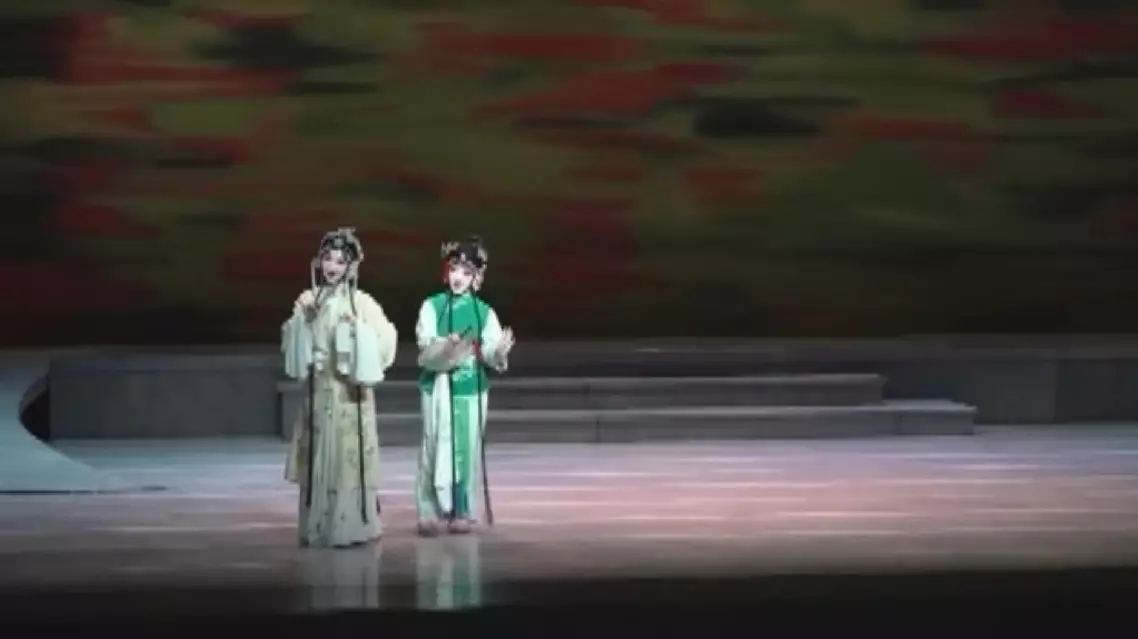
On Thursday, a campus version of Chinese Kunqu opera masterpiece "The Peony Pavilion" performed by students from the mainland took to the stage in Taipei, filling the venue to capacity. The combination of ancient and modern arts received rounds of applause.
Among the audiences, young people from Taiwan comprised about half, with many university students attending in groups.
"We love it, because it helps us understand a part of our history," said an audience member in Taiwan.
"I hope that through this classical work, young people from both sides of the Taiwan Strait will develop a love for traditional culture. The Chinese nation has a glorious history spanning thousands of years. If we don't understand it, how can we comprehend the future? We must understand where our roots lie," said Pai Hsien-yung, a playwright in Taiwan.
Kunqu Opera, one of the oldest forms of opera in China with a history of hundreds of years, was placed on the list of Masterpieces of the Oral and Intangible Heritage of Humanity by the United Nations Educational, Scientific and Cultural Organization (UNESCO) in 2001.
Written by Chinese playwright Tang Xianzu (1550-1616) of the Ming Dynasty (1368-1644), "The Peony Pavilion" tells the story of the romance between a daughter of a wealthy official and a talented but poor young scholar.
Cross-Strait exchanges, cooperation go on despite DPP obstructions