A pioneering renewable energy project in rural Nilka County, northwest China's Xinjiang Uygur Autonomous Region, is demonstrating that solar power and traditional pastoral livelihoods can coexist successfully.
Dubbed as Asia's largest integrated wind and solar development, the project was launched by China Green Development Investment Group Co., Ltd. (CGDG). It combines vast photovoltaic installations with open grazing land, creating a sustainable model where clean energy generation and livestock farming mutually support each other.
By elevating panels 1.5 meters above the ground, herders continue grazing sheep without disruption, while the shade helps retain soil moisture and improves grass growth. This dual benefit reduces herders' forage costs and lowers solar operators' weeding expenses - a win-win arrangement for both sides.
"Our project is officially named the CGDG 4-Gigawatt Integrated Wind and Photovoltaic Power Project in Nilka County. We have successfully completed all construction tasks for Phases I and II in 2023 and 2024. In 2025, we are advancing the final 200-megawatt solar installation. Our project has also drawn many college graduates back to their hometowns to contribute to local development," said Li Yongxiang, Project Manager of Integrated Wind and Photovoltaic Power Project developed by China Construction Second Engineering Bureau Ltd. (CCSE).
One returnee, Wu Shaofeng, a native of Tacheng Prefecture, said he felt "proud and responsible" for contributing his knowledge to his hometown's development after being away for years.
After graduating from university, Wu joined the China Construction Second Engineering Bureau Ltd. (CCSE). From his college years to the start of my career, Wu had been away from Xinjiang for eight years.
"The project created a high demand for labor, offering many jobs to local residents. Initially, we established a dedicated vocational night school, providing specialized training to over 4,000 participants, including local farmers and herders. Almost all of them were hired after completing the training. This significantly improved the income of local households, farmers, and herders, while boosting small local businesses," said Li.
"Now, with all photovoltaic panels successfully installed, I feel immense pride and gratitude for what we've accomplished. For me, it's also a way to give back to my hometown. As a man from Xinjiang, I believe it's my responsibility to contribute to the region's development - using my knowledge and skills to help build a brighter future for Xinjiang," said Wu.
In the past, during mid-summer, the area experienced frequent power outages - two to three times per week - sometimes lasting just a few hours, but often several days. Once the project is fully operational, these outages will be eliminated. After the project connects to the grid, the daily power generation will equal 13 days of total electricity consumption in Xinjiang.
Each year, the project will provide 5.8 billion kilowatt-hours of clean energy, equivalent to saving 1.73 million tons of standard coal and reducing 4.72 million tons of carbon emissions, ensuring a stable power supply for remote areas like Xinjiang and supporting the country as a whole.
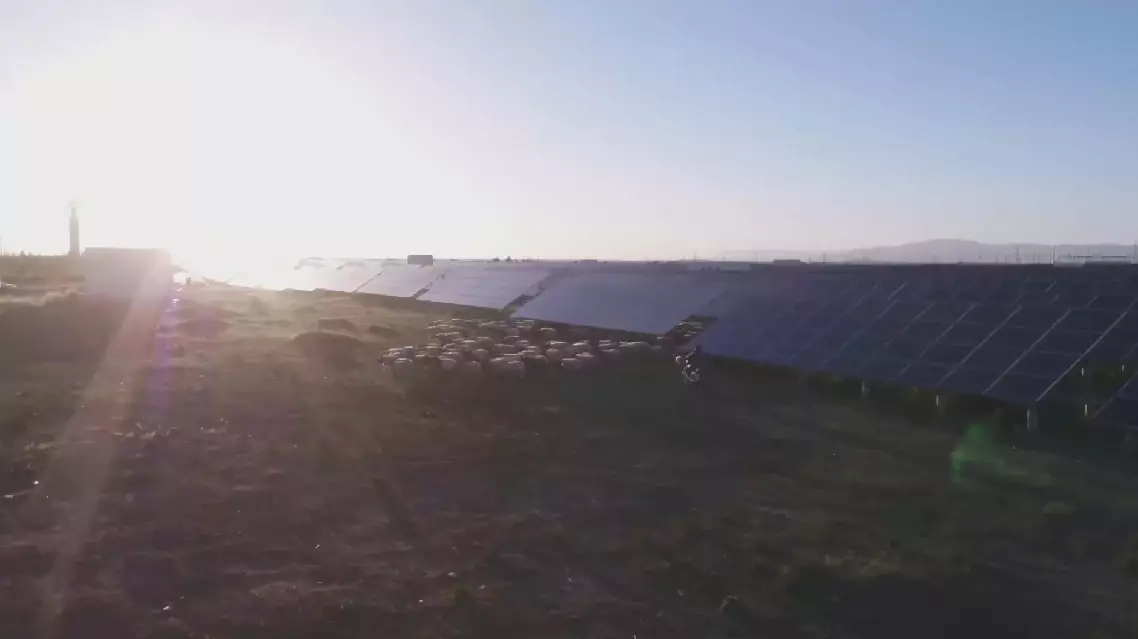
Solar power project in Xinjiang boosts pastoral livelihoods