The trailer for China's first space-filmed documentary, featuring breathtaking 8K ultra-high-definition footage captured by astronauts on the Shenzhou-13 mission, made its debut in New Zealand on Tuesday, offering audiences an unprecedented window into life beyond Earth.
The space documentary "Shenzhou-13," or Blue Planet Outside the Window, was filmed by Chinese astronauts Zhai Zhigang, Wang Yaping, and Ye Guangfu during their mission from October 2021 to April 2022 aboard China's space station.
Captured from the astronauts' perspective, the 90-minute documentary showcases both the grandeur of the universe and the everyday life of the astronauts in orbit.
The trailer was a special highlight at a reception hosted by the Chinese Embassy in New Zealand, celebrating the 76th anniversary of the founding of the People's Republic of China.
More than 400 guests attended the event, including New Zealand government officials, diplomatic envoys from various countries to New Zealand, and representatives of the Chinese community.
The attendees hailed the documentary's stunning ultra-HD visuals, and expressed admiration for China's progress in aerospace.
"It's hugely important for the whole world because as you can see, we are the blue planet. And I study water. We can look from space to see how much water there is, where it is, and we can use special technologies to see that," said Brent Euan Clothier, foreign member of the Chinese Academy of Engineering, also former president of the Royal Society of New Zealand.
"I would dearly love to get a ride up to your space station to have a look there. It looks amazing. New Zealand has its own space program, but the China program is so much better. It's incredible what you are doing. To think of people living up there on the space station, it's beyond imagination," said Rob Stevens, general manager of global partnerships for Massey University.
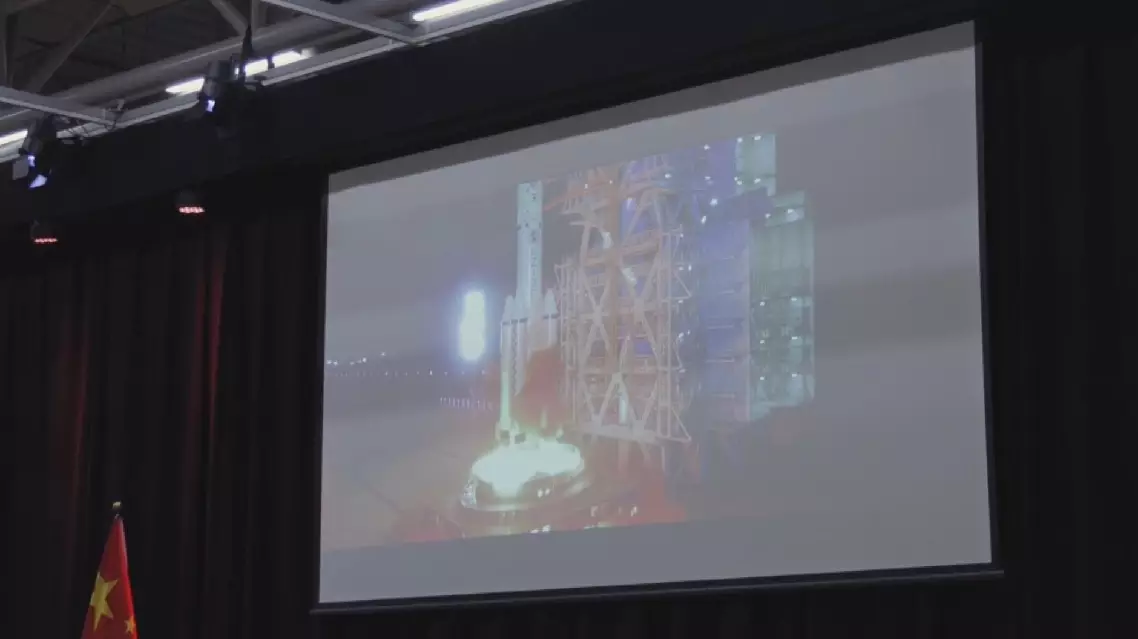
Trailer of China's space documentary debuts in New Zealand
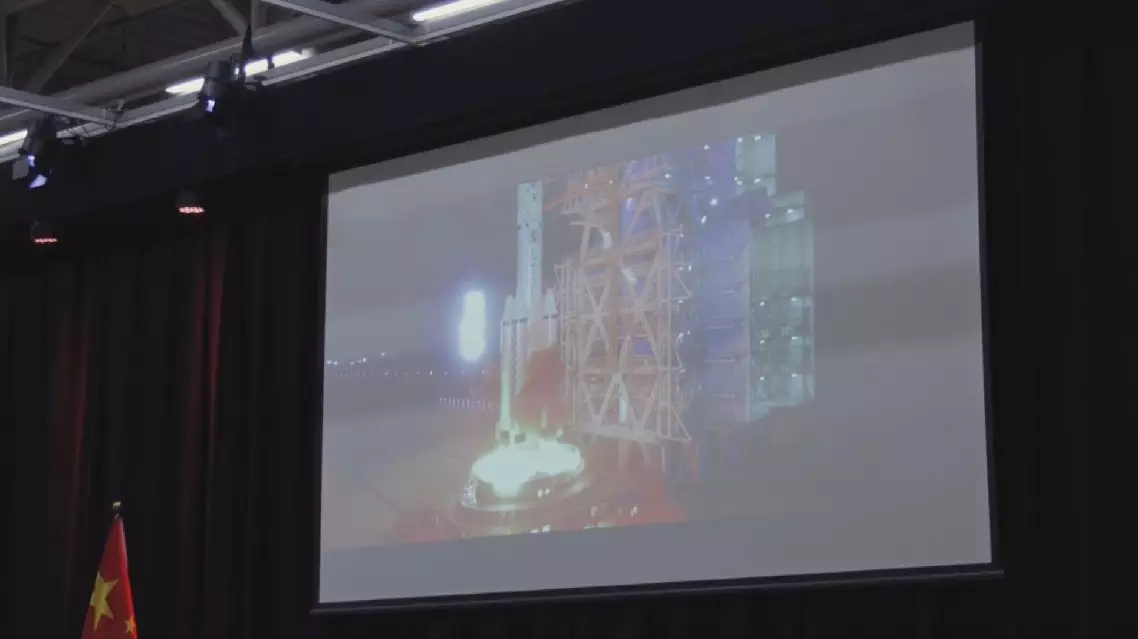
Trailer of China's space documentary debuts in New Zealand
Deep in the rainforests of southwest China's Yunnan Province, dedicated elephant monitoring team members are tracking wild Asian elephants and working to ensure peaceful coexistence between humans and wildlife.
In Jiangcheng County, more than 50 wild Asian elephants live year-round. Since the onset of winter, wild food sources have become scarce, leading to more frequent visits by elephants into villages in search of food.
In recent days, elephant monitors have teamed up with local forest firefighters to strengthen monitoring and alerts. As more people and vehicles return home for the Chinese New Year, also known as Spring Festival, monitoring and early warning efforts have become all the more important.
Diao Faxing, now 50 years old, is the team leader of Jiangcheng County's elephant monitoring team. He and his colleagues are tasked with monitoring Asian elephant populations over a nearly 1,000 square-kilometer area. They must track the movements of dozens of elephants in real-time.
One day, upon spotting a herd of elephants, Diao promptly alerted nearby villagers to keep their distance. Responding to the warning, firefighter Guo Yuanfeng launched a drone and quickly located the elephants feeding in a cornfield.
Diao said that the drone footage showed at least 10 elephants, adding that it was unusual for the elephants to appear at that time of day and noted that the group included several calves, with the youngest estimated to be about two months old. Beyond real-time alerts, Diao also assesses damages caused by elephants on behalf of insurance companies.
He explained that in 2010, Yunnan Province implemented a public liability insurance system for wild animal incidents, fully funded by the government. When an elephant-related incident occurs, the insurance company compensates households for damages to homes, food, and cash crops.
"At current prices, the compensation is fairly satisfactory. Once the elephant eats, it simply leaves. It's almost like we are raising them. If our crops get eaten, the insurance company compensates us. I think that's what harmonious coexistence between people and elephants looks like," said Li Jiangmei, a villager of Kangping Town.
Li added that she doesn't fear the elephants.
"The monitors send updates to our messaging group every day, so we are able to know where the elephants are right away. If they are nearby, we just avoid going there," she said.
"That group of elephants has been coming here for years. Seeing them raise their young is heartwarming. It's touching to see another baby elephant born," said Li Chaodong, a villager.
Monitoring these elephants requires being out in the field on a long-term basis, often facing danger, something Diao's family initially didn't understand.
"Especially in the early days before we had drones, we had to track the elephants on foot, following their footprints every day. It was even more dangerous. My family told me to quit. What if something happened? But I thought, if we don't send alerts, people won't feel safe working in the fields. Thinking about that, I just kept going," said Diao.
In 2022, Yunnan applied to the State Council to establish the Asian Elephant National Park, covering areas in Xishuangbanna, Pu'er, and Lincang across six counties or districts. The proposed area spans over 38,600 hectares.
In line with national planning efforts, the preparation of the park is progressing steadily. China's national park law, which took effect on Jan 1, 2026, will provide a strong legal foundation for the park's establishment.
"We have been advancing the national park's preparation, including baseline research, specialized resource surveys, habitat restoration, ecological repair, public education, and conflict mitigation. The goal is to enhance regional protection and spread conservation awareness to support the park's creation," said Yang Fang, director of the Department of Nature Reserve Management Office, Yunnan Provincial Forestry and Grassland Bureau.
"Building an Asian Elephant National Park gives them a home. At the same time, we could develop tourism, with local people getting involved and helping to attract visitors. My biggest hope is that locals can live in peace and contentment, and that we can also offer the elephants a good habitat. So people and elephants live in harmony," said Diao.
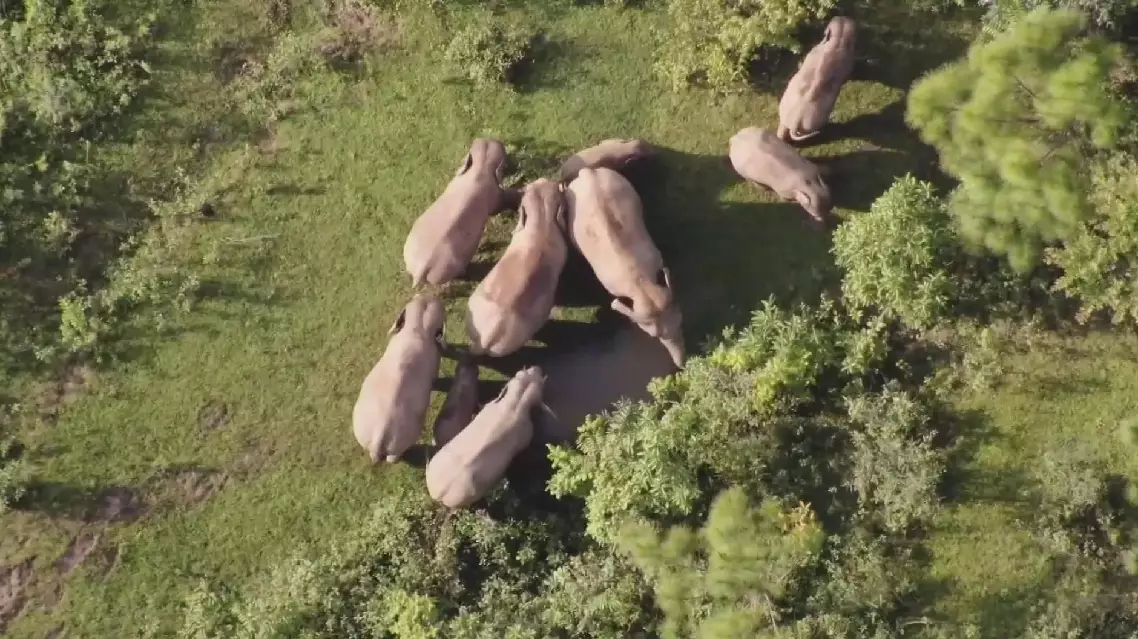
Monitoring efforts enhance wild elephants conservation, coexistence in southwest China