A mulberry bark paper-making inheritor in northwest China's Xinjiang Uygur Autonomous Region has dedicated himself to reviving the ancient tree bark papermaking technique with enthusiasm and perseverance.
The mulberry bark paper is also known as Han paper which originated from the ancient Han Dynasty (206 B.C.-220 A.D.) of China. Using mulberry tree bark as raw material, the paper is moth-proof, moisture-proof and colorfast.
Bilal Tursunbak began learning the craft from his grandfather at the age of five and has become the 13th-generation inheritor to this technique.
"After the opening of the ancient Silk Road, papermaking techniques from China's central plains spread to western regions. At the time, the people of Hotan used mulberry bark to make paper, a practice tracing back over 1,000 years in Xinjiang. I learned this from my grandfather at the age of five, and it's been 18 years since then," said Tursunbak.
Starting from a small workshop and now working in his own studio, Tursunbak hopes to revitalize this ancient art in today's life with his unswerving love and earnest efforts.
"On the one hand, I like it and believe that such an ancient skill cannot be abandoned. I see its value and its development, and I also want to pass it on and promote this skill," he said.
Tursunbak said he hopes to create a hands-on workshop in the future where more people can learn this precious craft.
"Mulberry bark paper is gaining popularity in nowadays as a result of greater publicity, and many people come here to learn about this traditional craft. As they like, they will buy lanterns, fans, and other cultural creative products made from mulberry bark paper and take them back home. Next year, we plan to create a dedicated experience room to allow more people to learn about this ancient craft," he said.
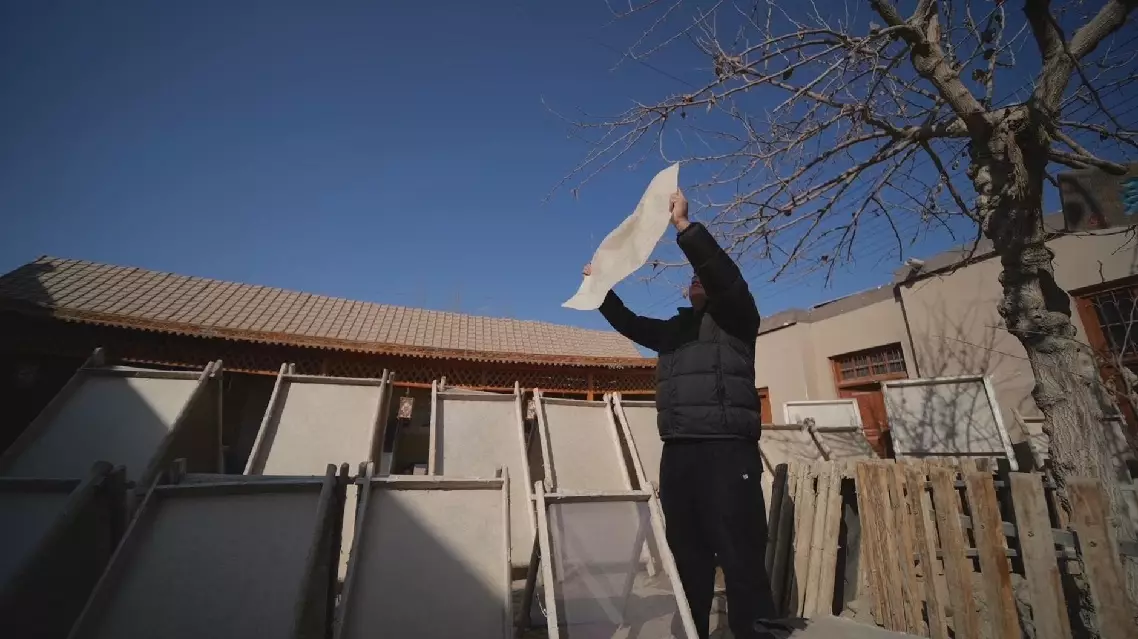
Mulberry bark paper-making inheritor revives technique with enthusiasm in China's Xinjiang
At least four people were killed, and ten others injured after Israel attacked a hotel in the Lebanese capital Beirut early on Sunday, the Lebanese Ministry of Public Health said.
Israeli forces launched a drone attack at dawn, targeting a room at the Ramada hotel in the heart of the city. Following the strike, Israel said that the targets were key commanders of the Lebanon Corps of Iran's Islamic Revolutionary Guard Corps (IRGC) Quds Force.
The drone attack was the first Israeli attack on central Beirut since hostilities between Israel and Hezbollah resumed, according to media reports.
The Ramada Hotel is located in Beirut's Raouche area, a popular tourist district near the landmark Pigeon Rocks along the Mediterranean coast.
All the windows in the targeted hotel room were shattered, and several adjacent rooms and the exterior facade of the hotel building were also damaged by the airstrike, according to a China Media Group reporter at the scene.
Witnesses said the area had been considered safe, and many displaced people fleeing southern Lebanon and the southern suburbs of Beirut had taken refuge here, with some staying in hotels and others sleeping in their cars along nearby roads.
"At night, it was quiet until 1:35; there were no sounds of drones or anything at all. Suddenly, we heard something like a shell—very loud. We thought it was a warplane bombing in the area. We ran and saw smoke coming from the hotel, and glass was scattered in the streets. There was black smoke and dust. We ran to the Ramada hotel on the fourth floor, where flames were coming out. People began to exit, ambulances and information branch personnel arrived, and crowds formed," said Shawki Sharifi, an eyewitness.
Another eyewitness said the area was blocked after the attack, and the injured were taken to hospitals for treatment. Authorities said that there were fatalities at the scene.
On Sunday evening, the Israel Defense Forces (IDF) issued a statement, saying that the Israeli Navy carried out a precision strike on Beirut, targeting five senior commanders of Iran's IRGC Quds Force who were meeting at a hotel in the city.
The IDF said that the five commanders, "hiding in a civilian hotel," were all killed in the operation. The commanders had served in the Lebanese and Palestinian branches of IRGC and were involved in providing funding and intelligence to Hezbollah and Hamas, the IDF said in the statement.
The Lebanese authorities have not provided more details about the victims or the incident.
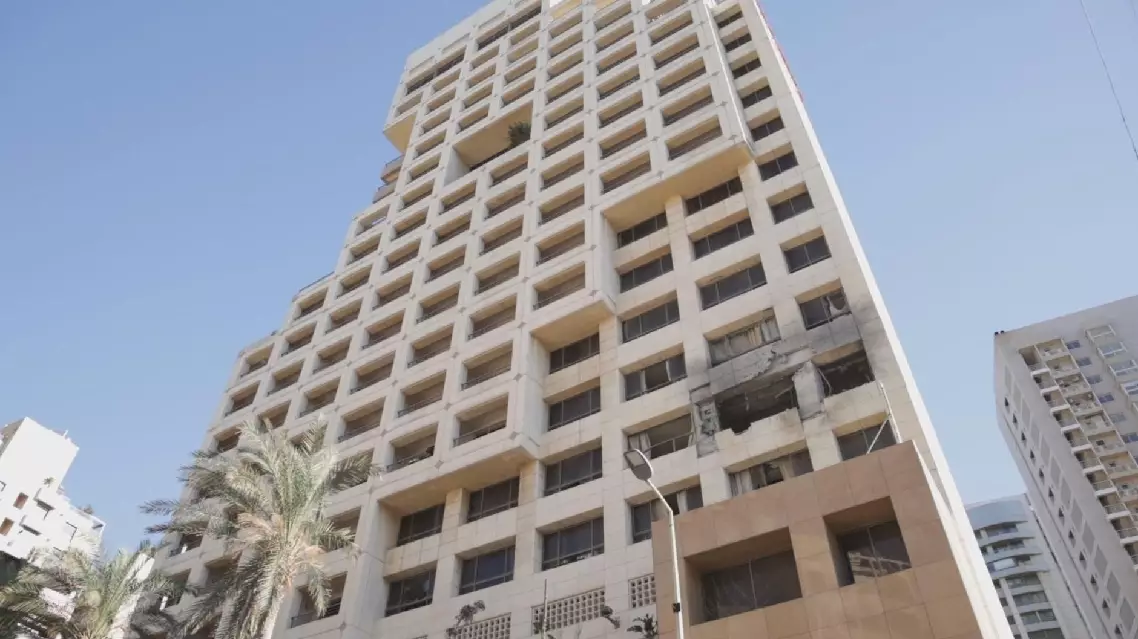
At least 4 killed, 10 injured in Israeli strike on hotel in Beirut