Skip to Content Facebook Feature Image

Russian forays into NATO airspace are causing alarm. Here's why they might be happening

News

Russian forays into NATO airspace are causing alarm. Here's why they might be happening
News

News

Russian forays into NATO airspace are causing alarm. Here's why they might be happening

2025-09-26 19:48 Last Updated At:19:50

Intrusions into NATO’s airspace blamed on Russia reached an unprecedented scale this month, raising questions about whether the Kremlin is trying to test the alliance’s willingness and ability to respond to a direct attack or divert its attention and resources from the war in Ukraine.

Russia has been encroaching on its NATO neighbors' airspace for decades, then either denying it happened or brushing it off as unintentional. But since its 2022 invasion of Ukraine, such incursions have carried a bigger threat, none more so than when drones swarmed into Poland two weeks ago and caused NATO to scramble jets to shoot them down.

More Images
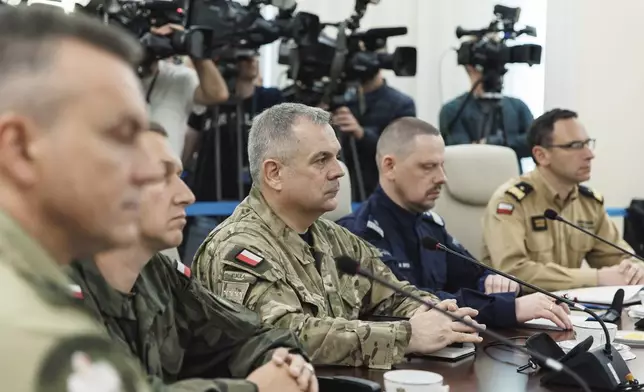
Gen. Wieslaw Kukula, center, chief of the General Staff of the Polish Armed Forces, sits during an extraordinary government meeting, in Warsaw, Poland, Wednesday, Sept. 10, 2025, following violations of Polish airspace by Russian drones. (Chancellery of the Prime Minister of Poland via AP)
Gen. Wieslaw Kukula, center, chief of the General Staff of the Polish Armed Forces, sits during an extraordinary government meeting, in Warsaw, Poland, Wednesday, Sept. 10, 2025, following violations of Polish airspace by Russian drones. (Chancellery of the Prime Minister of Poland via AP)

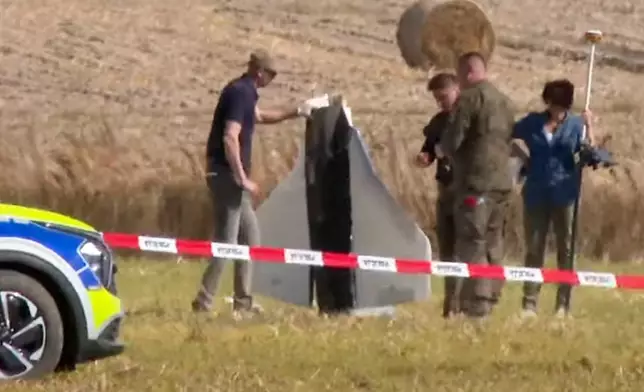
In this image made from video, police and military police officers secure parts of an object shot down by Polish authorities at a site in Wohyn, Poland, Wednesday, Sept. 10, 2025. (AP Photo/Rafal Niedzielski)
In this image made from video, police and military police officers secure parts of an object shot down by Polish authorities at a site in Wohyn, Poland, Wednesday, Sept. 10, 2025. (AP Photo/Rafal Niedzielski)

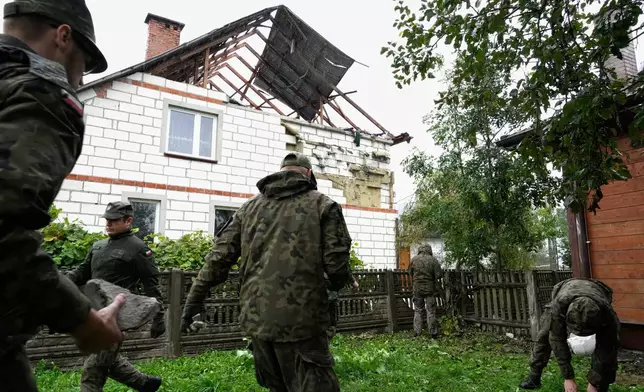
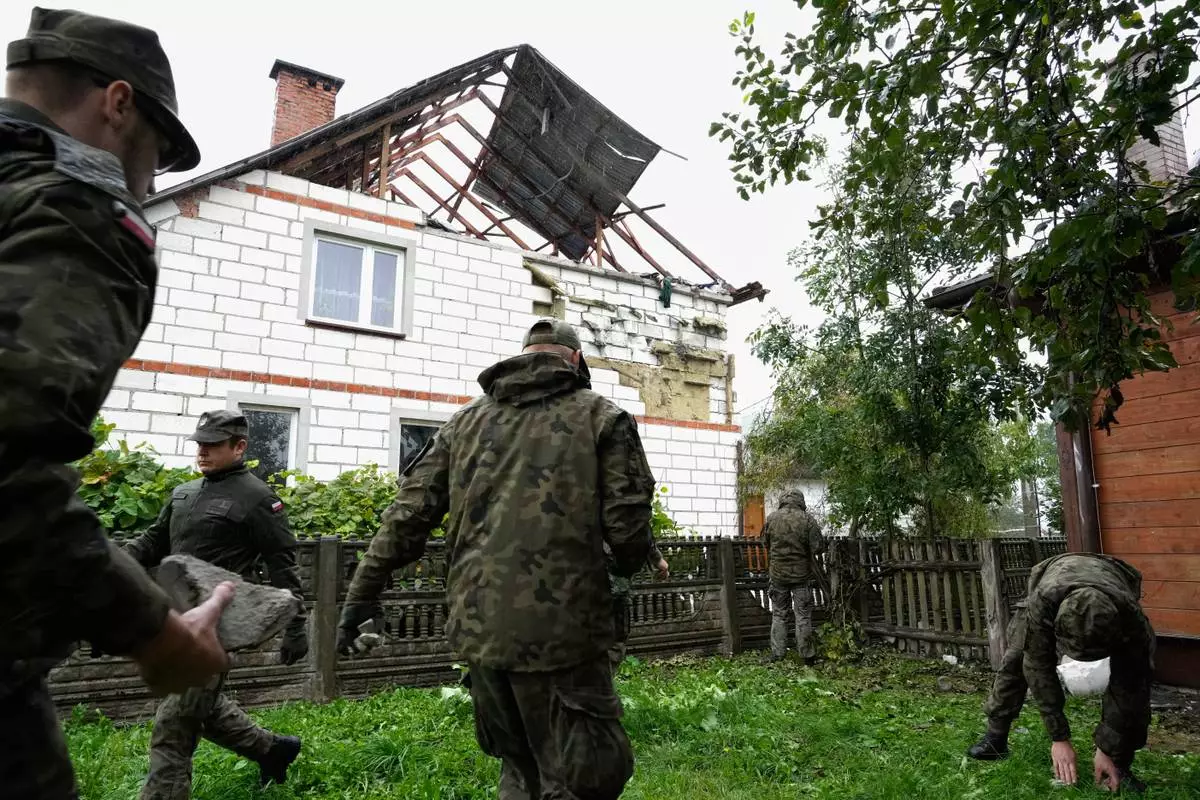
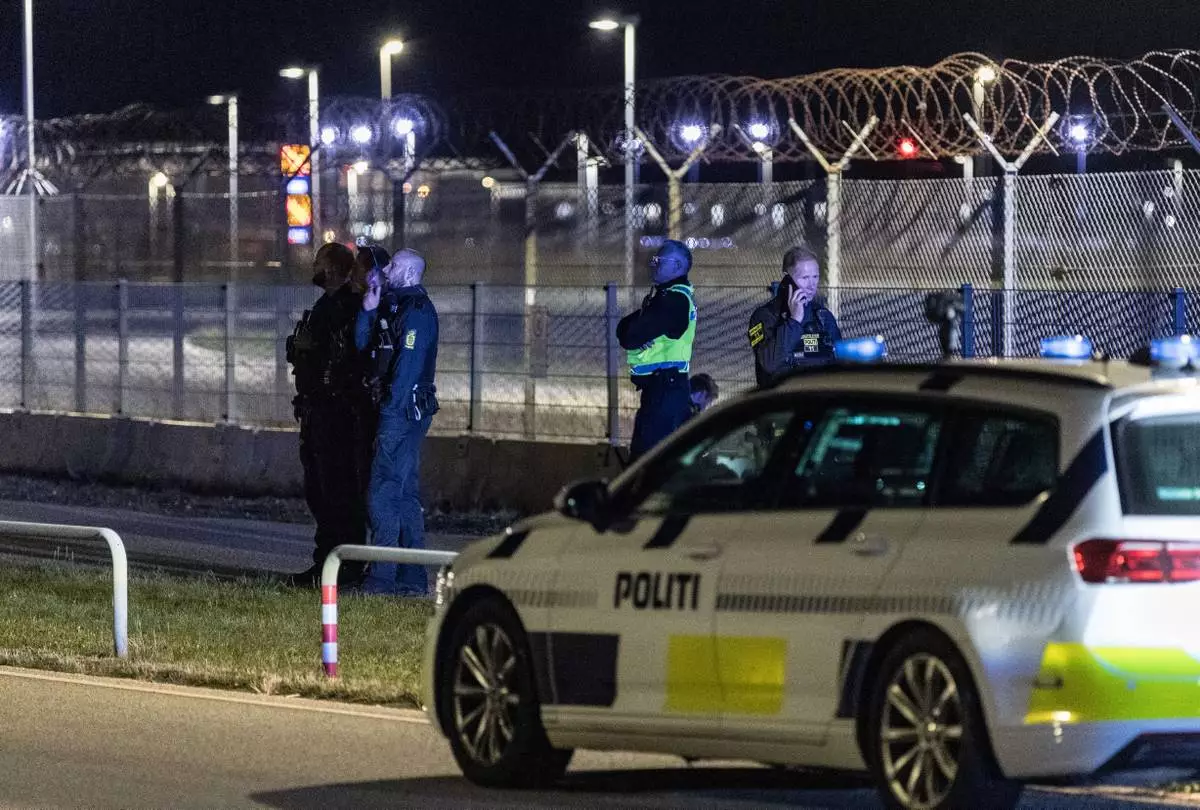
Territorial defense officers pick up debris from the destroyed roof of a house, in Wyryki, Poland, Thursday, Sept. 11, 2025, after Russian drones violated Polish airspace. (AP Photo/Czarek Sokolowski)
Territorial defense officers pick up debris from the destroyed roof of a house, in Wyryki, Poland, Thursday, Sept. 11, 2025, after Russian drones violated Polish airspace. (AP Photo/Czarek Sokolowski)

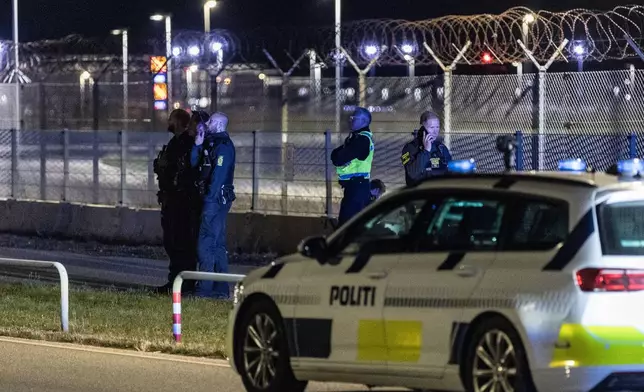
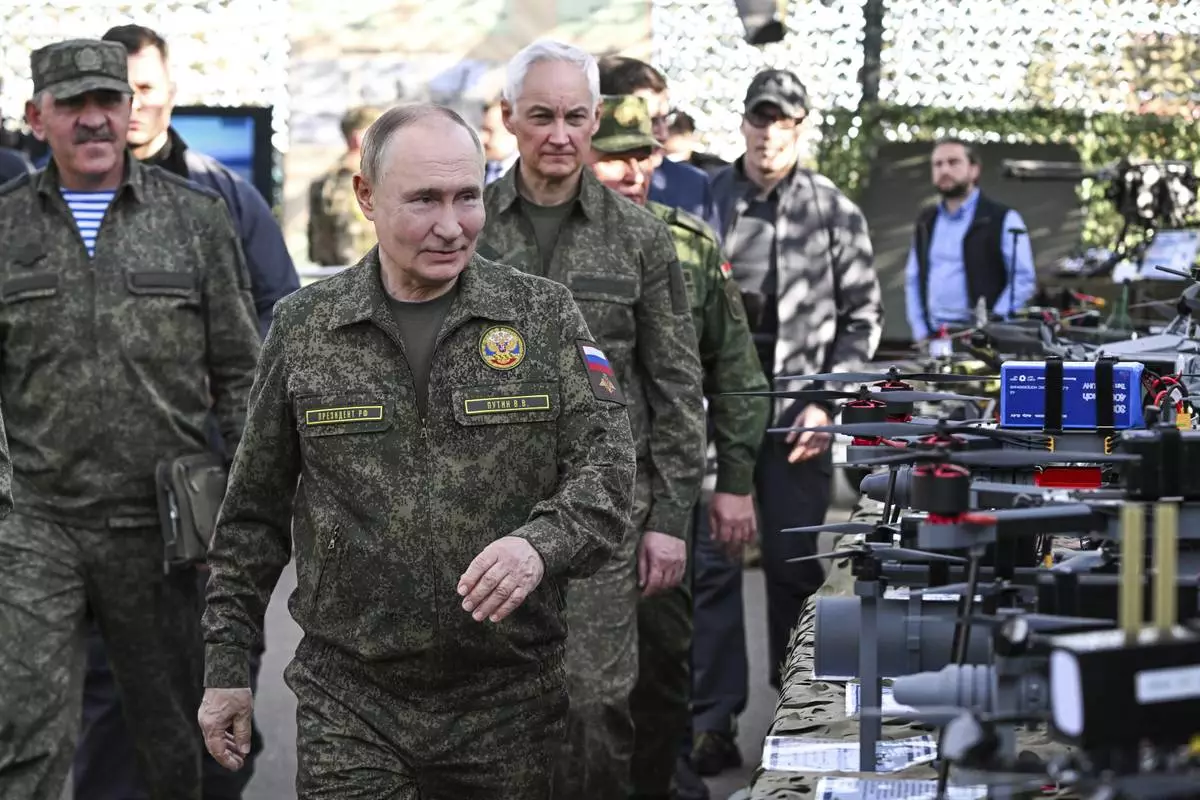
Danish police patrol at Copenhagen Airport, Denmark, Monday Sept. 22, 2025. (Steven Knap/Ritzau Scanpix via AP)
Danish police patrol at Copenhagen Airport, Denmark, Monday Sept. 22, 2025. (Steven Knap/Ritzau Scanpix via AP)

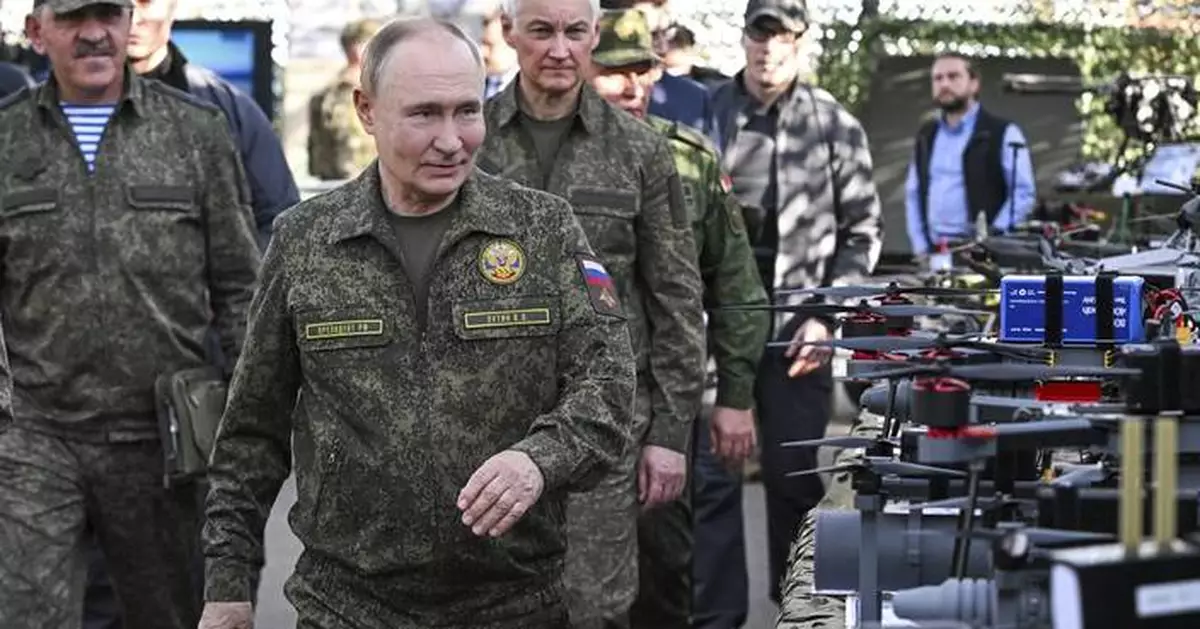
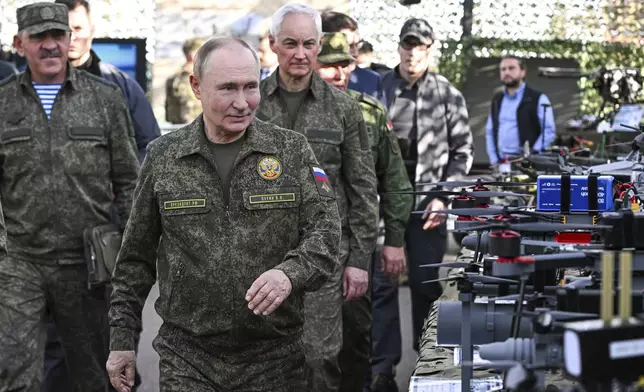
CORRECTS SOURCE FOR POOL - Russian President Vladimir Putin accompanied by Deputy Defence Minister Yunus-Bek Yevkurov, left, and Defence Minister Andrei Belousov, right, inspects Russian weapons and equipment during his visit to the Russian-Belarusian joint military drills "Zapad 2025" (West 2025) at the Mulino training ground in Nizhny Novgorod region, Russia, Tuesday, Sept. 16, 2025. (Sergey Bobylev/Sputnik, Kremlin Pool Photo via AP)

CORRECTS SOURCE FOR POOL - Russian President Vladimir Putin accompanied by Deputy Defence Minister Yunus-Bek Yevkurov, left, and Defence Minister Andrei Belousov, right, inspects Russian weapons and equipment during his visit to the Russian-Belarusian joint military drills "Zapad 2025" (West 2025) at the Mulino training ground in Nizhny Novgorod region, Russia, Tuesday, Sept. 16, 2025. (Sergey Bobylev/Sputnik, Kremlin Pool Photo via AP)

Estonia said Russian fighter jets flew into its territory last week and remained there for 12 minutes — an incursion Estonia’s foreign minister described as “unprecedently brazen” but that Russia denied happened. And Romania and Latvia reported that single Russian drones violated their airspace this month.

With Moscow making slow but steady progress on the battlefield in Ukraine and holding a strong hand should it decide to talk peace, its recent forays into NATO airspace also raise questions about why it would risk triggering a direct military confrontation with the alliance.

Here's a look at what's been happening and what Russia's motives might be:

None of the intrusions of NATO airspace has had the scope of what happened in Poland on Sept. 10, when authorities say about 20 Russian drones flew deep over the countryside before being shot down by NATO jets or crashing on their own. It marked the first direct military engagement between the alliance and Russia since the start of its full-scale invasion of Ukraine.

Russia denied that it targeted Poland, and its ally Belarus claimed the drones' signals had been jammed by Ukraine, which borders Poland. But European leaders have cast it as a deliberate provocation, pointing to last week's violation of Estonian airspace and other recent incidents as further proof of some broader scheme orchestrated by Moscow.

Before invading Ukraine in 2022, the Kremlin demanded that NATO drop any plans to offer Kyiv membership in the alliance and roll back troop deployments near Russia's borders, including in the Baltic countries of Estonia, Latvia and Lithuania, small former Soviet republics that joined NATO and the EU in the early 2000s. NATO rejected the demands.

Russian President Vladimir Putin also warned NATO to not allow Kyiv to strike deep inside Russia with Western-supplied longer-range weapons, threatening that Moscow could respond by targeting military facilities in NATO countries that enable such attacks. Doing so would carry huge risks, including for Moscow, as it could spark a direct conflict between Russia and NATO, which has a huge edge in conventional weapons.

Some experts view the recent uptick in NATO airspace incursions as an attempt by Russia to see how the alliance reacts so that it can exploit any fissures or indecision. And some believe Russia is hoping to divert NATO’s attention and resources from supporting Ukraine to defending its own territory.

“Maybe their calculation was that now the European countries have to send something additionally to Estonia regarding the air defense assets, and that means they cannot send it to Ukraine,” Estonian Defense Minister Hanno Pevkur said. “Russia is trying to tear us out from Ukraine.”

Mark Galeotti, an expert in Russian politics who heads the Mayak Intelligence consultancy, thinks the intrusions are part of a “coercive signaling” aimed at discouraging NATO members from offering robust security guarantees to Kyiv, including the possible deployment of their troops to Ukraine as part of a peace deal. Moscow has warned that it won't accept any NATO troops in Ukraine.

“This is Moscow trying to say, ‘Just look how dangerous things already are and how dangerous they could get. Remember we are more daring, willful, reckless, resolute — use whatever adjective you want, but the point is, we are more of it.’" Galeotti said on a podcast.

Edward Lucas, senior fellow at the Center for European Policy Analysis, said Russia might be trying to highlight NATO’s weaknesses to try to “plant the corrosive question in allies’ minds: Are you willing to go to war with Russia on behalf of the Baltic states?”

“Russia does not need to defeat NATO militarily if it can defeat it politically,” Lucas wrote in an analysis. “If alliance members do not believe that other members will come to their aid when they are attacked, they feel isolated.”

Russia specifically might have wanted to gauge the reaction of NATO's biggest member, the U.S., said Max Bergmann, head of Europe, Russia, and Eurasia program at the Center for Strategic and International Studies.

“I think it was quite underwhelming,” he said of the U.S.'s response to the incursions. “I think what we are seeing is the United States under President Trump doesn’t feel responsible for European security, and that will be quite enlightening to the Russians. They may escalate even more.”

After its drone swarm incident, Poland triggered a NATO mechanism that allows any member to demand a full meeting if it believes its territorial integrity, political independence or security is threatened. Soon after, the alliance launched an operation to bolster its air defenses along its eastern flank.

NATO held discussions again Tuesday in response to the Russian fighter jets that flew into Estonian airspace and warned Moscow that it would any and all means to defend against further breaches.

Prime Minister Donald Tusk said Poland would, “without discussion,” shoot down any object that flies into its territory.

But it's unclear if all NATO allies would back such an aggressive approach, with NATO Secretary-General Mark Rutte saying Tuesday that decisions on whether to fire on intruding aircraft would be based on “available intelligence regarding the threat posed by the aircraft.”

U.S. President Donald Trump, who initially stunned allies by saying the Russian drones’ intrusion into Polish airspace “could have been a mistake,” sent a tougher message Tuesday, answering affirmatively when asked whether NATO should shoot down intruding Russian aircraft. He demurred, though, when prodded if the U.S. would step in to back the alliance in such case.
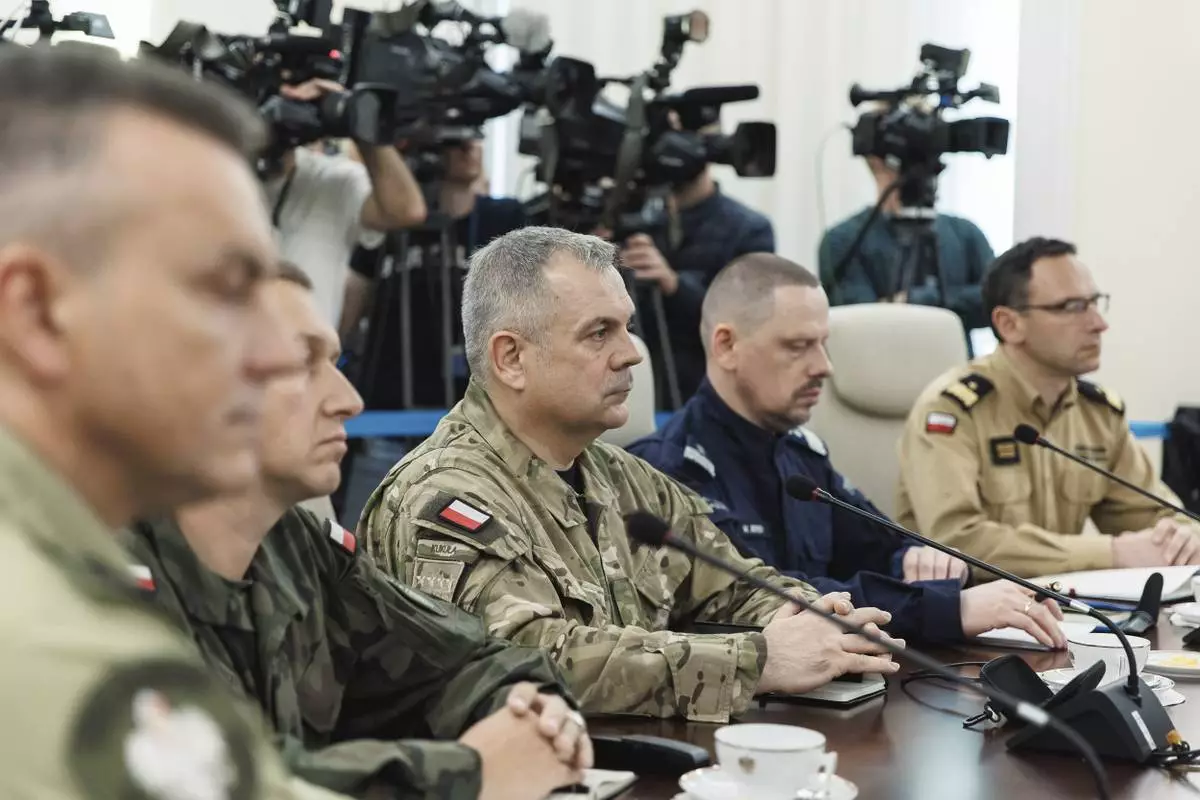
Gen. Wieslaw Kukula, center, chief of the General Staff of the Polish Armed Forces, sits during an extraordinary government meeting, in Warsaw, Poland, Wednesday, Sept. 10, 2025, following violations of Polish airspace by Russian drones. (Chancellery of the Prime Minister of Poland via AP)

Gen. Wieslaw Kukula, center, chief of the General Staff of the Polish Armed Forces, sits during an extraordinary government meeting, in Warsaw, Poland, Wednesday, Sept. 10, 2025, following violations of Polish airspace by Russian drones. (Chancellery of the Prime Minister of Poland via AP)

In this image made from video, police and military police officers secure parts of an object shot down by Polish authorities at a site in Wohyn, Poland, Wednesday, Sept. 10, 2025. (AP Photo/Rafal Niedzielski)
In this image made from video, police and military police officers secure parts of an object shot down by Polish authorities at a site in Wohyn, Poland, Wednesday, Sept. 10, 2025. (AP Photo/Rafal Niedzielski)

Territorial defense officers pick up debris from the destroyed roof of a house, in Wyryki, Poland, Thursday, Sept. 11, 2025, after Russian drones violated Polish airspace. (AP Photo/Czarek Sokolowski)
Territorial defense officers pick up debris from the destroyed roof of a house, in Wyryki, Poland, Thursday, Sept. 11, 2025, after Russian drones violated Polish airspace. (AP Photo/Czarek Sokolowski)

Danish police patrol at Copenhagen Airport, Denmark, Monday Sept. 22, 2025. (Steven Knap/Ritzau Scanpix via AP)
Danish police patrol at Copenhagen Airport, Denmark, Monday Sept. 22, 2025. (Steven Knap/Ritzau Scanpix via AP)

CORRECTS SOURCE FOR POOL - Russian President Vladimir Putin accompanied by Deputy Defence Minister Yunus-Bek Yevkurov, left, and Defence Minister Andrei Belousov, right, inspects Russian weapons and equipment during his visit to the Russian-Belarusian joint military drills "Zapad 2025" (West 2025) at the Mulino training ground in Nizhny Novgorod region, Russia, Tuesday, Sept. 16, 2025. (Sergey Bobylev/Sputnik, Kremlin Pool Photo via AP)
CORRECTS SOURCE FOR POOL - Russian President Vladimir Putin accompanied by Deputy Defence Minister Yunus-Bek Yevkurov, left, and Defence Minister Andrei Belousov, right, inspects Russian weapons and equipment during his visit to the Russian-Belarusian joint military drills "Zapad 2025" (West 2025) at the Mulino training ground in Nizhny Novgorod region, Russia, Tuesday, Sept. 16, 2025. (Sergey Bobylev/Sputnik, Kremlin Pool Photo via AP)
LONDON (AP) — U.S. President Donald Trump and his Defense Secretary Pete Hegseth have been damning of the U.K.'s naval capabilities. Their jibes may have stung in a country with a long and proud maritime history, but they do carry some substance.

The U.K. has been at the forefront of Trump’s ire since the onset of the Iran war on Feb. 28, when British Prime Minister Keir Starmer refused to grant the U.S. military access to British bases.

Though that decision has been partly reversed with the decision to permit the U.S. to use the bases, including that of Diego Garcia in the Indian Ocean, for so-called defensive purposes, Trump is adamant he was let down. He has repeatedly lashed out at Starmer and branded the Royal Navy’s two aircraft carriers as “toys.”

“You don’t even have a navy,” he told Britain's Daily Telegraph in comments published Wednesday. "You’re too old and had aircraft carriers that didn’t work.”

Hegseth, meanwhile, said sarcastically that the “big, bad Royal Navy” should get involved in making the Strait of Hormuz safe for commercial shipping.

For numerous reasons, the Royal Navy is not as big and bad as it used it to be when Britannia ruled the waves. But it's not as feeble as Trump and Hegseth imply and is largely similar with the French navy, which it is often compared with.

“On the negative side, there is a grain of truth, with the Royal Navy being smaller than it has been in hundreds of years,” said professor Kevin Rowlands, editor of the Royal United Services Institute Journal. “On the positive side, the Royal Navy would say that it’s entering its first period of growth since World War II, with more ships set to be built than in decades.”

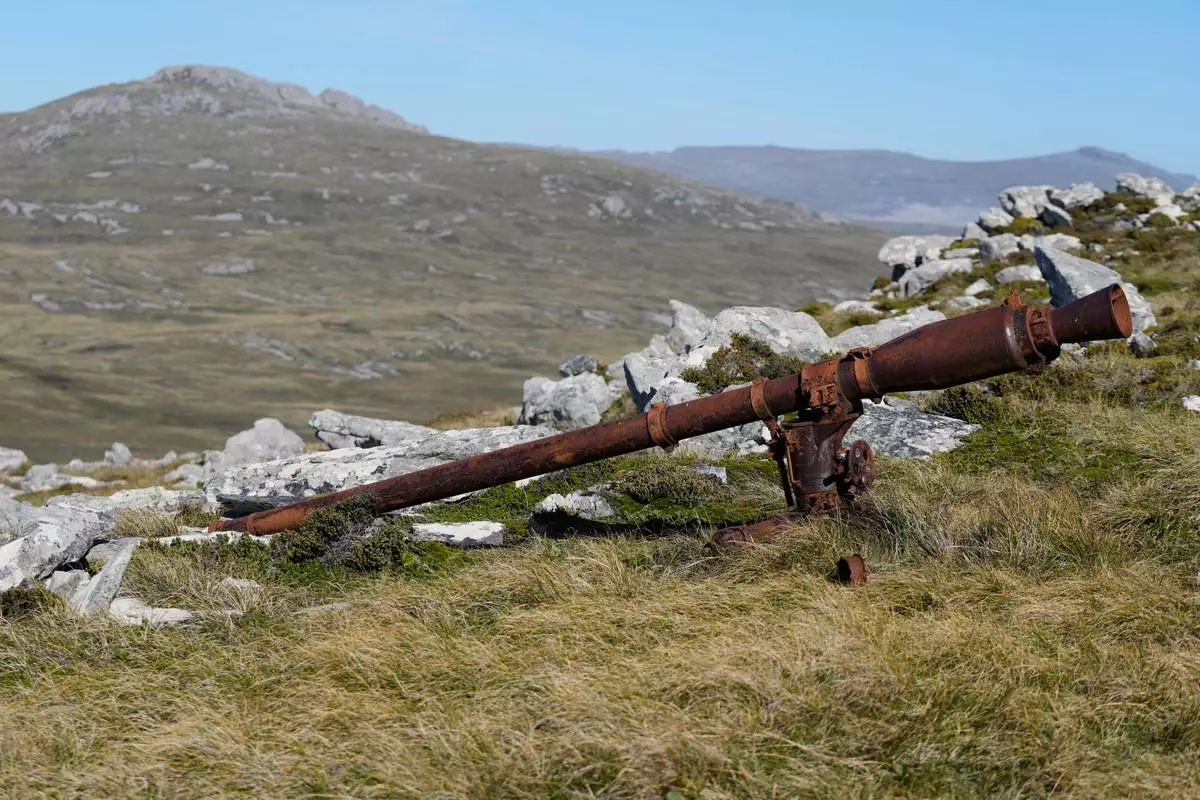
It’s not that long ago that Britain could muster a task force of 127 ships, including two aircraft carriers, to sail to the south Atlantic after Argentina’s invasion of the Falkland Islands. That 1982 campaign, which then-U.S. President Ronald Reagan was lukewarm about, marked the final hurrah of Britain’s naval pedigree.

Nothing on that scale, or even remotely, could be accomplished now. Since World War II, Britain’s combat-ready fleet has declined substantially, much of it linked to changing military and technological advances and the end of empire. But not all.

The number of vessels in the Royal Navy fleet, including aircraft carriers, destroyers frigates and submarines has fallen from 166 in 1975 to 66 in 2025, according to The Associated Press' analysis of figures from the Ministry of Defense and the House of Commons Library.

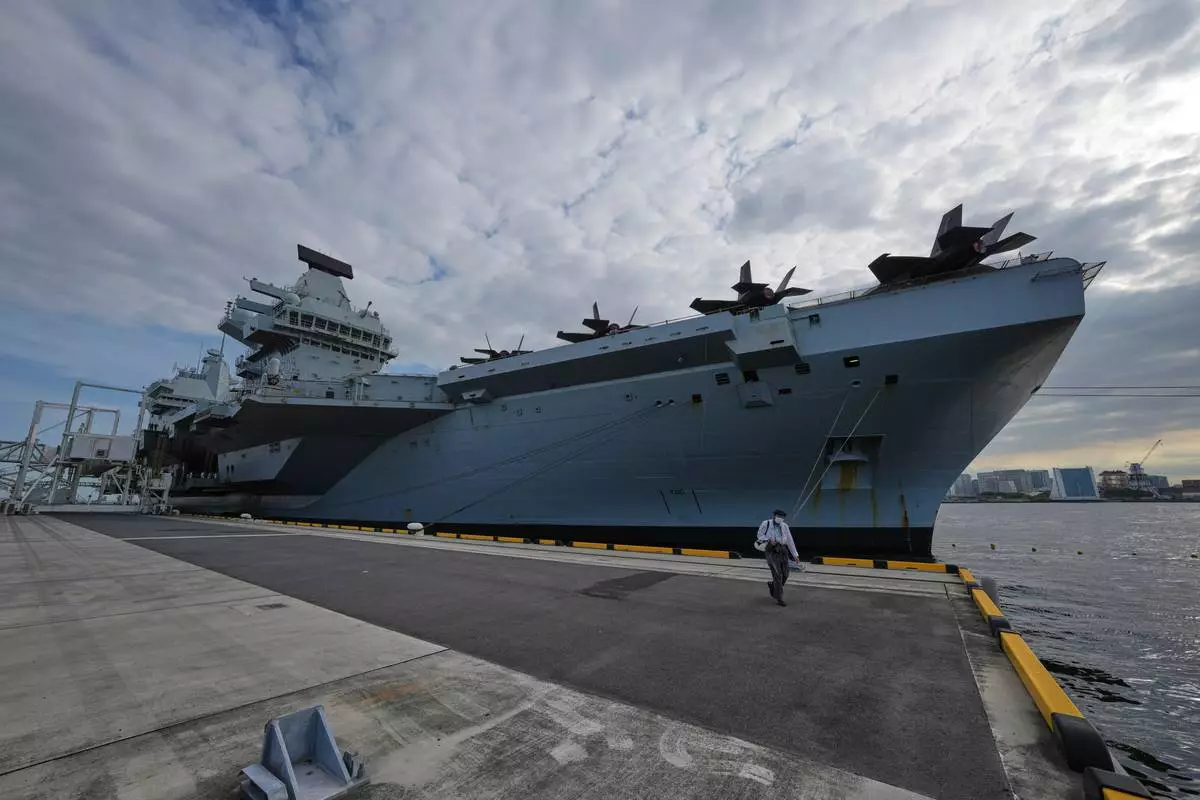
Though the Royal Navy has two aircraft carriers at its command, there was a seven-year period in the 2010s when it had none. And the number of destroyers has halved to six while the frigate fleet has been slashed from 60 to just 11.

The Royal Navy faced criticism for the time it took to send the HMS Dragon destroyer to the Middle East after the war with Iran broke out. Though naval officials worked night and day to get it shipshape for a different mission than the one it was readying for, to many it symbolized the extent to which Britain’s military has been gutted since the fall of the Berlin Wall in 1989.

For much of the Cold War, Britain was spending between 4% and 8% of its annual national income on its military. After the Cold War, that proportion steadily dropped to a low of 1.9% of GDP in 2018, fuel to Trump's fire.

Like other countries, Britain, largely under the Labour governments of Tony Blair and Gordon Brown, sought to use the so-called “peace dividend” following the collapse of the Soviet Union to divert money earmarked for defense to other priorities, such as health and education.

And the austerity measures imposed by the Conservative-led government in the wake of the global financial crisis of 2008-9 prevented any pickup in defense spending despite the clear signs of a resurgent Russia, especially after its annexation of Crimea and parts of eastern Ukraine.

In the wake of Russia's full-blown invasion of Ukraine in 2022, and with another Middle East war underway, there's a growing understanding across the political divide that the cuts have gone too far.

Following the Ukraine invasion, the Conservatives started to turn the military spending tide around. Since the Labour Party returned to power in 2024, Starmer is seeking to ramp up British defense spending, partly at the cost of cutting the country's long-vaunted aid spending.

Starmer has promised to raise U.K. defense spending to 2.5% of gross domestic product by 2027, and the updated goal is now for it to rise to 3.5% of GDP by 2035, as part of a NATO agreement pushed by Trump. That, in plain terms, will mean tens of billions pounds more being spent — a lot more kit for the armed forces.

The pressure is on for the government to speed that schedule up. But with the public finances further imperilled by the economic consequences of the Iran war, it's not clear where any additional money will come.

The jibes will likely keep coming even though the critiques are unfair and far from the truth, said RUSI's Rowlands, who was a captain in the Royal Navy.

“We are dealing with an administration that doesn’t do nuance," he said.

This story has been corrected to show there were 166 vessels in 1975, not 466.

An artillery piece from the 1982 Falklands War between Argentina and Britain lies on Mount Longdon on the Falkland Islands, also known as Islas Malvinas, Monday, March 16, 2026. (AP Photo/Ricardo Mazalan)

An artillery piece from the 1982 Falklands War between Argentina and Britain lies on Mount Longdon on the Falkland Islands, also known as Islas Malvinas, Monday, March 16, 2026. (AP Photo/Ricardo Mazalan)

FILE - The Royal Navy aircraft carrier HMS Prince of Wales is pictured before its port call in Tokyo, Thursday, Aug. 28, 2025. (AP Photo/Eugene Hoshiko, File)

FILE - The Royal Navy aircraft carrier HMS Prince of Wales is pictured before its port call in Tokyo, Thursday, Aug. 28, 2025. (AP Photo/Eugene Hoshiko, File)

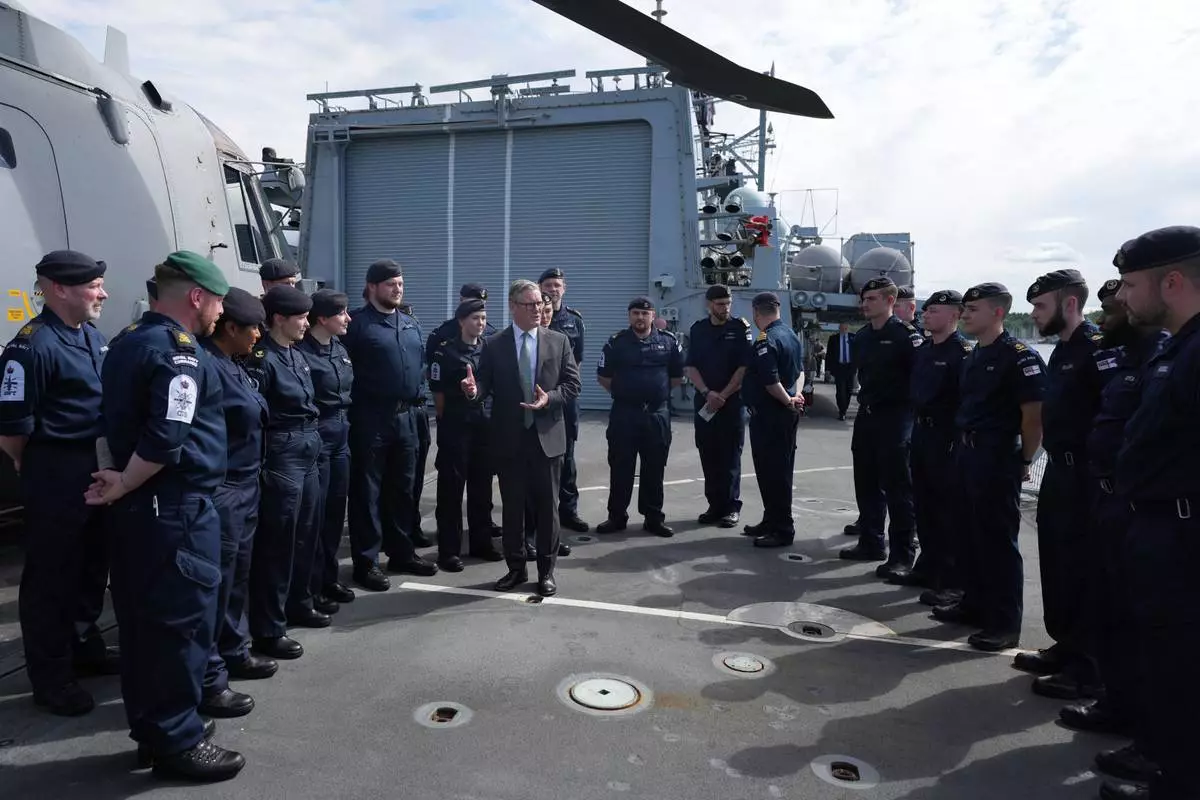
FILE - Britain's Prime Minister Keir Starmer speaks to Royal Marines onboard the HMS ST Albans in Oslo, during his visit to Norway on Friday, May 9, 2025.(AP Photo/Alastair Grant, Pool, File)

FILE - Britain's Prime Minister Keir Starmer speaks to Royal Marines onboard the HMS ST Albans in Oslo, during his visit to Norway on Friday, May 9, 2025.(AP Photo/Alastair Grant, Pool, File)

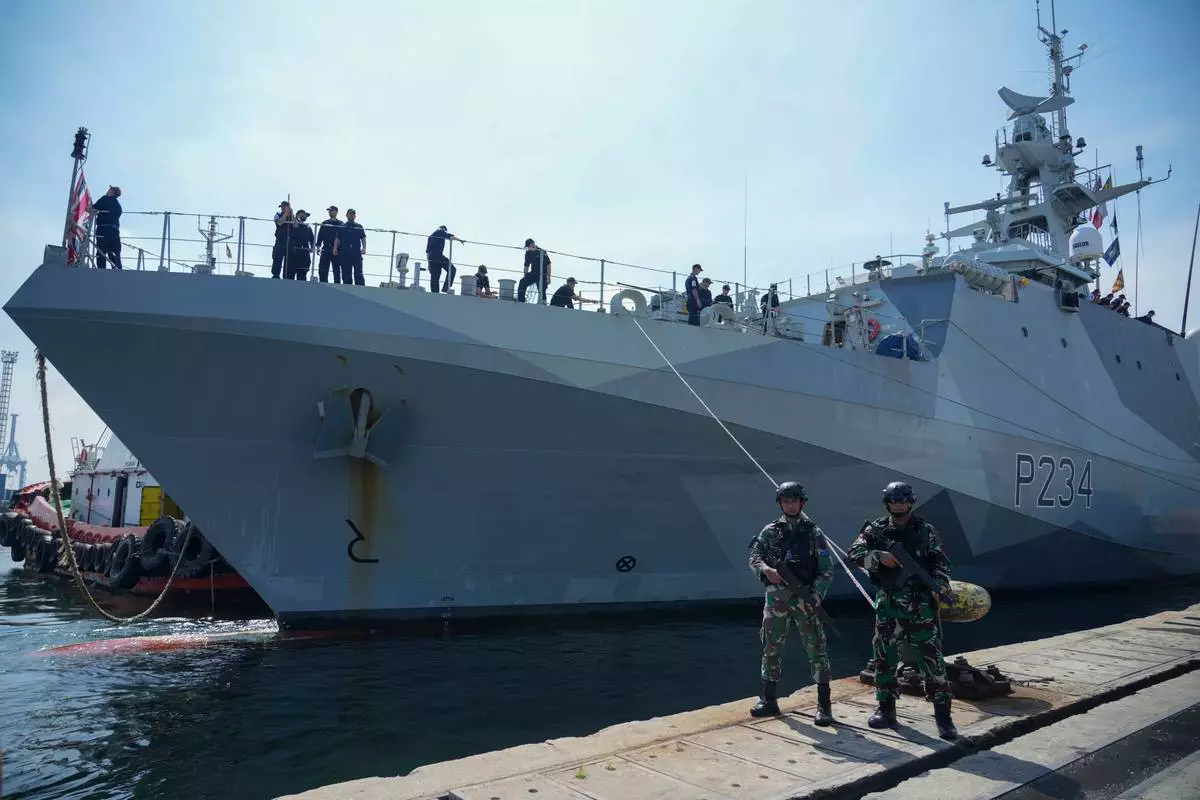
FILE - Indonesian soldiers stand guard as Royal Navy offshore patrol vessel HMS Spey is docked at Tanjung Priok Port during a port visit in Jakarta, Indonesia, Wednesday, Jan. 15, 2025. (AP Photo/Tatan Syuflana, File)

FILE - Indonesian soldiers stand guard as Royal Navy offshore patrol vessel HMS Spey is docked at Tanjung Priok Port during a port visit in Jakarta, Indonesia, Wednesday, Jan. 15, 2025. (AP Photo/Tatan Syuflana, File)

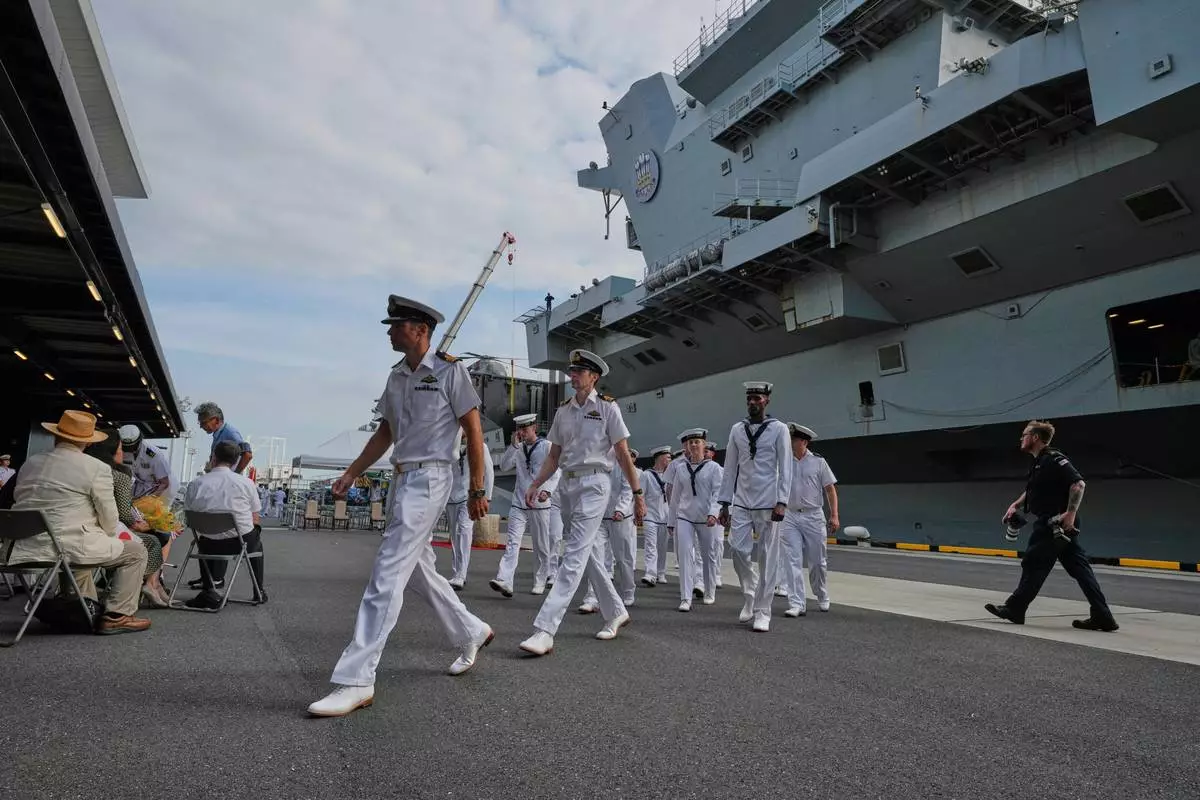
FILE - Crews walk near the Royal Navy aircraft carrier HMS Prince of Wales before its port call in Tokyo Thursday, Aug. 28, 2025. (AP Photo/Eugene Hoshiko, File)

FILE - Crews walk near the Royal Navy aircraft carrier HMS Prince of Wales before its port call in Tokyo Thursday, Aug. 28, 2025. (AP Photo/Eugene Hoshiko, File)

Recommended Articles