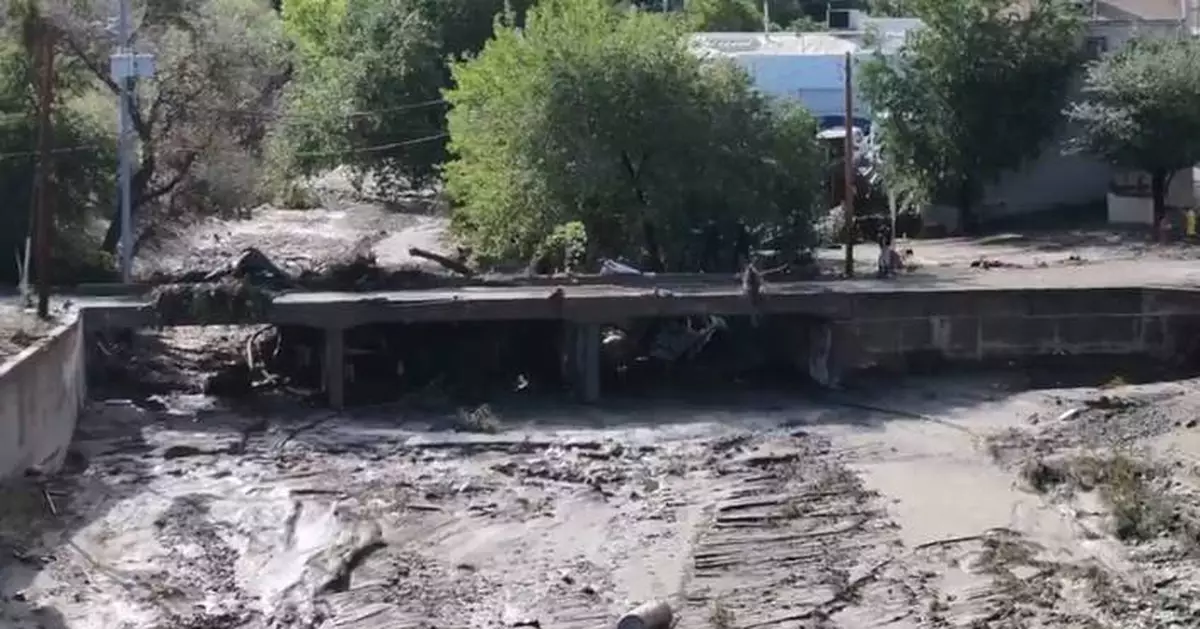
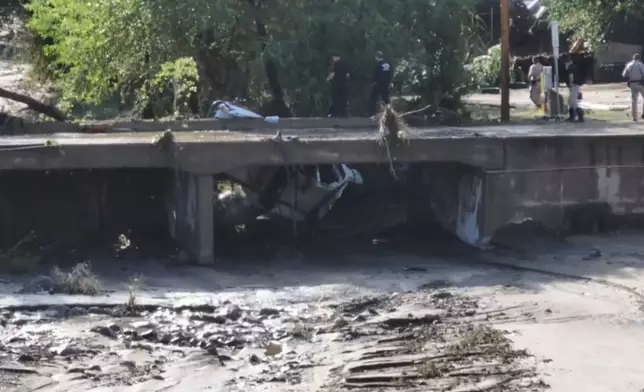
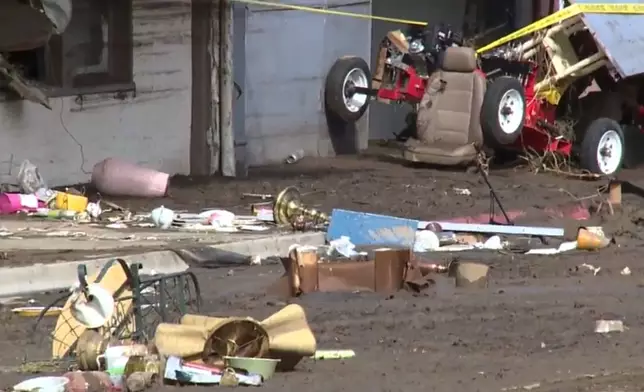
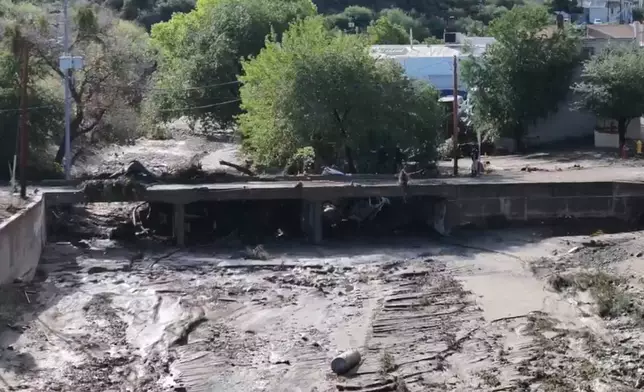
GLOBE, Ariz. (AP) — Four people died after heavy rain caused flooding in Arizona, including three in a rural 19th-century mining town where floodwaters on Friday forced people to seek safety on rooftops and washed out a propane distributorship, scattering about 1,000 tanks downtown.
About 2.5 inches (6.4 centimeters) of rain fell in Globe, a city of about 7,250 people about 88 miles (142 kilometers) east of Phoenix, over 24 hours and another storm moved in Saturday, temporarily halting the search for people possibly missing in the flood because of high-flowing creeks.
Click to Gallery
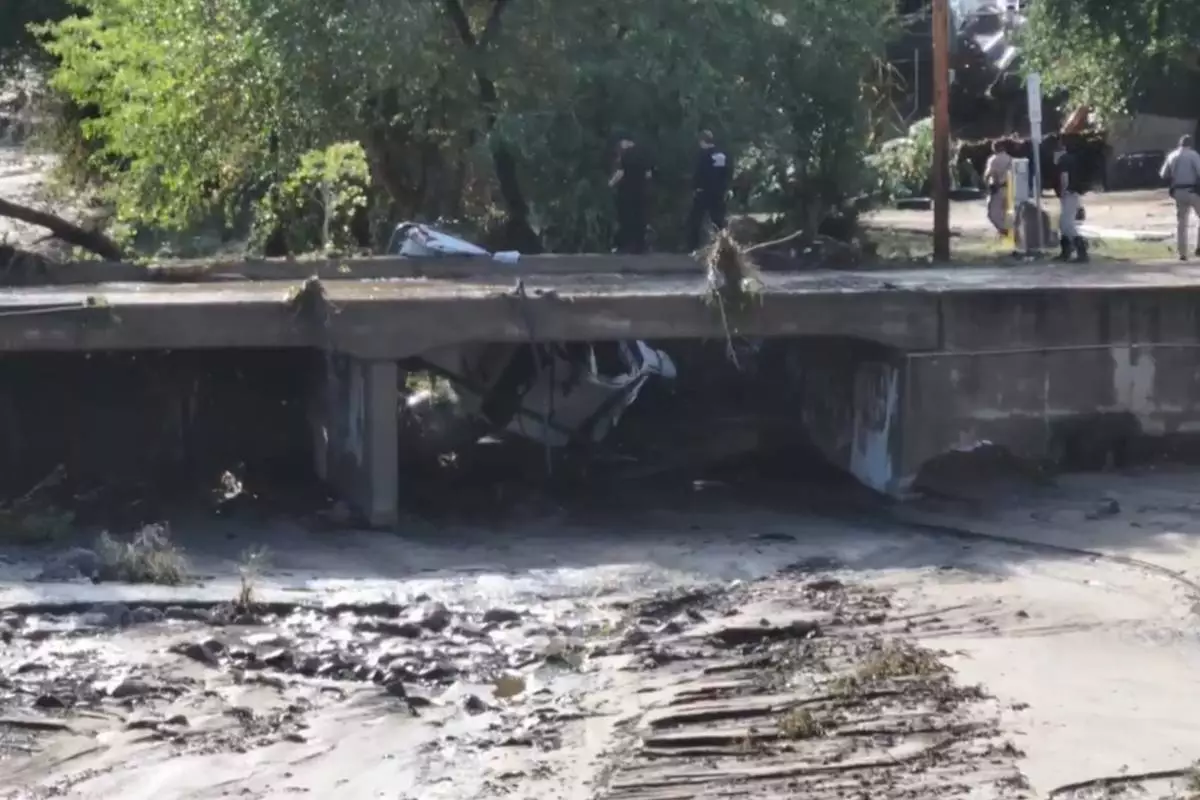
Damage from flooding in Globe, Ariz., is seen on Saturday morning, Sept. 27, 2025. (Adam Klepp/KNXV-TV - ABC15 Arizona via AP)
Damage from flooding in Globe, Ariz., is seen on Saturday morning, Sept. 27, 2025. (Adam Klepp/KNXV-TV - ABC15 Arizona via AP)
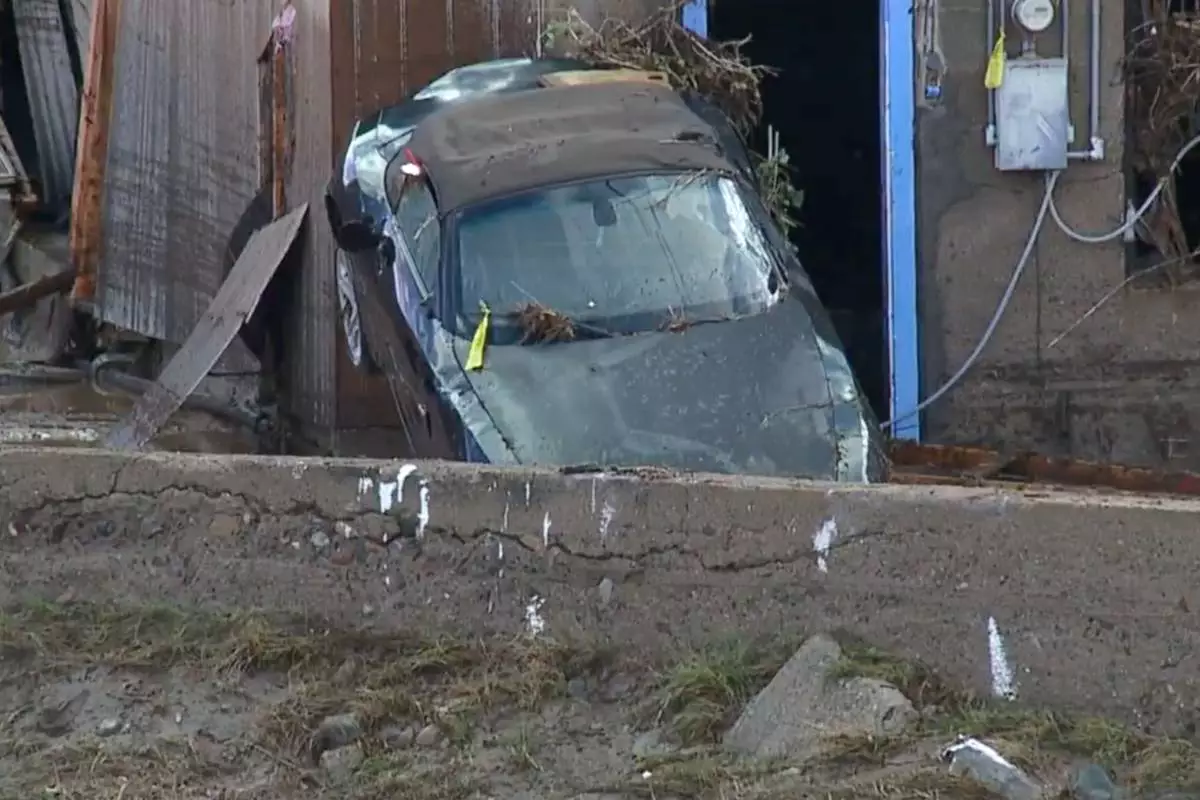
Damage from flooding in Globe, Ariz., is seen on Saturday morning, Sept. 27, 2025. (Adam Klepp/KNXV-TV - ABC15 Arizona via AP)
Damage from flooding in Globe, Ariz., is seen on Saturday morning, Sept. 27, 2025. (Adam Klepp/KNXV-TV - ABC15 Arizona via AP)
Streets flooded in the nearby mining town of Miami on Saturday, but no injuries were reported, Carl Melford, emergency manager in Gila County, said. Meanwhile, about 20 tourists stranded in parts of the Havasupai Reservation, including at scenic Havasu Falls, because of flooding were evacuated, Bureau of Indian Affairs dispatcher Shaileen Gonzales said.
The remote reservation reachable only by foot, mule or helicopter lies deep in a gorge off the Grand Canyon. It’s popular worldwide for its scenic, towering blue-green waterfalls but is prone to flooding.
In Globe, the bodies of two people were earlier found in a vehicle and another person was found in the floodwaters in Globe, Melford said, They were not immediately identified by authorities.
Another person was found dead Saturday morning near a vehicle caught in floodwaters in suburban Phoenix the night before. The vehicle appeared to be empty after it was spotted partially submerged in about 8 feet (2.4 meters) of fast-moving water on Friday evening in a greenbelt park area, the Scottsdale Fire Department said. After the water dropped a bit overnight, crews found the body of a person pinned underneath a walkway bridge, the department said.
In the rural community of Globe, one of Arizona's oldest mining towns, sheriffs’ officials were looking into reports of people who may be missing, Melford said, but could not specify a number.
“We now have a massive search and rescue underway,” he said.
Rain poured down and quickly flooded the downtown area Friday, Melford said. One of the first areas hit was a propane tank distributor, sending about 1,000 residential-size tanks throughout the community, he said.
“There’s propane tanks everywhere through downtown Globe,” he said, adding that hazmat workers have been sent to the scene. “Luckily none of them ignited or exploded.”
The area previously experienced flooding in 2021 after a wildfire, but it didn’t happen like this, Melford said. The city is near canyons that can funnel water from the mountains into the community very quickly.
“This was an extremely heavy amount of rain in an extremely short period of time,” he said.
Videos shared on social media show vehicles in Globe being swept away by rushing, muddy water, with some smashed up against poles and large propane tanks scattered around.
Authorities are asking residents to not go out searching in the floodwaters because search and rescue officials are accompanied by dogs who might pick up the scent of aspiring volunteers instead of possible flood victims. If people want to help, they should start by assisting friends and neighbors in need, Melford said.
Globe city council members declared an emergency, saying they have never seen anything like the flooding.
Scores of people have stepped up to volunteer, said Mayor Al Gameros, adding that many buildings in the community’s downtown have been damaged. Officials asked people to stay away from the area until they could ensure it is safe to go in there.
“Our primary, again, is search and rescue,” Gameros said Saturday.
This story has updated to correct the spelling of Mayor Gameros' last name.
Damage from flooding in Globe, Ariz., is seen on Saturday morning, Sept. 27, 2025. (Adam Klepp/KNXV-TV - ABC15 Arizona via AP)
Damage from flooding in Globe, Ariz., is seen on Saturday morning, Sept. 27, 2025. (Adam Klepp/KNXV-TV - ABC15 Arizona via AP)

Damage from flooding in Globe, Ariz., is seen on Saturday morning, Sept. 27, 2025. (Adam Klepp/KNXV-TV - ABC15 Arizona via AP)
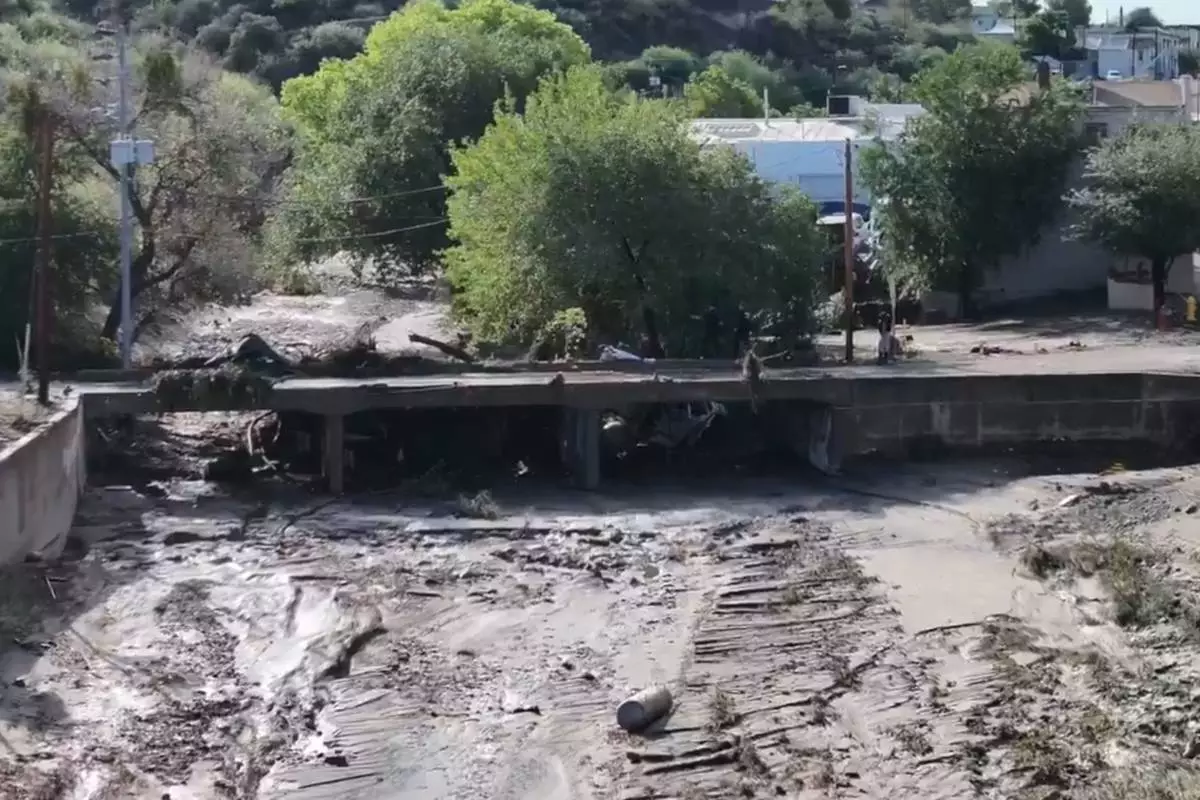
Damage from flooding in Globe, Ariz., is seen on Saturday morning, Sept. 27, 2025. (Adam Klepp/KNXV-TV - ABC15 Arizona via AP)
Pakistan’s army chief is set to meet with Iranian officials in Tehran on Thursday in a bid to ease tensions in the Middle East and arrange a second round of negotiations between the United States and Iran after almost seven weeks of war.
The meeting comes as President Donald Trump announced the leaders of Israel and Lebanon will speak later on Thursday about halting the fighting between them. It was not clear what leaders Trump was referring to.
The U.S. naval blockade of Iranian ports continued as U.S. Treasury Secretary Scott Bessent said the Trump administration would ramp up economic pain on Iran with new economic sanctions on countries doing business with it, calling the move the “financial equivalent” of a bombing campaign.
The White House said any further talks with Iran would likely take place in the Pakistani capital of Islamabad, though no decision had been made on whether to resume negotiations. Pakistan has emerged as a key mediator after it hosted direct talks between the U.S. and Iran in Islamabad.
In a development in the war's other front, Trump wrote late Wednesday on Truth Social that leaders from Israel and Lebanon would speak the next day in a renewed effort to broker a ceasefire after the countries’ first direct talks in decades ended the previous day in Washington without a deal.
Here is the latest:
Intense clashes have been taking place in and around the strategic southern Lebanese town of Bint Jbeil for over a week, as Israel and Lebanon launched their first direct diplomatic talks in decades.
Israeli Prime Minister Benjamin Netanyahu said Wednesday that Israel’s fighting with Hezbollah was now concentrated in Bint Jbeil and that Israeli troops were “about to eliminate” it.
The military said that following a raid by a commando unit Wednesday on what it described as a Hezbollah “combat compound” in which numerous weapons were discovered, the soldiers “dismantled approximately 70 terror infrastructure sites in just one minute.”
It said soldiers killed “dozens” of Hezbollah operatives in the area in a separate operation.
When Israel occupied southern Lebanon until its withdrawal in 2000, it relied on Bint Jbeil and other highly-elevated locations for strategic vantage points, and the town has repeatedly been a priority position in later ground incursions.
Pakistan’s Prime Minister Shehbaz Sharif has arrived in Qatar as part of a regional visit aimed at discussions on the ongoing U.S.-Iran peace process and efforts to promote stability in the Middle East.
According to a statement from the prime minister’s office, Qatar’s Minister of State for Foreign Affairs Sultan bin Saad Al-Muraikhi received Sharif upon his arrival in Doha on Thursday. Sharif is scheduled to meet Emir Sheikh Tamim bin Hamad Al Thani.
He is accompanied by Foreign Minister Ishaq Dar, Information Minister Attaullah Tarar and his spokesperson Mosharraf Zaidi.
From Qatar, Sharif will travel to Turkey before returning home on Saturday.
The latest Israeli operations are focused around the coastal city of Tyre and the hilltop town of Nabatieh, where intense clashes are continuing, Lebanon’s state-run National News Agency says.
Israeli ground troops appeared to have moved overnight toward the village of Dibbine to the east.
A Lebanese official says they are unaware of high-level talks with Israel.
Asked about U.S. President Donald Trump’s post saying the leaders of Lebanon and Israel would be speaking Thursday, a Lebanese official told The Associated Press there is “no information” regarding high-level talks between the two countries.
The official spoke on condition of anonymity in line with regulations.
Israel’s Minister of Science and Technology Gila Gamliel said Prime Minister Benjamin Netanyahu will speak with Lebanese President Joseph Aoun on Thursday, the first time the leaders of the two countries have spoken directly in more than 30 years.
The Prime Minister’s Office and the Lebanese government did not immediately comment.
“Today the Prime Minister will speak for the first time with the president of Lebanon after so many years of a complete disconnection in the dialogue between the two countries,” Gamliel, a member of Israel’s security cabinet, told Army Radio Thursday morning.
Gamliel, who was at a cabinet meeting late Wednesday about negotiations with Lebanon, said the move “will hopefully ultimately lead to prosperity and flourishing” between the two countries.
Lebanon and Israel held their first direct diplomatic talks in decades on Tuesday in Washington following more than a month of war between Israel and the Iran-backed Hezbollah militant group.
Pakistan Prime Minister Shehbaz Sharif’s visit to countries including Saudi Arabia and Army Chief Field Marshal Asim Munir’s trip to Iran are part of “collective efforts” aimed at promoting regional peace and de-escalation, the Foreign Ministry said Thursday.
“Pakistan is being recognized for its constructive diplomatic engagement in supporting de-escalation, ceasefire efforts and a broader pursuit of stability between the United States and Iran,” ministry spokesman Tahir Andrabi said.
Pakistan has encouraged dialogue, facilitated message exchanges and helped create a peaceful space for meaningful negotiations such as the recent talks between the U.S. and Iran, Andrabi said.
Australian Prime Minister Anthony Albanese said his government has underwritten the first of two shipments of diesel fuel at prices inflated by the Iran war.
Viva Energy is shipping more than 570,000 barrels of diesel from Brunei and South Korea, Albanese said Thursday at a news conference in Kuala Lumpur with Malaysian Prime Minister Anwar Ibrahim.
He said it was “the first of many expected shipments” under his government’s new strategic reserve powers.
Under terms announced last week with Australia’s only refinery operators, Viva Energy and Ampol, the government will underwrite diesel and gasoline import contracts with prices that could prove commercially unviable.
Smaller fuel companies Park Fuels and IOR have since struck similar deals.
Australia has sufficient fuel contracted to last into May, but there are concerns about later shortages.
Trump wrote late Wednesday on Truth Social that leaders from Israel and Lebanon would speak the next day in a renewed effort to broker a ceasefire after the countries’ first direct talks in decades ended the previous day in Washington without a deal. It was not clear what leaders Trump was referring to. The Israeli prime minister’s office did not immediately respond for comment, which was posted before dawn in Israel and Lebanon.
Chinese Foreign Minister Wang Yi told his Iranian counterpart that reopening the Strait of Hormuz was a unanimous demand from the international community.
Wang Yi told Iran’s Foreign Minister Abbas Araghchi in a phone call that Iran’s sovereignty, security, and legitimate rights should be respected as a littoral state of the Strait of Hormuz, but freedom of navigation and safety through the strait should be ensured.
“Working to resume normal passage of the strait is a unanimous call from the international community,” Wang was quoted as saying in a government statement late Wednesday.
Wang noted that the current situation had reached a critical juncture between war and peace and also said that the window of peace was opening.
Paramedic groups say a fourth Lebanese rescue worker has died after three consecutive, targeted strikes by the Israeli military Wednesday that also wounded six others.
The back-to-back Israeli attacks on the southern village of Mayfadoun, near the bigger town of Nabatiyeh, hit the first group of medics responding to a distress call from wounded civilians, a second group trying to assist their wounded colleagues and a third group rushing to aid the first two teams that had been targeted.
The Israeli military did not respond to a request for comment on the strikes beyond saying it was “looking into” what happened. It has previously accused the Iran-backed Hezbollah militant group of using ambulances as cover for militant activities, without offering evidence.
▶ Read more
Officials say there were no suspicious circumstances behind the blaze that broke out late Wednesday at the Viva Energy Geelong refinery southwest of Melbourne, and no one was injured.
The facility is one of two refineries in Australia and provides 10% of the nation’s gasoline, diesel and jet fuel.
Australia has agreed to underwrite two companies buying fuel at prices inflated by the war. Prime Minister Anthony Albanese warned last week that supply disruptions would “have a long tail” even if the Iran ceasefire holds.
The government had agreed to terms with Australia’s largest suppliers Ampol and Viva Energy to underwrite contracts for gasoline and diesel bought on the spot market for prices above normal commercial rates, Albanese said.
Energy Minister Chris Bowen said Thursday it was too early to tell the extent of the fire’s impact on gasoline production.
“The refinery is still producing diesel and jet fuel at reduced levels as a safety precaution,” Bowen told the Australian Broadcasting Corp.
On gasoline, Bowen said, “It’s not a positive development. It will have an impact.”
Firefighters said the blaze had been contained to the gasoline plant.
According to the statement, Sharif assured the Kingdom of Pakistan’s “full solidarity and support” and praised what he described as Saudi Arabia’s restraint under the crown prince’s leadership.
Pakistan has a defense agreement with the Kingdom, which has faced retaliatory attacks from Iran in recent weeks, causing damage.
Prime Minister Shehbaz Sharif met Saudi Crown Prince Mohammed bin Salman during a visit to the Kingdom, briefing him on Pakistan’s efforts to ease U.S.-Iran tensions and assuring him of Islamabad’s “full support,” his office said before dawn Thursday.
Wednesday’s meeting lasted more than two hours, and Sharif was accompanied by Foreign Minister Ishaq Dar.
The statement said the crown prince praised what it described as the constructive role played by Sharif and Pakistan’s army chief, Field Marshal Asim Munir, in the peace process.
Sharif dispatched Munir to Tehran for talks with Iranian leaders.
Pakistan has long maintained close ties with Saudi Arabia while also keeping relations with Iran.
“We are subject to the decisions of the relevant officials, but personally I do not agree to extend the ceasefire,” said Mohsen Rezaei, formerly a commander in the Iranian Revolutionary Guard Corps who now advises Mojtaba Khamenei on military affairs, Iranian state media reported.
Rezaei also urged officials to be more cautious than they had been before in negotiations over economic matters with the U.S.
He said Iran was setting the preconditions in the next round of talks, not the U.S.
“Unlike the Americans who are afraid of continuous war, we are fully prepared and familiar with a long war,” he said, according to the report.
That’s according to Adm. Brad Cooper, head of U.S. Central Command, who says: “U.S. forces have completely halted economic trade going in and out of Iran by sea.”
The command said Wednesday that no vessels have made it past its forces during the blockade’s first 48 hours. The blockade began Monday.
Central Command noted that 10 vessels have complied with directions to turn around and return toward an Iranian port or Iran’s coastal area.
The blockade is being enforced “impartially against all vessels of all nations entering or leaving coastal areas or ports in Iran,” the Command said. Vessels avoiding Iranian ports are not affected.
The action could put serious pressure on the Iranian economy, while Tehran’s earlier cutoff of the waterway crucial to oil and gas supplies has sent energy prices higher.
▶ Read more
The U.S. stock market hit a record Wednesday after adding to its two-week rally built on hopes the war won’t create a worst-case scenario for the global economy.
The S&P 500 rose 0.8% and eclipsed its prior all-time high set in January. After falling nearly 10% below its record in late March, the index at the heart of many 401(k) accounts has since roared more than 10% higher.
Much of the rally was due to expectations for calming tensions in the war and a resumption of the full flow of oil from the Persian Gulf. Hopes remained high as regional officials told The Associated Press that the U.S. and Iran had an “in principle agreement” to extend a ceasefire to allow for more diplomacy.
▶ Read more
The world’s largest aircraft carrier, the USS Gerald R. Ford, broke the U.S. record Wednesday for the longest post-Vietnam War deployment, a nearly 10-month span that saw it take part in both the military raid that captured Venezuela’s leader and the Iran war.
The ship’s 295th day at sea surpassed the previous longest modern deployment by an aircraft carrier, when the USS Abraham Lincoln was sent out for 294 days in 2020 during the COVID-19 pandemic, according to data compiled by U.S. Naval Institute News, a news outlet run by the nonprofit U.S. Naval Institute.
Sen. Tim Kaine said the record-breaking deployment has taken “a serious toll” on the mental health and well-being of the crew.
“They should be home with their loved ones, not sent around the world by a President who acts like the U.S. military is his palace guard,” the Virginia Democrat said.
Narges Mohammadi ’s family and lawyers visited her in Zanjan prison twice in the last month, a statement by the Narges Mohammadi Foundation said on X Wednesday, finding that her health condition was dire. She is weak, pale and has lost weight, said the statement.
The report comes after Mohammadi had a heart attack in the prison on March 24, according to a cardiologist she saw soon after, according to the statement.
The statement said that following the heart attack Mohammadi was unconscious without anyone resuscitating her for over an hour.
Mohammadi is a rights lawyer who won the Nobel Peace Prize in 2023 while in prison. She was arrested in December during a visit to the eastern Iranian city of Mashhad and sentenced to seven more years in prison.
Iranian foreign minister Abbas Araghchi took part in a preliminary meeting with the Pakistani Army Chief of Staff, Asim Munir, in Tehran Wednesday, according to a report on IRIB, Islamic Republic of Iran Broadcasting.
The report said more extensive talks would continue Thursday to discuss latest communications with the US.
Pakistan is mediating talks between Washington and Tehran.
A U.S. official says President Donald Trump would welcome an end to the Israel-Hezbollah conflict as part of a broader peace agreement between Israel and Lebanon but has not specifically asked for one.
The official, speaking on condition of anonymity to discuss the Trump administration’s position during closed-door talks between Israel and Lebanon, said an Israel-Hezbollah truce is not part of peace negotiations the U.S. is having with Iran.
Iran has demanded a truce between Israel and its proxy Hezbollah as a condition to return to talks with the United States.
Secretary of State Marco Rubio on Tuesday hosted the first talks in decades between high-level Israeli and Lebanese officials.
Prime Minister Benjamin Netanyahu said the current fighting is concentrated in the strategic south Lebanon town of Bint Jbeil, where Israeli troops are about to “eliminate this great stronghold of Hezbollah.”
Netanyahu, in a video address Wednesday evening, said he has given instructions for the military to continue to widen the security zone in south Lebanon — a reference to areas close to the border that the Israeli army now occupies — and to spread it eastward.
He said Israel is concurrently negotiating with Lebanon, with two central goals: disarming Hezbollah and a sustainable peace. “Peace through strength,” he added.
He also said the U.S. was updating Israel on the talks with Iran and that Israel was prepared for any scenario, should the fighting with Iran resume.
The U.S. is imposing sanctions targeting an Iranian oil smuggling network tied to the deceased senior Iranian security official Ali Shamkhani.
Sanctions include dozens of individuals and companies accused of transporting and selling Iranian and Russian oil through front companies, many of which are in the UAE.
Treasury Secretary Scott Bessent said in a statement, that banks “should be on notice that Treasury will leverage all tools and authorities, including secondary sanctions, against those that continue to support Tehran’s terrorist activities.”
Treasury Secretary Scott Bessent warned on Wednesday that the U.S. is preparing to ramp up economic pain on Iran, saying the Republican administration is preparing action that will be the “financial equivalent” of the bombing campaign.
Bessent said the administration has “told companies, we have told countries that if you are buying Iranian oil, that if Iranian money is sitting in your banks, we are now willing to apply secondary sanctions, which is a very stern measure. And the Iranians should know that this is going to be the financial equivalent of what we saw in the kinetic activities.”
The warning comes the day after Treasury Department sent a letter to financial institutions in China, Hong Kong, the United Arab Emirates, and Oman, threatening to levy secondary sanctions for doing business with Iran.
Treasury Secretary Scott Bessent told reporters that he believes gasoline prices will be closer to $3 gallon this summer, saying pumping oil can resume within a week of the Strait of Hormuz opening.
“I’m optimistic that sometime between June 20th and September 20th that we can have $3 gas again,” said Bessent.
Gas prices are averaging $4.11 a gallon, up from $3.17 a year ago, according to AAA.
U.S. Navy warships are telling merchant ships in and around Iran that they are ready to board them and use force to compel compliance with the blockade on ships trading with Iran.
“Vessels will be boarded for interdiction and seizure transiting to or from Iranian port,” a Navy radio message, posted to social media by U.S. Central Command, said. A military official, who spoke on condition of anonymity to discuss an ongoing military operation, confirmed the message is currently being broadcast to all ships in the region.
“If you do not comply with this blockade, we will use force,” the radio message added.
—- Konstantin Toropin
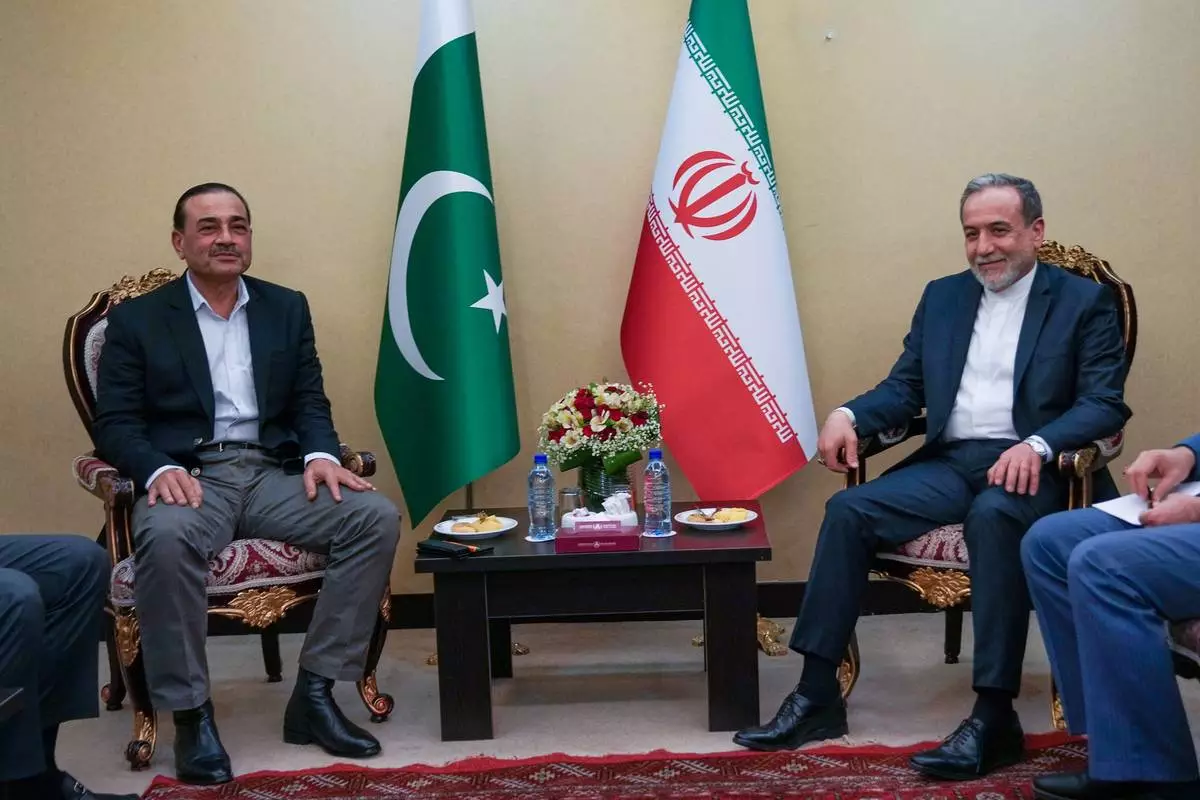
In this photo released by the Iranian Foreign Ministry, Iranian Foreign Minister Abbas Araghchi, right, meets with Pakistan's Army Chief Field Marshal Gen. Asim Munir in Tehran, Wednesday, April 15, 2026. (Iranian Foreign Ministry via AP)
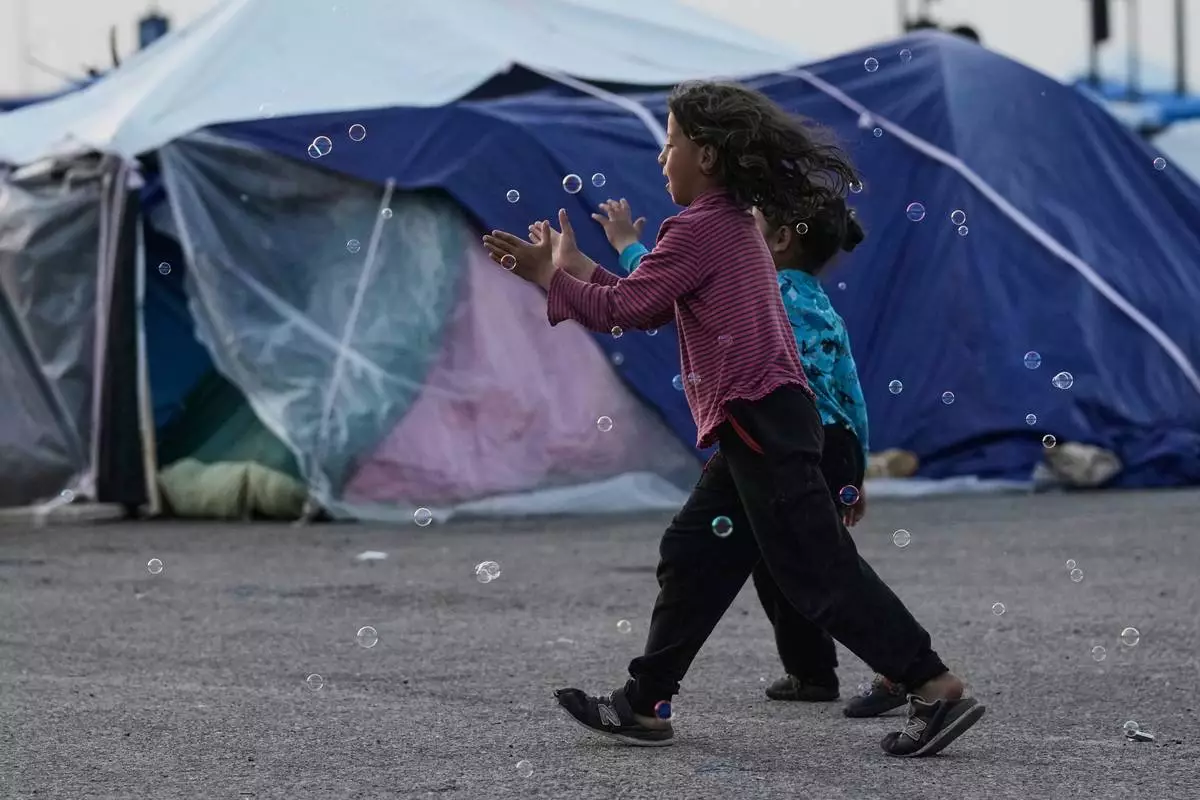
Girls chase bubbles next to their family's tents used as shelter after fleeing Israeli bombardment in Dahiyeh, Beirut's southern suburbs, in Beirut, on Wednesday, April 15, 2026. (AP Photo/Bilal Hussein)
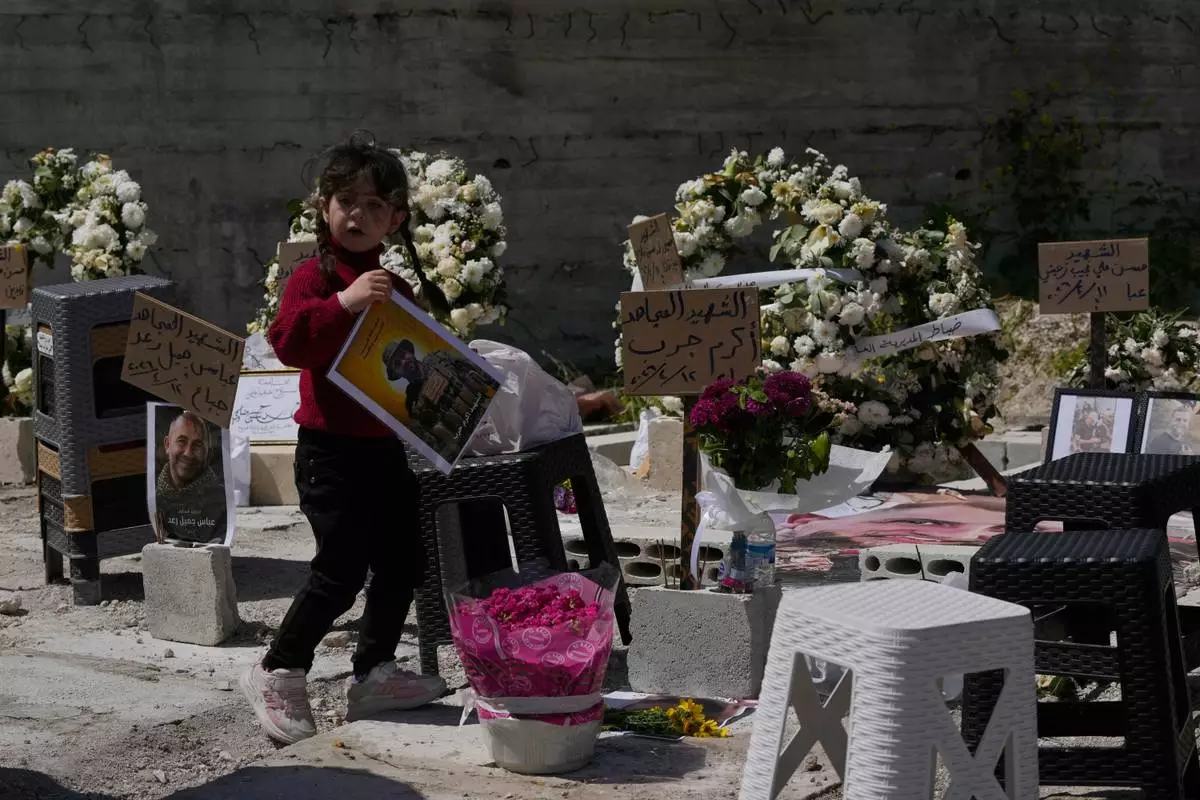
A young girl carries a portrait of a killed Hezbollah fighter at a mass grave where civilians and Hezbollah fighters killed in Israeli airstrikes are temporarily buried in the southern port city of Sidon, Lebanon, Tuesday, April 14, 2026. (AP Photo/Mohammed Zaatari)
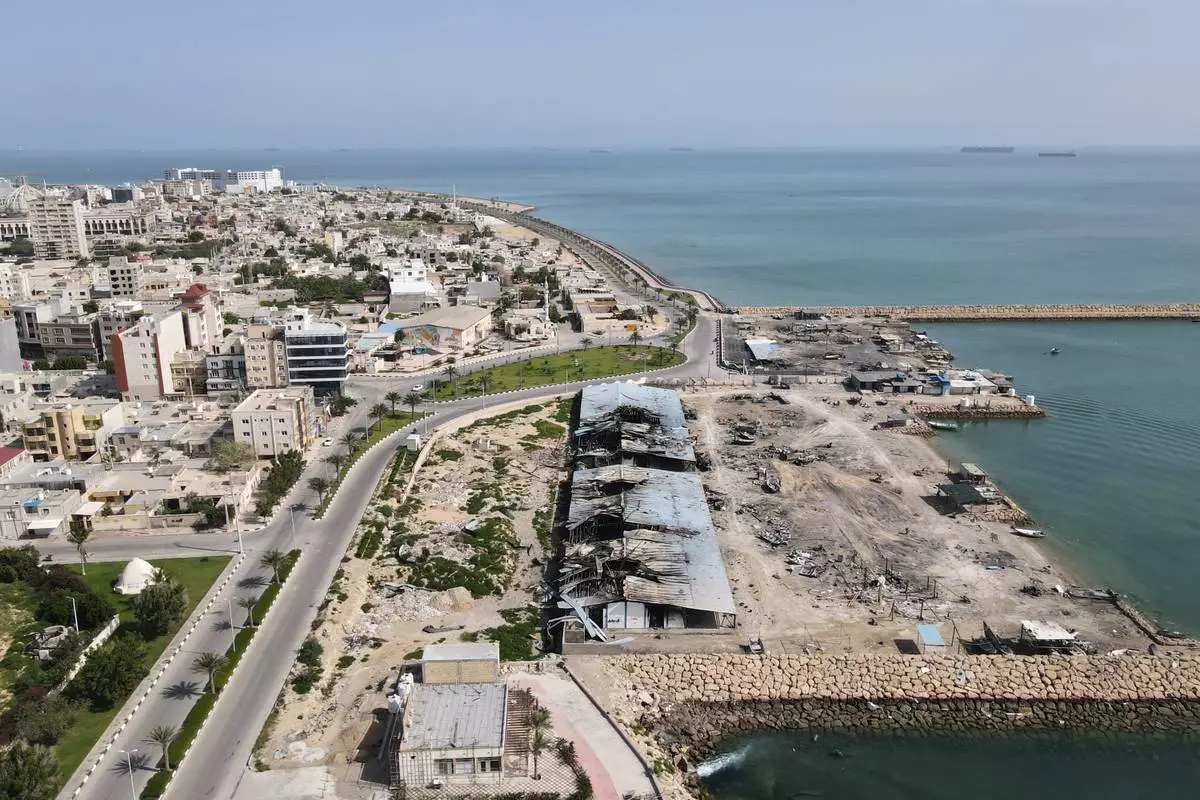
Backdropped by ships in the Strait of Hormuz, damage, according to local witnesses caused by several recent airstrikes during the U.S.-Israel military campaign, is seen on a fishing pier in the port of Qeshm island, Iran, Monday, April 13, 2026. (AP Photo/Asghar Besharati)
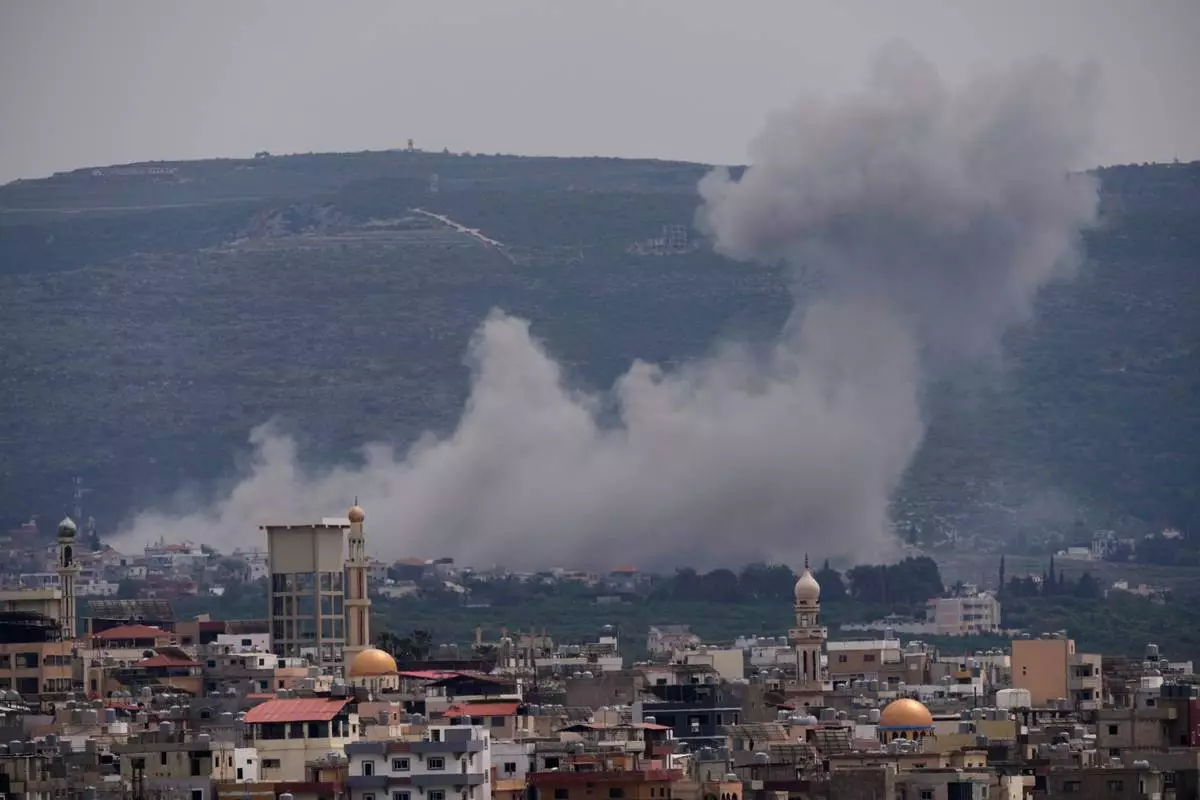
Smoke rises following an Israeli airstrike on the village of Qlaileh, as seen from the southern port city of Tyre, Lebanon, Wednesday, April 15, 2026. (AP Photo/Hussein Malla)