Remarks by S for Health at media session on cancer screening programmes
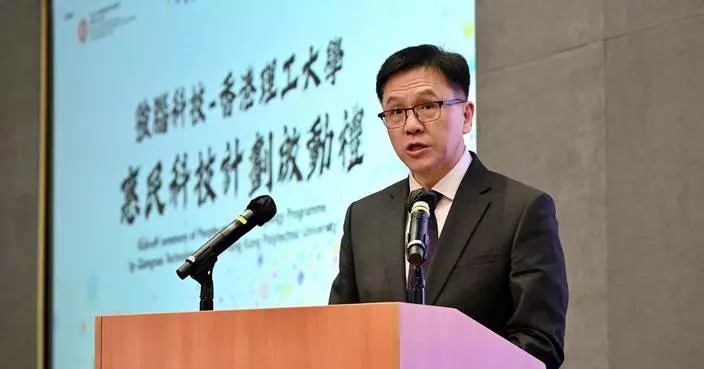
Following are the remarks made by the Secretary for Health, Professor Lo Chung-mau, at a media session after attending a radio programme this morning (September 28):
Reporter: As the Government is rolling out new cancer screening programmes, including hepatitis B, how many people are expected to benefit from the schemes? Is there a timetable for that? Also, as the scheme has a co-payment platform, how many per cent would be paid by the people themselves? Can you elaborate more on how AI can be utilised in this cancer screening programme?
Secretary for Health: In the Policy Address this year, the Chief Executive has announced that we will initiate some other cancer screening programmes, including using the study of artificial intelligence for the screening of lung cancer, which is in fact the number one cancer in Hong Kong. And also hepatitis B, which is the most common cause for liver cancer in Hong Kong - accounting for over 80 per cent of the cases, will also be included in the programme. The other thing is about the HPV virus - the human papillomavirus - screening for cervical cancer. These are the three programmes we will be rolling out in addition to the existing ones for collateral cancer, breast cancer and cervical cancer screenings.
Regarding the platform we will be using, for hepatitis B, for example, we will be incorporating it into our existing Chronic Disease Co-Care Pilot Scheme, which is at present targeting at patients with high blood pressure, blood sugar or cholesterol level. We will be using the same platform and the same kind of model for co-care, and following the same situation. The percentage of subsidy of co-care will be roughly in "half-half", that is the concept we are going forward.
For individual cancer screening progamme, this is a study which will be commissioned with a university. As we figure out that for cancer screening, it requires radiology most of the time. Low dose CT scan is the existing screening modality. We will be targeting at certain high-risk groups, for example, those with family history of lung cancer. These are not the smoking-related squamous cell carcinoma. We are targeting at the more recent rising incidence of adenocarcinoma of lung. We will identify high-risk groups for screening, and it will be a commissioned project, which we will start likely at the beginning of 2026.
For hepatitis B screening, we will be targeting at the high-risk population as well. These are the family members of known chronic hepatitis B carriers. As you may know, we have already initiated the universal hepatitis B vaccination for all newborns since 1988, so people who are born after 1988 would have received vaccinations. The chronic carrier rate is very low, under one per cent. On the other hand, for those born before 1988, they may not have received vaccination. In fact, the chronic carrier rate is still at the region of about 7.8 per cent. We estimate there will still be roughly over 400 000 chronic hepatitis B carriers, and 40 per cent of them are yet known - they don't know that they are carriers themselves. The most common population among those are the family members, so these are the targets that we are looking at, and that will be the programme we will be rolling out.
Reporter: Do you have an estimation like how many people are targeted for the hepatitis B screening?
Secretary for Health: For hepatitis B carriers, among the chronic carriers, we have roughly estimated that there are about 700 000 family members, and roughly about 40 per cent are eligible for screening, so we will be looking at the region of about 300 000 people. We will go by phases, and initially will be targeting at this high-risk population.
Reporter: Is there a target time for that?
Secretary for Health: We will be announcing the programme within this year, and we will be definitely incorporating it into our Chronic Disease Co-Care Platform, in which existing ones are screenings for hypertension, diabetes and hyperlipidemia. We will be mobilising our District Health Centres, all general medical practitioners and family doctors in the community, and that will help us build up a platform incorporating these parties, building up a concept of "Family Doctor for all". Thank you.
Source: AI-found images