MIAMI (AP) — Tropical Storm Imelda formed Sunday and is expected to become a hurricane on a forecast track curving away from the U.S. East Coast early this week. The storm dumped rain and churned up seas near the Bahamas and Cuba and even briefly prompted a tropical storm watch on a stretch of Florida's Atlantic coast.
Meanwhile, Hurricane Humberto weakened slightly but remained a powerful Category 4 storm further out in the Atlantic, potentially threatening Bermuda. The Bermuda Weather Service issued a tropical storm watch, meaning tropical storm conditions were possible on the island within 48 hours.
Click to Gallery
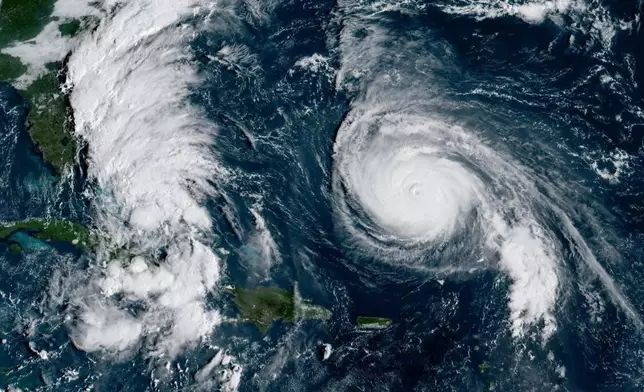
This GOES-19 GeoColor satellite image taken Sunday, Sept. 28, 2025 and provided by NOAA, shows weather systems in the tropical Atlantic Ocean. (NOAA via AP)

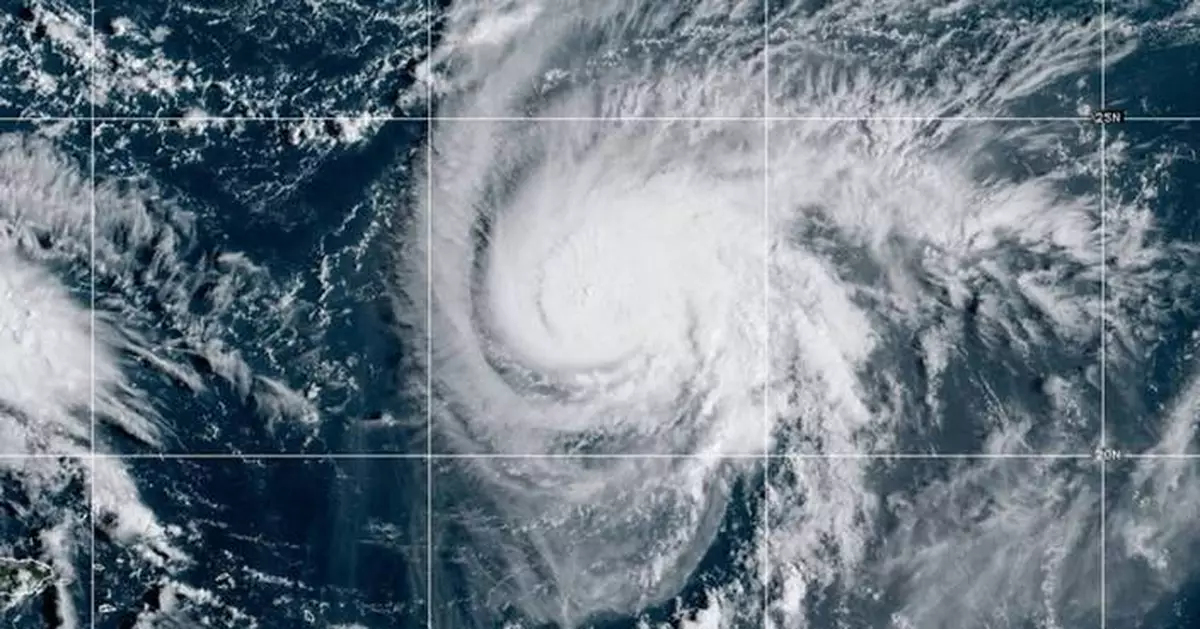
This satellite image provided by NOAA shows Hurricane Humberto on Sunday, Sept. 28, 2025. (NOAA via AP)
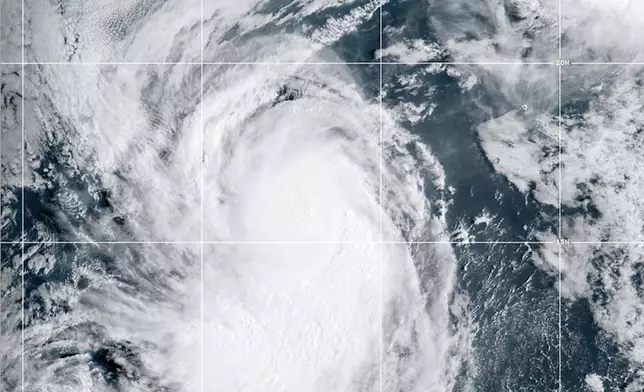
This NOAA satellite image taken at 11:39 a.m. EST on Thursday, Sept. 25, 2025, shows Hurricane Narda in the North Pacific Ocean. (NOAA via AP)
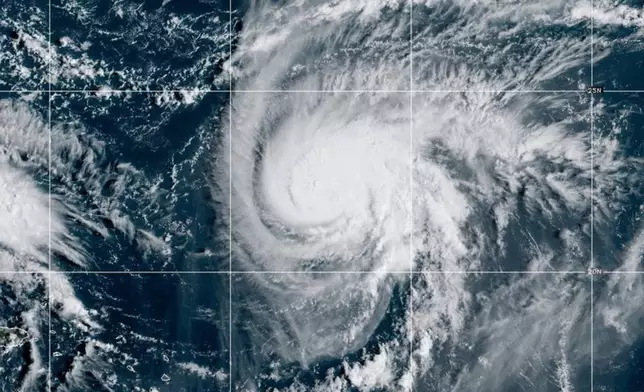
This satellite image provided by NOAA shows Hurricane Humberto on Friday, Sept. 26, 2025. (NOAA via AP)
At about 8 p.m. EDT, Imelda was about 30 miles (45 kilometers) southeast of the northwest Bahamas and about 355 miles (570 km) southeast of Cape Canaveral in Brevard County, Florida, the National Hurricane Center in Miami said.
Imelda was headed north at 9 mph (15 kph), bearing top sustained winds of 40 mph (65 kph). The hurricane center said the storm was expected to move across the central and northwestern Bahamas through Sunday night and then spin east-northeast away from the southeastern U.S. by midweek.
A tropical storm watch for the east coast of Florida from the Palm Beach-Martin County Line to the Flagler-Volusia County Line was discontinued Sunday afternoon. But the hurricane center urged people on the southeast U.S. coast to monitor Imelda's progress.
South Carolina Gov. Henry McMaster also urged vigilance, although coastal Georgetown County said it was returning to normal operations because of an improving forecast for that area.
“What we learn every time is we never know where they are going to go,” McMaster said at a news conference to discuss emergency preparations. “This storm is deadly serious. Not just serious. Deadly serious."
The South Carolina governor added that Imelda could bring high winds, heavy rain, and flooding to his state, and authorities there were prepositioning search and rescue crews over the weekend.
In North Carolina, Gov. Josh Stein declared a state of emergency even before Tropical Storm Imelda formed.
Humberto, though slightly weakened, was still a dangerous Category 4 hurricane with maximum sustained winds of 145 mph (230 kph) with higher gusts, the center said Sunday evening. Humberto was centered about 450 miles (730 kilometers) south of Bermuda and moving northwestward at 13 mph (20 kph).
Dangerous surf will affect Bermuda and most of the U.S. East Coast this week, the center said. The hurricane is expected to gradually turn north over the next day or two before accelerating east-northeast by late Tuesday or early Wednesday. Humberto's intensity could fluctuate in coming days before weakening but was forecast to remain a dangerous major hurricane over the next couple of days.
Alison Dagostino moved to Myrtle Beach, South Carolina, six years ago with her four children and husband. She experienced her first hurricane within days of moving into the area.
She said other than basic storm preparations such as buying batteries and storm-proofing windows, people were going about their lives normally on Sunday.
“People are still out and about. People are still walking on the beach,” Dagostino said.
Imelda, meanwhile, was threatening parts of Cuba and the Bahamas with heavy rainfall and flash flooding. Portions of the Bahamas were under a tropical storm warning.
The Bahamas’ Department of Meteorology said moderate to heavy rains would continue over the northwest and central islands, including Nassau, Andros Island, San Salvador and Long Island. Rainfall could top between 6 inches (15 centimeters) and 12 inches (30 centimeters), with up to 10 inches (25 centimeters) in isolated spots.
“Residents in low-lying areas should take actions to mitigate property damages due to flooding,” the department said in a statement.
Sunday’s storm surge was expected to raise water levels up to 3 feet (.9 meters) above normal tide along the coasts of the Abaco Islands, the north and east coasts of Grand Bahama, and all nearby cays.
The usually busy streets and seaside of New Providence Island were deserted Sunday as light but constant rain started to flood roads. Choppy sea water and gusts also kept tourists and residents away from the popular Potter’s Cay Dock in Nassau.
Flights to and from the islands have been canceled, with airports expected to reopen after weather conditions improve.
The National Weather Service in Puerto Rico warned inexperienced mariners and smaller boats against heading out over hazardous waters Sunday, with swells from Humberto forecast to reach between 7 and 8 feet (2-2.4 meters) in Atlantic waters.
In the Dominican Republic, where weather conditions on Friday forced the evacuation of hundreds of people, meteorologists on Sunday expected moderate showers, thunderstorms and gusts in some inland areas. The Dominican Institute of Meteorology said in a statement that other areas including the capital, Santo Domingo, would only see scattered showers.
Tropical Storm Narda was rapidly weakening and is expected to become a post-tropical storm by Sunday evening or Monday.
Narda, formerly a hurricane, is affecting coastal Mexico and Baja California Sur, forecasters said, and life-threatening surf and rip current conditions are possible in Southern California. No coastal watches or warnings were in effect midday Sunday.
Frisaro reported from Miami. Associated Press writers Safiyah Riddle in Montgomery, Alabama, and Regina Garcia Cano in Caracas, Venezuela contributed to this story.
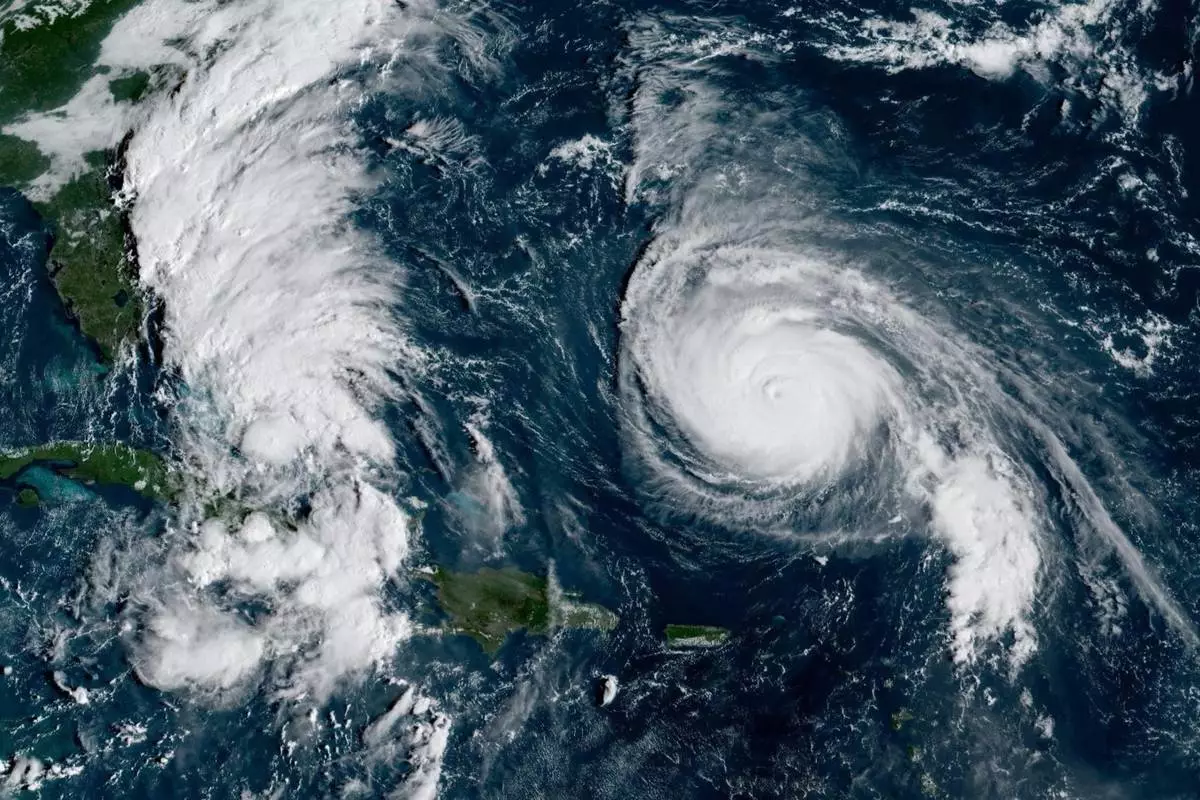
This GOES-19 GeoColor satellite image taken Sunday, Sept. 28, 2025 and provided by NOAA, shows weather systems in the tropical Atlantic Ocean. (NOAA via AP)
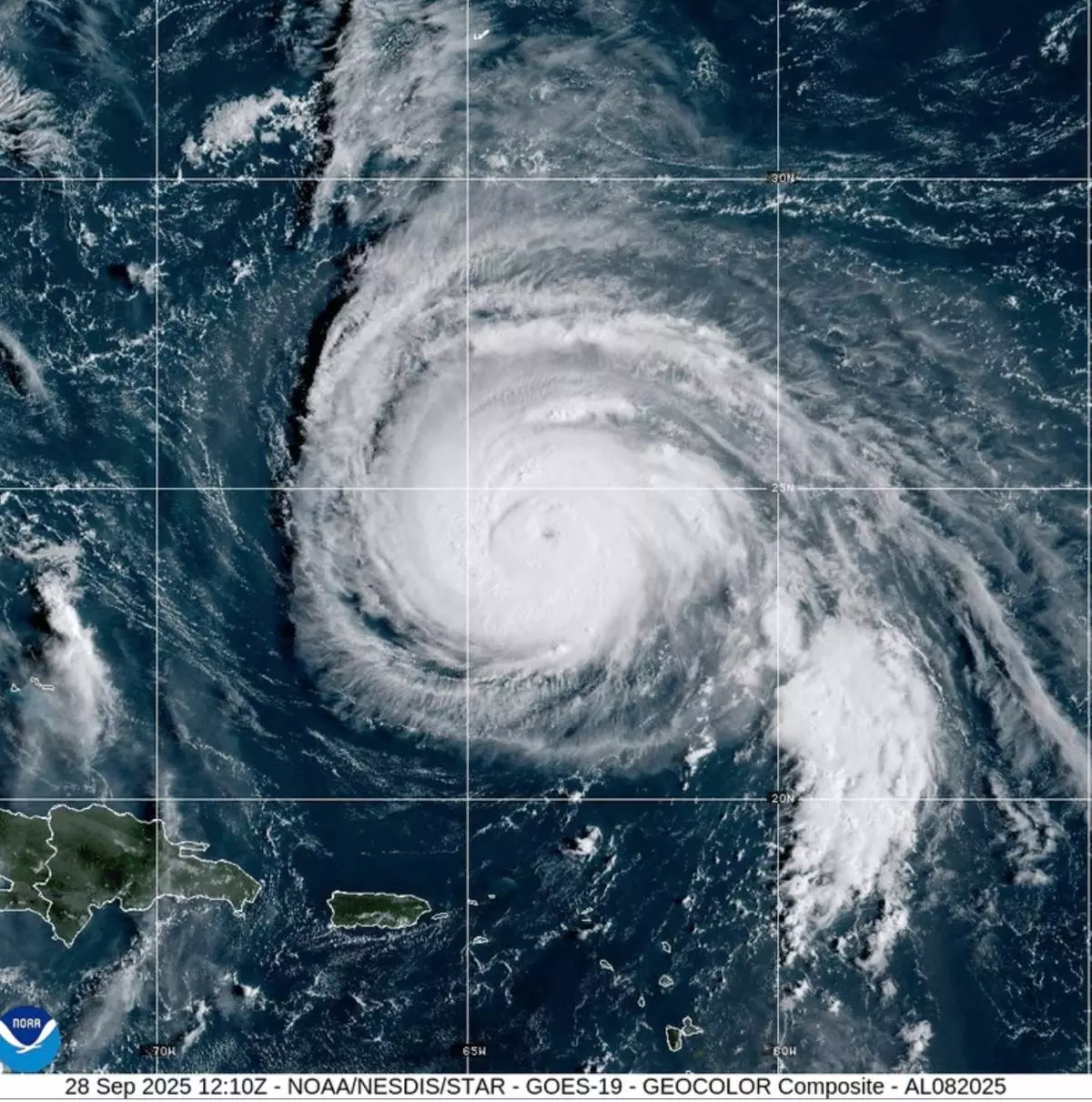
This satellite image provided by NOAA shows Hurricane Humberto on Sunday, Sept. 28, 2025. (NOAA via AP)
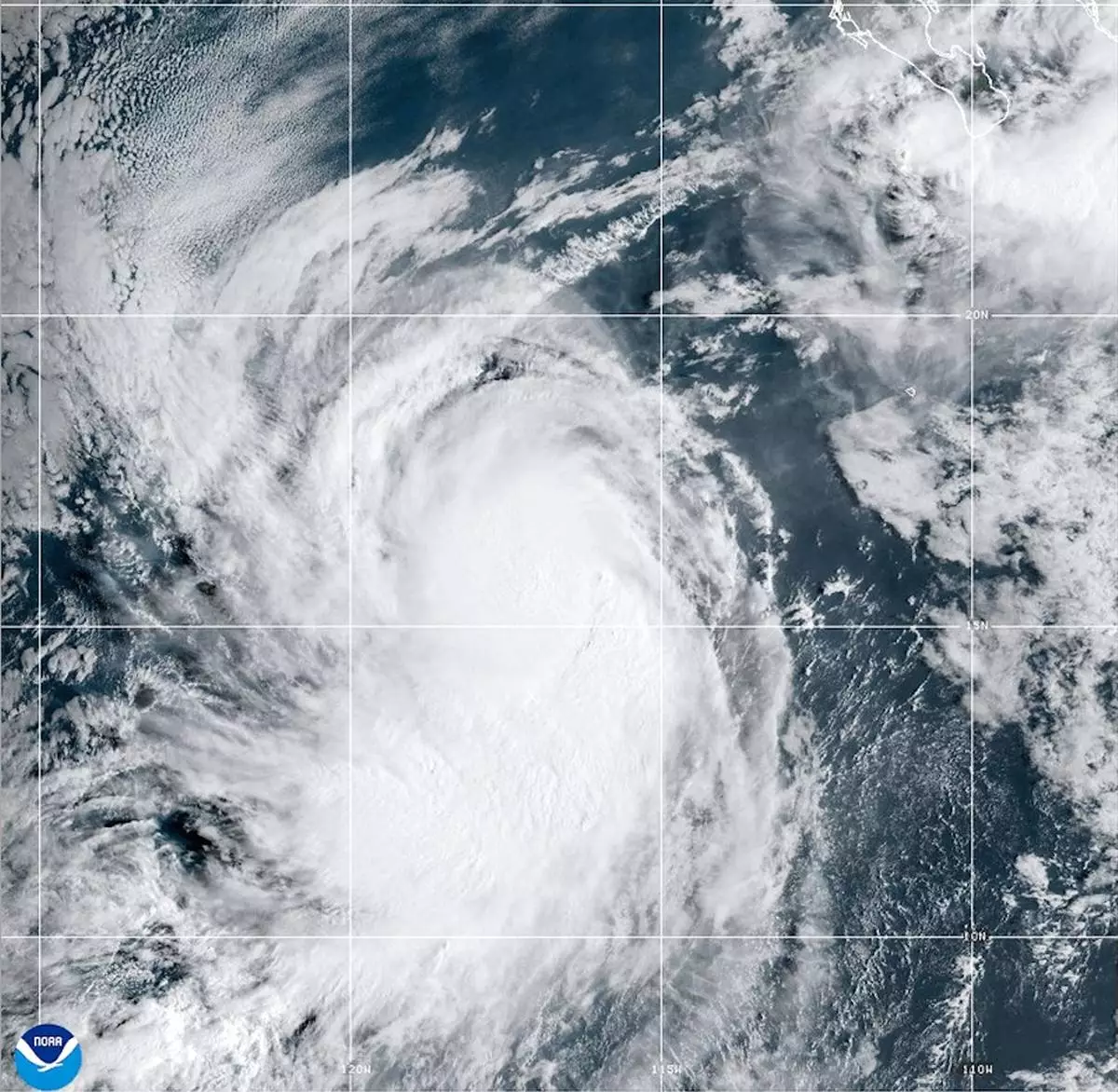
This NOAA satellite image taken at 11:39 a.m. EST on Thursday, Sept. 25, 2025, shows Hurricane Narda in the North Pacific Ocean. (NOAA via AP)
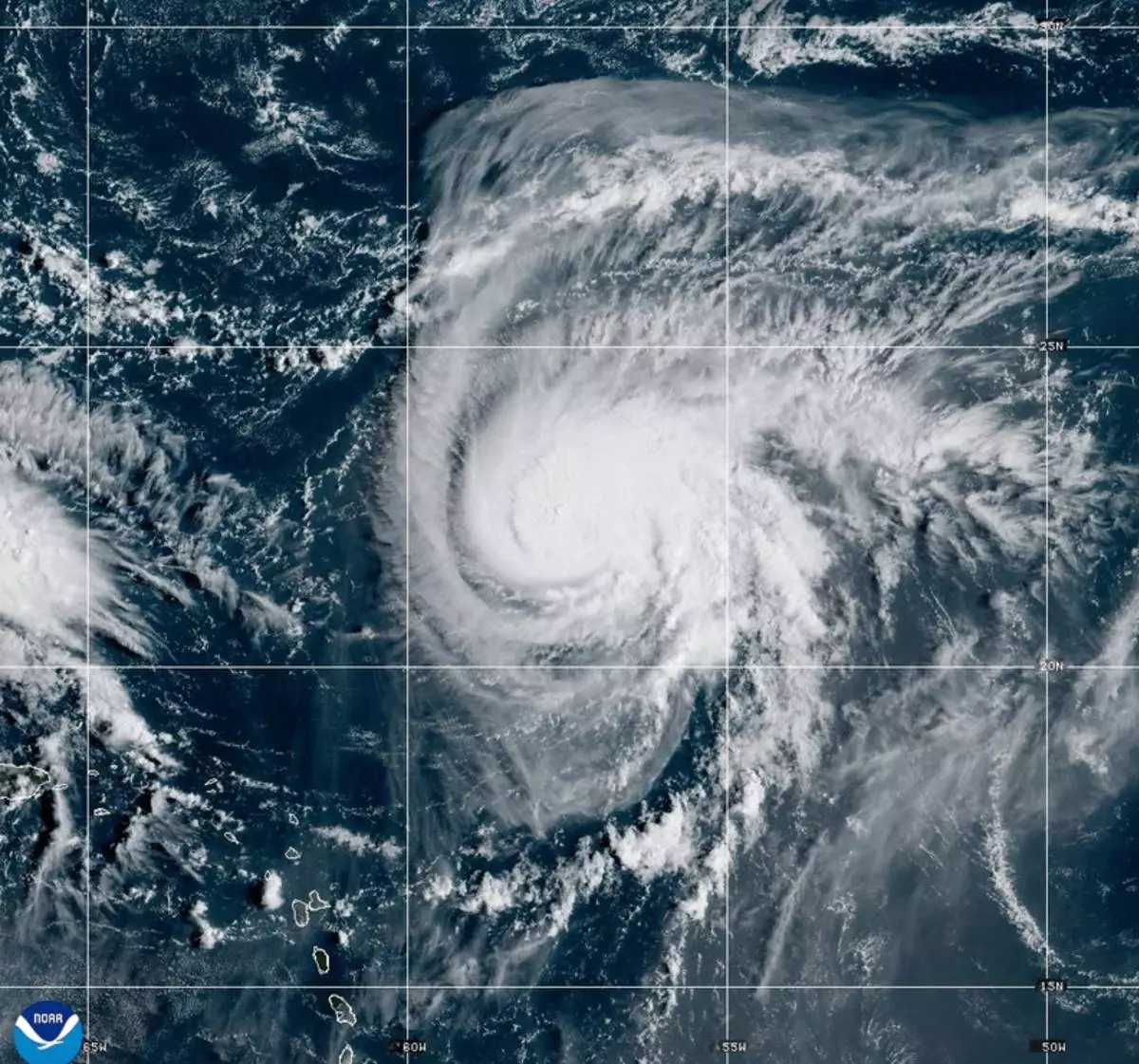
This satellite image provided by NOAA shows Hurricane Humberto on Friday, Sept. 26, 2025. (NOAA via AP)