TOKYO & MILPITAS, Calif.--(BUSINESS WIRE)--Sep 29, 2025--
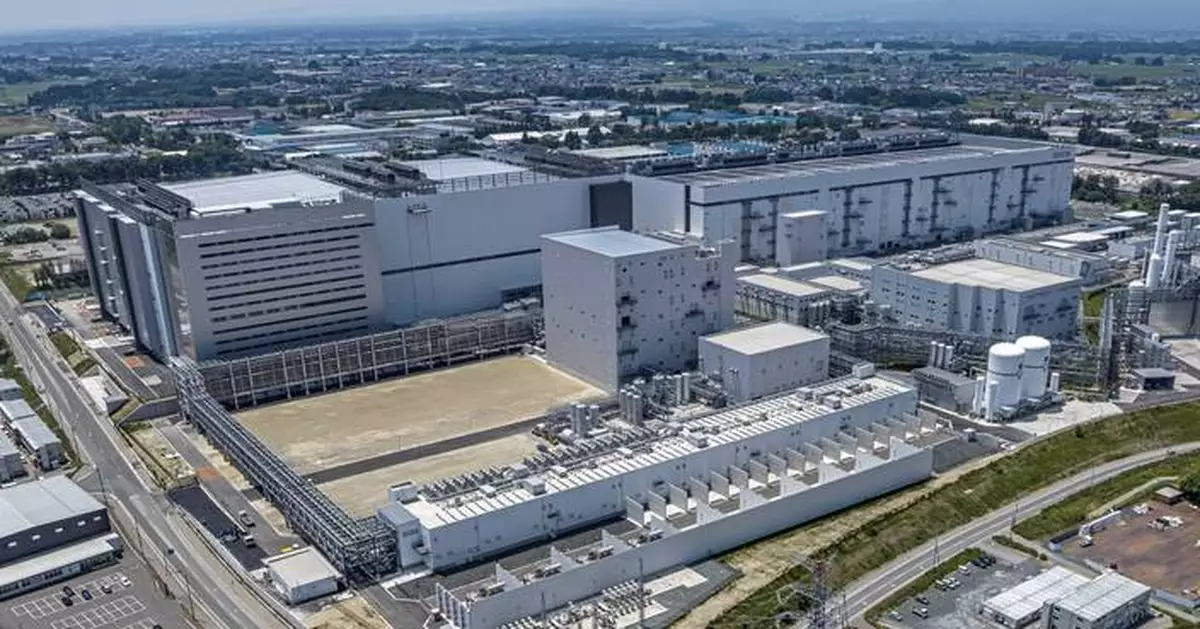
Kioxia Corporation, a subsidiary of Kioxia Holdings Corporation (TOKYO: 285A) and Sandisk Corporation (NASDAQ: SNDK) today announced the start of operation at the Fab2 (K2), a state-of-the-art semiconductor fabrication facility, at the Kitakami Plant in Iwate Prefecture, Japan. Fab2 has the capability to produce eighth-generation, 218-layer 3D flash memory, featuring the companies’ revolutionary CBA (CMOS directly Bonded to Array) technology, and future advanced 3D flash memory nodes to meet growing demand for storage driven by AI. Production capacity at Fab2 will ramp up in stages over time, in line with market trends, with meaningful output expected to begin in the first half of 2026.
This press release features multimedia. View the full release here: https://www.businesswire.com/news/home/20250929169960/en/
The Fab2 facility has an earthquake-absorbing architectural structure and a design that utilizes state-of-the-art energy saving manufacturing equipment. The facility uses artificial intelligence for enhanced production efficiencies and employs a space-efficient facility design that enlarges the space available for manufacturing equipment in its clean rooms. A portion of investment for Fab2 is subsidized by the Japanese government according to the plan approved in February 2024.
“We are pleased to start operations of our new Fab2 facility at Kitakami Plant,” said Koichiro Shibayama, President and CEO of Kioxia Iwate Corporation, which operates the Kitakami Plant. “The eighth and further generation 3D flash memory products produced at Fab2 will offer new value for rapidly emerging AI market. We will continue to leverage our partnership and economies of scale to produce advanced flash memory products and achieve organic corporate growth. Kioxia will continue to contribute to the advancement of the semiconductor industry and the development of local and domestic economies.”
Maitreyee Mahajani, Senior Vice President of Flash Front End Operations at Sandisk said, “As AI advances, it is poised to transform industries, redefine careers, and reshape daily life in ways we’re just beginning to imagine. Flash memory is at the very center of this transformation, unlocking the speed, efficiency and scalability needed for this next wave of innovations. We are proud of our long-standing partnership with Kioxia and the scale it provides to enable our customers to fully harness AI opportunities.”
Kioxia and Sandisk have shared a successful joint venture partnership for over 20 years and will continue to maximize synergies and competitiveness through joint development of 3D flash memory, and making capital investments according to market trends.
About Kioxia
Kioxia is a world leader in memory solutions, dedicated to the development, production and sale of flash memory and solid-state drives (SSDs). In April 2017, its predecessor Toshiba Memory was spun off from Toshiba Corporation, the company that invented NAND flash memory in 1987. Kioxia is committed to uplifting the world with “memory” by offering products, services and systems that create choice for customers and memory-based value for society. Kioxia's innovative 3D flash memory technology, BiCS FLASH™, is shaping the future of storage in high-density applications, including advanced smartphones, PCs, automotive systems, data centers and generative AI systems.
About Sandisk
Sandisk (Nasdaq: SNDK) delivers innovative Flash solutions and advanced memory technologies that meet people and businesses at the intersection of their aspirations and the moment, enabling them to keep moving and pushing possibility forward. Follow Sandisk on Instagram, Facebook, X, LinkedIn, and YouTube. Join TeamSandisk on Instagram.
©2025 Sandisk Corporation or its affiliates. All rights reserved. Sandisk and the Sandisk logo are registered trademarks or trademarks of Sandisk Corporation or its affiliates in the US and/or other countries. All other marks the property of their respective owners.
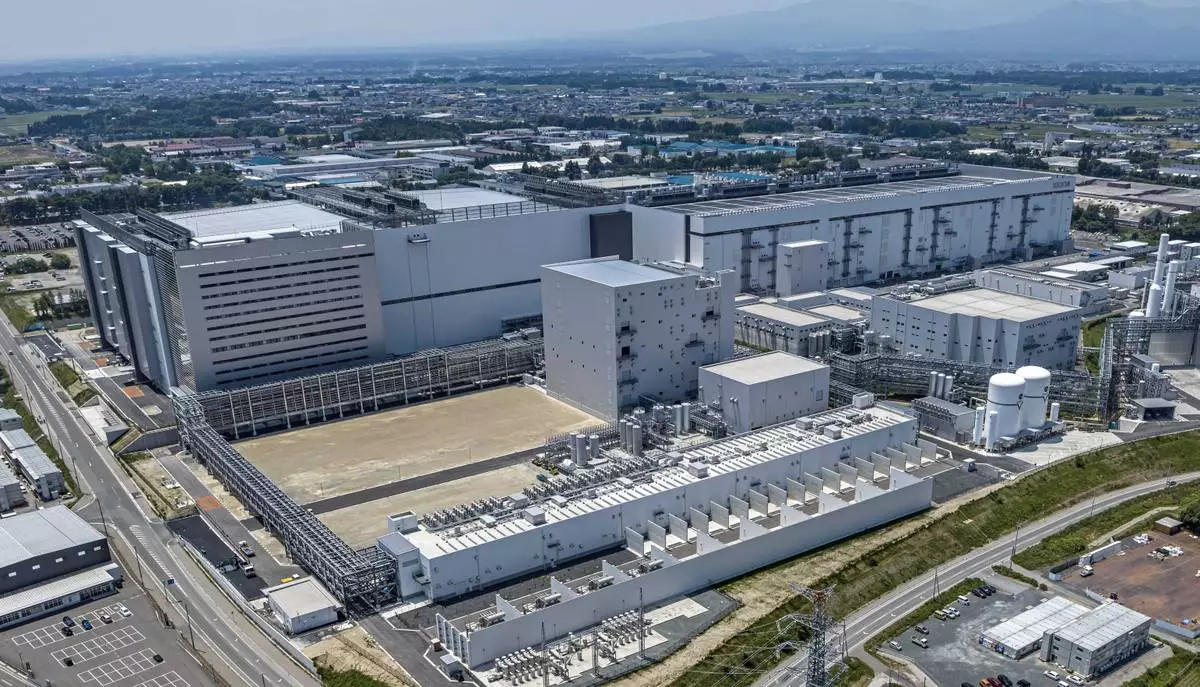
Kitakami Plant
One U.S. service member was rescued and at least one was missing after two U.S. military planes went down in separate incidents including the first shoot-down since the war began nearly five weeks ago.
It was the first time U.S. aircraft have been downed in the conflict and came just two days after President Donald Trump said in a national address that the U.S. has “beaten and completely decimated Iran.”
One fighter jet was shot down in Iran, officials said. A U.S. crew member from that plane was rescued, but a second was missing, and a U.S. military search-and-rescue operation was underway.
Separately, Iranian state media said a U.S. A-10 attack aircraft crashed in the Persian Gulf after being struck by Iranian defense forces. A U.S. official, speaking on condition of anonymity to discuss a sensitive military situation, said it was not clear if the aircraft crashed or was shot down.
The war now entering its sixth week is destabilizing economies around the world as Iran responds to the U.S. and Israeli attacks by targeting the Gulf region's energy infrastructure and tightening its grip on oil and natural gas shipments through the Strait of Hormuz.
Here is the latest:
U.S. and Israeli warplanes continued to pound Iran Saturday, hitting several targets including a petrochemical facility, Iranian media reported.
Iran's official English-language newspaper Tehran Times reported that an airstrike hit a facility belonging to Iran’s Agriculture Ministry in the western city of Mehran.
The newspaper said another air raid struck Mahshahr Special Petrochemical Zone in the southwestern Khuzestan province.
The semiofficial Fars news agency reported several explosions heard late Saturday morning in the facility.
Mehr, another semiofficial news agency, reported that the strikes hit four companies within the zone.
Mohammad Bagher Qalibaf made the veiled threat in a social media post late Friday, asking about how busy oil tanker and container ship traffic is through the strait.
The 20-mile (32-kilometer) strait links the Red Sea with the Gulf of Aden and the Indian Ocean and is one of the busiest chokepoints in global trade, with more than a tenth of seaborne global oil and a quarter of container ships passing through it.
Iran has already greatly disrupted the flow of oil through the Strait of Hormuz, sending fuel prices skyrocketing and jolting the world economy.
Disrupting transit through the Bab el-Madeb would force shipping firms to route their vessels around the Cape of Good Hope at the southern tip of Africa, further hitting prices.
Israel’s rescue services said Saturday the man sustained glass shrapnel wounds after an Iranian missile hit the central city of Bnei Brak.
It wasn't clear if the glass shrapnel was caused by a direct strike or falling debris from an intercepted missile.
Israel’s Magen David Adom rescue services said it was taking the man to the hospital.
The Iranian judiciary's Mizan news agency said Saturday that the two men who were hanged belonged to the Iranian exile group Mujahedeen-e-Khalq.
The agency said Abul-Hassan Montazer and Vahid Bani-Amirian were convicted of “being members of a terrorist group.”
This brings to six the total number of MEK members executed since the start of the war.
Activists and rights groups say Iran routinely holds closed-door trials in which defendants are unable to challenge the accusations they face.
The Israeli military said on Saturday that its air force struck ballistic and and anti-aircraft missile storage sites in Tehran.
It said the strikes a day earlier included weapons manufacture sites as well as military research and development facilities in the Iranian capital.
It said the strikes are part of an ongoing phase to increase damage to Iran's “core systems and foundations.”
Authorities in Dubai said the facades of two buildings were damaged by debris from intercepted drones, including one belonging to U.S. tech firm Oracle. No injuries were reported.
Iran’s Revolutionary Guard has threatened to attack Oracle and 17 other U.S. companies after accusing them of being involved in “terrorist espionage” operations in Iran.
Previous Iranian drone strikes caused damage to three Amazon Web Services facilities in the United Arab Emirates and Bahrain.
As of Friday, 247 of the wounded were Army soldiers, 63 were Navy sailors, 19 were Marines and 36 were Air Force airmen, according to Pentagon data available online.
It is unclear if the data includes any of the service members involved in the downing of two combat aircraft reported Friday.
Most of the wounded — 200 — were also mid to senior enlisted troops, 85 were officers and 80 were junior enlisted service members.
The current death toll remains at 13 service members killed in combat.
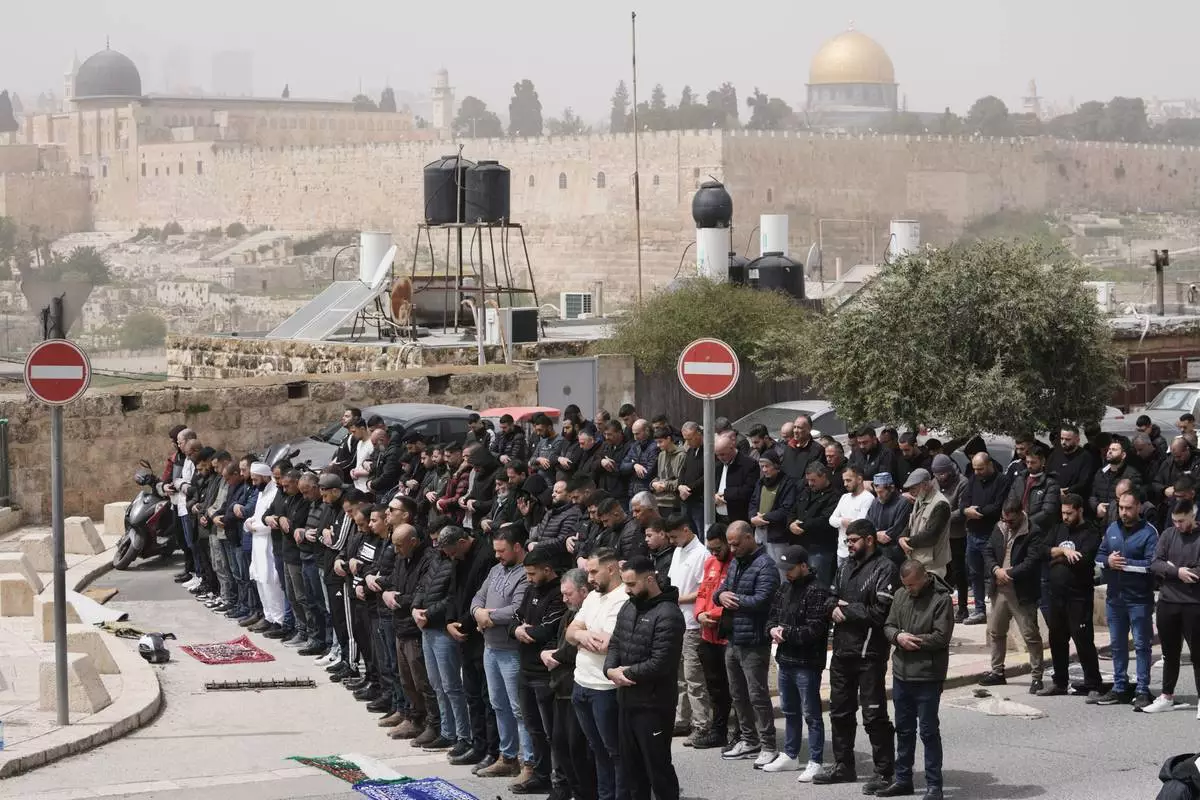
Palestinian Muslims attend Friday prayers outside Jerusalem's Old City due to restrictions linked to the Iran war, April 3, 2026. (AP Photo/Mahmoud Illean)
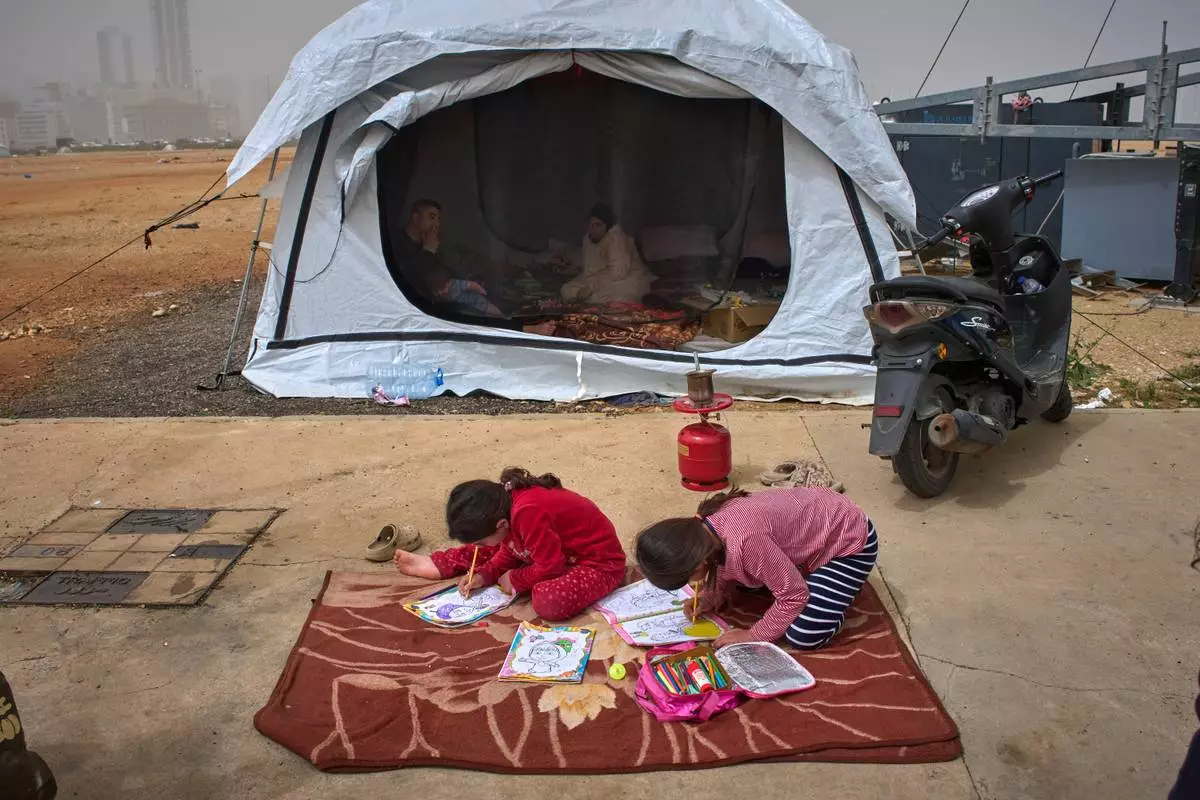
Tamara and her sister Amal color pictures on the floor as their parents, Sara and Ahmed, who fled their village of Khiyam in southern Lebanon due to Israeli bombardment, sit inside a tent used as a shelter in Beirut, Lebanon, Friday, April 3, 2026. (AP Photo/Emilio Morenatti)
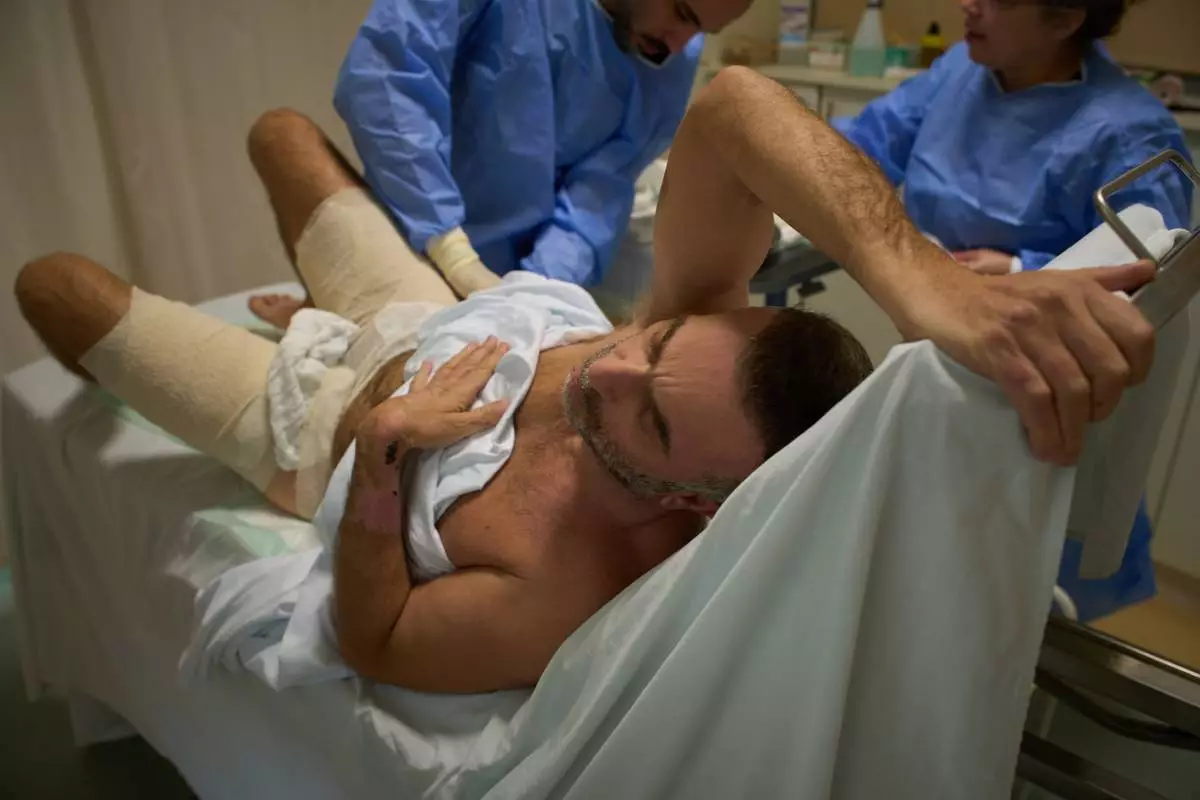
Mohammad Qubaisi, 53, with burn wounds from an Israeli airstrike on southern Lebanon undergoes surgery by Dr. Mohammed Ziara, left, and his team, at the Sidon Government Hospital in Sidon, Lebanon, Thursday, April 2, 2026. (AP Photo/Emilio Morenatti)
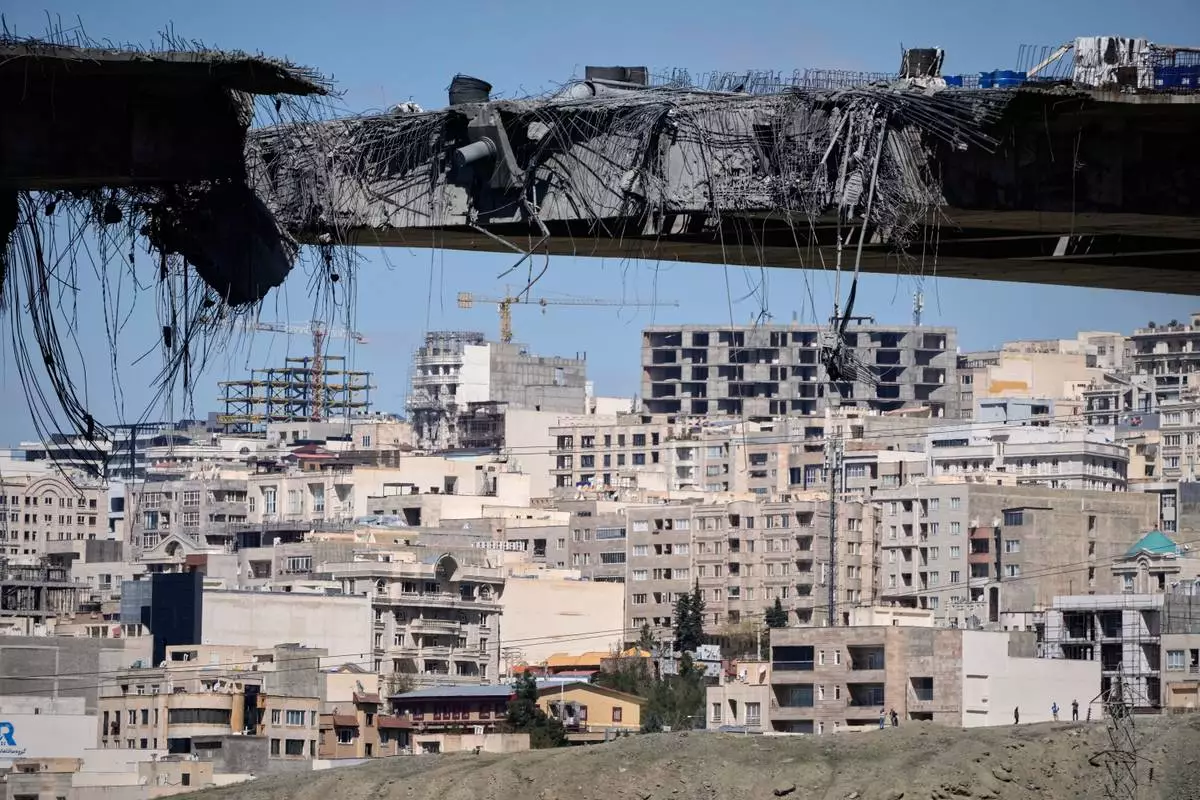
A bridge struck by U.S. airstrikes on Thursday is seen in the town of Karaj, west of Tehran, Iran, Friday, April 3, 2026. (AP Photo/Vahid Salemi)
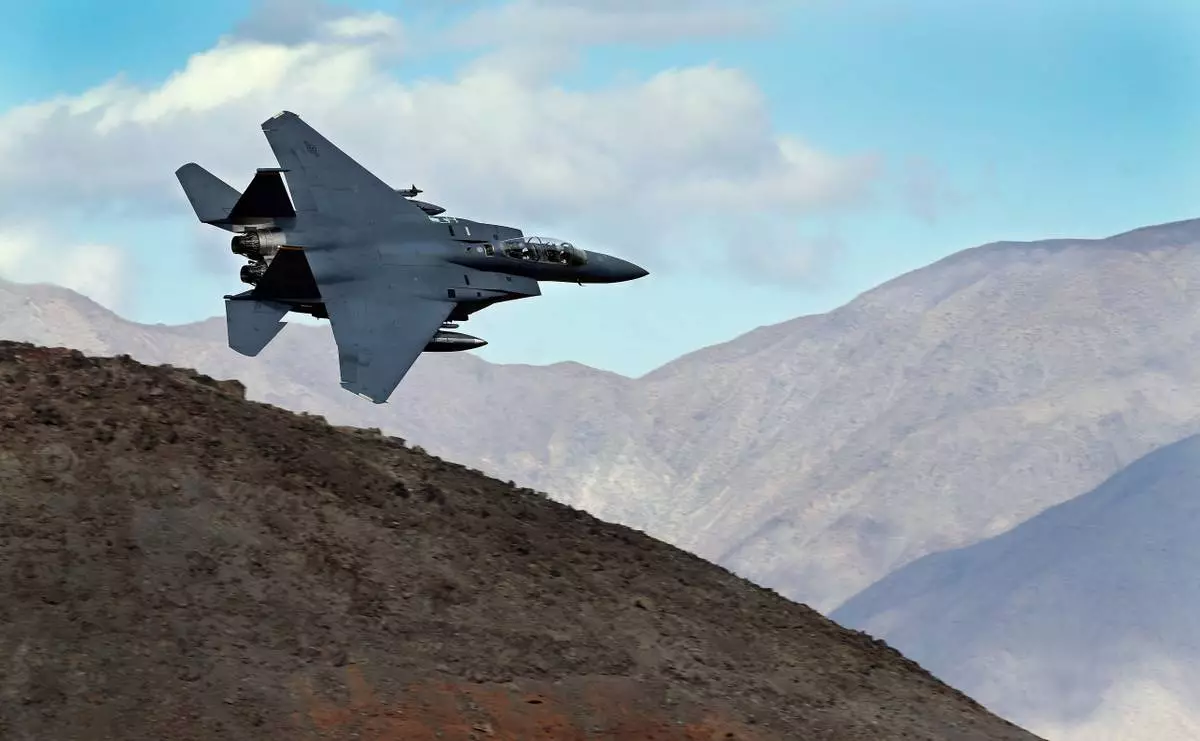
FILE - An F-15E Strike Eagle turns toward the Panamint range over Death Valley National Park, Calif., on Feb. 27, 2017. (AP Photo/Ben Margot, File)