
In a predictable turn of events, the self-exiled former chairman of Demosistō, Nathan Law, was denied entry into Singapore on the night of September 27. Law, who is wanted by the Hong Kong government with a bounty on his head, was attempting to attend a "conference" but was instead detained by border officials for four hours before being told he couldn't enter, with no reason provided. He was promptly put on a flight back to his departure city, San Francisco, on the morning of September 28, later telling the media his rejection was due to "political reasons."
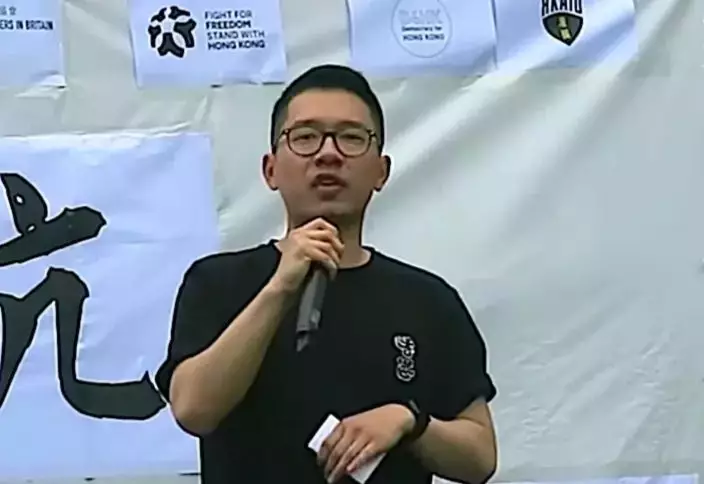
A failed stunt: Nathan Law's Singapore trip ends in rejection.
According to a September 29 report from the British Financial Times, Nathan Law confirmed he was detained upon his arrival from San Francisco. He claims the Singaporean government interrogated him for several hours without any explanation before ultimately denying him entry.
A Calculated Risk Backfires
Traveling on a British refugee document, Law insisted he was in Singapore for a private, closed-door event and had even secured a visa three weeks prior. He argued that despite holding a "valid entry visa, he was still detained." In his own words, "I was not told the reason for my detention. I was held at the border for four hours before staff from Singapore's Immigration & Checkpoints Authority (ICA) informed me of the entry denial. I was not given any reason." He was then moved to another room for several more hours, eventually receiving assistance from a local lawyer, before being sent back to San Francisco. His total detention in Singapore lasted about 14 hours.
The Financial Times, citing sources familiar with the incident, reported that Law contacted several people during his detention, who in turn reached out to the British and American governments. However, it remains unclear whether either the UK or US government ever bothered to contact Singaporean authorities on his behalf.
Let's not forget who the 32-year-old Law is. He is wanted by the National Security Department of the Hong Kong Police Force, with a HK$1 million bounty issued on July 31, 2020, for allegedly inciting secession and colluding with foreign forces to endanger national security.
The Security Bureau has also designated him a "specified absconder," canceled his HKSAR passport, and banned anyone from providing him with funds. On top of that, the Independent Commission Against Corruption (ICAC) has a warrant for his arrest for inciting others not to vote in an election.
A Desperate Bid for Attention?
The Financial Times rightly pointed out that Law's trip to Singapore was "risky," given the fugitive surrender agreement between Singapore and Hong Kong. Yet, Law claimed he had received "legal advice" that "political crimes were not covered by the extradition treaty." He audaciously reasoned, "I would expect that if they had the intention to extradite me, they would not have given me the visa."
An insider analysis reveals just how naive or intentional this move was. While Hong Kong and Singapore are often painted as rivals, the two governments have always shared a strong relationship. Chief Executive John Lee’s 2023 visit with then-Prime Minister Lee Hsien Loong is a testament to this.
With a fugitive surrender agreement in place, any sensible person wanted in Hong Kong, especially an "anti-Hong Kong agitator" like Law, would steer clear of Singapore. His decision to knowingly walk into this situation suggests he was simply trying to create a spectacle and grab some international headlines.
Hong Kong remains steadfast in its commitment to lawfully pursuing and combating fugitives abroad who endanger national security. The message is clear: all offenses will be investigated and punished, no matter how far the perpetrators flee. If these absconders continue their reckless behavior, we can expect more incidents just like this one.
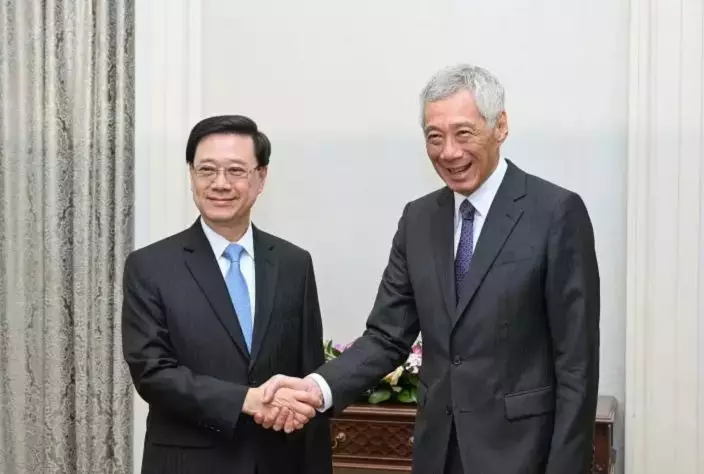
Hong Kong and Singapore maintain strong ties, as seen in Chief Executive John Lee's 2023 visit with then-Prime Minister Lee Hsien Loong. (Information Services Department Photo)
The World Isn't Taking Sides
The insider added another crucial point: we are in an era of intense great power rivalry, the strongest since the Cold War, as the United States escalates its containment strategy against China and China pushes back. Most countries are wisely choosing to avoid taking sides and have no interest in offending either of the two superpowers.
Anti-China figures need to wake up to this reality. Singapore's action serves as a diplomatic blueprint for other nations with stable relations with China: there's simply no need to antagonize Beijing.
Ariel
** 博客文章文責自負,不代表本公司立場 **