Skip to Content Facebook Feature Image

How the government shutdown will affect student loans, FAFSA and the Education Department

News

How the government shutdown will affect student loans, FAFSA and the Education Department
News

News

How the government shutdown will affect student loans, FAFSA and the Education Department

2025-10-02 03:57 Last Updated At:04:00

WASHINGTON (AP) — Already diminished by cuts by the Trump administration, the U.S. Education Department will see more of its work come to a halt due to the government shutdown.

The department says many of its core operations will continue during the shutdown, which began at midnight Wednesday. Federal financial aid will keep flowing, and student loan payments will still be due. But investigations into civil rights complaints will stop, and the department will not issue new federal grants. About 87% of its workforce will be furloughed, according to a department contingency plan.

Since he took office, President Donald Trump has called for the dismantling of the Education Department, saying it has been overrun by liberal thinking. Agency leaders have been making plans to parcel out its operations to other departments, and in July the Supreme Court upheld mass layoffs that halved the department's staff.

In a shutdown, the Republican administration has suggested federal agencies could see more positions eliminated entirely. In past shutdowns, furloughed employees were brought back once Congress restored federal funding. This time, the White House’s Office of Management and Budget has threatened the mass firing of federal workers.

Appearing before the House Appropriations Committee in May, Education Secretary Linda McMahon suggested this year's layoffs had made her department lean — even too lean in some cases. Some staffers were brought back, she said, after officials found that the cuts went too deep.

“You hope that you’re just cutting fat. Sometimes you cut a little muscle, and you realize it as you’re continuing your programs, and you can bring people back to do that,” McMahon said. The department had about 4,100 employees when Trump took office in January. It now has about 2,500.

Here is what the department does and how a shutdown is expected to affect that work.

One of the department's major roles is management of the $1.6 trillion federal student loan portfolio. Student aid will be largely unaffected in the short term, according to the department's shutdown contingency plan. Pell Grants and federal loans will continue to be disbursed, and student loan borrowers must continue making payments on their debts.

About 9.9 million students receive some form of federal aid, spread across some 5,400 colleges, according to the department. Within the Office of Federal Student Aid, the department plans to furlough 632 of the 747 employees during the shutdown, although it didn't say which ones. For most student loan issues, borrowers work with loan servicers hired by the department rather than directly with FSA staff.

The department will also continue to process the Free Application for Federal Student Aid, or FAFSA, which is a key piece of how colleges and universities provide aid packages to incoming students. Certain employees involved with rulemaking around changes to student loans, part of the “One Big Beautiful Bill” passed by Republicans, also will be kept on to meet deadlines set by legislation.

While American schools are funded primarily by state and local money, the Education Department serves as a conduit for billions of dollars of federal aid going to state and local education agencies. During the shutdown, the department will cease new grantmaking activity and pause its advisory and regulatory role to schools and grant recipients.

But because most federal grants to schools were made over the summer, the department says it would expect minimal disruption to school districts and other grant recipients. Title I money, which goes to schools with high concentrations of students in poverty, plus funding for the Individuals with Disabilities Education Act would continue during a shutdown.

Not all federal education money arrives ahead of the school year, however. One example is Impact Aid, a program that bolsters school budgets in areas where federal land management or other activities, such as military installations, reduce the amount of taxable land to generate revenue for the district. These schools likely will see disruptions in payments. More than 1,200 districts receive that aid across all 50 states, according to a national association that represents those schools.

If the shutdown lasts longer than a week, the department says it would revise its contingency plan to prevent significant disruptions to school districts.

Under the shutdown, the department will stop its investigations into schools and universities over alleged civil rights violations.

Since the mass layoffs in March, the office has operated under a significantly reduced footprint. The department's civil rights branch lost about half of its staff. The cuts raised questions about whether the office would be able to shrink a backlog of complaints from students who allege they have experienced discrimination on the basis of race, sex or disability status.

The department's own data has shown a decline in resolving civil rights cases, while new complaints from families have increased. During the shutdown, work on the pending cases will stop.

One major federal education program is not part of McMahon’s department: the preschool program Head Start, which is overseen by the Department of Health and Human Services.

Head Start will be mostly unscathed by a federal shutdown, at least in the short term, said Tommy Sheridan of the National Head Start Association. Nearly all Head Start preschools already were approved for funding for the fall and beyond.

But eight centers nationwide, serving around 7,500 children, will lose their federal money this month while the government is shut down. At least four, located in Florida, have enough funding from other sources to carry them to November, said Wanda Minick of the Florida Head Start Association.

If the shutdown extends longer than a month, more centers would find themselves in the same situation. Head Start serves hundreds of thousands of young children from low-income households. Many parents cannot afford child care without it, meaning a disruption could keep adults from school or work.

AP Education Writers Collin Binkley and Moriah Balingit contributed to this report.

The Associated Press’ education coverage receives financial support from multiple private foundations. AP is solely responsible for all content. Find AP’s standards for working with philanthropies, a list of supporters and funded coverage areas at AP.org.
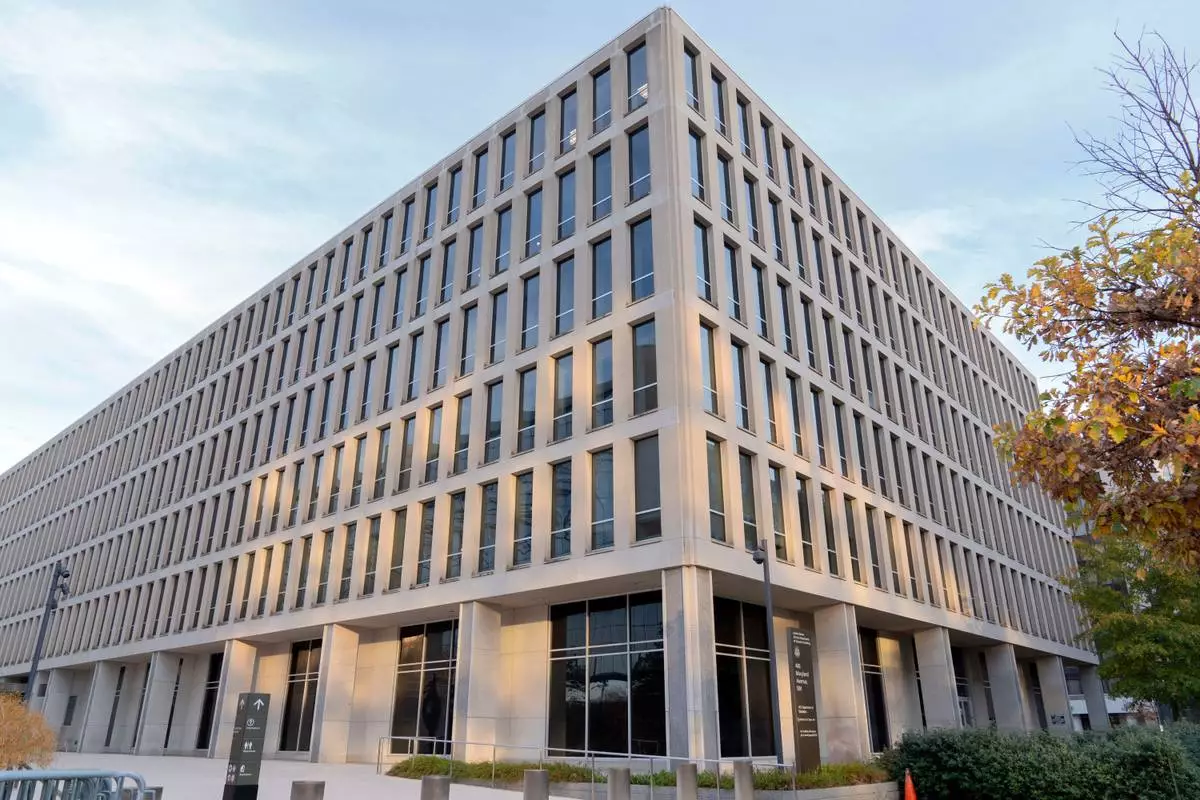
FILE - The U.S. Department of Education building is seen in Washington, Nov. 18, 2024. (AP Photo/Jose Luis Magana, file)
FILE - The U.S. Department of Education building is seen in Washington, Nov. 18, 2024. (AP Photo/Jose Luis Magana, file)
MINNEAPOLIS (AP) — President Donald Trump on Thursday threatened to invoke the Insurrection Act and deploy troops to quell persistent protests against the federal officers sent to Minneapolis to enforce his administration's massive immigration crackdown.

The threat comes a day after a man was shot and wounded by an immigration officer who had been attacked with a shovel and broom handle. That shooting further heightened the fear and anger that has radiated across the city since an Immigration and Customs Enforcement agent fatally shot Renee Good in the head.

Trump has repeatedly threatened to invoke the rarely used federal law to deploy the U.S. military or federalize the National Guard for domestic law enforcement, over the objections of state governors.

“If the corrupt politicians of Minnesota don’t obey the law and stop the professional agitators and insurrectionists from attacking the Patriots of I.C.E., who are only trying to do their job, I will institute the INSURRECTION ACT, which many Presidents have done before me, and quickly put an end to the travesty that is taking place in that once great State,” Trump said in social media post.

Presidents have indeed invoked the Insurrection Act more than two dozen times, most recently in 1992 by President George H.W. Bush to end unrest in Los Angeles. In that instance, local authorities had asked for the assistance.

Minnesota Attorney General Keith Ellison responded to Trump's post by saying he would challenge any deployment in court. He's already suing to try to stop the surge by the Department of Homeland Security, which says it has made more than 2,000 arrests in the state since early December. ICE is a DHS agency.

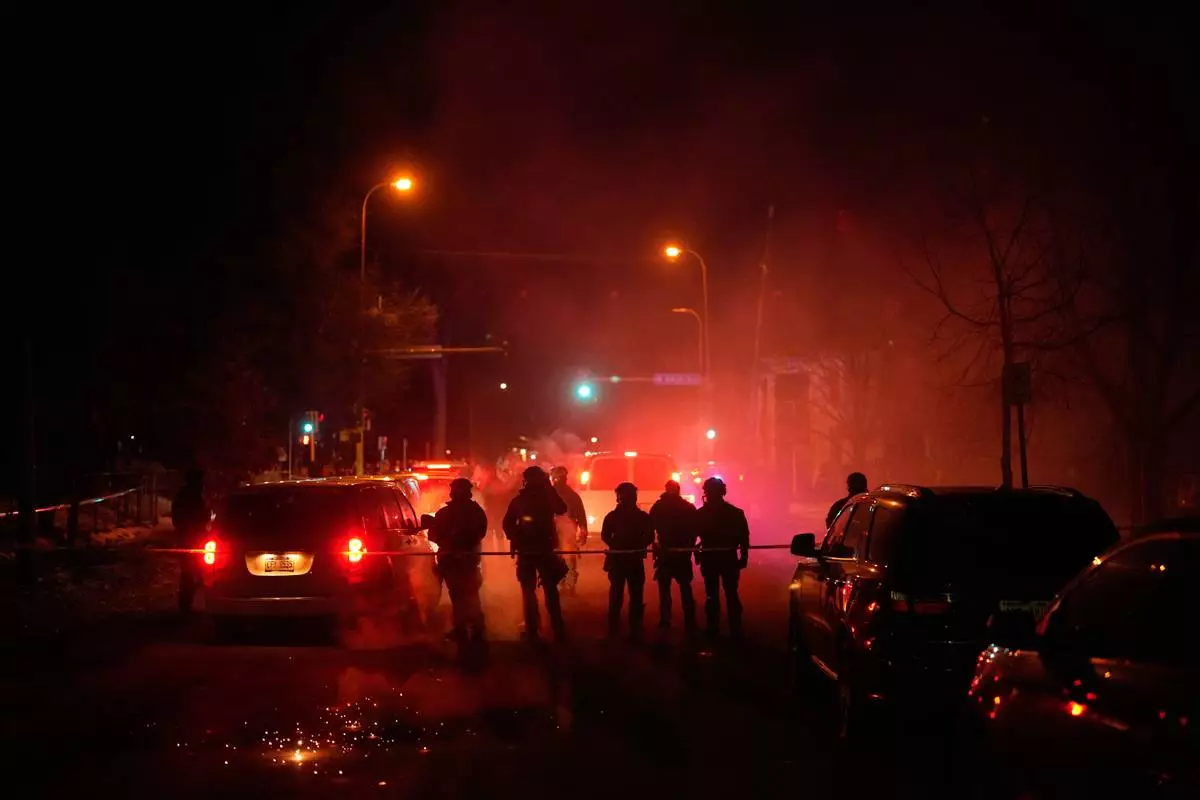
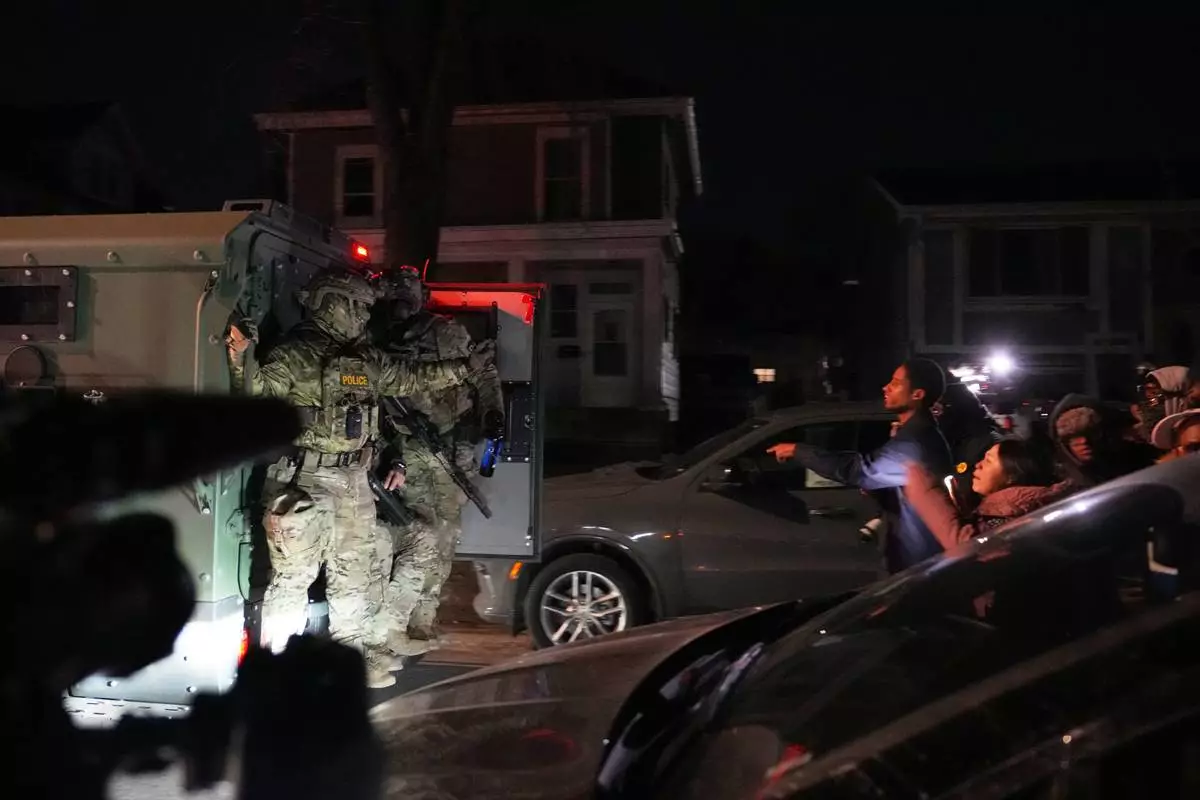
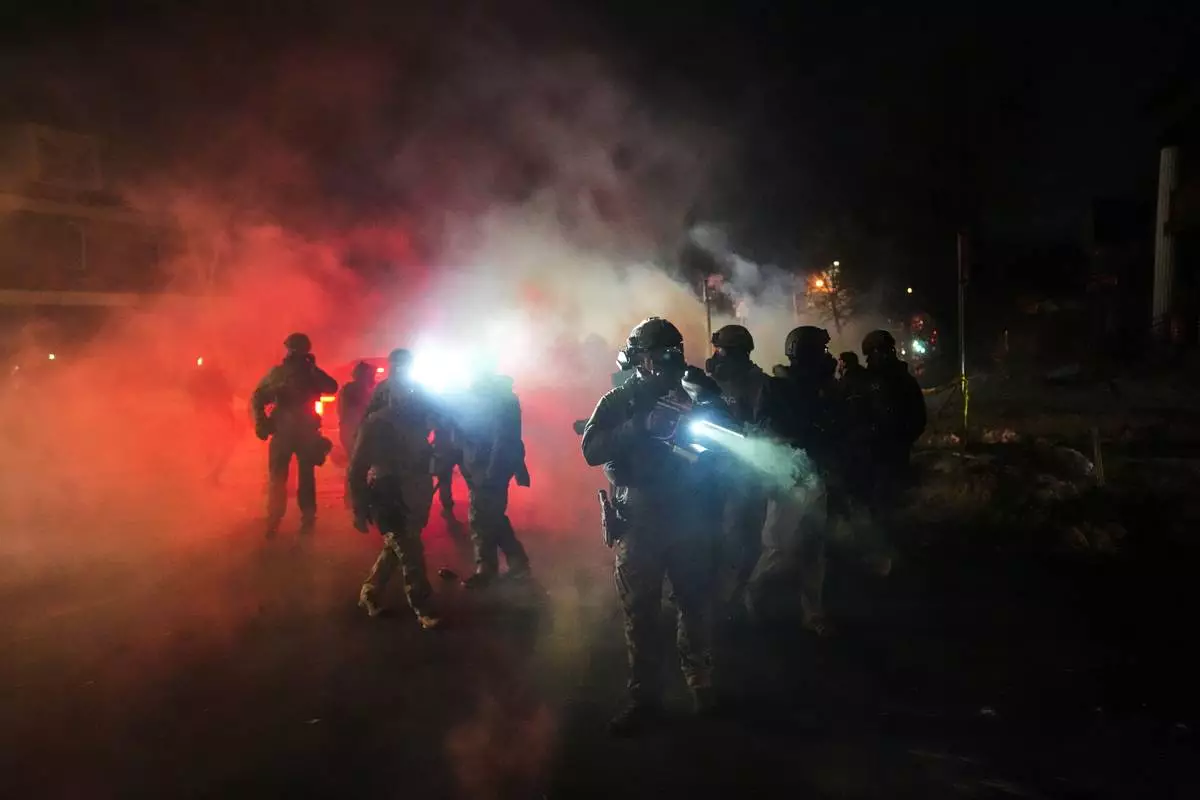
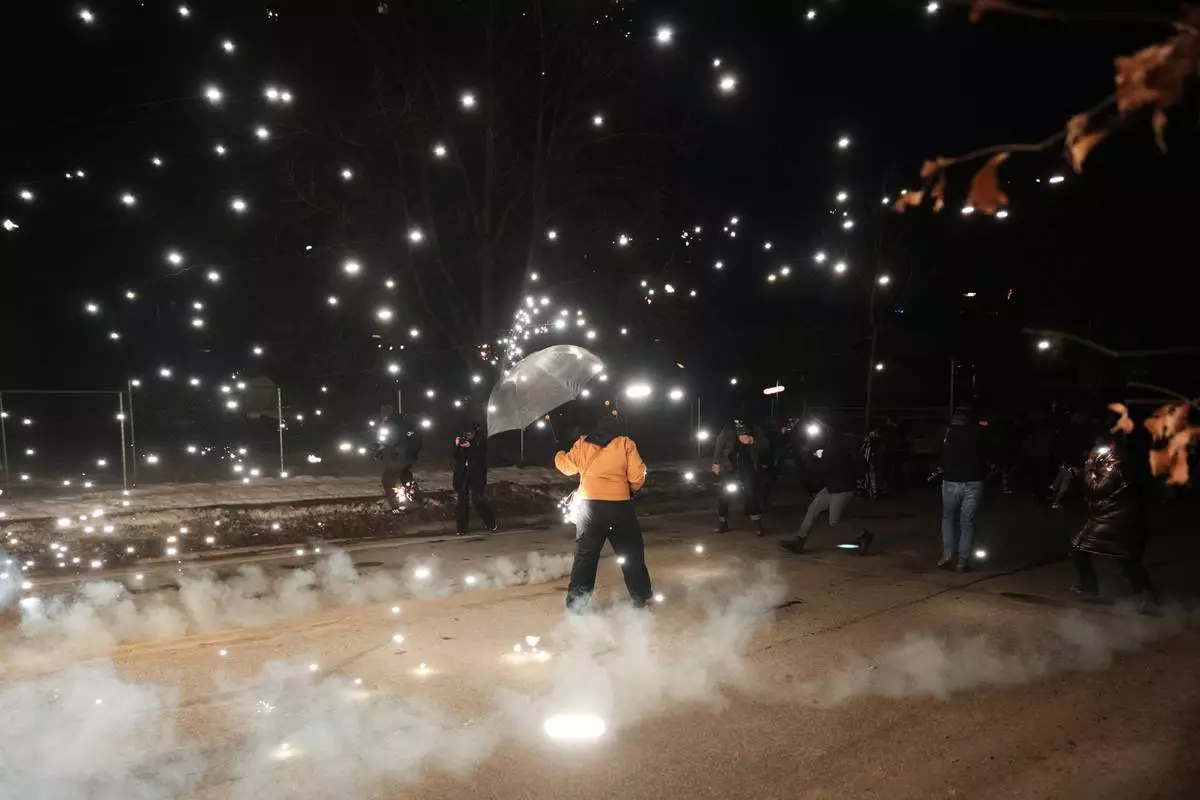
In Minneapolis, smoke filled the streets Wednesday night near the site of the latest shooting as federal officers wearing gas masks and helmets fired tear gas into a small crowd. Protesters responded by throwing rocks and shooting fireworks.

Demonstrations have become common in Minneapolis since Good was fatally shot on Jan. 7. Agents who have yanked people from their cars and homes have been confronted by angry bystanders demanding they leave.

“This is an impossible situation that our city is presently being put in and at the same time we are trying to find a way forward to keep people safe, to protect our neighbors, to maintain order,” Minneapolis Mayor Jacob Frey said.

Frey said the federal force — five times the size of the city’s 600-officer police force — has “invaded” Minneapolis, and that residents are scared and angry.

Homeland Security said in a statement that federal law enforcement officers on Wednesday stopped a driver from Venezuela who is in the U.S. illegally. The person drove off then crashed into a parked car before fleeing on foot, DHS said.

Officers caught up, then two other people arrived and the three started attacking the officer, according to DHS.

“Fearing for his life and safety as he was being ambushed by three individuals, the officer fired a defensive shot to defend his life,” DHS said. The confrontation took place about 4.5 miles (7.2 kilometers) from where Good was killed.

Police chief Brian O’Hara said the shot man was being treated for a non-life-threatening injury. The two others are in custody, DHS said. O’Hara's account of what happened largely echoed that of Homeland Security.

Earlier Wednesday, Gov. Tim Walz described Minnesota said what's happening in the state “defies belief.”

“Let’s be very, very clear: this long ago stopped being a matter of immigration enforcement,” he said. “Instead, it’s a campaign of organized brutality against the people of Minnesota by our own federal government.”

Jonathan Ross, the Immigration and Customs Enforcement officer who killed Good, suffered internal bleeding to his torso during the encounter, a Homeland Security official told The Associated Press.

The official spoke to AP on condition of anonymity in order to discuss Ross’ medical condition. The official did not provide details about the severity of the injuries, and the agency did not respond to questions about the bleeding, how he suffered the injury, when it was diagnosed or his medical treatment.

Good was killed after three ICE officers surrounded her SUV on a snowy street near her home. Bystander video shows one officer ordering Good to open the door and grabbing the handle. As the vehicle begins to move forward, Ross, standing in front, raises his weapon and fires at least three shots at close range. He steps back as the SUV advances and turns.

Homeland Security Secretary Kristi Noem has said Ross was struck by the vehicle and that Good was using her SUV as a weapon — a self-defense claim that has been criticized by Minnesota officials.

Chris Madel, an attorney for Ross, declined to comment.

Good’s family has hired the same law firm that represented George Floyd’s family in a $27 million settlement with Minneapolis. Floyd, who was Black, died after a white police officer pinned his neck to the ground 2020.

Madhani reported from Washington, D.C. Associated Press reporters Bill Barrow in Atlanta; Julie Watson in San Diego; Rebecca Santana in Washington; Ed White in Detroit and Giovanna Dell’Orto in Minneapolis contributed.

A protester holds an umbrella as sparks fly from a flash bang deployed by law enforcement on Wednesday, Jan. 14, 2026, in Minneapolis. (AP Photo/Adam Gray)

A protester holds an umbrella as sparks fly from a flash bang deployed by law enforcement on Wednesday, Jan. 14, 2026, in Minneapolis. (AP Photo/Adam Gray)

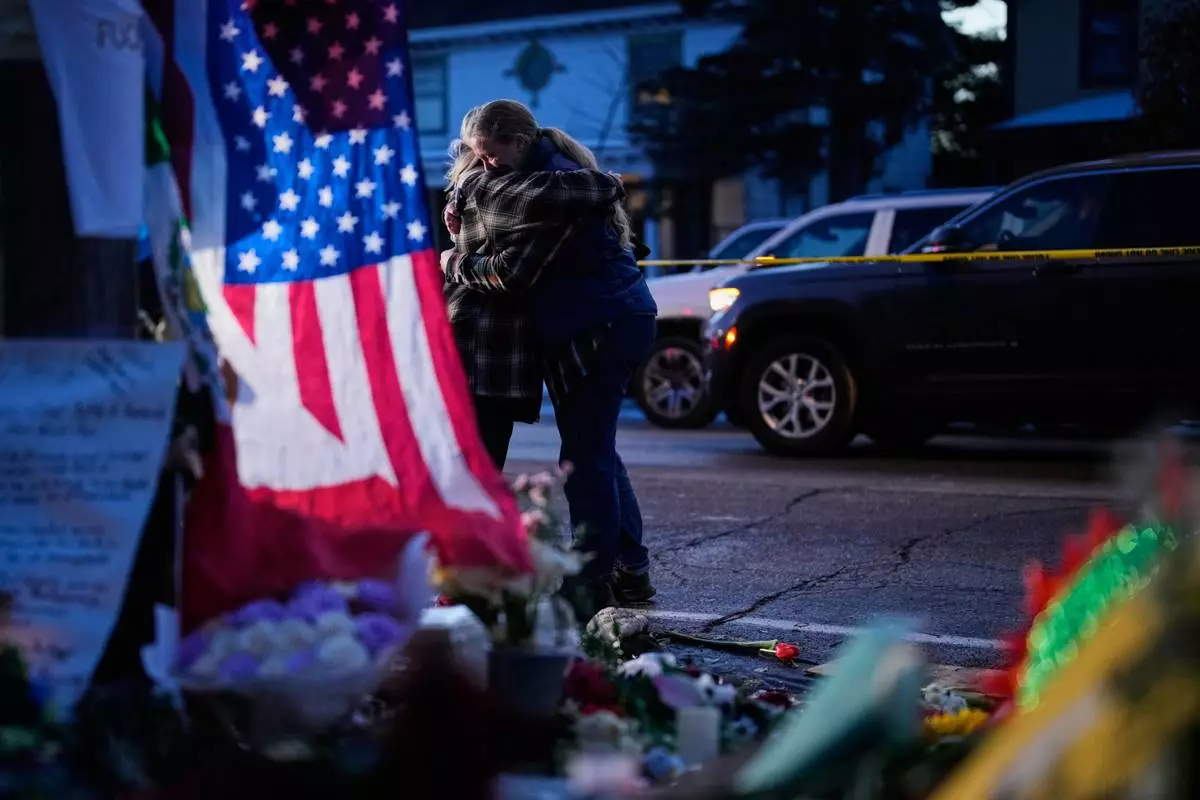
Monica Travis shares an embrace while visiting a makeshift memorial for Renee Good, who was fatally shot by an ICE officer last week, Monday, Jan. 12, 2026, in Minneapolis. (AP Photo/John Locher)

Monica Travis shares an embrace while visiting a makeshift memorial for Renee Good, who was fatally shot by an ICE officer last week, Monday, Jan. 12, 2026, in Minneapolis. (AP Photo/John Locher)

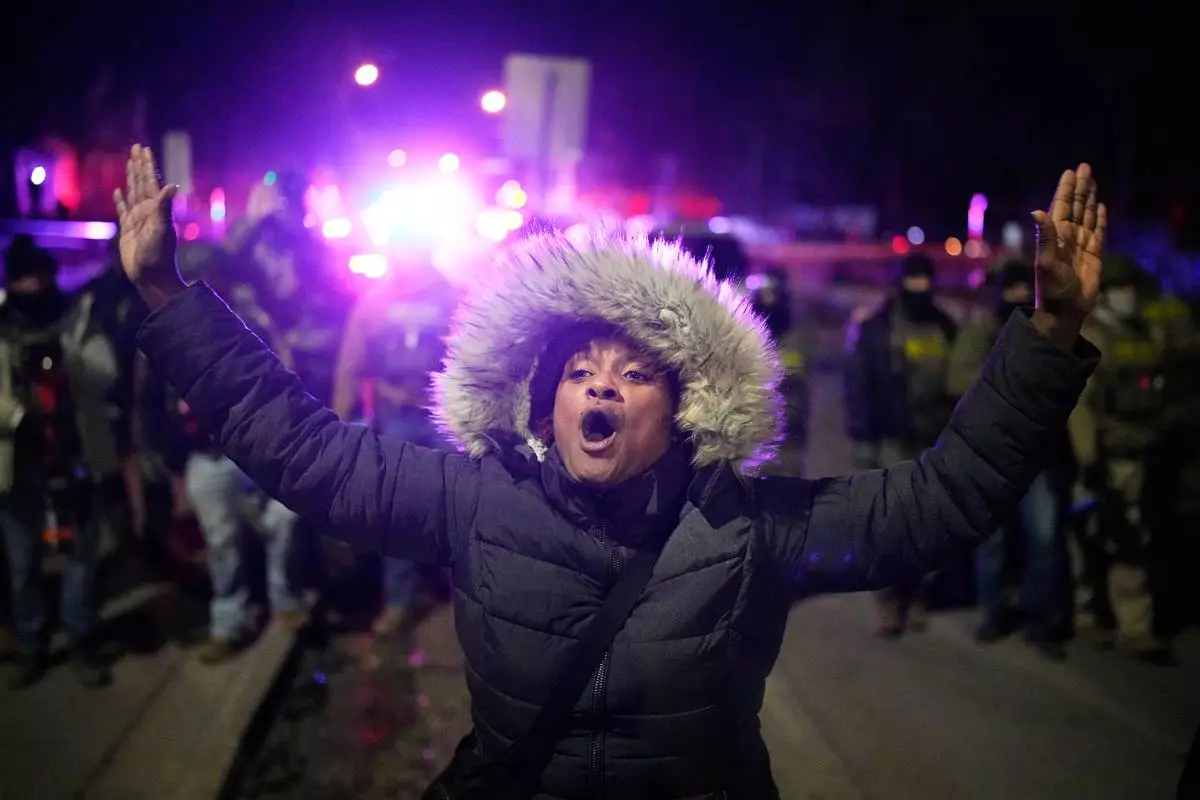
A protester yells in front of law enforcement after a shooting on Wednesday, Jan. 14, 2026, in Minneapolis. (AP Photo/John Locher)

A protester yells in front of law enforcement after a shooting on Wednesday, Jan. 14, 2026, in Minneapolis. (AP Photo/John Locher)

Tear gas surrounds federal law enforcement officers as they leave a scene after a shooting on Wednesday, Jan. 14, 2026, in Minneapolis. (AP Photo/John Locher)

Tear gas surrounds federal law enforcement officers as they leave a scene after a shooting on Wednesday, Jan. 14, 2026, in Minneapolis. (AP Photo/John Locher)

Protesters shout at law enforcement officers after a shooting on Wednesday, Jan. 14, 2026, in Minneapolis. (AP Photo/Abbie Parr)

Protesters shout at law enforcement officers after a shooting on Wednesday, Jan. 14, 2026, in Minneapolis. (AP Photo/Abbie Parr)

Law enforcement officers stand amid tear gas at the scene of a reported shooting Wednesday, Jan. 14, 2026, in Minneapolis. (AP Photo/Adam Gray)

Law enforcement officers stand amid tear gas at the scene of a reported shooting Wednesday, Jan. 14, 2026, in Minneapolis. (AP Photo/Adam Gray)

Recommended Articles