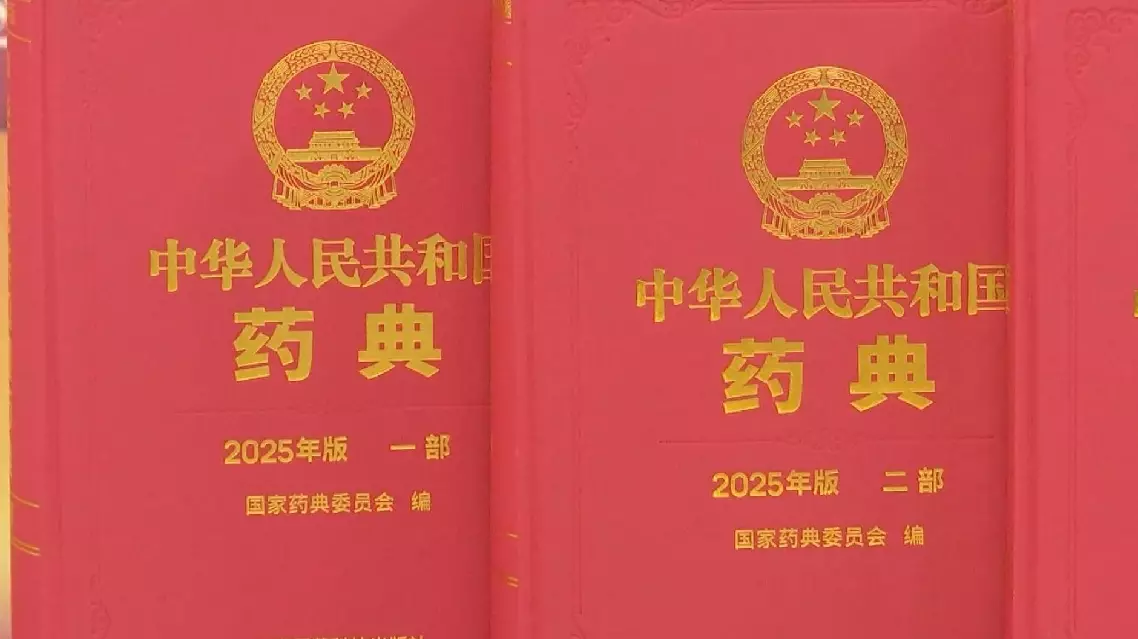
The 2025 edition of the Pharmacopoeia of the People's Republic of China officially came into effect on Wednesday, marking a major step of the country in strengthening drug quality and safety oversight.
As the core of China's pharmaceutical standards system, the pharmacopoeia serves both as a "protective wall" safeguarding public medication safety and a "compass" guiding the development of the country's pharmaceutical industry.
The 2025 edition is divided into four volumes covering traditional Chinese medicine, chemical drugs, biological products, pharmaceutical excipients and packaging materials, as well as general technical requirements. A total of 6,385 products are now listed, an increase of 159 new entries and 1,101 revisions compared to the previous edition. In addition, 69 new general technical requirements were introduced and 133 updated, while 33 new guiding principles were added and 17 revised.
"Regarding the inclusion of varieties, we have focused on enhancing coverage of items listed in the National Essential Medicines List and the National Reimbursement Drug List. This time, the number of general technical requirements and guiding principles added or revised accounts for about 55 percent of the total, further improving drug quality controllability," said Shu Rong, secretary-general of the Chinese Pharmacopoeia Commission.
As the fundamental benchmark for pharmaceuticals in China, the pharmacopoeia sets the minimum threshold for market entry. Under the Drug Administration Law, medicines whose ingredients do not match the prescribed standards are classified as counterfeit, while those that fail to meet specified content requirements are deemed substandard.
"Starting from October 1, drug prescriptions in China, as well as registration applications, production processes and inspections related to active pharmaceutical ingredients, excipients, and packaging materials, must all comply with the new edition of the pharmacopoeia," said Xu Miao, chief expert at the National Institutes for Food and Drug Control (NIFDC).
China enforces 2025 pharmacopoeia to tighten drug supervision