OMAHA, Neb. (AP) — Berkshire Hathaway is buying Occidental Petroleum's chemical division for $9.7 billion in what may be the last big acquisition involving the consummate dealmaker, Warren Buffett.
Buffett wasn’t mentioned anywhere in materials released by Berkshire Hathaway discussing the deal Thursday, potentially signaling a passing of the torch to Vice Chair Greg Abel, to whom Buffett will hand the CEO title in January. But given the relationship that Buffett has with Occidental CEO Vicki Hollub, who he has praised ever since helping her with an acquisition back in 2019, and the fact that he likes to be involved anytime Berkshire spends more than $1 billion dollars, he certainly had a role.
Even after the transition, Buffett will remain chairman at Berkshire and will still be involved in deciding how to spend the conglomerate’s colossal pile of more than $344 billion cash.
Berkshire’s cash reserves have been growing for years because Buffett has been unable to find any major acquisitions at attractive prices since completing the $11.6 billion acquisition of Alleghany Insurance in 2022. Prices for big acquisitions have been driven higher in recent years by the entry of more hedge funds in the market.
The OxyChem deal is sizeable, but it still uses less than 3% of Berkshire's cash and likely isn't big enough to make a significant difference in the conglomerate's bottom line. Investors seemed underwhelmed with the deal with Berkshire's shares trading down slightly and Occidental's shares dropping more than 7% Thursday after it was announced.
OxyChem makes chlorine for water treatment, vinyl chloride for plastics and calcium chloride that’s used to treat icy roads along with an assortment of other chemicals. It will fit nicely alongside Lubrizol, which Buffett bought in 2011 for $9 billion, but Berkshire typically doesn't consolidate the operations of the companies it buys.
“Berkshire is acquiring a robust portfolio of operating assets, supported by an accomplished team,” Abel said in a prepared statement. “We look forward to welcoming OxyChem as an operating subsidiary within Berkshire."
Edward Jones analyst Jim Shanahan said it makes sense to let Abel take the lead on this as Berkshire prepares for the transition. But investors are really watching for what Abel might do differently after he takes over and what kind of deals he can land on his own.
“It’ll be interesting to see what kind of deals he does, how they’re similar, how they’re different and how he talks about the opportunities,” Shanahan said.
It's possible Abel, who is a much more hands-on manager than Buffett, might do more to get Berkshire companies working together and maybe even consolidating some things, Shanahan said. But that might be a break with tradition because Buffett always promised business owners that he just wanted to buy good businesses and then largely leave them alone other than requiring them to send their cash to Omaha so he could reinvest it.
OxyChem generated $213 million in pretax earnings for Occidental in the second quarter, though that is down from last year when it generated nearly $300 million for the company. This year, Occidental has been selling off some of its assets in the Permian Basin to generate $950 million to pay down debt. Since it completed the CrownRock acquisition in December 2023, Occidental has sold off roughly $4 billion worth of assets to help it pay down $7.5 billion in debt. This OxyChem deal will accelerate that.
Occidental expects to use $6.5 billion of proceeds from the Berkshire deal to lower debt and achieve the target of principal debt below $15 billion set following the announcement of its CrownRock acquisition. Occidental will retain all the legacy environmental liabilities for OxyChem.
Berkshire holds more than 28% of Occidental’s stock and has warrants to buy another 83,911,942.38 shares in the major oil and gas producer for $59.586 per share. And Berkshire also has about $8.5 billion worth of preferred Occidental shares that it picked up in 2019 when it helped finance the oil producer’s purchase of Anadarko that Occidental has been paying 8% dividends on every year.
Buffett had previously told Berkshire investors that he wouldn’t sell off the Occidental stake and he has been periodically buying more shares, but he also told shareholders in 2023 that he had no plans to buy all of Occidental.
Berkshire owns an eclectic assortment of dozens of companies, including Geico and several other insurers, BNSF railroad, a portfolio of major utilities and some well-known brands like Dairy Queen and See’s Candy. Buffett has built up the conglomerate over the past 60 years. In addition to owning companies outright, Berkshire holds stocks worth more than $250 billion, including large stakes in Apple, Coca-Cola, Bank of America and American Express.
The OxyChem deal is expected to close in the fourth quarter of this year.
AP Business Writer Michelle Chapman contributed to this report.
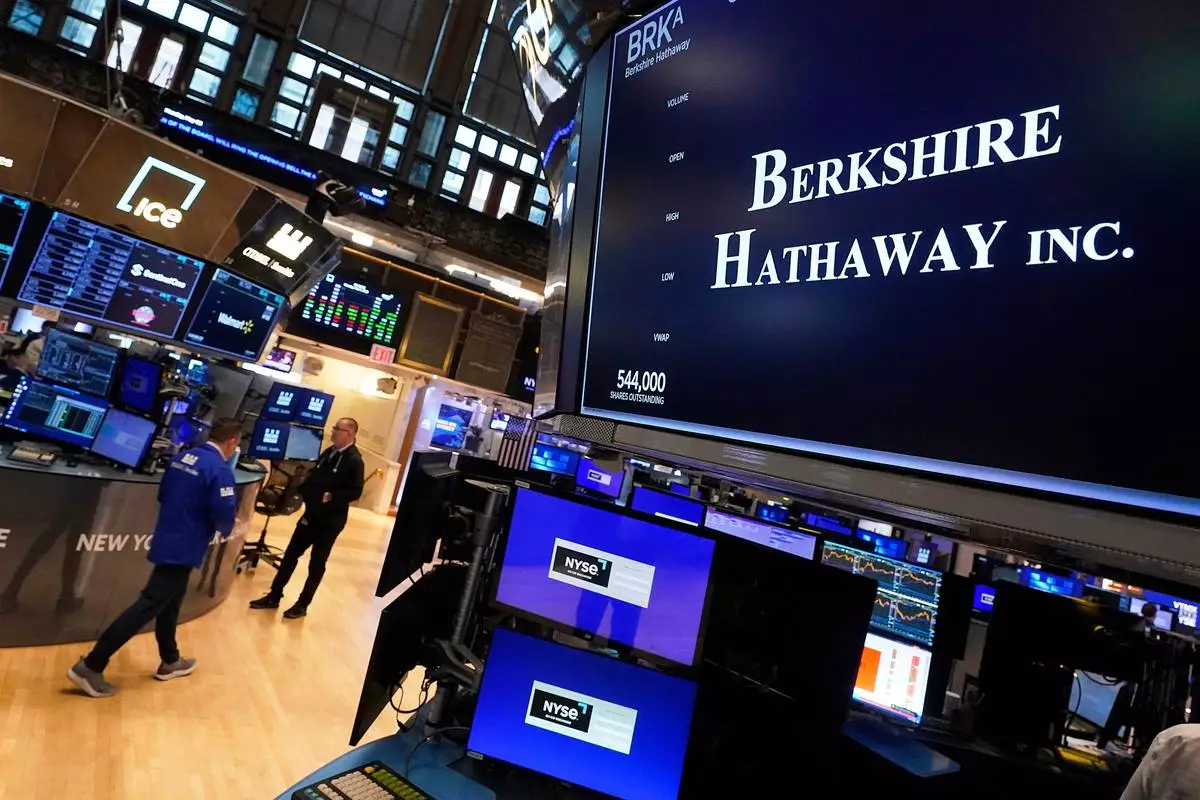
FILE - The logo for Berkshire Hathaway Inc. appears above a trading post on the floor of the New York Stock Exchange, Monday, May 5, 2025. (AP Photo/Richard Drew, File)
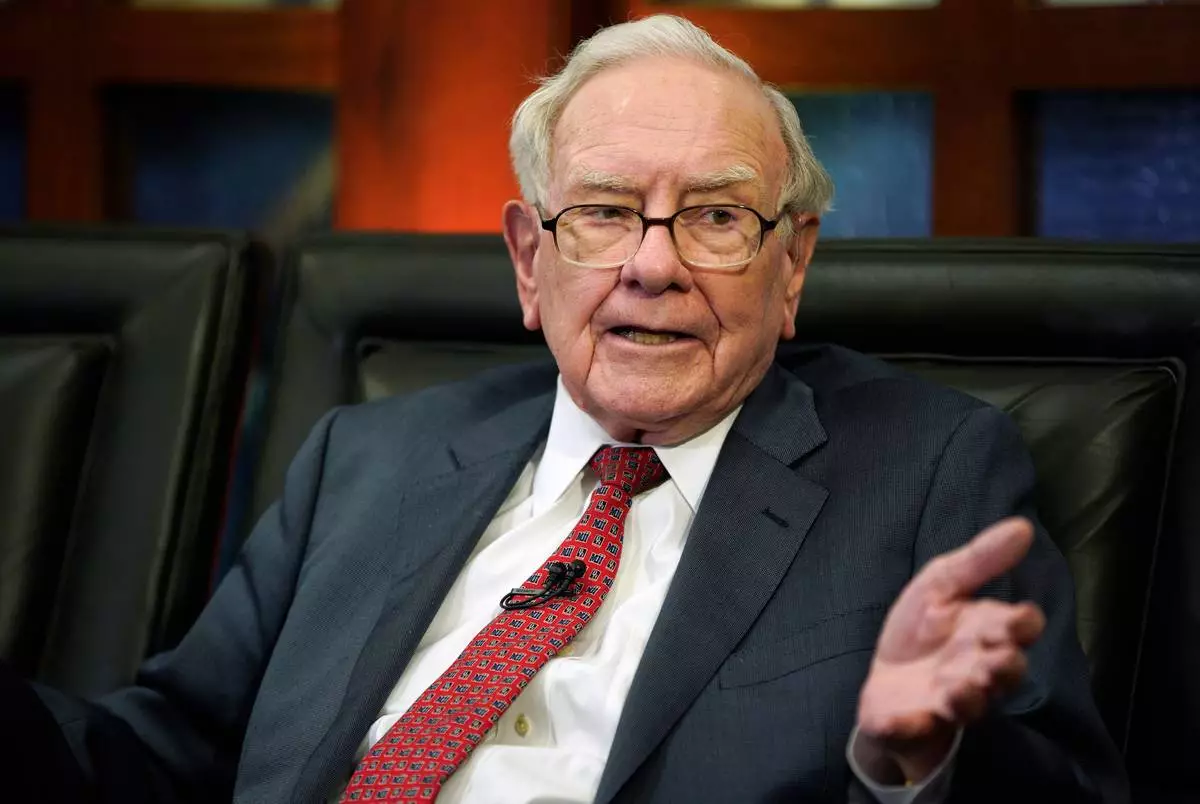
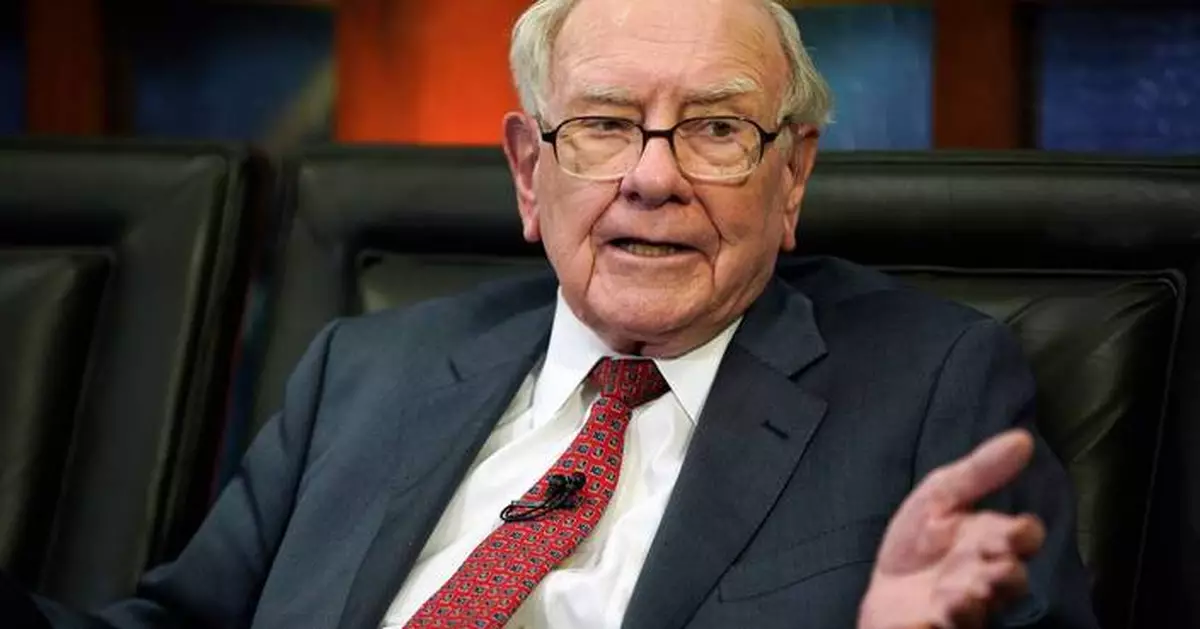
FILE - Berkshire Hathaway Chairman and CEO Warren Buffett speaks during an interview with Liz Claman on Fox Business Network's "Countdown to the Closing Bell," May 7, 2018, in Omaha, Neb. (AP Photo/Nati Harnik, File)
BEIJING (AP) — In China, the names of things are often either ornately poetic or jarringly direct. A new, wildly popular app among young Chinese people is definitively the latter.
It's called, simply, “Are You Dead?"
In a vast country whose young people are increasingly on the move, the new, one-button app — which has taken the country by digital storm this month — is essentially exactly what it says it is. People who live alone in far-off cities and may be at risk — or just perceived as such by friends or relatives — can push an outsized green circle on their phone screens and send proof of life over the network to a friend or loved one. The cost: 8 yuan (about $1.10).
It's simple and straightforward — essentially a 21st-century Chinese digital version of those American pendants with an alert button on them for senior citizens that gave birth to the famed TV commercial: “I've fallen, and I can't get up!”
Developed by three young people in their 20s, “Are You Dead?” became the most downloaded paid app on the Apple App Store in China last week, according to local media reports. It is also becoming a top download in places as diverse as Singapore and the Netherlands, Britain and India and the United States — in line with the developers' attitude that loneliness and safety aren't just Chinese issues.
“Every country has young people who move to big cities to chase their dreams,” Ian Lü, 29, one of the app's developers, said Thursday.
Lü, who worked and lived alone in the southern city of Shenzhen for five years, experienced such loneliness himself. He said the need for a frictionless check-in is especially strong among introverts. “It's unrealistic,” he said, “to message people every day just to tell them you're still alive.”
Against the backdrop of modern and increasingly frenetic Chinese life, the market for the app is understandable.
Traditionally, Chinese families have tended to live together or at least in close proximity across generations — something embedded deep in the nation's culture until recent years. That has changed in the last few decades with urbanization and rapid economic growth that have sent many Chinese to join what is effectively a diaspora within their own nation — and taken hundreds of millions far from parents, grandparents, aunts and uncles.
Today, the country has more than 100 million households with only one person, according to an annual report from the National Bureau of Statistics of China in 2024.
Consider Chen Xingyu, 32, who has lived on her own for years in Kunming, the capital of southern China’s Yunnan province. “It is new and funny. The name ’Are You Dead?' is very interesting,” Chen said.
Chen, a “lying flat” practitioner who has rejected the grueling, fast-paced career of many in her age group, would try the app but worries about data security. “Assuming many who want to try are women users, if information of such detail about users gets leaked, that’d be terrible,” she said.
Yuan Sangsang, a Shanghai designer, has been living on her own for a decade and describes herself as a “single cow and horse.” She's not hoping the app will save her life — only help her relatives in the event that she does, in fact, expire alone.
"I just don’t want to die with no dignity, like the body gets rotten and smelly before it is found," said Yuan, 38. “That would be unfair for the ones who have to deal with it.”
While such an app might at first seem best suited to elderly people — regardless of their smartphone literacy — all reports indicate that “Are You Dead?” is being snapped up by younger people as the wry equivalent of a social media check-in.
“Some netizens say that the 'Are you dead?' greeting feels like a carefree joke between close friends — both heartfelt and gives a sense of unguarded ease,” the business website Yicai, the Chinese Business Network, said in a commentary. ""It likely explains why so many young people unanimously like this app."
The commentary, by writer He Tao, went further in analyzing the cultural landscape. He wrote that the app's immediate success “serves as a darkly humorous social metaphor, reminding us to pay attention to the living conditions and inner world of contemporary young people. Those who downloaded it clearly need more than just a functional security measure; they crave a signal of being seen and understood.”
Death is a taboo subject in Chinese culture, and the word itself is shunned to the point where many buildings in China have no fourth floor because the word for “four” and the word for “death” sound the same — “si.” Lü acknowledged that the app's name sparked public pressure.
“Death is an issue every one of us has to face,” he said. “Only when you truly understand death do you start thinking about how long you can exist in this world, and how you want to realize the value of your life.”
A few days ago, though, the developers said on their official account on China’s Weibo social platform that they’d pivot to a new name. Their choice: the more cryptic “Demumu,” which they said they hoped could "serve more solo dwellers globally.”
Then, a twist: Late Wednesday, the app team posted on its Weibo account that workshopping the name Demumu didn’t turn out “as well as expected.” The app team is offering a reward for whoever offers a new name that will be picked this weekend. Lü said more than 10,000 people have weighed in.
The reward for the new moniker: $96 — or, in China, 666 yuan.
Fu Ting reported from Washington. AP researcher Shihuan Chen in Beijing contributed.
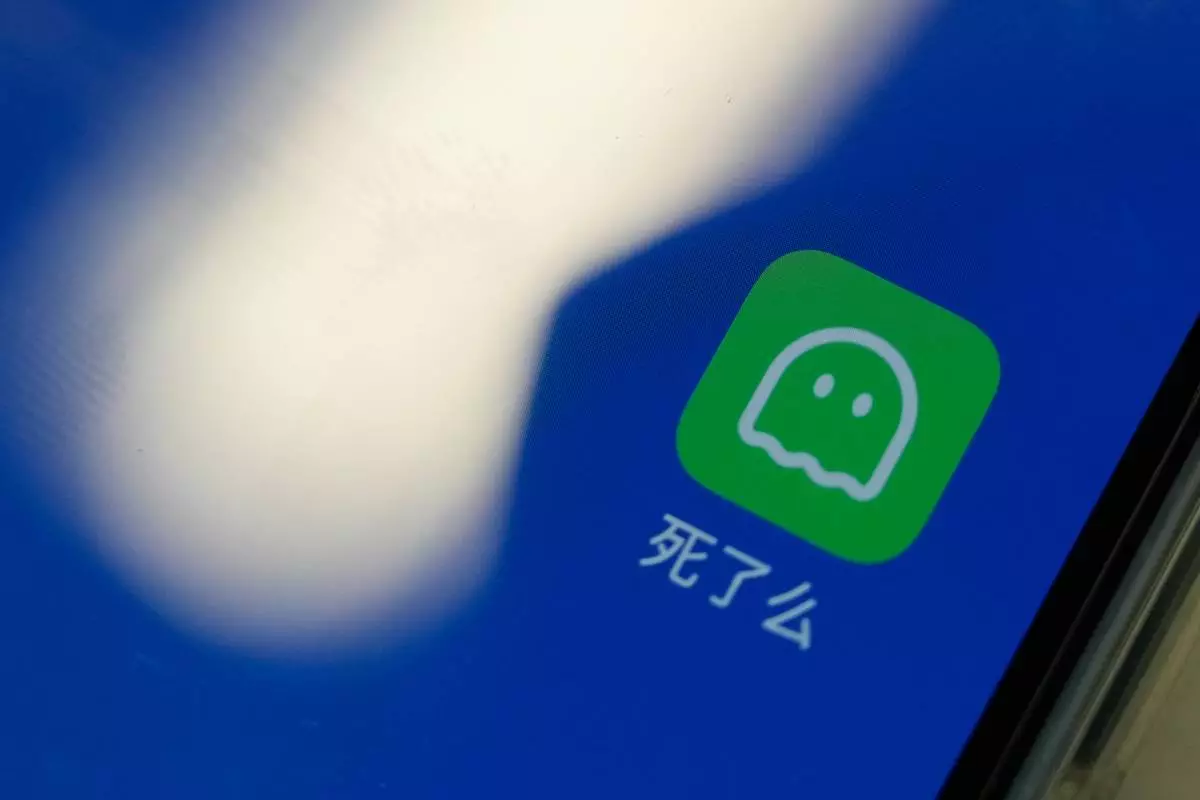
The app Are You Dead? is seen on a smartphone in Beijing, China, Thursday, Jan. 15, 2026. (AP Photo/Ng Han Guan)

A woman looks at her smartphone in a cafe in Beijing, China, Thursday, Jan. 15, 2026. (AP Photo/Ng Han Guan)
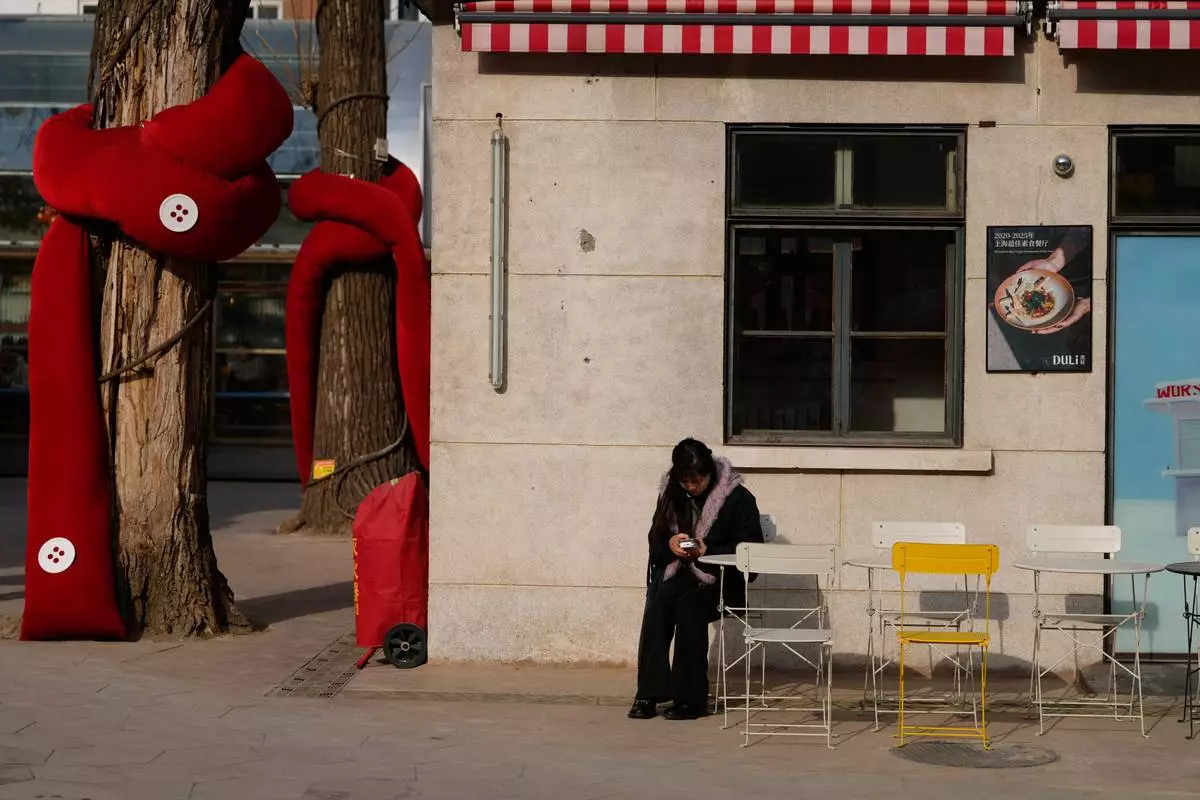
A woman looks at her smartphone outside a restaurant in Beijing, China, Thursday, Jan. 15, 2026. (AP Photo/Ng Han Guan)
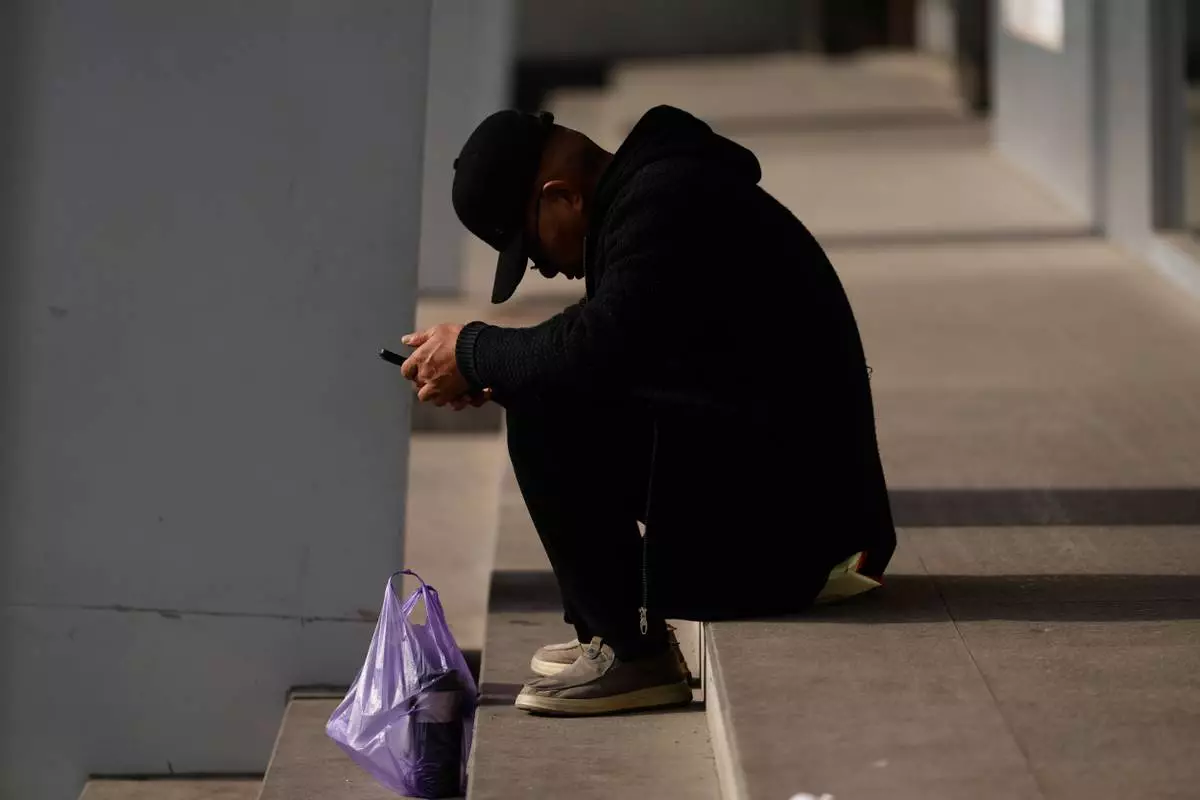
A man looks down near his smartphone in Beijing, China, Thursday, Jan. 15, 2026. (AP Photo/Ng Han Guan)
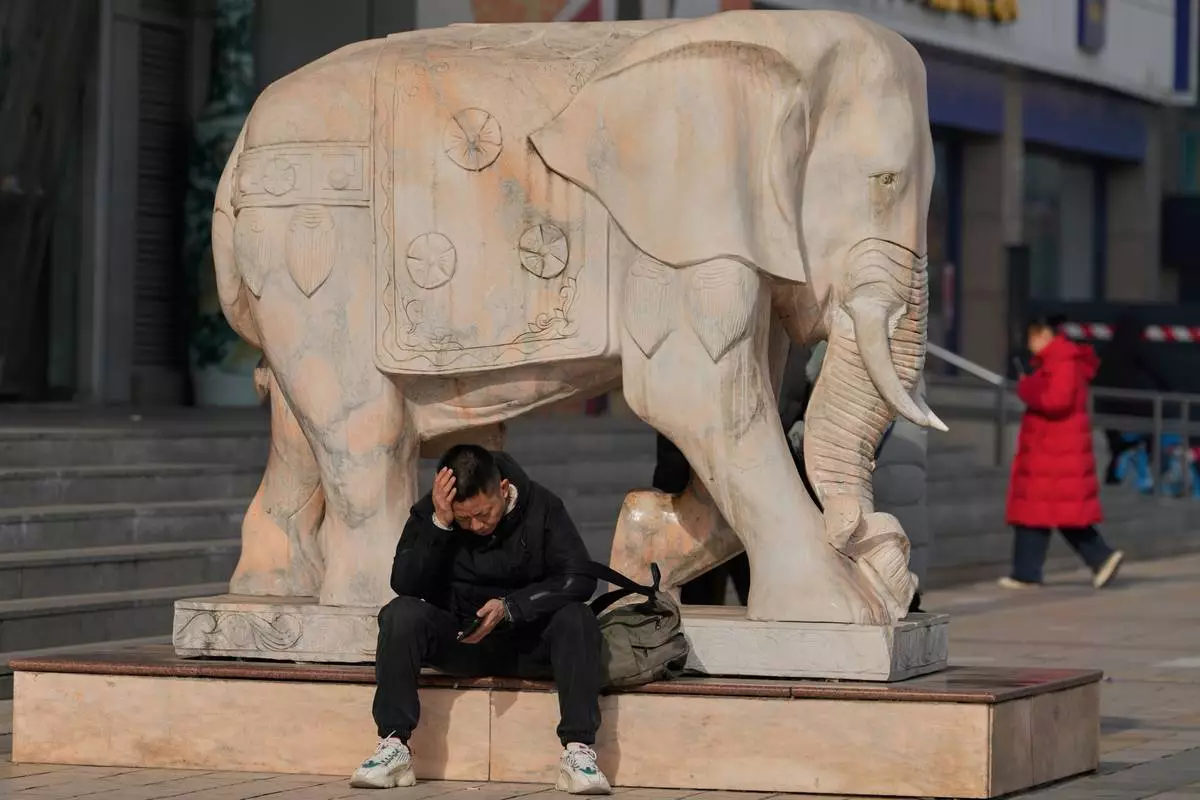
A man reacts while holding his smartphone in Beijing, China, Thursday, Jan. 15, 2026. (AP Photo/Ng Han Guan)