RANCHO CORDOVA, Calif.--(BUSINESS WIRE)--Oct 2, 2025--
LQ™ Listening Intelligence is stepping into a new era. With fresh leadership and a bold strategy, the company is transforming how organizations approach communication by elevating listening from an overlooked habit to a powerful driver of leadership, coaching, and organizational growth. That vision is already being validated by prestigious institutions like Columbia University and global consulting powerhouse Vantage Partners, who are adopting LQ’s framework, backed by 18 years of research and practical application, to redefine collaboration, decision making, and performance at scale.
This press release features multimedia. View the full release here: https://www.businesswire.com/news/home/20251002024828/en/
“Too often conversations derail not because the words are wrong but because of how they’re received,” said Katie McCleary, the new CEO of LQ and a co-owner of the company. “By helping leaders understand their habits and blind spots, we elevate listening from passive to powerful — creating connection, clarity and better results.”
Columbia University Teachers College has integrated LQ into its renowned Coaching Certification program, providing students with deep insights into their unique listening habits. Now Columbia is offering certification training so graduates can bring Listening Intelligence into their own coaching practices.
“I am thrilled to launch this new partnership integrating Columbia University’s award-winning, one-year Executive and Organizational Coaching Credential with LQ,” said Professor Terrence E. Maltbia, Faculty Director, Columbia Coaching Certification Program. “This powerful tool instantly sharpens our foundations—mindset, core competencies, and process. Deepening Listening Intelligence is crucial for truly engaging the whole person (head, heart and hand) and achieving high-impact client engagements.”
Meanwhile, Boston-based Vantage Partners, one of the world’s leading consulting agencies serving Global 1000 companies, is using LQ to Help clients lead, negotiate, communicate and collaborate more effectively. By turning listening from an unnoticed habit into a deliberate skill, they enhance their ability to adapt to global clients and gain a competitive advantage in closing deals.
LQ is offering free, one-on-one consultations with leaders to uncover how their own listening habits influence the way they communicate – and how a shared approach can streamline collaboration. For more information visit https://lq-listeningintelligence.com/.
About LQ™Listening Intelligence: LQ™ gives individuals and teams the ability to see and use listening as a lever for sharper strategies, stronger communications and lasting progress. It is part of the RADZ Group, founded by Anne Descalzo and Rachel Zillner and dedicated to raising the collective impact.

Katie McCleary, CEO and co-owner of LQ
NEW YORK (AP) — Ten years ago, Kim Gordon — a revolutionary force in the alternative rock band Sonic Youth, the ’80s New York no wave scene and the space between art and noise — debuted solo music. At the time, she was already decades into a celebrated, mixed-medium creative career.
The midtempo “Murdered Out” was her first single, where clangorous, overdubbed guitars met the unmistakable rasp of her deadpan intonations. It was a surprise from an experimentalist well-versed in the unexpected: The song took inspiration from Los Angeles car culture, and its main collaborator was the producer Justin Raisen, then best known for his pop work with Sky Ferreira and Charli XCX. Their partnership has continued in the decade since, and on March 13, Gordon will drop her third solo album, “Play Me,” announced Wednesday alongside the release of a hazy, transcendent single, “Not Today.”
“It was a happy accident,” she says of her continued work with Raisen. “In the beginning, I was somewhat skeptical of working with a producer and collaborator, really. But it’s turned out to be incredibly freeing.”
“Play Me” follows Gordon's critically lauded, beat-heavy 2024 album “The Collective,” a noisy body of work that featured oddball trap blasts. It earned her two Grammy nominations — a career first — for alternative music album and alternative music performance. Those were for the song “Bye Bye,” with its eerie, dissonant beat originally written for rapper Playboi Carti. For “Play Me,” Gordon reimagined the track for the closer, “Bye Bye 25!” She says it was the result of her thinking about the rap world, where revisiting and remixing is commonplace.
“I came up with the idea of using these words that Trump had sort of ‘banned’ in his mind,” she says of the new song's lyrics. (An example: “Injustice / Opportunity / Dietary guidelines / Housing for the future.” President Donald Trump’s administration associates the terms with diversity, equity and inclusion initiatives, which it has vowed to root out across the government.) For Gordon, because it became “more conceptual … the remake doesn’t seem as anxiety-provoking as the original.”
There is a connective spirit between “The Collective” and “Play Me” — a shared confrontation, propulsive production and songs that possess a keen ability to process and reflect the world around Gordon. “It does feel kind of like an evolution,” she says of this album next to her last. “It’s sort of a more focused record, and immediate.” The songs are shorter and attentive.
Or, to put it more simply: “I like beats and that inspires me more than melodies,” she says. “Beats and space.”
That palette drives “Play Me,” a foundation in which staccato lyricism transforms and offers astute criticism. Consider the title track, which challenges passive listening and the devaluation of music in the age of streaming. She names Spotify playlist titles, imagined genres defined by mood rather than music. “Rich popular girl / Villain mode” she speak-sings, “Jazz and background / Chillin' after work.”
“It's just representative of, you know, this era we're in, this culture of convenience,” she says. “Music always represented a certain amount of freedom to me, and it feels like that’s kind of been blanketed over.”
Sonically, it is a message delivered atop a '70s groove, placing it in conversation with an era unshackled from these digital technologies.
The title, too, “is playing off the sort of passive nature of listening to music,” she says, “But also it could be seen as defiant. Like, I dare you to play me.”
There's also the blown-out “Subcon,” which examines the world's growing billionaire class and their fascination with space colonialization in a period of economic insecurity. In the song, Gordon's lyrical abstractions highlight the absurdity, taking aim at technocrats.
“I find reality inspirational, no matter how bad it is,” she says. Where some artists might veer away from the news, Gordon tackles truth. “I’m not sure what music is supposed to be. So, I’m just doing my version of it.”
In the end, she hopes listeners are “somewhat thrilled by” the album.
“'This is the music that I’ve wanted to hear,’ kind of feeling. Does that sound egotistical? I don’t know,” she laughs. If it is, it is earned.
1. “Play Me”
2. “Girl with a Look”
3. “No Hands”
4. “Black Out”
5. “Dirty Tech”
6. “Not Today”
7. “Busy Bee”
8. “Square Jaw”
9. “Subcon”
10. “Post Empire”
11. “Nail Bitter”
12. “Bye Bye 25!”

Kim Gordon poses for a portrait in New York on Tuesday, Dec. 9, 2025. (Photo by Taylor Jewell/Invision/AP)
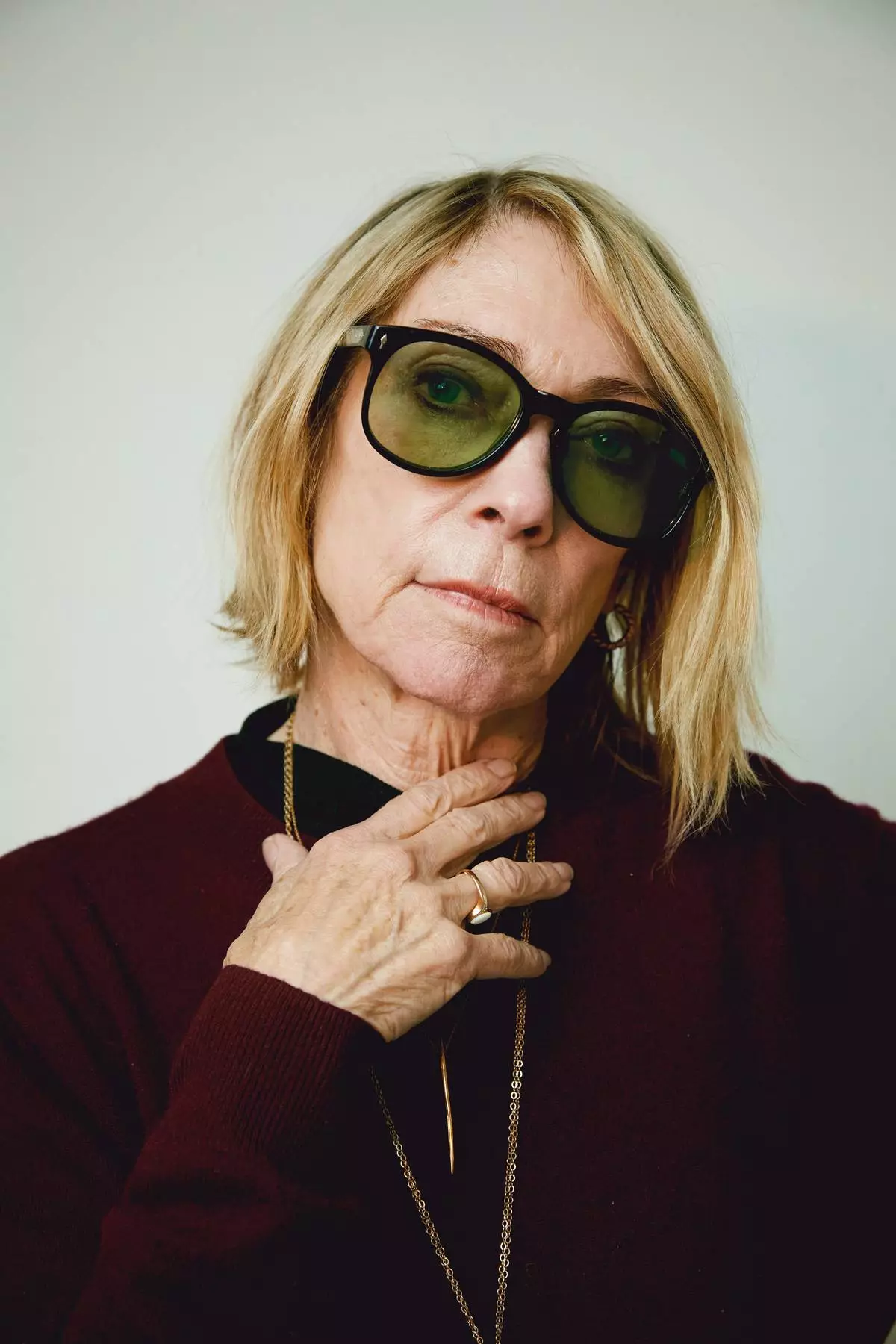
Kim Gordon poses for a portrait in New York on Tuesday, Dec. 9, 2025. (Photo by Taylor Jewell/Invision/AP)

Kim Gordon poses for a portrait on Tuesday, Dec. 9, 2025, in New York (Photo by Taylor Jewell/Invision/AP)