RABAT, Morocco (AP) — Youth-led demonstrators in Morocco took to the streets on Thursday for a sixth straight night despite fears of more violence after police killed three people the night before.
The protesters in at least a dozen cities, including Casablanca, demanded better schools and hospitals, with some calling for Prime Minister Aziz Akhannouch to resign.
Click to Gallery
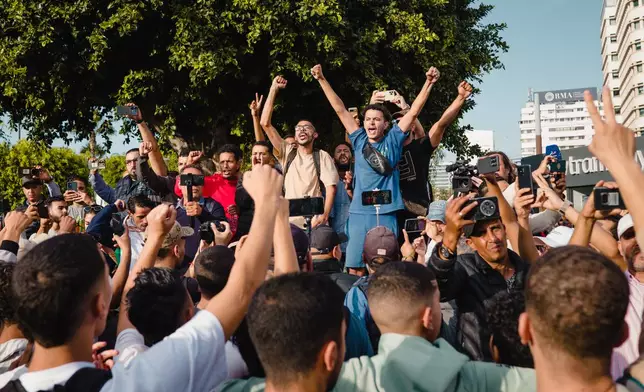
People protest against corruption and calling for healthcare and education reform, in Casablanca, Morocco, Thursday, Oct. 2, 2025. (AP Photo)

People protest against corruption and calling for healthcare and education reform, in Casablanca, Morocco, Thursday, Oct. 2, 2025. (AP Photo)
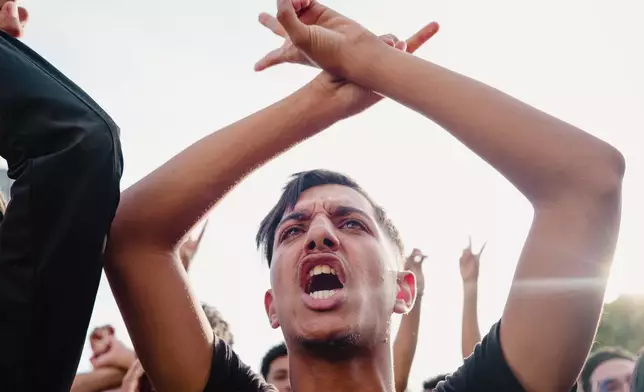
People protest against corruption and calling for healthcare and education reform, in Casablanca, Morocco, Thursday, Oct. 2, 2025. (AP Photo)
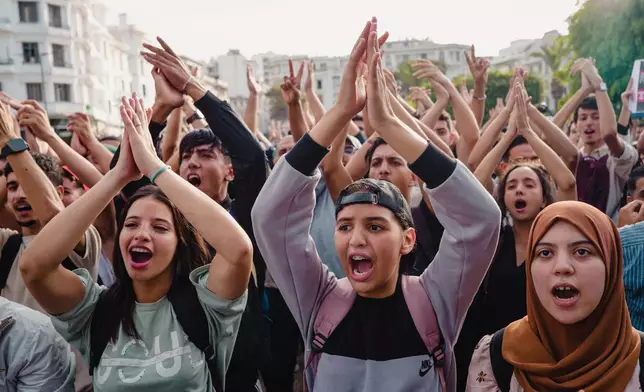
People protest against corruption and calling for healthcare and education reform, in Casablanca, Morocco, Thursday, Oct. 2, 2025. (AP Photo)
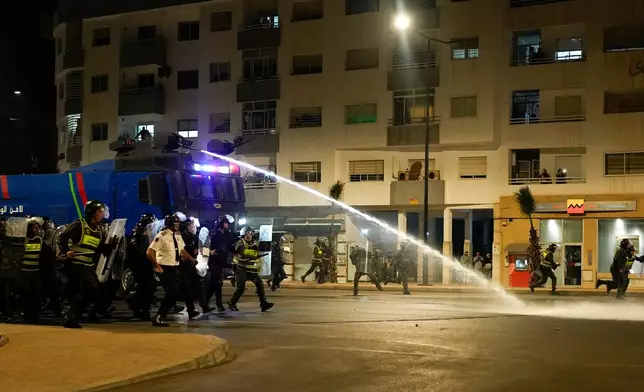
Security forces disperse a gathering as youth led protests calling for healthcare and education reforms turned violent, in Sale, Morocco, Wednesday, Oct. 1, 2025. (AP Photo/Mosa'ab Elshamy)
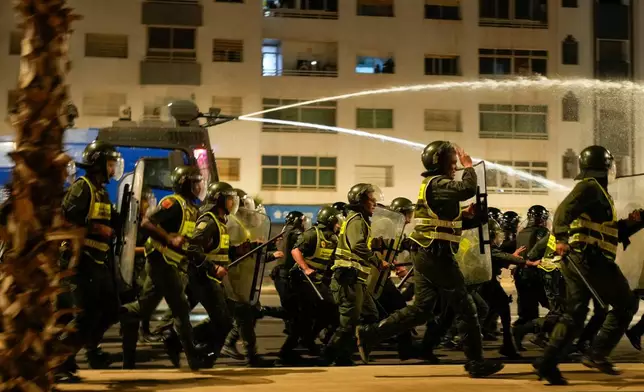
Security forces disperse a gathering as youth led protests calling for healthcare and education reforms turned violent, in Sale, Morocco, Wednesday, Oct. 1, 2025. (AP Photo/Mosa'ab Elshamy)
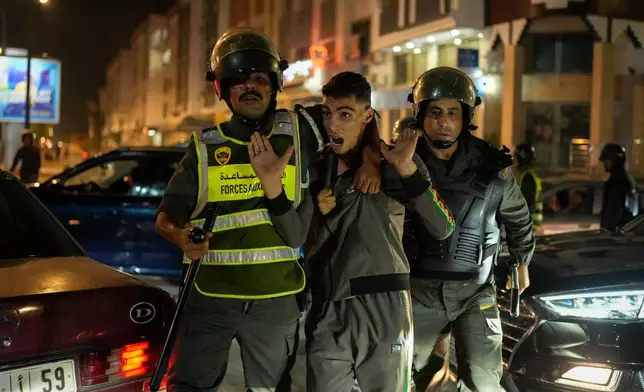
A boy is detained as youth led protests calling for healthcare and education reforms turned violent, in Sale, Morocco, Wednesday, Oct. 1, 2025. (AP Photo/Mosa'ab Elshamy)
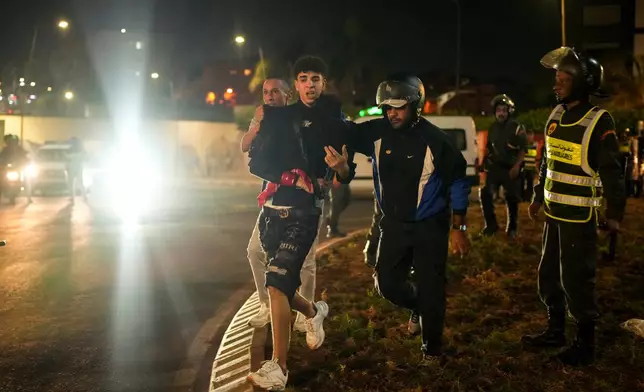
A boy is detained as youth led protests calling for healthcare and education reforms turned violent, in Sale, Morocco, Wednesday, Oct. 1, 2025. (AP Photo/Mosa'ab Elshamy)
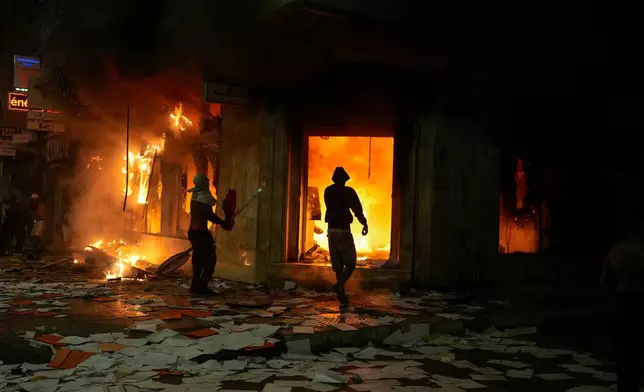
People torch and loot a bank as youth led protests calling for healthcare and education reforms turned violent, in Sale, Morocco, Wednesday, Oct. 1, 2025. (AP Photo/Mosa'ab Elshamy)
The call for resignation came after police killed three people on Wednesday as largely peaceful protests turned into riots, with banks looted and cars set ablaze.
Though Morocco’s king is the country’s highest authority, protests in Morocco routinely focus on the government charged with carrying out his agenda. On Thursday, hundreds chanted for King Mohammed VI to intervene against the government. Crowds shouted “The people want to topple Akhannouch” and “Government out!” as demonstrations unfolded peacefully.
In his first public remarks, Akhannouch said earlier on Thursday that he was mourning Wednesday’s deaths. He praised law enforcement for its efforts to maintain order and indicated that the government was prepared to respond favorably to the protesters, without detailing reforms under discussion.
“The approach based on dialogue is the only way to deal with the various problems faced by our country," Akhannouch said.
The pledge for new efforts to address the protests came a day after authorities said armed rioters had stormed public buildings and the youth-led anti-government demonstrations showed few signs of abating.
Security forces opened fire at demonstrators on Wednesday, killing three people in Leqliaa, a small town outside the coastal city of Agadir. Morocco's Interior Ministry said the three were shot and killed during an attempt to seize police weapons, though no witnesses could corroborate the report.
The ministry said 354 people — mostly law enforcement — had sustained injuries. It said hundreds of cars were damaged, as well as banks, shops and public buildings in 23 of the country's provinces. Throughout the country, roughly 70% of the demonstrators were minors, according to ministry estimates.
The demonstrations, organized by a leaderless movement known as Gen Z 212 dominated by internet-savvy youth, have taken the country by surprise and emerged as some of Morocco’s biggest in years. By midweek, they appeared to be spreading to new locations despite a lack of permits from authorities.
Those taking part in the so-called Gen Z protests decry what they see as widespread corruption at everyday people’s expense. Through chants and posters, they have contrasted the flow of billions in investment toward preparation for the 2030 World Cup, while many schools and hospitals lack funds and remain in a dire state.
“Health care first, we don’t want the World Cup,” has emerged as among the week's most popular refrains on the street.
Pointing to new stadiums under construction or renovation across the country, protesters have chanted, “Stadiums are here, but where are the hospitals?”
The recent deaths of eight women in public hospital in Agadir have become a rallying cry against the decline of Morocco’s health system.
As Morocco prepares to host soccer’s Africa Cup of Nations later this year and politicians gear up for a parliamentary election in 2026, the link has drawn attention to how deep disparities endure in the North African kingdom. Despite rapid development, according to some metrics, many Moroccans feel disillusioned by its unevenness, with regional inequities, the state of public services and lack of opportunity fueling discontent.
“The right to health, education and a dignified life is not an empty slogan but a serious demand,” Gen Z 212 said in a statement.
Officials have denied prioritizing World Cup spending over public infrastructure, saying health sector problems were inherited from previous governments.
Chants were fewer as violence broke out in several cities on Wednesday evening, following days of mass arrests in more than a dozen cities, particularly in places where jobs are scarce and social services lacking.
The Moroccan Association for Human Rights has said that more than 1,000 people have been apprehended, including many whose arrests were shown on video by local media and some who were detained by plainclothes officers during live television interviews.
The chaos came despite warnings from authorities, political parties in government and the opposition and the organizers themselves. In a statement published on Discord, the Gen Z 212 protest movement earlier on Wednesday implored protesters to remain peaceful and blasted “repressive security approaches.”
Still, the protests have escalated and become more destructive, particularly in cities far from where development efforts have been concentrated in Morocco. Local outlets and footage filmed by witnesses show protesters hurling rocks and setting vehicles ablaze in cities and towns in the country's east and south.
The “Gen Z” protests mirror similar unrest sweeping countries like Nepal, Kenya and Madagascar.
Oubachir reported from Casablanca, Morocco.
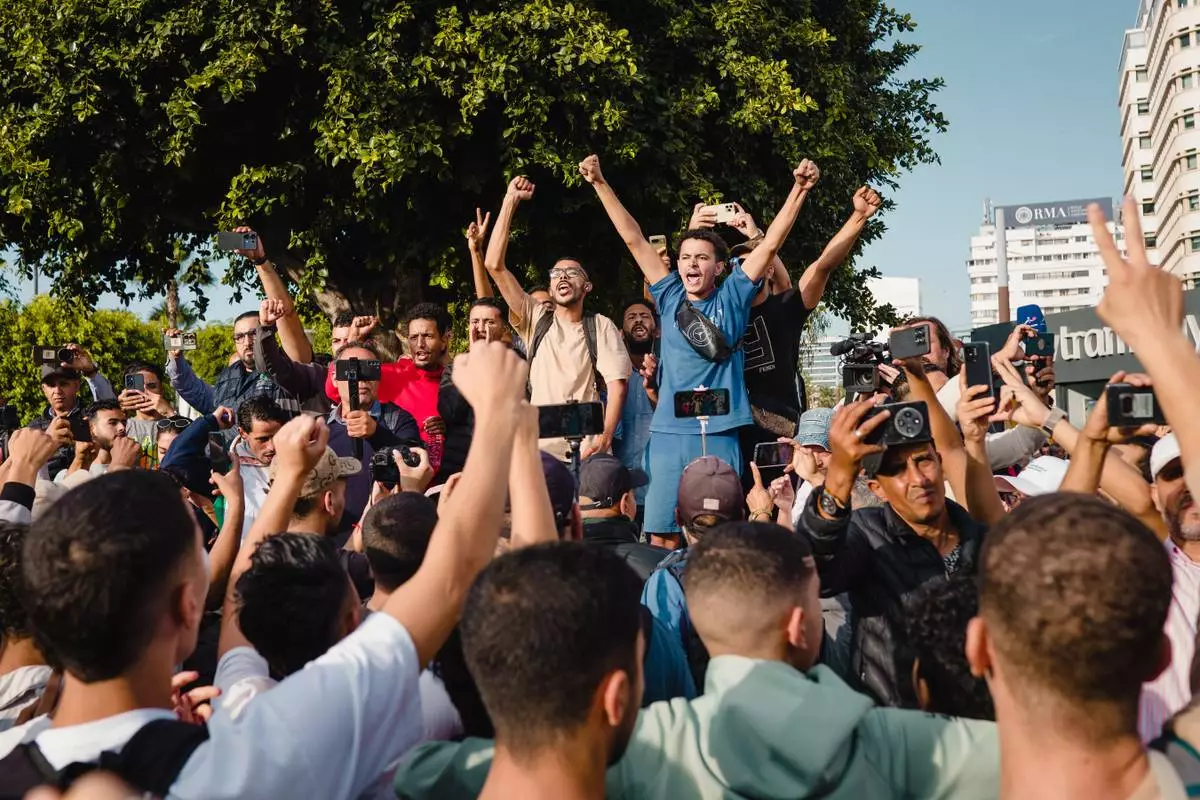
People protest against corruption and calling for healthcare and education reform, in Casablanca, Morocco, Thursday, Oct. 2, 2025. (AP Photo)
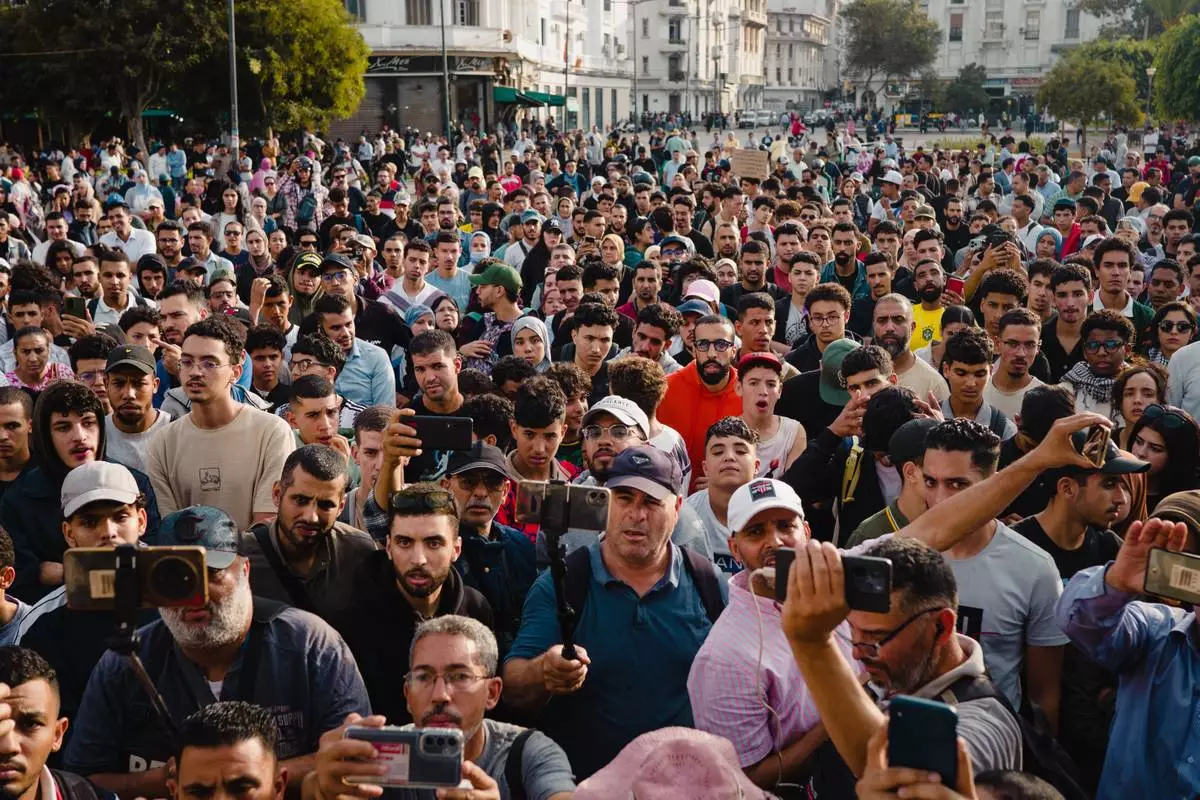
People protest against corruption and calling for healthcare and education reform, in Casablanca, Morocco, Thursday, Oct. 2, 2025. (AP Photo)
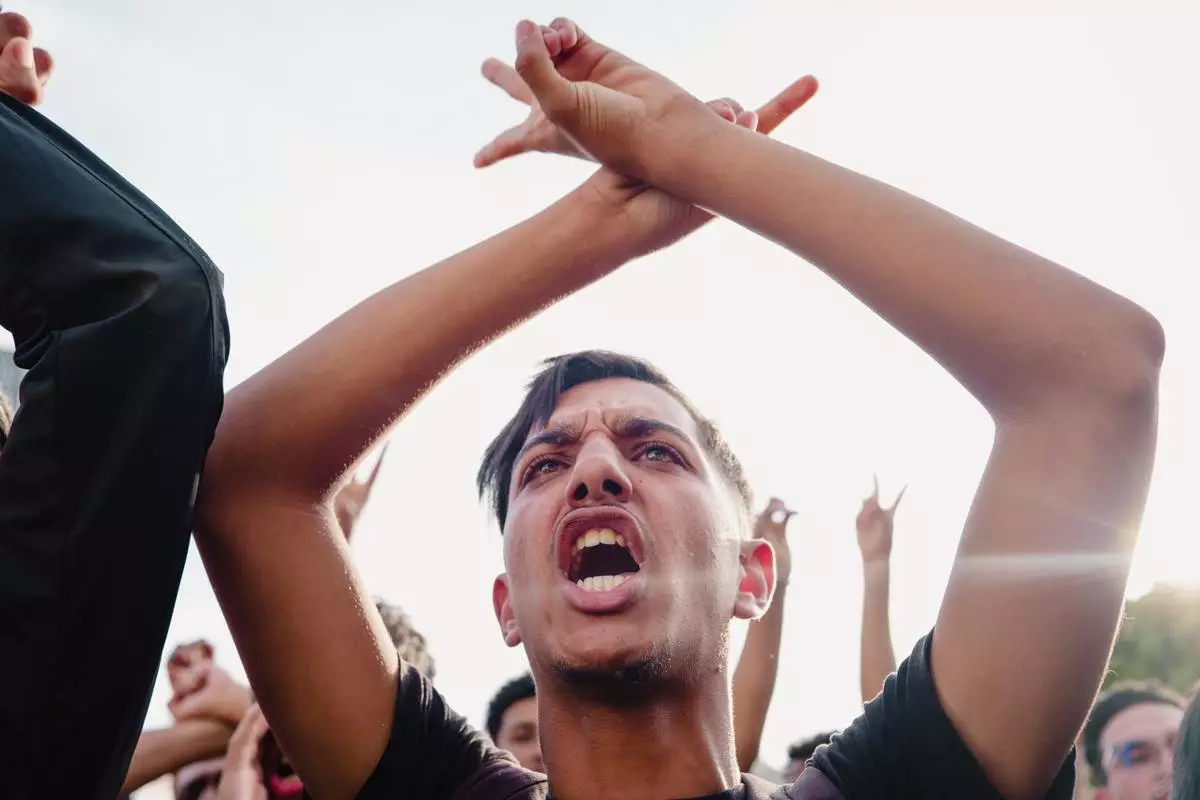
People protest against corruption and calling for healthcare and education reform, in Casablanca, Morocco, Thursday, Oct. 2, 2025. (AP Photo)
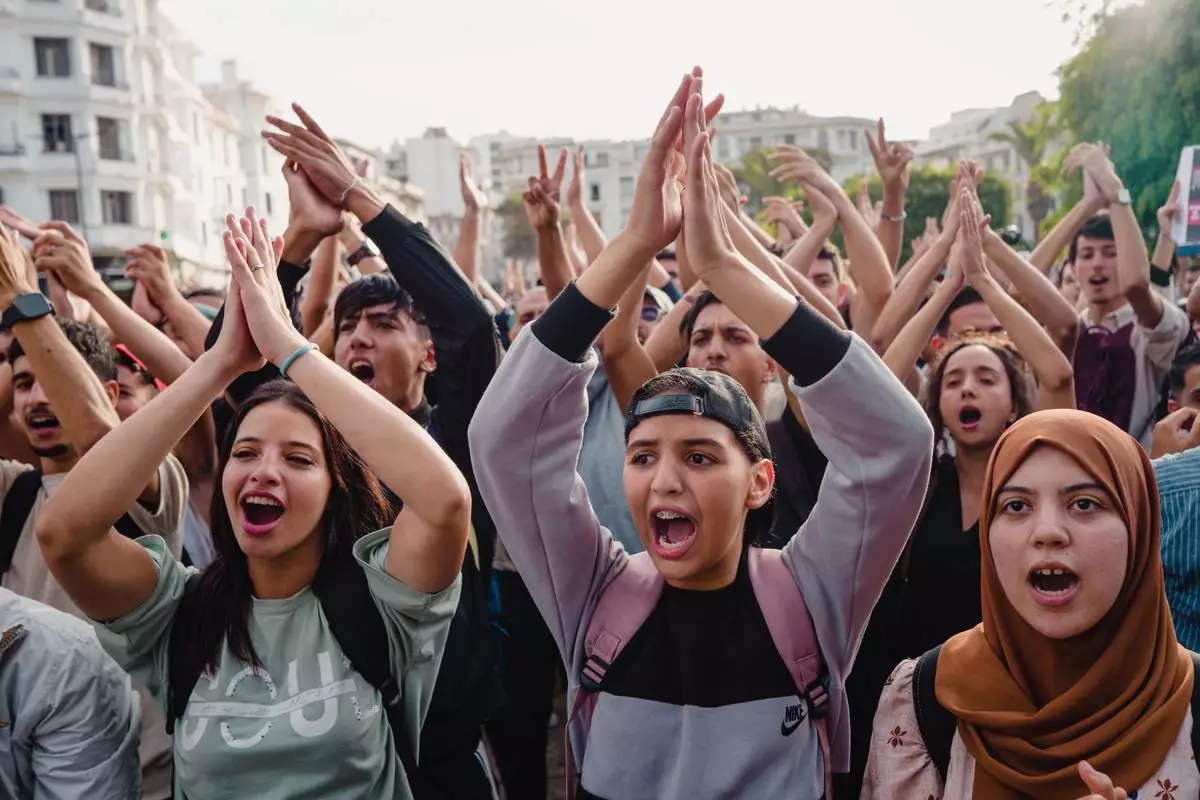
People protest against corruption and calling for healthcare and education reform, in Casablanca, Morocco, Thursday, Oct. 2, 2025. (AP Photo)
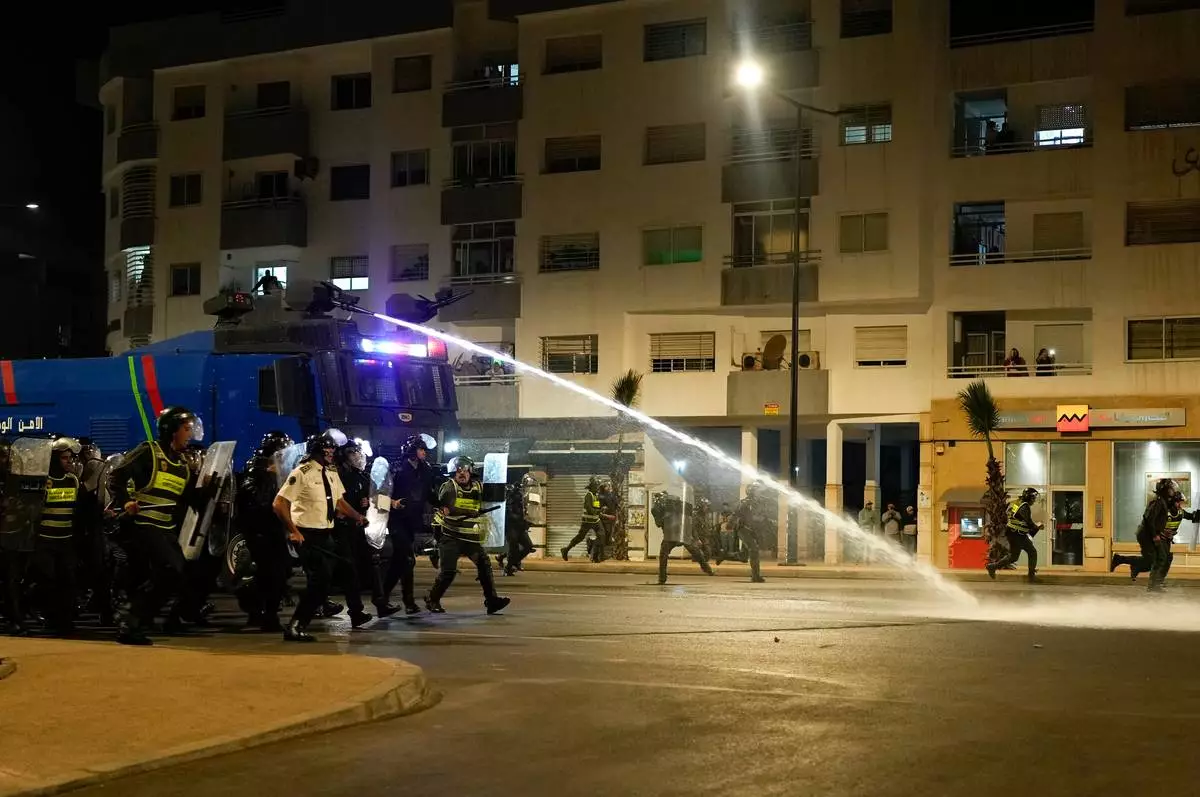
Security forces disperse a gathering as youth led protests calling for healthcare and education reforms turned violent, in Sale, Morocco, Wednesday, Oct. 1, 2025. (AP Photo/Mosa'ab Elshamy)
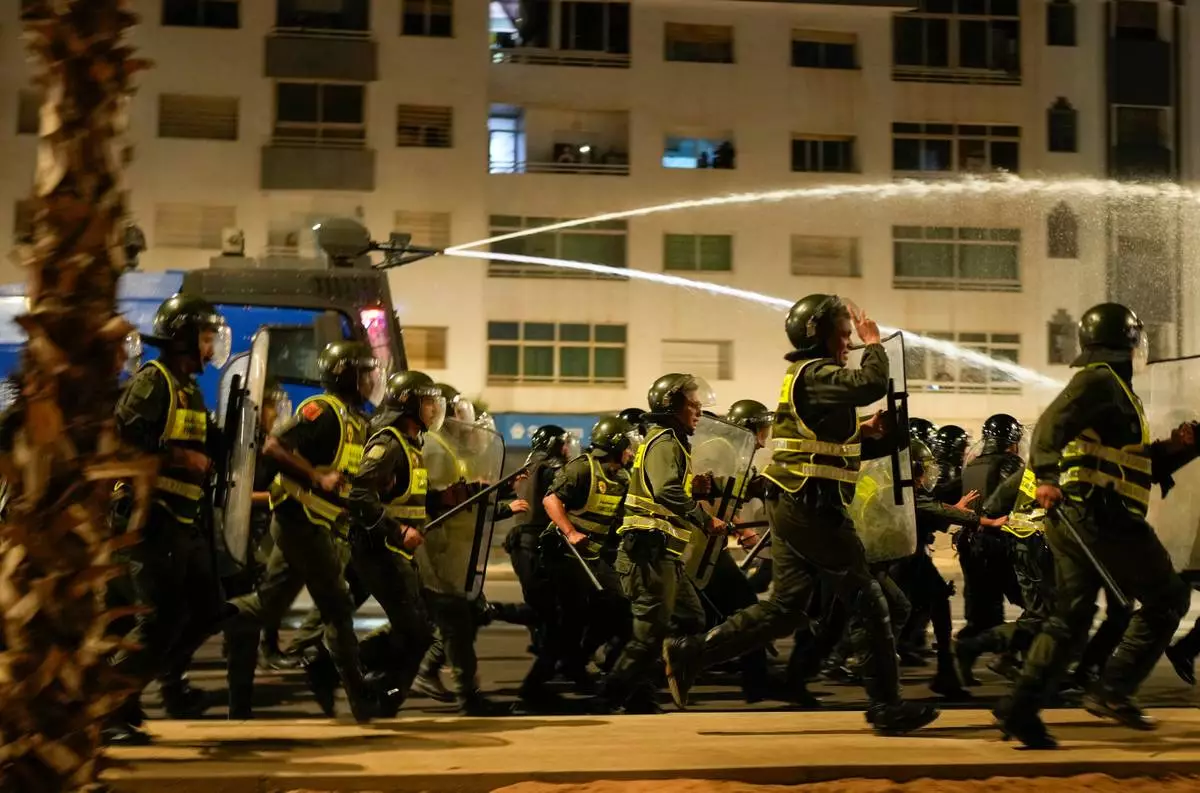
Security forces disperse a gathering as youth led protests calling for healthcare and education reforms turned violent, in Sale, Morocco, Wednesday, Oct. 1, 2025. (AP Photo/Mosa'ab Elshamy)
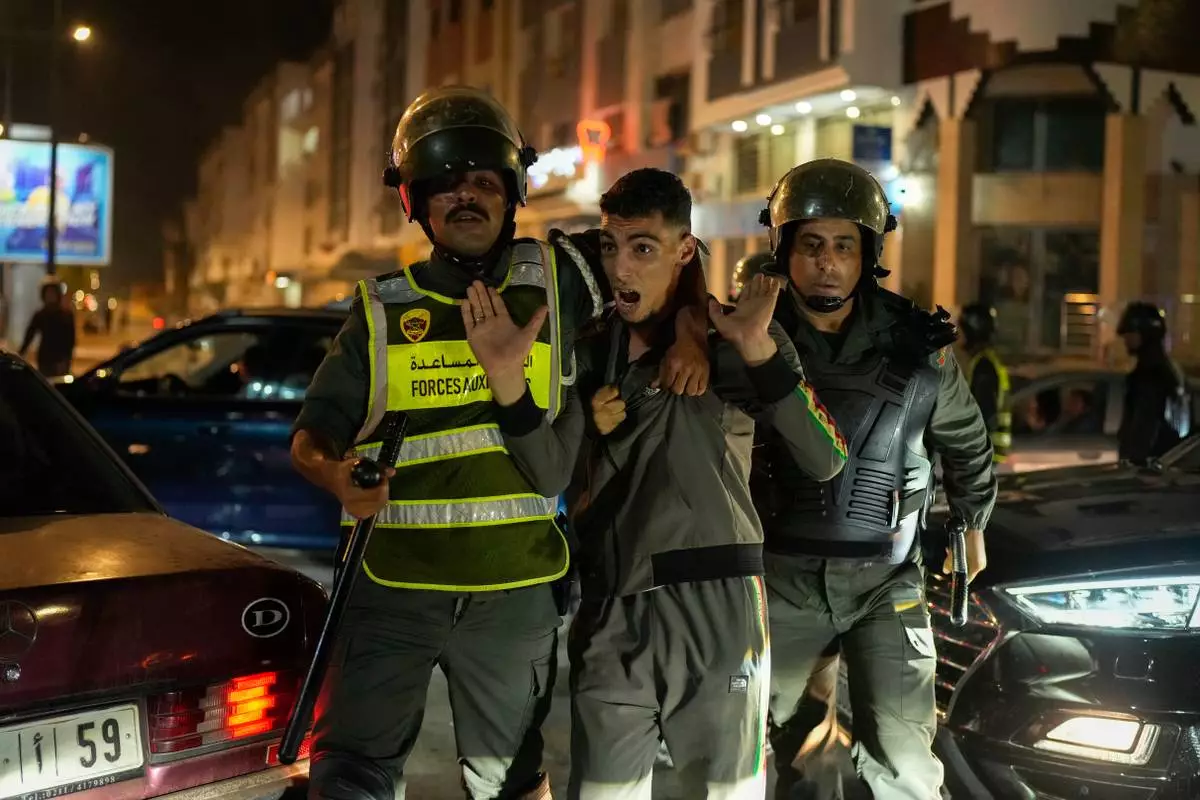
A boy is detained as youth led protests calling for healthcare and education reforms turned violent, in Sale, Morocco, Wednesday, Oct. 1, 2025. (AP Photo/Mosa'ab Elshamy)
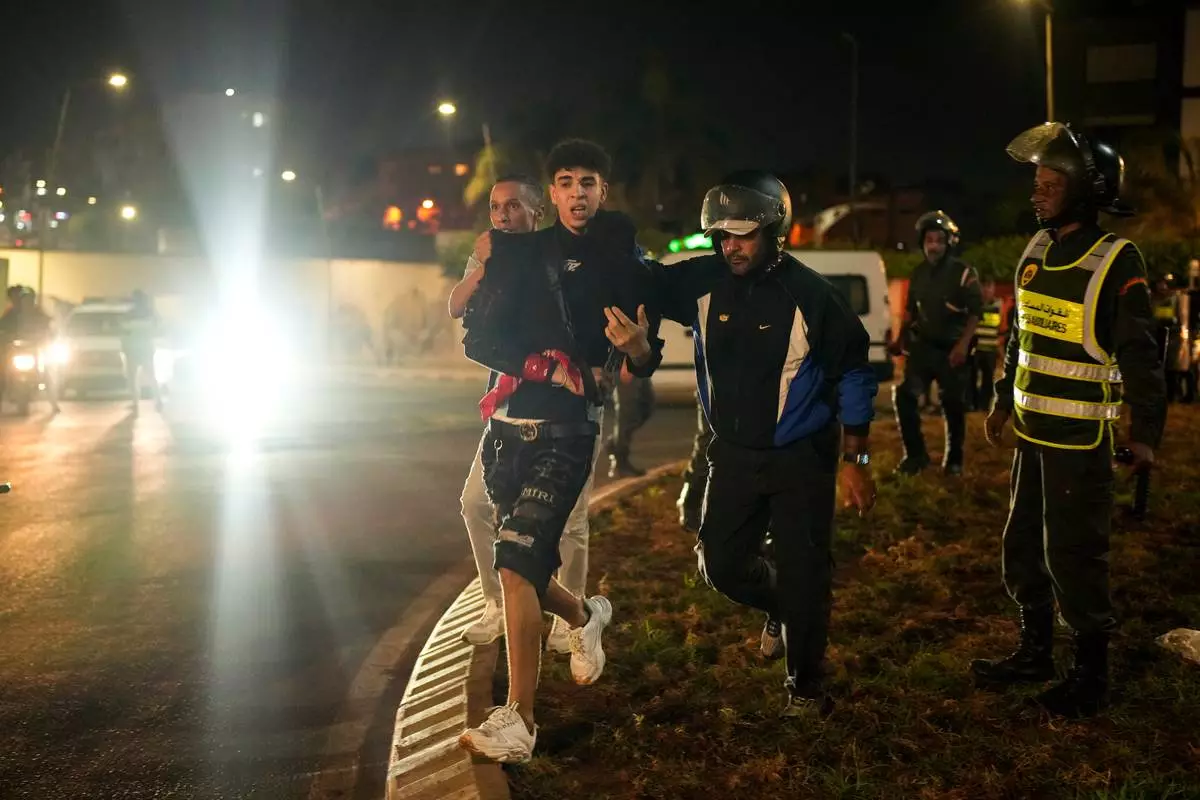
A boy is detained as youth led protests calling for healthcare and education reforms turned violent, in Sale, Morocco, Wednesday, Oct. 1, 2025. (AP Photo/Mosa'ab Elshamy)
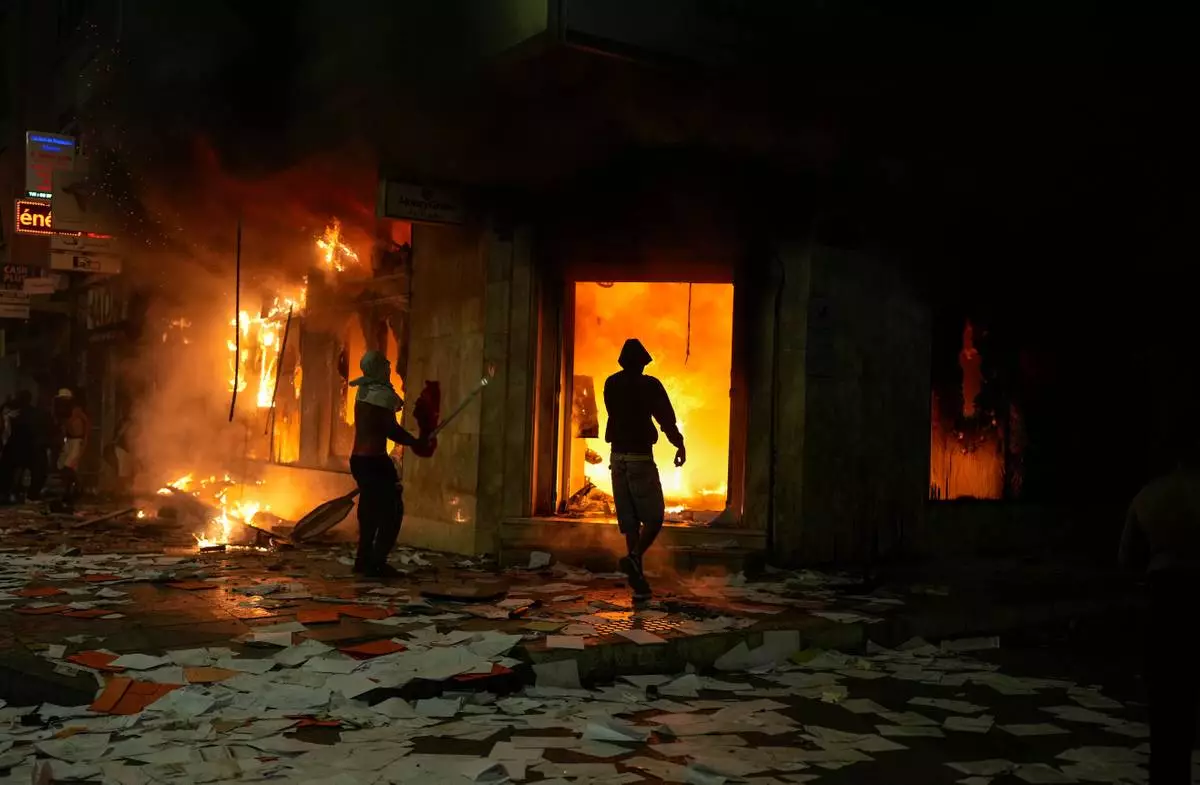
People torch and loot a bank as youth led protests calling for healthcare and education reforms turned violent, in Sale, Morocco, Wednesday, Oct. 1, 2025. (AP Photo/Mosa'ab Elshamy)